Is the Bible Scientifically Accurate?

Doesn’t the God of the universe know these things? Why doesn’t He get the facts right?!

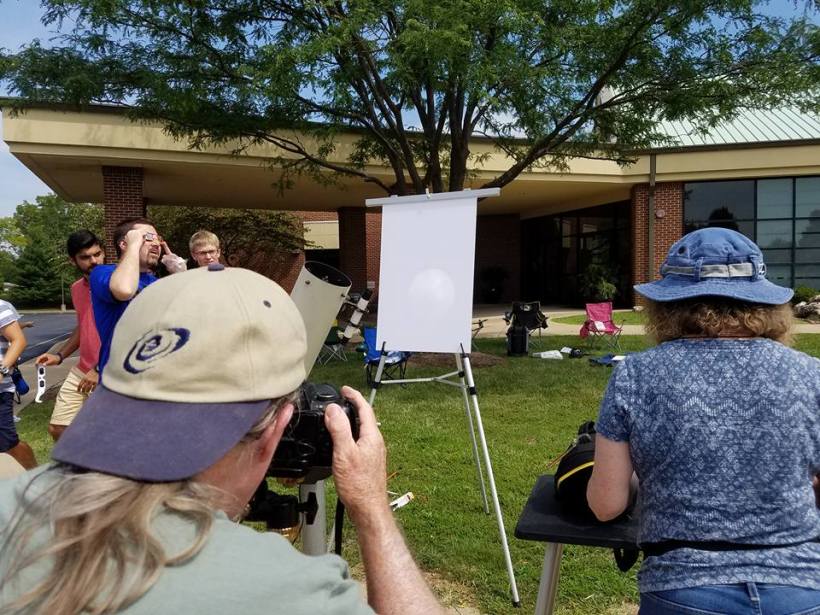
Photo taken of friends at a church in Missouri viewing the eclipse

I listened to a presentation by Jon Jorgenson on Science vs. the Bible in which he addressed the question whether the Bible has any scientific errors. Jon’s YouTube channel is aimed at teenagers and young adults, and he is a prolific producer of inspirational and devotional material.

He acknowledges, the answer, literally, is yes. For instance, in Genesis, the author describes the Moon as a “lesser light”, but we know the Moon is not technically a light. It doesn’t generate light of its own like the Sun.

Another example is the parable of the mustard seed. Jesus calls the mustard seed the smallest of all seeds. We know that there are other seeds in the world that are smaller than mustard seeds.

For these reasons, we cannot honestly say that the Bible, on its face, taken literally, is scientifically accurate. It simply isn’t.

Jon offers that we shouldn’t expect the Bible to be scientifically accurate because it isn’t meant to be.  2 Timothy 3:16 states: “All Scripture is inspired by God and profitable for teaching, for reproof, for correction, for training in righteousness”. (NASB) From this, he makes the point that the Bible is written for a different purpose.

Still, one might ask, doesn’t the God of the universe know these things? Why doesn’t He get the facts right?!

Continue reading “Is the Bible Scientifically Accurate?”

Living Like An Atheist?

If God created the universe, created you and me and everything we know, doesn’t He deserves more of us?

ChristianPics.co

Ravi Zacharias is a well-known speaker on faith, culture and philosophy. He travels around the world, rubbing shoulders with the intellectual elite. He wasn’t always the intellectual sort. He wasn’t always a man faith. He called himself an atheist growing up.

In an interview, when he was pressed on that point, he said, “Atheism is a strong word. I was living like an atheist.”

 How many of us live like an atheist?

Continue reading “Living Like An Atheist?”

The Rightness of God

God is right because he is God.

ChristianPics.co

For, being ignorant of the righteousness of God, and seeking to establish their own, they did not submit to God’s righteousness. For Christ is the end of the law for righteousness to everyone who believes.” (Romans 10:2-4)

Paul was writing here of the Jews. Paul spoke with particular authority about this because he was a Jew, trained in the highest Jewish traditions by the greatest teacher of the time, and he had once zealously protected the Jewish tradition of the law against the upstart followers of Jesus. And then, he dramatically encountered the risen Jesus.

Paul is saying that the Jews were ignorant of God’s righteousness because they sought to establish their own righteousness, instead of accepting (submitting to) God’s righteousness. Paul knew this because Jesus was the embodiment of God, righteousness and all, in the flesh.

But righteousness seems sometimes like a nebulous concept. It seems better understood with “self” in front of it. It’s hard to think of righteousness without thinking self-righteous. In truth, only God is righteous. We can only try to understand His righteousness.

Another way to look at righteousness is through the lens of “rightness”. Simply put, God is right because he is God. When we think we are right, especially in comparison or contrast to God, we are asserting that we are the measure of right, rather than God.

Continue reading “The Rightness of God”

Who Created God?

The question “Who created God?” has stumped many a person who believes in God, but the question is flawed.

Depositphotos Image ID: 10605683 Copyright: kevron2002

One of the “show stopping” questions posed by atheists is this one: If God created the universe, who created God?

It is a clever question, and has stumped many a person who believes in God, but the question, itself, is flawed. Let me explain.

In my response, I am indebted to John Lennox who’s answer to this very question is embedded at the end of this blog article. John Lennox, is a Professor of Mathematics at Oxford University and a frequent speaker on topics of science, philosophy and religion. He has twice debated the vocal atheist, and Oxford professor, Richard Dawkins, who wrote a book, The God Delusion, using this question as a centerpiece.

The flaw of the question is that it is loaded with the assumption that God was created. The response of the Christian (or theist generally) is that such a notion (that God was created) is not a notion about God at all, but a notion about a god – a created thing. Another word for such a thing is an idol.

Continue reading “Who Created God?”

God’s Righteousness for My Righteousness

Do not be ignorant of God’s righteousness, seeking to establish righteousness on your own.

Photo by Tim Butterfield

“Brothers, my heart’s desire and prayer to God for them is that they may be saved for I bear them witness that they have a Zeal for God, but not according to knowledge. For, being ignorant of the righteousness of God, and seeking to establish their own, they did not submit to God’s righteousness. For Christ is the end of the law for righteousness to everyone who believes.” (Romans 10:1-4)

Paul is speaking to the Romans of the Jews, but this message could apply to anyone who seeks to establish his own righteousness and does not submit to God’s righteousness. Paul had a particular authenticity to be able to say this about the Jews, because they were his people. He was one of them. He was not just Jewish, but trained as a Pharisee by the greatest of the contemporary teachers of the time and zealous for the Jewish law to the point of persecuting the followers of Christ (Phil. 3:6) – before he was confronted by the living, resurrected Jesus.

Paul knew something of the righteousness of his former life and of the righteousness of the Jews in his time. Their righteousness consisted of zealously keeping the law. The Pharisees, the protectors keepers of the law, were the people with whom Jesus had the harshest confrontations. He accused them of imposing impossible burdens on others, burdens that they, themselves, didn’t even keep. Primarily, though, they were attempting to establish their own righteousness in reference to the law.

Anyone who seeks to establish his own righteousness, by virtue of that fact, does not submit to God’s righteousness. Continue reading “God’s Righteousness for My Righteousness”