10 Fundamental Truths about Creation on which Christians Can Agree

Science and faith have been at odds with each other in the United States since before the Scopes Trial. Rather, should I say that people of science and people of faith have been at odds. I don’t believe there should be (or is) any real tension between science and faith.

Issues arise in the way people integrate or separate the two areas of discipline. Issues arise in the assumptions and presumptions people make about science and faith and how people interact (or don’t interact) with them.

The subject of creation among people of faith has also been fraught with much tension in the last 10-20 years (at least). People separate broadly into young earth and old earth camps. People in the old earth camp separate into groups informed by creationism, theistic evolution or a third way defined as “intelligent design”. The “gap theory” is another way to approach these issues – combining old universe and young earth principles.

Many people just don’t know where to fall on the spectrum of possibilities. Not many of us are so well-informed on the science and expert in our biblical exegesis that we can sort it out confidently for ourselves. We might wonder to God, “Is this going to be on the test?”

Of course, there is no test to get into heaven. Jesus took the test and passed it for all of us! The only test to get into heaven is what we do with Jesus. Do we embrace the gift of salvation that God offered us in Christ? Or do we reject it?

Still, the tension over how we should view creation, evolution, science and faith is real. It can cause quite a bit of consternation and doubt. Some people even wonder if people in different creation can fellowship with each other.

In a recent presentation that Krista Bontrager gave to the Chicago Chapter of Reasons to Believe with which I am affiliated, she reminded us of the call to unity in faith: “In essentials, unity. In non-essentials, liberty. In all things, charity.” I think she is right that we should be mindful of these things, not just i n this area.

More practical and helpful than that, though, she introduced to us ten (10) foundational points on the subject of creation on which all Christians should be able to agree. By focusing on the points of agreement, we can put our differences into better (more manageable) perspective.

Following are the ten (10) fundamental beliefs that unite Christians on the subject of creation:

Continue reading “10 Fundamental Truths about Creation on which Christians Can Agree”
Looking at Some of the Oldest Extant Examples of Ancient Biblical Text

By Tamar Hayardeni, Attribution, https://commons.wikimedia.org/w/index.php?curid=23802552
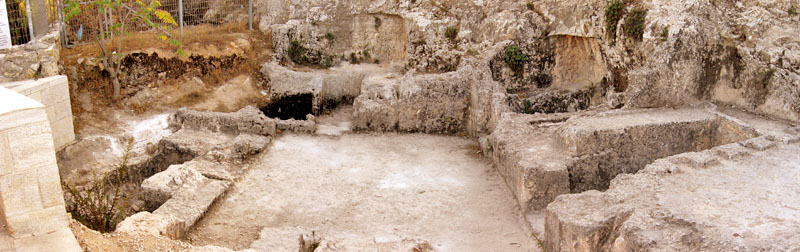
Ketef Hinnom burial caves

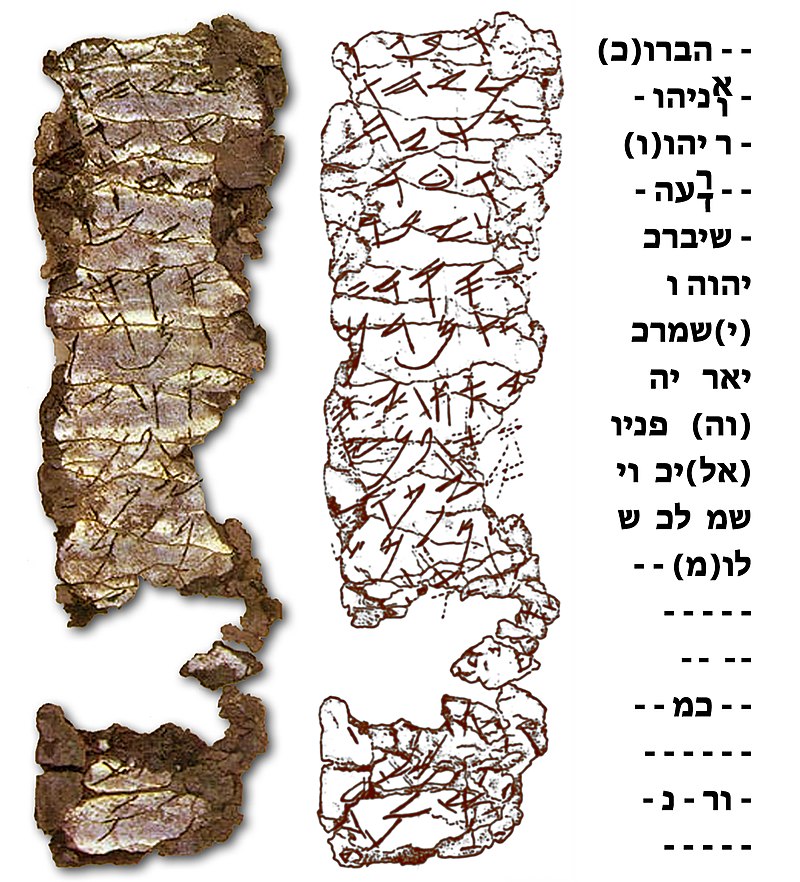
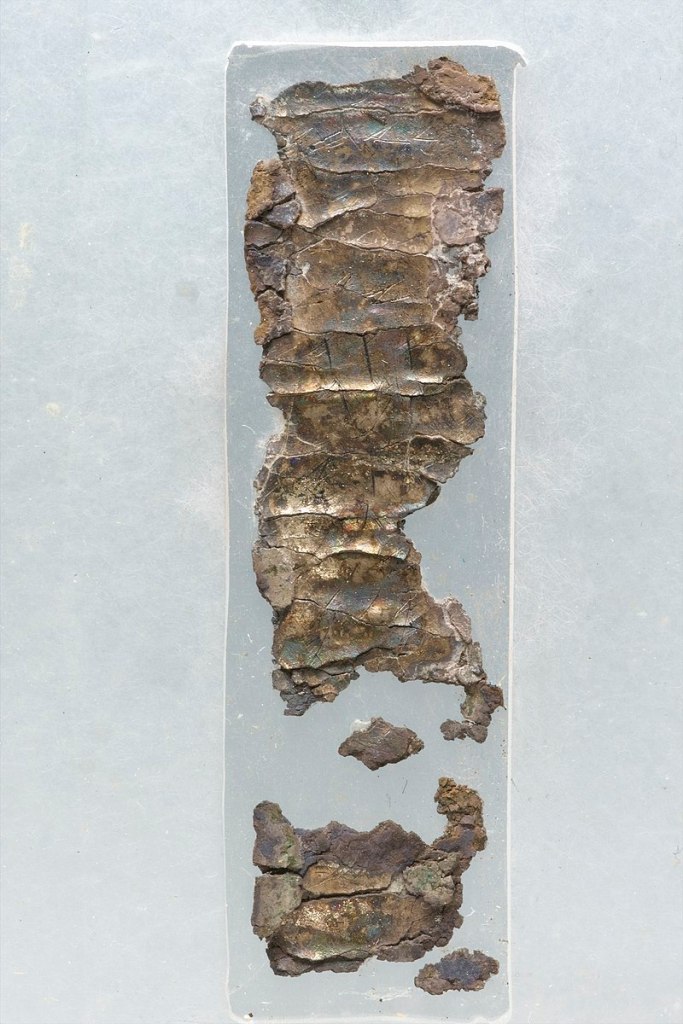
Some of the oldest extant examples of ancient biblical text are the Ketef Hinnom amulets.[i] The silver amulets meant to be worn around the neck are very small. They are actually tiny scrolls made of rolled silver with inscriptions on them. They were found at the First Temple funerary site of Ketef Himmom southwest of Jerusalem.[ii]

Discovered in 1979, the inscriptions on the amulets were not detected until the scrolls were painstakingly unrolled in 1994 by the West Semitic Research Project at the University of Southern California. The inscriptions on one scroll contain text similar to the blessings found in the Tora[iii]h at Numbers 6:24-26[iv]:

6:24 Yahweh bless you and keep you;
6:25 Yahweh make his face shine upon youand be gracious to you;
6:26 Yahweh lift up his countenance upon you, and give you peace.

(The italicized words are not found on the scroll but may have appeared in the area where the scroll has disintegrated.)

The other scroll contained language similar to the parallel passages in the Torah of Exodus 20:6; Deuteronomy 5:10 and 7:9, and the Prophets, Daniel 9:4 and Nehemiah 1:5.[v]


These amulets with the biblical inscriptions date to the First Temple period before the Babylonian exile. Conservative sources date them to the eighth–sixth centuries B.C.E.[vi] More liberal sources date them to the period immediately prior to the destruction of Jerusalem by the Babylonians in 586/7 BCE.[vii] No one dates them after the destruction of the First Temple.

This is significant because the consensus of scholars date the Torah post exile to the Persian Period (539-333 BCE, and probably 450-350 BCE).[viii] While classic rabbinic views hold that the entire Torah was written by Moses during his life in the second millennium BCE, the consensus of modern scholars is that the Torah was written by a number of authors post exile.

The confirmed dating of the Ketef Hinnom amulets doesn’t necessarily prove that the Torah was written and in existence at the time those amulets were created. They could have been produced from oral tradition. It does establish, though, that pre-exilic Jews were familiar with the sayings in the Torah.


It’s also consistent (or not inconsistent) with the view that the Torah was written down before the exile – perhaps, even by Moses.

All five books of the Torah, and every book of the Christian Old Testament, except for Esther, was found among the Dead Sea Scrolls. The earliest Dead Sea Scroll texts date to 300 BCE. The remarkable similarity of the versions of the Hebrew text in the Dead Sea Scrolls to the texts preserved from a millennium or more later amazed scholars. While most of the books of the Old Testament found at Qumran were fragmentary, a complete scroll of Isaiah was found dating to no earlier than the first century BCE.[ix] The Ketef Hinnom amulets, though are much older still.

I have referenced mostly sources that are secular or liberal in their leaning. I did that on purpose, as even these sources attest to a certain factual baseline that is consistent with the biblical narrative, and not contradictory to it. They don’t rule out earlier dates and facts that are not just consistent, but which match the biblical record. Thus, archaeology continues to reveal artifacts consistent with a view of the historical reliability of the Old Testament.


~~~~~~~~~~~~~~~

[i] See Ketef Hinnom at Wikipedia

[ii] See Miniature Writing on Ancient Amulets, by Robin Ngo for Bible History Daily at the Biblical Archaeology Society website March 5, 2021.

[iii] The first five books of the Christian New Testament known as Genesis, Exodus, Leviticus, Numbers and Deuteronomy.

[iv] See Wikipedia

[v] Ibid.

[vi] See Miniature Writing on Ancient Amulets

[vii] Wikipedia.

[viii] See Torah at Wikipedia

See Who Wrote the Dead Sea Scrolls? By Andrew Lawler for Smithsonian Magazine January 2010

[ix] See 6 Things You May Not Know About the Dead Sea Scrolls by Jennie Cohen at History.com

Loving the Sojourner Because God Loves the Sojourner

The terms, aliens, strangers and sojourners, were found throughout Scripture, and the Bible has a lot to say about them.

During the second half of the Obama administration and leading up to and through much of the Trump administration, immigrants were much in the news. The country was divided over how immigrants should be handled: whether we should build a wall and be more restrictive at the borders; how strictly we should enforce the laws; whether the laws should be changed; whether immigrants from certain countries should be restricted or prohibited; and so on.

Much of the public “discussion” was inflamed with political rhetoric. The tone was angry on both “sides”. It seemed that most people were talking past each other. People took extreme positions. The issues were couched in all or nothing language, as if the choices were to open the borders wide or shut them down completely.

As I talked with people privately on both “sides”, though, the tenor and tone was different. I didn’t speak with anyone who advocated open borders with no security or regulations. I didn’t speak with anyone who wanted to close the borders and keep everyone out. Most people really fell in the middle; it was the inflamed rhetoric that created the appearance that people were amassed at the polar extremes, like angry mobs with pitchforks in their hands.

The heat of the immigration discussion has died down, but the issues haven’t gone away. President Biden has undone most or all of the executive orders issued by President Trump to tighten up border security and other immigration controls, but the laws haven’t changed.

We can expect less and less enforcement and control of the border, but the laws haven’t changed. The issues haven’t been resolved. Our immigration system is still not very workable, and issues are bound to boil to the surface again and demand attention.

I first seriously dug into the “issue” of immigration during the Obama administration. I was buffeted by the opposing winds of political rhetoric, but I wanted to know how Christians should view immigration… if there was a definitive Christian position to be taken. Most Christians I knew were well-versed in the political rhetoric, but I wasn’t hearing a biblically focused critique of the subject.


The Syrian refugee crisis was flooding the news and my conscience. I had to confess that I didn’t know where God stood. I didn’t know what the Bible said on immigration, if anything. I wanted to step back from the political fray and do my own searching of Scripture and meditation to let God speak to me on the issue.


I spent a weekend searching the Scriptures. I discovered that the Bible has much to say on the subject. The terms, aliens, strangers and sojourners, are found throughout Scripture from the Old Testament to the New Testament, and those terms permeate everything from start to finish.

I found that Scripture speaks very clearly and directly on the subject, and it leaves me little room to wonder how we ought to respond to immigration issues in our current day. I wrote about it for the first time in November 12, 2014 in the article, Immigration: the Strangers Among Us.

God’s “view” of immigrants is closely aligned with how God relations with Abraham and his descendants. We might forget that God told Abraham his descendants “would be foreigners in a strange land, and that they would be enslaved and mistreated four hundred years”. (Gen. 15:13; and Acts 7:6) Abraham’s faith also prompted him to live “like a stranger in a foreign country” (as did Isaac and Jacob). (Heb. 11:9)


“For he was looking forward to the city with foundations, whose architect and builder is God.”

Hebrews 11:10


In fact, this identify of being an alien and a stranger on the earth applies to all people of faith in the past:


“All these people were still living by faith when they died. They did not receive the things promised; they only saw them and welcomed them from a distance, admitting that they were foreigners and strangers on earth. People who say such things show that they are looking for a country of their own. If they had been thinking of the country they had left, they would have had opportunity to return. Instead, they were longing for a better country—a heavenly one. Therefore God is not ashamed to be called their God, for he has prepared a city for them.”

Hebrews 11:13-16


The status of God’s people as aliens and strangers was built into the very fabric of the their relationship with God and emphasized by centuries of living with that status. It became their fundamental sense of identity, and it should be ours also. (1 Peter 2:9-12)

Continue reading “Loving the Sojourner Because God Loves the Sojourner”

The Story of Abraham and God’s Redemption of all Mankind – Part 3

God works through the hot mess of our choices to accomplish His purposes.

I am covering some ground in the story of God’s redemption of mankind through Abraham and his progeny. This is a story of God redeeming people because of their faith (trust in God), not for their morality. It’s also a story of God accomplishing His purposes through people despite their messiness.

Abraham and Sarah were childless for 25 years after God gave Abraham promises that He would give Abraham a land for his descendants who would be numerous and that God would bless all the nations through them. On the basis of those promises, Abraham left his ancestral home and journeyed to “a land God would show him”. 

Through those 25 years, Abraham and Sarah continued to live their lives. The moved many times over those years, in and out of the land of Canaan, which is the land God promised to them.

Abraham wavered at times. At one point, when God visited Abraham, Abraham questioned God, saying, “[Y]ou have given me no offspring….”, and telling God (as if He didn’t know), “[T]he heir of my house is Eliezer of Damascus.” (Gen. 15:2-3)

God God didn’t waiver, though. He renewed the promise, saying, “This man shall not be your heir; your very own son [out of your loins] shall be your heir.” (Gen. 15:4)

Years went by. Abraham and Sarah had been in Canaan for 10 years already (Gen. 16:3), and Abraham was 86 years old. (Gen. 16:16), Sarah got impatient and offered her Egyptian servant, Hagar to Abraham, they conceived, and Hagar gave birth to Ishmael. (Gen. 16:1-4)

We find out that this wasn’t God’s plan either, but He let 13 more years go by before letting Abraham know. Abraham was 99 years old when God visited again!

God said again, “I will make you very fruitful; I will make nations of you, and kings will come from you” (Gen. 17:6); and, “The whole land of Canaan, where you now reside as a foreigner, I will give as an everlasting possession to you and your descendants after you.” (Gen.17:8)

How would Abraham have taken that?

God had made this same promise since Abraham stood in Haran imagining the land God was promising him and the descendants he would have, but that was 25 years ago! Abraham was now 99, and Sara was 90. The likelihood that the two of them would have a child together was slim to none.

Thirteen years prior, Abraham had a son. His name was Ishmael. Surely, Abraham thought by that point that Ishmael was the fulfillment of God’s promise, but it wasn’t so.

After almost 25 years, God finally gave Abraham some missing details:

“As for Sarai your wife, you are no longer to call her Sarai; her name will be Sarah. I will bless her and will surely give you a son by her. I will bless her so that she will be the mother of nations; kings of peoples will come from her.” (Gen. 17:15-16)

Abraham’s response isn’t surprising:

“If only Ishmael might live under your blessing!” (Gen. 17:18)

Abraham had not only come to accept that Ishmael was the fulfillment of God’s promise; Abraham had embraced it. Abraham undoubtedly loved Ishmael, despite his abrasiveness. Thus, his response to God’s new direction was, “What about Ishmael?!”

Why did God wait 25 years from the time He first promised to fill the land with Abraham’s descendants to give Abraham all the details? Why did God let Abraham sleep with Sarah’s servant and have another son first? Why did God wait 13 more years before letting Abraham in on the additional details?

I’m not sure I know the answers. It was obviously God’s plan, though, to fulfill the promise to Abraham through Sarah, his half-sister, the daughter of Abraham’s father, Terah. God also wasn’t done with using the line of Terah in this story.

Continue reading “The Story of Abraham and God’s Redemption of all Mankind – Part 3”

The Story of Abraham and God’s Redemption of Mankind – Part 2

God works out His purposes through the messiness of human history.

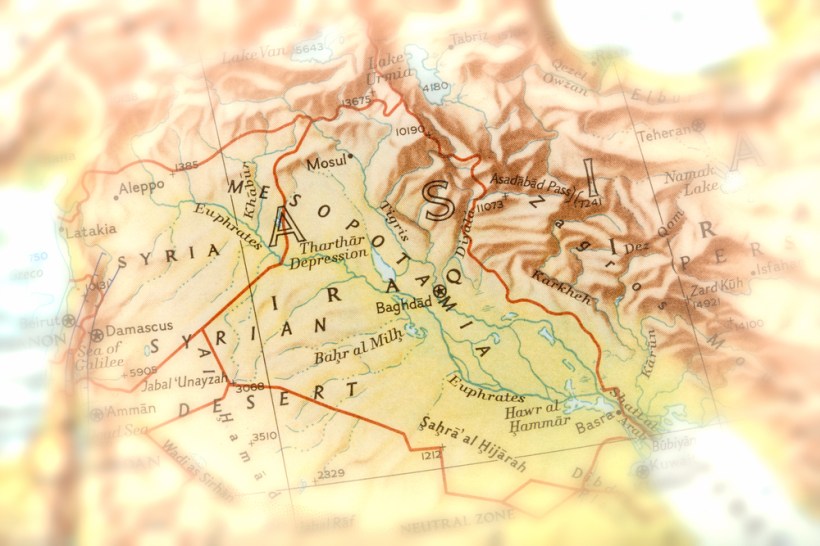
The story of God’s redemption of mankind in the Bible funnels through one man, Abraham from Mesopotamia. I introduced Abraham (known as Abram then) and his family in Part 1 of this series of articles.

Abram’s sister, Sarai, became his wife. Both of them were children of their father, Terah, by different mothers. Terah’s son, Haran, died in their homeland (Ur). The family with Lot, Haran’s son, left Ur and and traveled to a place they called Haran in southern Turkey, just north of Aleppo Syria.

Terah and Nahor remained in Haran, but God gave Abram the direction, “Go to the land that I will show you”, and the promise, “I will make you a great nation….”, and “Through you every family on earth will be blessed”. (Gen. 12:1-3) Thus, at the age of 75, Abram and Sarah left Haran and continued on to Canaan, and Lot went with them.

When they arrived at Shechem in Canaan, God renewed the promise as Abram looked out over the land: “I’m going to give this land to your descendants.” Abram built an altar there, Then, he continued on to the high country in Canaan, between Bethel and Ai, where he also built an altar and worshiped God. (Gen. 12:7-8)

Though God had promised him twice at this point to give Abram this land, Abram continued on. They traveled south out of Canaan, into the Negev desert, and they kept going further south to Egypt because of famine. (Gen 12:9-10)

Abram remained in Egypt long enough to accumulate some wealth before he started moving again. (Gen. 13:2) It is written that Abram “traveled from place to place” when he left Egypt. He seemed to be wandering.

He traveled north again, back to the Negev and eventually back to Bethel and Ai, where he settled down. (Gen. 13:3-4) It must have been some time, as he and Lot had accumulated so many animals their herds and servants couldn’t coexist peacefully. Thus, they parted ways. (Gen 13:5-13)

Lot settled south of Canaan in the Jordan Valley. Abram remained in Canaan, and God gave him the same promise a third time: “Look north, south, east, and west of where you are. I will give all the land you see to you and to your descendants….”; and “I will also give you as many descendants as the dust of the earth.” (Gen. 13:15-16)

Still, Abram moves again, this time south about 35 miles to another part of Canaan known as Hebron. Many years pass. Abram seems to be waiting for God to do what he said, and, for the first time, Abram begins to show signs of doubt that God’s promises would come to pass, . Perhaps, this is why God promises him a fourth time: “Your own son will be your heir” (Gen. 15:4); and “I will give this land to your descendants.” (Gen. 15:18)

When Abram was 86, however, Sarai takes matters into her own hands and offers her Egyptian servant, Hagar, to Abram. Abram agrees, Hagar conceives, but all is not well in the Abram household. Hagar disrespects the barren Sarai, and Sarai mistreats Hagar so badly that she runs away. (Gen 16)

God comforts Hagar in her distress and says of Ishmael, “He will be free and wild”, but “[h]e will fight with everyone, and everyone will fight with him….,” and “[h]e will have conflicts with all his relatives.” (Gen. 16:12)

It seems that nothing is going right for Abram, and God promise takes on a sour taste. Is this the son through whom God will bless all the nations? This wild and contentious boy? Is the son of Sarai’s now despised Egyptian servant Abram’s heritage?

Continue reading “The Story of Abraham and God’s Redemption of Mankind – Part 2”