Digging into the Accuracy and Inspiration of the Bible

I wrote recently on the character of Scripture, prompted by a statement made by Marty Solomon in Episode #82 of the BEMA Podcast, picking up on a statement he made that inspiration doesn’t necessarily mean accuracy. (See Does inspiration mean accuracy?) This topic gets into what it means that Scripture is the inspired word (or revelation) of God.

The idea that Scripture is inspired by God comes from 2 Timothy 3:16:

“All Scripture is inspired by God and beneficial for teaching, for rebuke, for correction, for training in righteousness….” 

2 Timothy 3:16 (NASB)

Paul’s statement in his second letter to young Timothy is one of the few comments on the character of Scripture in the Bible. In this article, I want to focus on other comments on Scripture that can be found in the New Testament.

You might be surprised to know that Peter references Paul authoritatively, expressly characterizing Paul’s letters as “scripture” (sacred writings). (2 Peter 3:15-16 ESV) The recognition by Peter that Paul’s writings are scripture is highly significant because Jesus said Peter was the “rock” on which Jesus would build his church. (Matt. 16:18) If Peter considered Paul’s writings “scripture”, we should too.

Paul, likewise, references Luke in his first letter to Timothy. Paul quotes from “the Scripture”, saying: “’Do not keep an ox from eating as it treads out the grain.’ And in another place, ‘Those who work deserve their pay!’” (1 Timothy 5:18 NLT) The first quotation is from Deuteronomy 25:4. The second is from Luke 10:7 (NRSV). Thus, Paul quotes Luke’s Gospel, as scripture in the same vein as the Torah.

This discussion, though, begs the question: what is scripture? Obviously Peter thought Paul’s letters were scripture, and Paul thought Luke was scripture. Most of scripture in that time would have been what we call the Old Testament. There was no “New Testament”, so what else is scripture?

Many misconceptions abound. People claim that books were removed from the Bible. People claim that a group of “church fathers” got together and determined what should be in the New Testament.

These claims are false. They have no basis in the historical record.

The truth is more complicated, and the NT canon developed more organically than what is popularly believed. The writings of the NT developed from the texts that were considered authoritative throughout the scattered regions of the early church, long before the Christianity became the official religion of Rome in the late 4th century and the Holy Roman Empire emerged in the 9th Century (See Encyclopedia Britannica).

We may think of Christianity being controlled centrally from Rome, but that didn’t happen until after the 4th Century. Before that, churches were scattered all over the Roman Empire and beyond. Various centers of influence existed, including Rome, Alexandria (Northern Africa), Jerusalem and Caesarea (the Levant), Antioch (Syria), Lyons (France) and other places. The top down authority of Rome (and Constantinople) developed much later.

The writings that make up the existing New Testament were shared and circulated throughout a wide area, wherever churches took root. Opinions were shared, and a consensus grew based primarily on the authorship (apostolic connection) and message (consistency with the teachings of Jesus).

Many of those writings were accepted very early by a majority of people, and others gained acceptance later by the same organic method of consensus. (See The Formation of the New Testament Canon) Many other writings were considered helpful, but not scriptural, and some writings were considered heretical. Late writings generated after the apostles had all died were categorically excluded. These writings date from the second century and later.

Eusebius of Caesarea was one of the first people to attempt a summary of authoritative writings. The 22 “books” he identified in the 3rd Century are nearly identical to the canon we have today, minus a few and plus a few. The consensus was close to settled at that time.

The first person to name all 27 writings exactly as they are known today was Athanasius in Northern Africa in his Festal Letter written A.D. 367. The same canon was accepted by the rest of Christendom at the African synods of Hippo Regius (A.D. 393) and Carthage (A.D. 397 and 419). (Not the Council of Nicaea as the popular myth goes!)

In between the 1st Century and the early 5th Century when the canon was officially settled, other lists were offered by various sources. Bruce Metzger, the Princeton Theologian, says, “The slowness of determining the final limits of the canon is testimony to the care and vigilance of early Christians in receiving books purporting to be apostolic.”

Metzger notes that “the chief criterion for acceptance of particular writings as sacred, authoritative, and worthy of being read in services of worship was apostolic authorship”. The early church focused on the source or authority – connection to the apostles who knew Jesus. They also measured them by the known message of Jesus, as preserved by those same apostles.

Keep in mind that the apostles lived on after Jesus. Peter died in 64 AD during the reign of Nero in Rome according to contemporary, extra-biblical sources. John, the Apostle, died in approximately 100 AD according to reports preserved from multiple sources.

Thus, the apostles, the closest people to Jesus, lived on 30 to 70 years after Jesus died. They were the standard by which the authority of contemporary writings were judged.

Determining (or accepting) what is Scripture is only a beginning, though. How we view Scripture and interact with it is where the real rubber meets the road. In my last article, I wrestled with what it means that Scripture is inspired, suggesting that accuracy is not necessarily the key component. I will dig a little deeper into that vein in the rest of this article.

Continue reading “Digging into the Accuracy and Inspiration of the Bible”

Wrestling with the Accuracy and Inspiration of the Bible


In episode #82 on the BEMA Discipleship Podcast (dealing with “textual criticism” of the Bible), Marty Solomon made the following statement about growing up in a fundamentalist church: “Inspiration means accuracy in the world I grew up in.” Now he says, “That’s not what inspiration means. Inspiration means it was inspired by God.”

Solomon is talking about one of the few verses in the Bible that gives us explicit insight into how we should view Scripture:

“All Scripture is inspired by God and beneficial for teaching, for rebuke, for correction, for training in righteousness….” 

2 Timothy 3:16 (NASB)

That Scripture is “inspired by God” is what those with a “high view” of Scripture hang our hat on, but what does “inspired by God” mean exactly?

Jesus revered Scripture, and he quoted from it often, He quoted from the Torah at least 21 times and from the Prophets at least 18 times. He referenced those writings when he said,

Do not think that I have come to abolish the Law or the Prophets. I have not come to abolish them, but to fulfill them. For I tell you truly, until heaven and earth pass away, not a single jot, not a stroke of a pen, will disappear from the Law until everything is accomplished.” 

Matthew 5:17-19

His words seem to suggest a high standard of accuracy in “the Law”, but I have noted that the quotations of Jesus in the New Testament do not often match (if ever) the exact phrases from the passages he quotes. Of course, he doesn’t cite “chapter and verse” because there were no chapters or verses then, but the words themselves are often not exactly the same.

Further, the Scriptural texts were written out carefully by scribes who were highly specialized in the tedium of copying the text verbatim, but many people could not read or write. Scripture was committed to memory and quoted often from memory.

Solomon’s comment reveals how his position has changed from the view of the church in which he grew up. He still believes the Bible is inspired by God, but he no longer believes that inspiration necessarily means accuracy.

The exact words quoted in the New Testament writings that were spoken by Jesus were likely spoken in Hebrew, or maybe Aramaic, and they were translated into Greek. We have Hebrew manuscripts, Greek manuscripts and Latin manuscripts. We also have very early manuscripts in Coptic, Syriac, and other languages.

We have a virtual treasure of manuscripts of the biblical texts, so much that they dwarf the text of any other ancient writing many, many times over. We also have many modern translations, each with differences in words, sentence structure, phraseology, etc.

The Bible we have is magnitudes more certain in its reliability and integrity than any other ancient text. We can trust that we have a very, very close approximation in the Bible of what was originally said because of the wealth of texts we can compare to each other. But can we say it is 100%, word for word, accurate in every jot and tittle?

Solomon has a “high view” of Scripture, as I do, but he doesn’t necessarily demand, expect, or hold on to it as if every word is accurate (without error). This can be a difficult “concession” for many people who are Christians and believe the Bible must be viewed as 100% accurate in every word and detail.

A “high view” of Scripture, to me, means to view it with the utmost respect, to embrace it as authoritative and inspired, and to study it regularly as food for the soul/spirit, for guidance in knowing and understanding God and His purposes and how to live as one who would follow Christ.

The idea that the Bible is inerrant (without error) is not to be found in the Bible. Rather, we can find in the Bible that it was inspired by God.

All Scripture is inspired by God and beneficial for teaching, for rebuke, for correction, for training in righteousness….

Most people who claim to be Christians, and some people who don’t, agree that the Bible is inspired. The idea that the Bible was inspired, and inspired by God, is somewhat noncontroversial, but some people take it further: they say that every word in the Bibles we have is from God; they say the Bible is without error; they say the Bible is inerrant (meaning, incapable of being wrong).

We should note, however, when Paul said all scripture is inspired by God, he was likely talking about the Old Testament, as there was no New Testament as we know it when Paul wrote his letter to Timothy. He also doesn’t clarify what he would include in the term, “Scripture”. We have to try to fill in those blanks.

Can we really say the Bible – every word of the text we have today – is 100% accurate to the words that were originally inspired by God, spoken and written down?

Which translation?

In which language?

Maybe there is a reason Paul did not say that Scripture is an accurate, word for word, and verbatim script of God’s words to the people who were inspired to receive them.

Muslims claim that is what the angel Gabriel did with Muhammed. They claim the angel dictated to Muhammed, who wrote down everything exactly as it was spoken to him. The biblical text doesn’t make that claim about itself.

Paul says that Scripture is “beneficial for teaching, for rebuke, for correction, for training in righteousness“. He implicitly says we can trust it and rely on it. He holds it in the highest regard, but he doesn’t say what we try to claim about the Bible – that it is inerrant.

Maybe we shouldn’t go as far in our claims as we do. In writing this piece, I am not suggesting that we should not trust the Bible or not rely on it. I am not saying we should disregard it or discount it.

I believe Scripture is “alive and active. Sharper than any double-edged sword, it penetrates even to dividing soul and spirit, joints and marrow; it judges the thoughts and attitudes of the heart.” (Hebrews 4:12)

Does it need to be 100% accurate to do that?

Does it need to “inerrant”?

NT Wright makes the bold claim that we have the Scripture God wanted us to have.

Human beings have a strong desire to categorize, define, and reduce to certainty. Maybe we should resist that temptation.

“God’s ways are not our ways, and His thoughts are not our thoughts.” We are finite and limited beings. We will always have a measure of uncertainty. Faith involves placing our trust in what we believe is trustworthy. Faith doesn’t require certainty.

We will never have certainty because we are finite, limited beings. We are not gods, and we are certainly not God.

I realize I have not, perhaps, brought much clarity to the subject. I do have some more thoughts on the subject, including what Peter has to say, and what Peter and Paul say about each other. I will pick up where I leave off here in future writings.

We Prepare for the End Times Simply by Being Faithful and Diligent Daily

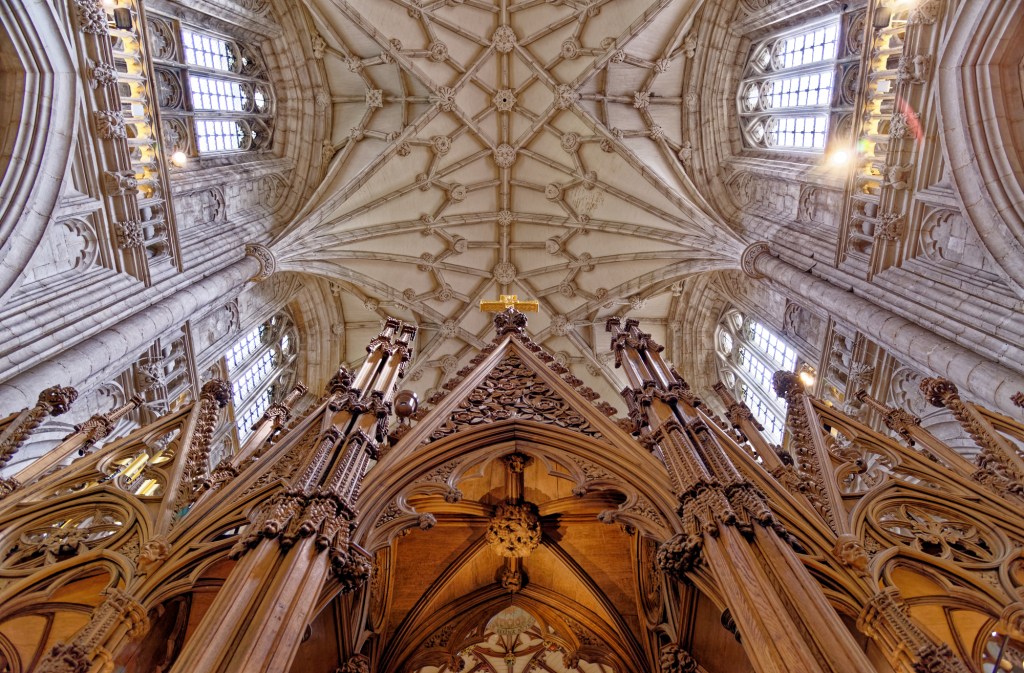
Interior of Winchester Cathedral in Hampshire – United Kingdom. Photo taken on 6th of May 2019

In my daily Bible reading today, I read through Luke 17. While I have been reading through the Gospels, the kingdom of God has been the theme that has caught my eye. I have meditated and written on the kingdom of God a few times recently in my latest trip through the Gospels in chronological order.

Today, I read the following:

“When he was asked by the Pharisees when the kingdom of God would come, he answered them, ‘The kingdom of God is not coming with something observable; no one will say, ‘See here!’ or ‘There!’ For you see, the kingdom of God is in your midst.’”

Luke 17:20-22 CSB

The Pharisees asked Jesus about the Kingdom of God. This was their orientation. They looked back on David the king and all the kings of Israel and on a future Messiah who would reestablish the throne of the Davidic Kingdom. They were predisposed to think this way for tens of generations.

The response Jesus gave them wasn’t what they expected or what they hoped for. If Jesus was the Messiah, as some people were claiming, he would certainly reestablish the ancient kingdom in short order. Or so they thought.

What did he mean that the kingdom wasn’t coming with something observable?! What good would a kingdom be that could not be seen? What kind of a kingdom would that be?

At the same time, if they could get past their assumptions driven by their long-awaited expectations and listen to what Jesus was saying, they would focus on the statement: “For you see, the kingdom of God is in your midst!” Present tense!

In many of the parables Jesus spoke about the kingdom, he paints a picture of the kingdom as something like leaven that makes bread rise or a small seed like a mustard seed that grows up into a large bush that can hold many birds.


These parables suggest that the kingdom of God does not come with pomp and circumstance in impressive form. It is more like salt and light, things that we take completely for granted, which we either can’t live without or which enhance or flavor and preserve and sustain us in ways that we might not even appreciate.

“The kingdom of God,” Jesus said, “is in our midst”, but we are apt to miss it if we do not appreciate what he means. Kingdoms have a king, of course, and Jesus is that king, but he is not a king now in the common sense of the word. He has not (yet) established an earthly kingdom, but a “heavenly one”.

Just as God created all that is seen from what is unseen, Jesus has established the kingdom, for now, through what is unseen. He invites us into His kingdom. It’s a gift offered to us. (Eph. 2:8)

The kingdom is nothing we can earn. (Eph. 2:9) We can’t be born into it; we don’t receive it as a privileged offer; we aren’t selected to receive the offer. (John 1:12) The kingdom is offered freely to all who respond by faith and enter into it.

The kingdom of God is experienced through relationship with God, the Father, through the mediation of Jesus, the Son, and the in-dwelling of the Holy Spirit. We live out the kingdom of God in community with other believers and our interactions in the world. If we are true ambassadors of God’s kingdom, people will be attracted to our salt and light – or repelled by it as they who rejected Jesus were repelled.

The kingdom of God is demonstrated on earth now through lives of people who have given themselves over to its king, through the lives of people who follow Jesus, who have taken up their crosses, who have given up their lives, and who have devoted themselves to becoming like their Lord and savior. Where two or more gather to pray in Christ’s name, he is there.

This is the good news of the gospel that Jesus proclaimed to the poor, the freedom he proclaimed to the prisoners, the recovery of sight to the blind and the freedom to the oppressed. The kingdom of God is here and now openly available to all who would submit to Jesus Christ as Lord and King. But, Jesus also spoke of the future.

As Jesus often did with his closest disciples, he shared with them more intimate details that were not shared with the crowds at large:

“Then he told the disciples, ‘The days are coming when you will long to see one of the days of the Son of Man, but you won’t see it. They will say to you, ‘See there!’ or ‘See here!’ Don’t follow or run after them. For as the lightning flashes from horizon to horizon and lights up the sky, so the Son of Man will be in his day. But first it is necessary that he suffer many things and be rejected by this generation.”

Luke 17:22-25

As believers, we can take solace and guidance from these words. The disciples were not prepared for what was to come – the ugly public condemnation, humiliation, and dominance of Roman authority over the Messiah, the king of God’s kingdom. They were not prepared for his suffering and death at the insistence of many of God’s own people.

The darkness of the world threatened to snuff out the light of God’s kingdom in them, and the darkness of today’s world does the same in us. Jesus warned them, and the warning stands for us, that the world would treat them (and us) the same way it treated him.

Jesus knew his followers would mourn for him and long for his return. This is a challenge for all true believers in Jesus Christ. We long for him to be with us, to return to earth. To right the wrongs and wipe away the tears.

We are tempted, therefore, to focus our attention on trying to determine when he will return. We are tempted to speculate and fixate on it. Indeed, people have written books and developed theologies about it. We even have a word for it: eschatology.

Many people over the years have claimed to figure it out and predict when he will return, but Jesus warned against us doing that. Jesus said no one will know the day or hour. Christ will return when he returns. His return will be unmistakable, but first came the business of suffering and dying.


Of course, Jesus suffered and died 2000 years ago now. We are tempted to think that times are different, but I believe Jesus was talking both about the present time and the future. His words to the disciples when he was anticipated his own imminent suffering and death provide us guidance still today.

Continue reading “We Prepare for the End Times Simply by Being Faithful and Diligent Daily”

Does God Throw Wildflowers into a Furnace?

The title to this piece seems like a silly question, right? But Jesus said,

“Consider how the wildflowers grow: They don’t labor or spin thread. Yet I tell you, not even Solomon in all his splendor was adorned like one of these. If that’s how God clothes the grass, which is in the field today and is thrown into the furnace tomorrow, how much more will he do for you — you of little faith?”
 
Luke 12:27‭-‬28 CSB

So, we need to ask again, “Does God throw wildflowers into a furnace?” I think it’s pretty safe to say that He doesn’t, right? Jesus is speaking allegorically here.

Jesus is saying in flowery terms that flowers are here today and gone tomorrow. They are beautiful, but only for a short time. No one reads this passage to mean that has a furnace where He throws all the wildflowers in the world. A wildflower furnace.

In the context of this little parable, Jesus is saying that wildflowers are magnificent in their splendor, though they last only a short time. The fact that God makes such temporary things as wildflowers beautiful in splendor is meant to give us hope and faith that He has much more splendor in store for us, the creatures He made in His own image!

These words give us great hope when life seems to be taking us down. No one interprets what Jesus says here as a lesson in the way God disposes of wildflowers. It’s a lesson about putting our faith in God.

Continue reading “Does God Throw Wildflowers into a Furnace?”

Drinking Living Water & Embracing the Unseen: of Science and Faith

My inspiration this morning comes from “the woman at the well” and Galileo. They are separated by about 1500 years, but their stories resonate together for me this morning.

The theme is inspired by the questions: “How should we read Scripture?” and “How should we understand science and faith?” Those questions were relevant over 2000 years ago; they were relevant 500 years ago; and they are still relevant today.

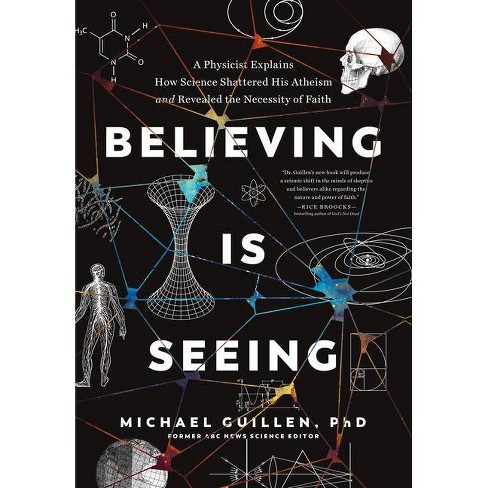
Michael Guillen, in his book, Believing is Seeing, reveals how logical and trans logical thinking are different tools, and each have a place in the intellectual toolbox. Logic is necessary to understand simple, “trivial” truths, but “profound” truths, he says, require trans logical thinking.


We err to apply logic to every problem. Simple matters are the province of logic, but complex matters require trans logic. As much as we might want to keep complex matters simple, we cannot gain insight into many complex matters without a willingness to go beyond the familiar confines of simple logic.

Guillen recognized the necessity to stretch beyond simple logic to more complex, trans logical thinking, among other things, in the realization that dark matter and dark energy make up 95% of the universe. In other words, 95% of the universe is invisible to us! (p. 9)

If we insist on limiting ourselves to things that we can see, touch, feel, smell, and hear, we must give up on 95% of the universe. If we want to explore outside the boundaries of what we can see, we need to adopt more robust, trans logical thinking.

Trans logical thinking is not anti logic, but it isn’t as linear as logic, and it may require holding things in tension that may seem contrary on their face. Classical physics and quantum physics are good examples of things we believe are both true, but which seem to be contradictory on their face.

If we are not willing to give up on 95% of reality, we must be willing to adapt. We must let go of our insistence that everything be reduced to what we can affirm with our senses and to what will fit into simple formulas and logical constraints. We need to think outside the box.

Guillen sees a parallel in the “stretching” that scientists must do to grapple with the unseen world at the edges of simple science and the revelation of the Bible of more “spiritual” things:

“’What no eye has seen,
    what no ear has heard,
and what no human mind has conceived’ —
    the things God has prepared for those who love him—
these are the things God has revealed to us by his Spirit.”

1 Corinthians 2:9

What the Spirit of God can reveal to us is somewhat similar to the stretching the scientist must do in his thinking to understand things like dark matter and dark energy, quarks, quantum entanglement and other mysteries of science that defy Aristotelian logic and conventional principals. For people who like to live with their feet planted solidly on the ground and with certainty anchoring their beliefs, the prospect of revelation by God’s Holy Spirit is like a black hole. We dare not venture too close for fear of being sucked into a black hole.

Yet, God not only invites us in; He insists that we venture close to understand Him.

“The Spirit searches all things, even the deep things of God. For who knows a person’s thoughts except their own spirit within them? In the same way no one knows the thoughts of God except the Spirit of God. What we have received is not the spirit of the world, but the Spirit who is from God, so that we may understand what God has freely given us. This is what we speak, not in words taught us by human wisdom but in words taught by the Spirit, explaining spiritual realities with Spirit-taught words.”

1 Corinthians 2:10-13

The difference between logic and trans logic in science and the study of the edges of the physical world have application to the metaphysical world in the encounter of the woman at the well with Jesus. I will lay out the similarities I see below.

Continue reading “Drinking Living Water & Embracing the Unseen: of Science and Faith”