Why did Paul Go to Corinth with a Demonstration of the Spirit’s Power?

“My speech and my preaching were not with persuasive words of wisdom but with a demonstration of the Spirit’s power….”

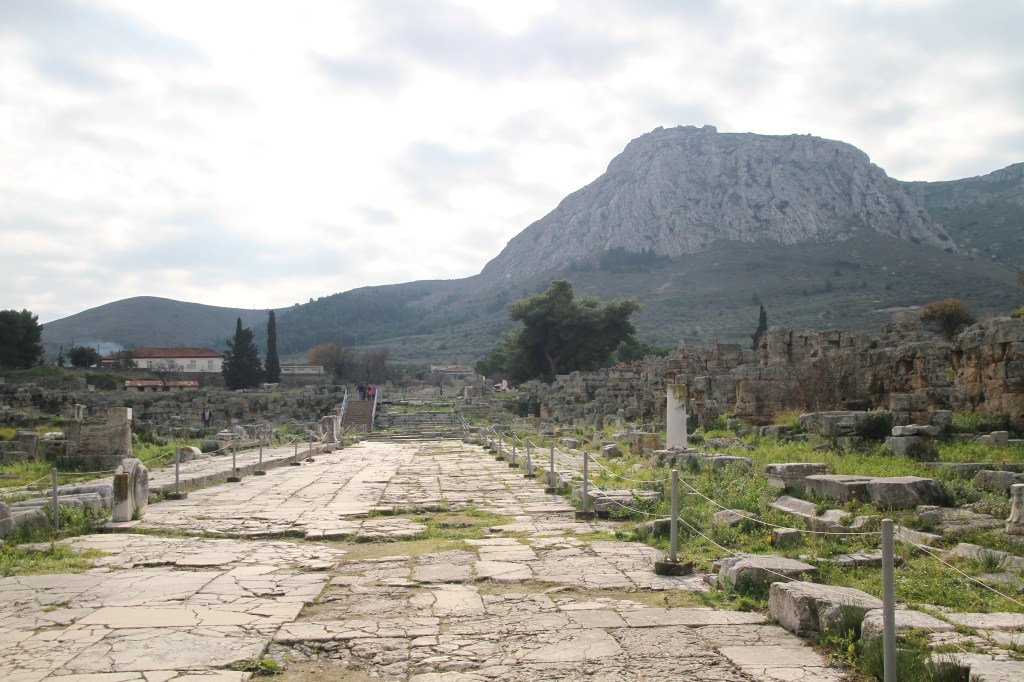
Ruins of Ancient Corinth in Peloponnese, Greece

Over the couple weeks that I was paying attention to what happened at Asbury University in Wilmore, KY (and other places now too), and considering the people criticizing it or cautioning us about it, I have prayerfully considered the matter. I have written about the “Asbury revival” a handful of times, so I am not going to rehash what I have written.

I continue to mull over the seeming positive development of 20-somthings worshiping, publicly confessing sins, praying for each other, and exalting the name of Jesus while people have been critical of what was happening and questioning God’s involvement in it. At the same, I have been drawn in my daily Bible reading to the concern Paul expressed in most of his letters for unity in the body of Christ.

This focus that has been impressed on me as I read the Bible and meditate on it predates the Asbury thing by many months, but it is directly relevant to it. The lack of unity in the American Church stands in sharp contrast to Paul’s emphasis on unity in the body of Christ. Our lack of unity has been publicly demonstrated in the vitriolic responses to the “He gets us” commercials aired during the Super Bowl and now to the Asbury “revival”.

Paul’s first letter to the Corinthians is all about unity and order in the local body of believers in Corinth. At the same time, the Corinthian Christians seemed to lack no shortage of what we might call the “outpouring” or “movement” of the Holy Spirit. None of Paul’s letters deals more with “the spiritual gifts” than this one.

I need to comment that the free exercise of the spiritual gifts, and God moving in peoples’ hearts and minds do not necessarily go hand in hand, as we will see, Paul also did not discourage the Corinthians from using the spiritual gifts.

This is the problem, though: while the spiritual gifts were demonstrably evidenced in the Corinthian church, they Corinthians were not producing an abundance of the fruits of the Spirit among. This lack of the fruit of the Holy Spirit was the problem in Corinth.

As a key indicator of that lack of fruit, Paul focused on their quarrelsome cliques: one group followed Paul, another group followed Apollos, and other groups of people claimed to follow Cephas, or simply Christ. That local body was being torn apart by arguments over who they should follow and other aspects of the Christian life, like whether they should be eating food sacrificed to idols. Meanwhile, they were ignoring other problems in their midst like sexual sin, relational issues, and other things.

They exhibited the spiritual gifts abundantly. Those exhibitions of spiritual gifting might be called today a “movement” or “outpouring” of the Holy Spirit, but the fruit of the Holy Spirit was lacking. Whether the Spirit was “moving” or people were simply exercising gifts given by the spirit are two different things.

I have experienced that incongruity myself. A lack of harmony between a hyper focus on the spiritual gifts and a lack of unity, faithfulness, maturity, and holiness in the local body of Christ has caused many to pull back from Charismatic and Pentecostal forms of Christian expression. Me included.

We sometimes fail to appreciate the difference between the gifts of the Holy Spirit and the fruits of the Holy Spirit. We think that a demonstration of the gifts of the Holy Spirit means that we are blessed by God, and everything we do is approved by God, but that isn’t necessarily true.

If those two things went hand in hand, Paul would have had no issues with the Corinthian church, because the Corinthians experienced a liberal “outpouring of the Spirit” characterized by prophecy, speaking in tongues, miracles, etc. Though the Corinthian church was demonstrably Charismatic (or Pentecostal), it was woefully lacking in unity and personal holiness.

Having acknowledged that, we need to notice that Paul’s issue with the Corinthians wasn’t (primarily) their misuse (or ineffective use) of the spiritual gifts. The more serious concern was their prideful, boastful, quarrelsome lack of unity and toleration of sin in their midst.
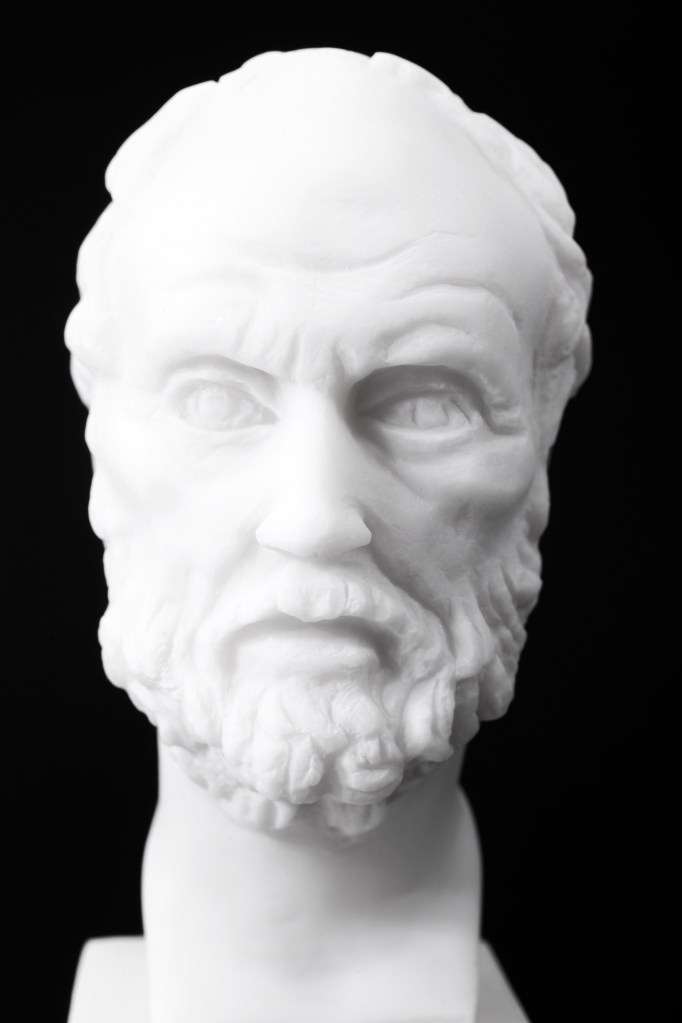
Something else occurs to me that I hadn’t noticed before, and this is the focus of my writing today. The Corinthians were Greek, of course. Paul famously says to the Corinthians that Greeks demand wisdom, while Jews (his people) demand signs.

Both of these things are forms of error, but the Corinthians, being Greek, were particularly prone to err along the lines of their particular, cultural bias. They valued discourse, argument and persuasive oratory. Thus, Paul said,


“When I came to you, brothers and sisters, announcing the mystery of God to you, I did not come with brilliance of speech or wisdom. I decided to know nothing among you except Jesus Christ and him crucified. I came to you in weakness, in fear, and in much trembling. My speech and my preaching were not with persuasive words of wisdom but with a demonstration of the Spirit’s power, so that your faith might not be based on human wisdom but on God’s power.”

1 Corinthians 2:1‭-‬5 CSB

Paul says he did not come with brilliance of speech or with persuasive words. He came with “a demonstration of the Spirit’s power”. As I will show below, Paul’s focus is on the Greek tendency to err in demanding “wisdom”, not the Jewish tendency to demand “signs” (though the Corinthians experienced no shortage of “signs”). This is interesting to me in the light of the Asbury University phenomenon.

Continue reading “Why did Paul Go to Corinth with a Demonstration of the Spirit’s Power?”

Echoes of Paul in John and the Priority of Love over Knowledge

Paul and John had very different encounters with Jesus, but they both speak of knowledge and love in similar ways.


I listened to a podcast this week in which the topic of discussion was the difference between John’s Gospel and the synoptic Gospels (Matthew, Mark, and Luke). Some people say the Gospels are so different that they couldn’t have all been written by people who followed Jesus. People say that John’s Gospel, which was written latest in time, includes theological progression and embellishment.

NT Wright, on the other hand, points out that John’s words echo words found in the other Gospels, though it is very different in its emphasis. He also observes that since John’s Gospel was written latest, he would have had access to the other Gospels. There would have been no need for him to cover the same ground the other Gospels already covered.

Wright’s observation about John not wanting to cover ground already covered by the other Gospels, or not wanting to cover it in the same way, makes sense to me. John also had more time to think over and chew on the words of Jesus because he lived long, and he wrote his Gospel later than the others.

John’s Gospel is more philosophical and theologically developed in an obvious sort of way (not that the other Gospels are lacking in theology). Did he embellish on what Jesus said? We don’t know. Would embellishment make it any less “scripture”? I don’t think so.

John was one of the three apostles who spent the most time with Jesus and was most intimate with him. He was part of the inner circle of disciples who were closest with Jesus. He may have gained more insight into what Jesus said in that intimacy and the luxury of a long life to reflect on what Jesus said than the other Gospel writers.

I probably like John’s Gospel the best because it is so philosophical, beginning with some of the most poignant words found in writing anywhere:

In the beginning was the Word, and the Word was with God, and the Word was God. He was with God in the beginning. Through him all things were made; without him nothing was made that has been made. In him was life, and that life was the light of all mankind. The light shines in the darkness, and the darkness has not overcome it.

John 1:1-4

Fast forward a few days: A friend texts me and a group of people a Bible verse or two every morning. I always read it as part of my morning Bible reading. Sometimes the things that I am reading tie together with other things I am listening to and thinking about.

That was the case this morning. The verses sent in the text reminded me of NT Wright’s statements about the echoes of Matthew, Mark, and Luke in John’s Gospel. The verses in the text from my friend this morning are as follows:

Dear friends, now we are children of God, and what we will be has not yet been made known. But we know that when Christ appears, we shall be like him, for we shall see him as he is. All who have this hope in him purify themselves, just as he is pure.

1 John 3:2‭-‬3 NIV

These words are not from the gospel of John, but from the first epistle of John. As I read them, I immediately heard echoes of the words of Paul in his first letter to the Corinthians, which was likely written earlier than John. In that letter, Paul said:

For we know in part and we prophesy in part, but when completeness comes, what is in part disappears. When I was a child, I talked like a child, I thought like a child, I reasoned like a child. When I became a man, I put the ways of childhood behind me. For now we see only a reflection as in a mirror; then we shall see face to face. Now I know in part; then I shall know fully, even as I am fully known.

1 Corinthians 13:10-12 (NIV)

1 Corinthians 13, of course, is the famous “love chapter”, ending with the statement: “And now these three remain: faith, hope and love. But the greatest of these is love.” (1 Corinthians 13:13) John’s first letter is all about love. Just as Paul focuses on love in 1 Corinthians 13, John focuses on love in 1 John, and both of them speak in that context about the present limitations on our knowledge and knowing more fully when we see Christ face to face.

The statement that caught my attention is that we do not know what we will be until Christ appears; then, we will be like him, and we will see him as he is. These words of John echo Paul’s words when he says for now we know in part, but then we will know as we are fully known. Now we see only as a reflection in a mirror, but then we shall see face to face and we shall know fully even as we are fully known.

The similarities between these passages are striking to me., and all the more that they are both spoken in the context of love. They emphasize transformation that will take place in us in the context of our relationship to God. They emphasize that we see and know only partially in this life, and we cannot see or know exactly who God is or exactly what God has created us to be at this point.

Both passages speak to a future in which we shall know fully even as we are fully known (Paul) and see God as He actually is (John).

Now, though, we do not see clearly. The King James says we see only as “through a glass darkly”. I am struck by the implications of these things: both the fact that John echoes Paul, and Paul echoes John, and by the emphasis on love because we do not know what we do not yet know.

Continue reading “Echoes of Paul in John and the Priority of Love over Knowledge”

A New (Old?) Take on Inerrancy

The Bible is the book God wanted us to have, and He wanted us to have it the way it is.


I did the research and wrote a thesis in college in support of the concept that Scripture is inerrant. I have mentioned this before. I was not a religion major in college only because I did not turn in my thesis.

I didn’t turn it in because I was having a hard time getting to where I wanted to go using Scripture and the scholarly work that was done up to the early 1980’s. I could not support my thesis with integrity, so I shelved it and did not return to the subject for almost 40 years!

I had a high view of Scripture then, and I have a high view of Scripture now. I read the Bible daily for personal guidance and edification. I believe the Bible is the inspired Word of God (which I can support from Scripture itself. (2 Timothy 3:16-17))

I believe, like the Moody Bible Institute, that the Old and New Testaments are divine revelation from God. The original autographs were verbally inspired by the Holy Spirit. The revelation is God’s self-disclosure recorded in human language. God is the source of it.

I stop, though, in going further to say that every word is true, and the Bible is free from error. The very statement begs the questions: which version? Written in which language? And other questions.

I agree with the Moody statement that the Bible is the supreme source of our knowledge of God and of salvation through Jesus Christ. I agree that it is “our indispensable resource for daily living”. I agree, also, that humans are left to interpret the Bible, and our interpretation is guided by “our reception and understanding of that which God revealed”.

I stop short of saying that God “recorded” Scripture, because we all know that it was written down by men. This difference distinguishes the Bible from the Quran and the Book of Mormon, both of which are claimed to have been dictated to men in a trance-like state.

I agree that “revelation is a divine act”, and “interpretation is a human responsibility”. I agree that our interpretation is fallible, but I must admit the possibility that the writing down of the Bible may, also, be fallible.

I say these things not to argue with anyone about the reliability of Scripture, and I do not desire to make a mountain out of a molehill. I go far down the road on my confidence in the reliability and trustworthiness of Scripture. I have written on the subject many times, and I have even given presentations on the topic.

I also recognize that I am fallible and must remain humble in my approach, so take what I say with a grain of salt and make your own determinations. I share my thoughts for what they are worth.

When I was in college sitting in a World Religion class, reading the Bible for the first time in my life, I was struck by a thought that I believe to this day came from the Holy Spirit (along with others). My professor was liberal and progressive, so I can’t “blame” it on him.

It occurred to me that, if God is real, and the God of the Bible is the creator of the universe, then He could orchestrate His communications to humans in a way that they could understand them and preserve the important points for posterity. If God is sovereign, He can do that.

I believe the Bible is the book God wanted us to have.

NT Wright

I still believe that, but I also like the way NT Wright puts it: “I believe the Bible is the book God wanted us to have.” I can buy that! Other things NT Wright says about the character of Scripture also make sense to me, so I will mix his words with mine in the remainder of this piece.

Continue reading “A New (Old?) Take on Inerrancy”

Simple Faith, Like Enoch Who Walked with God

Most of us are more “prone to wander” than we are like Enoch, who “walked with God”.

Man Walking to Heavenly Kingdom

I am afraid that the title to this piece promises more than I can deliver. I don’t have it all figured out. Not even close. If I had it all figured out in my mind, I would still be an impossible gap away from waling it out.

If my mind knew all there was to be known about faith, I am not confident my heart would be sure to follow. In fact, I fear my heart would not follow. It often does not follow where my mind, limited as it is, knows it should go – wretch that I am.

I say this with no love lost for myself and no false humility (to the extent that I can muster a humility that is true).

The worship leader prayed, “You are a God of love”, and he followed with the acknowledgment, “You loved us first.” He continued, speaking to us to remind us that “God forgives is; we fall short, but His mercies are new every day”.

I humbly, gratefully, and joyfully accept these truths. If God were not such as He is, I could not live with myself. I could not forgive myself, but that God forgives me.

This morning I tuned in online to the church service from my easy chair because I tested positive for COVID on Friday. I barely left this easy chair yesterday.

I don’t do well with nothing to do – nothing to do that I want to do anyway, other than mindlessly scrolling through everything my various technological devices will offer me.

Some people are given to doom scrolling, “spending an excessive amount of time reading large quantities of negative news online”, according to Wikipedia, which can cause the mind to race, leading to burnout, and causing you to” feel uncertain, anxious, or distressed”, according to WebMD.

Ironic, isn’t it? The Internet offers conveniently a ready definition to a malady caused by excessive time spent on the Internet. I don’t need to search my mind for the right words. They are at my fingertips with the click of a mouse. I barely need to think about it!

Not that it helps at all. I can define doom scrolling, acknowledge it, understand it and still fall victim to it. Knowledge is like that. It gives us a false sense of mastery and control.

Boredom and mindlessness are a bad combination for me. I constantly desire to be intrigued, engaged, entertained, piqued, inspired … yet I am not always willing to put in the work or thoughtfulness out of which real inspiration, meaning and purpose comes. I also sometimes look for inspiration and meaning in sources that are not capable of delivering it.

Sometimes, I simply don’t want to be bored, but I am too lazy to work at not being bored. Like I said, this is a bad combination for me. It’s a real time suck. An utter waste of time. It leaves me feeling completely unfulfilled and tempted to fill that gap with shadowy pleasures.

After getting up in the morning yesterday and reading through the daily Scriptures that are mapped out for me in the bible app I use, I failed to devote my attention to God or anything meaningful for the rest of the day. I might have said a half-hearted prayer or posted half a thought here and there – nothing but a mist floating over a never-ending torrent of things to see and hear on the Internet.

The sermon this morning was on “the crisis of pleasure”. The crisis of pleasure is a crisis of faith.

It’s a crisis of focusing our primary attention on seeking the scraps we can scrounge up in a world subjected to futility, heads down, eyes focused in the dust, when God is nudging us to look up. It’s a crisis of settling for the meager samplings found in the here-and-now while ignoring Christ, the hope of glory, who offers us things we can’t even imagine.

My mind knows these things full well. I write about them often. It might even be the most common theme of my writing – letting go of the things of this world to seek first the Kingdom, living as strangers and aliens in this world that is passing away, because we long for a heavenly country.

The pleasure we seek in this world is to please the self. There is no other kind. The pleasure we long for is the pleasure God gives back to us when we please Him:

Give, and it will be given to you. A good measure, pressed down, shaken together and running over, will be poured into your lap. For with the measure you use, it will be measured to you.

Luke 6:38

That brings us to the sermon, which was about Enoch, a man who was commended for his faith, because he pleased God. (Heb. 11:5) Enoch was a man who “walked with God”. (Gen. 5:22, 24) Reading these passages together tells us that walking with God and pleasing Him are the same things, and they are evidence of our faith, because:

[“W]ithout faith it is impossible to please God, because anyone who comes to him must believe that he exists and that he rewards those who earnestly seek him.”

Heb. 11:6

Once again, we see that faith is an action word, something I have noted a few times lately. Faith is an action that involves walking!

Continue reading “Simple Faith, Like Enoch Who Walked with God”

What Is the Christian Hope for a Better Life?

What are God’s plans to prosper you and not to harm you, plans to give you hope and a future?


Most people hope for a better life. Many people turn to Jesus because of hope for a better life, but what is the Christian hope for a better life? Sometimes I think even believers lose sight of it.

I was at church yesterday for a meeting I was leading, and I talked to someone who was there for another reason. We talked about the service there the day before for a 25-year old young man who lost his life in a car accident. It was hard.

I made the comment that we are all going to die. I didn’t say it just like that. I recognized with her that it’s hard for someone so young to die suddenly. It isn’t the natural order of things. We miss our loved ones terribly. The ache and the pain is real. A “life cut too short”, as we say, is a tragedy.

But, we should never lose sight of the bigger picture.

We are all going to die.

Sometimes … maybe most of the time … we don’t live like that reality is a fact.

I am not talking about the “eat, drink and be merry for tomorrow you die” kind of attitude. Yet, the people we know who live like that are living with the reality of death, perhaps, more than we might do. Without God, everything is meaningless under the sun!

That reality should point the Christian to Jesus, who rose from the dead, conquering sin and death, and who gives us a better hope. That hope, however, is not just that we will live a better life, but that we will be resurrected to a better life!

Yes, we will live a better life here with Jesus, but this life is not the end game. That’s what I am getting at today. Jesus does not guaranty that we will live a more prosperous life now, a pain-free life, or even a happier life on this earth (under the sun). To the contrary, he said, “In this world you will have trouble!”

Ecclesiastes tells us in no uncertain terms that everything under the sun is meaningless; if this is all there is, this life is vanity; we die like animals and turn back to dust; it doesn’t matter how good we are, how much we accumulate, or how many people like us, know us or honor us. We go down to the grave and live no more, the king and the pauper alike.

This line of thinking prompts me to question: Why do we put so much effort and energy into hope for this life?

The message at church when I began writing this piece was from Hebrews 11. If this topic resonates with you, take some time to read Hebrews 11.

Continue reading “What Is the Christian Hope for a Better Life?”