A New (Old?) Take on Inerrancy

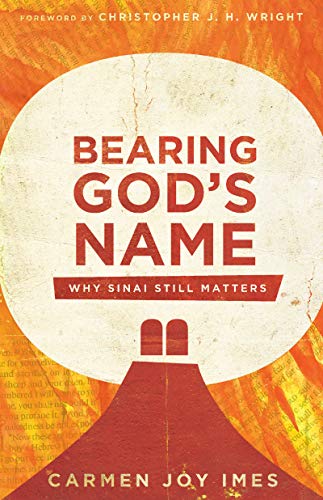
The Bible is the book God wanted us to have, and He wanted us to have it the way it is.


I did the research and wrote a thesis in college in support of the concept that Scripture is inerrant. I have mentioned this before. I was not a religion major in college only because I did not turn in my thesis.

I didn’t turn it in because I was having a hard time getting to where I wanted to go using Scripture and the scholarly work that was done up to the early 1980’s. I could not support my thesis with integrity, so I shelved it and did not return to the subject for almost 40 years!

I had a high view of Scripture then, and I have a high view of Scripture now. I read the Bible daily for personal guidance and edification. I believe the Bible is the inspired Word of God (which I can support from Scripture itself. (2 Timothy 3:16-17))

I believe, like the Moody Bible Institute, that the Old and New Testaments are divine revelation from God. The original autographs were verbally inspired by the Holy Spirit. The revelation is God’s self-disclosure recorded in human language. God is the source of it.

I stop, though, in going further to say that every word is true, and the Bible is free from error. The very statement begs the questions: which version? Written in which language? And other questions.

I agree with the Moody statement that the Bible is the supreme source of our knowledge of God and of salvation through Jesus Christ. I agree that it is “our indispensable resource for daily living”. I agree, also, that humans are left to interpret the Bible, and our interpretation is guided by “our reception and understanding of that which God revealed”.

I stop short of saying that God “recorded” Scripture, because we all know that it was written down by men. This difference distinguishes the Bible from the Quran and the Book of Mormon, both of which are claimed to have been dictated to men in a trance-like state.

I agree that “revelation is a divine act”, and “interpretation is a human responsibility”. I agree that our interpretation is fallible, but I must admit the possibility that the writing down of the Bible may, also, be fallible.

I say these things not to argue with anyone about the reliability of Scripture, and I do not desire to make a mountain out of a molehill. I go far down the road on my confidence in the reliability and trustworthiness of Scripture. I have written on the subject many times, and I have even given presentations on the topic.

I also recognize that I am fallible and must remain humble in my approach, so take what I say with a grain of salt and make your own determinations. I share my thoughts for what they are worth.

When I was in college sitting in a World Religion class, reading the Bible for the first time in my life, I was struck by a thought that I believe to this day came from the Holy Spirit (along with others). My professor was liberal and progressive, so I can’t “blame” it on him.

It occurred to me that, if God is real, and the God of the Bible is the creator of the universe, then He could orchestrate His communications to humans in a way that they could understand them and preserve the important points for posterity. If God is sovereign, He can do that.

I believe the Bible is the book God wanted us to have.

NT Wright

I still believe that, but I also like the way NT Wright puts it: “I believe the Bible is the book God wanted us to have.” I can buy that! Other things NT Wright says about the character of Scripture also make sense to me, so I will mix his words with mine in the remainder of this piece.

Continue reading “A New (Old?) Take on Inerrancy”

Simple Faith, Like Enoch Who Walked with God

Most of us are more “prone to wander” than we are like Enoch, who “walked with God”.

Man Walking to Heavenly Kingdom

I am afraid that the title to this piece promises more than I can deliver. I don’t have it all figured out. Not even close. If I had it all figured out in my mind, I would still be an impossible gap away from waling it out.

If my mind knew all there was to be known about faith, I am not confident my heart would be sure to follow. In fact, I fear my heart would not follow. It often does not follow where my mind, limited as it is, knows it should go – wretch that I am.

I say this with no love lost for myself and no false humility (to the extent that I can muster a humility that is true).

The worship leader prayed, “You are a God of love”, and he followed with the acknowledgment, “You loved us first.” He continued, speaking to us to remind us that “God forgives is; we fall short, but His mercies are new every day”.

I humbly, gratefully, and joyfully accept these truths. If God were not such as He is, I could not live with myself. I could not forgive myself, but that God forgives me.

This morning I tuned in online to the church service from my easy chair because I tested positive for COVID on Friday. I barely left this easy chair yesterday.

I don’t do well with nothing to do – nothing to do that I want to do anyway, other than mindlessly scrolling through everything my various technological devices will offer me.

Some people are given to doom scrolling, “spending an excessive amount of time reading large quantities of negative news online”, according to Wikipedia, which can cause the mind to race, leading to burnout, and causing you to” feel uncertain, anxious, or distressed”, according to WebMD.

Ironic, isn’t it? The Internet offers conveniently a ready definition to a malady caused by excessive time spent on the Internet. I don’t need to search my mind for the right words. They are at my fingertips with the click of a mouse. I barely need to think about it!

Not that it helps at all. I can define doom scrolling, acknowledge it, understand it and still fall victim to it. Knowledge is like that. It gives us a false sense of mastery and control.

Boredom and mindlessness are a bad combination for me. I constantly desire to be intrigued, engaged, entertained, piqued, inspired … yet I am not always willing to put in the work or thoughtfulness out of which real inspiration, meaning and purpose comes. I also sometimes look for inspiration and meaning in sources that are not capable of delivering it.

Sometimes, I simply don’t want to be bored, but I am too lazy to work at not being bored. Like I said, this is a bad combination for me. It’s a real time suck. An utter waste of time. It leaves me feeling completely unfulfilled and tempted to fill that gap with shadowy pleasures.

After getting up in the morning yesterday and reading through the daily Scriptures that are mapped out for me in the bible app I use, I failed to devote my attention to God or anything meaningful for the rest of the day. I might have said a half-hearted prayer or posted half a thought here and there – nothing but a mist floating over a never-ending torrent of things to see and hear on the Internet.

The sermon this morning was on “the crisis of pleasure”. The crisis of pleasure is a crisis of faith.

It’s a crisis of focusing our primary attention on seeking the scraps we can scrounge up in a world subjected to futility, heads down, eyes focused in the dust, when God is nudging us to look up. It’s a crisis of settling for the meager samplings found in the here-and-now while ignoring Christ, the hope of glory, who offers us things we can’t even imagine.

My mind knows these things full well. I write about them often. It might even be the most common theme of my writing – letting go of the things of this world to seek first the Kingdom, living as strangers and aliens in this world that is passing away, because we long for a heavenly country.

The pleasure we seek in this world is to please the self. There is no other kind. The pleasure we long for is the pleasure God gives back to us when we please Him:

Give, and it will be given to you. A good measure, pressed down, shaken together and running over, will be poured into your lap. For with the measure you use, it will be measured to you.

Luke 6:38

That brings us to the sermon, which was about Enoch, a man who was commended for his faith, because he pleased God. (Heb. 11:5) Enoch was a man who “walked with God”. (Gen. 5:22, 24) Reading these passages together tells us that walking with God and pleasing Him are the same things, and they are evidence of our faith, because:

[“W]ithout faith it is impossible to please God, because anyone who comes to him must believe that he exists and that he rewards those who earnestly seek him.”

Heb. 11:6

Once again, we see that faith is an action word, something I have noted a few times lately. Faith is an action that involves walking!

Continue reading “Simple Faith, Like Enoch Who Walked with God”

What Is the Christian Hope for a Better Life?

What are God’s plans to prosper you and not to harm you, plans to give you hope and a future?


Most people hope for a better life. Many people turn to Jesus because of hope for a better life, but what is the Christian hope for a better life? Sometimes I think even believers lose sight of it.

I was at church yesterday for a meeting I was leading, and I talked to someone who was there for another reason. We talked about the service there the day before for a 25-year old young man who lost his life in a car accident. It was hard.

I made the comment that we are all going to die. I didn’t say it just like that. I recognized with her that it’s hard for someone so young to die suddenly. It isn’t the natural order of things. We miss our loved ones terribly. The ache and the pain is real. A “life cut too short”, as we say, is a tragedy.

But, we should never lose sight of the bigger picture.

We are all going to die.

Sometimes … maybe most of the time … we don’t live like that reality is a fact.

I am not talking about the “eat, drink and be merry for tomorrow you die” kind of attitude. Yet, the people we know who live like that are living with the reality of death, perhaps, more than we might do. Without God, everything is meaningless under the sun!

That reality should point the Christian to Jesus, who rose from the dead, conquering sin and death, and who gives us a better hope. That hope, however, is not just that we will live a better life, but that we will be resurrected to a better life!

Yes, we will live a better life here with Jesus, but this life is not the end game. That’s what I am getting at today. Jesus does not guaranty that we will live a more prosperous life now, a pain-free life, or even a happier life on this earth (under the sun). To the contrary, he said, “In this world you will have trouble!”

Ecclesiastes tells us in no uncertain terms that everything under the sun is meaningless; if this is all there is, this life is vanity; we die like animals and turn back to dust; it doesn’t matter how good we are, how much we accumulate, or how many people like us, know us or honor us. We go down to the grave and live no more, the king and the pauper alike.

This line of thinking prompts me to question: Why do we put so much effort and energy into hope for this life?

The message at church when I began writing this piece was from Hebrews 11. If this topic resonates with you, take some time to read Hebrews 11.

Continue reading “What Is the Christian Hope for a Better Life?”

The Wrath of God: Between a Rock and a Hard Place

My musing today is inspired by Bethel McGrew’s thoughts on Jordan Peterson, Sam Harris and CS Lewis.


Esther O’Reilly…. I mean Bethel McGrew, as she is wont to be known now, writes in her Essay Preview: Missing God of Jordan Peterson’s interview with Sam Harris in which Harris prodded Peterson to commit to conclusions on his flirtation with God. Harris teased Peterson into grappling with the idea of a personal God, but Peterson characteristically sidestepped the invitation.

Jordan Peterson is far more popular, or notorious, a subject than my extraneous musings, but Peterson isn’t the focus of my thoughts today. It isn’t Sam Harris either, though I have written about him before. Rather, the trajectory of my own past flirtations with the idea of a less personal God now prods me forward.

McGrew observes in Harris’s questions that he unwittingly, if not then crassly, “makes the same point C. S. Lewis makes in his fictional Letters to Malcolm, writing on the problem with trying to depersonalize God’s anger. Lewis’s hypothetical young correspondent suggests that we might reframe our experience of this anger as ‘what inevitably happens to us if we behave inappropriately towards a reality of immense power.’ A live wire doesn’t feel angry when it shocks us, but we know we will be shocked if we brush up against it.”

Before getting to the point, I must confess that I have played with a similar analogy out of a similar desire, I suspect, to make God seem less unpopularly angry. A God who is not wont to anger (or wrath as the Bible unabashedly puts it) seems more palatable to the modern mind, and, perhaps, safer,

Only my analogy, which I have thought to be rather clever, is of two magnets. The magnet signifying God is of immense proportion, of course, compared to the little magnet the size of humans. It doesn’t matter the size of the magnets, though; if we are orientated opposite to God, we are repelled by God.

It’s science. Like the laws of nature. It has nothing to do with God being angry.

I have toyed with the same human affinity to depersonalize an angry God. I admit the temptation to subscribe to the idea that primitive, Bronze Age people are less sophisticated than us and got it wrong to think that a loving God might get angry.   

I rather like my analogy, honestly. It neatly dodges the discomfort of “the God of the Old Testament” in our collective faces. Discounting God’s wrath as primitive imagery is, perhaps, convenient, if not a dead end as I now consider.

The temptation to gloss over biblical truths is no less compelling in our time than in Lewis’s time, and, perhaps, with the same unwitting results:


“But ‘My dear Malcolm,’ Lewis writes, ‘what do you suppose you have gained by substituting the image of a live wire for that of angered majesty? You have shut us all up in despair; for the angry can forgive, and electricity can’t.’”


Brilliant!

On my analogy, a magnet cannot do other than to repel a magnet orientated with its same pole forward. Of course, a tiny magnet opposing a larger magnet can always reorient itself! Right?

Of course, analogies always break done at some point. Have you ever tried holding two magnets with their north poles facing each other? The lesser magnet tends to want to flip and go the other direction. If the magnet were a person, the “attraction” might be described as unstoppable.

But that doesn’t seem to be the way we operate in our orientation to God. We seem to have this sticky business of free will milling about within us, and a real tendency toward sin that requires us to choose God’s way over our ways (if we want to be orientated in God’s direction). We don’t naturally align with God.

It isn’t quite like science. It’s messier than we like to think of science (not that science doesn’t have its own messiness with sticky things like quantum entanglement and such). We can no more remove God’s personhood than our own from the “equation”.

I am a bit embarrassed that I have fixated on this tangent to McGrew’s point in writing about Jordan Peterson, but it’s what caught my attention and held it. It gave my a springboard for my own thoughts. I have taken her work afield, but it’s the path I am on, so I will continue.

Continue reading “The Wrath of God: Between a Rock and a Hard Place”

The Surprising Context of the Idea that God’s Ways Are Not Our Ways, and God’s Thoughts Are Not Our Thoughts

How many times have you heard someone say, “God’s thoughts are not our thoughts, and His ways are not our ways”? Think about the context in which those words tend to be spoken….

The death of a loved one, a difficult time you are going through, plans that don’t work out, change you long for doesn’t happen, or unexpected change throws your life into chaos: these are the kinds of circumstances in which these words are often spoken.

Bad things are happening, or the good things we hope for seem never to come. That’s when someone says, “You know, God’s ways are not our ways.” The implication is that we should trust Him anyway, and that is good advice, but it’s often not very comforting in the moment.

Speaking those words in those kinds of circumstances also takes them completely out of the context in which they were spoken by the Prophet, Isaiah, whose words they are:


“Seek the Lord while he may be found; call to him while he is near. Let the wicked one abandon his way and the sinful one his thoughts; let him return to the Lord, so he may have compassion on him, and to our God, for he will freely forgive. 

“’For my thoughts are not your thoughts, and your ways are not my ways.’ This is the Lord’s declaration. ‘For as heaven is higher than earth, so my ways are higher than your ways, and my thoughts than your thoughts.'”

Isaiah 55:6-9 CSB


Until today I had not considered these verses in the context of the previous two verses. Or in the context of the whole chapter, for that matter. In fact, Isaiah 55 begins with the words, “Come, all you who are thirsty!”[i] I encourage you to read all of Isaiah 55, which I have provided at the end of this article.

But the focus of this article is the two verses spoken right before the enigmatic words of comfort that we often hear: “For my thoughts are not your thoughts, and your ways are not my ways.”

These verses are spoken in the context of encouragement to seek God and return to him so that God may have compassion on you, for God freely forgives. This is the context for the statement that God’s thoughts are not our thoughts, and His ways are not our our ways.

The implication here is that God forgives where we are not likely to forgive. God has compassion where we fail to have compassion. God freely forgives where we have much difficulty forgiving, and He has compassion when we would not have compassion.

That God’s thoughts are higher than our thoughts is often mentioned in the context of things we do not understand about life, such as the death, tragedy, catastrophe, and hopelessness. We think of the negative things that happen to us and the good things for which we hope that never seem to come about.

While it’s true that God sees things we do not see, and He has purposes that He is working out in history, throughout the earth, and even in our own loves that we do not understand, Isaiah’s statement that God’s way are not our ways, and His thoughts are not our thoughts, was not spoken in that context at all.

God’s thoughts are not our thoughts because He has compassion that we do not have and do not understand! God’s ways are not our ways because God freely forgives those who turn to Him.

Thank about that: This means that God is much more compassionate and forgiving than we understand or give him credit for.

We sometimes fixate on God’s judgment. We struggle with God’s wrath and the problem of pain and suffering in the world. In these contexts is when we heard it said that God’s thoughts are higher than our thoughts, and His ways are higher than our ways.

God is much more compassionate and forgiving than we understand or give him credit for

The real import of these versus, however, it’s not that God is mysterious in some dark and tragic way, but that God is mysterious in a compassionate and forgiving way!

We may actually have more difficulty understanding the compassion of God, than the wrath of God sometimes. We may have more difficulty understanding the forgiveness of God than the judgment of God. We may not like the idea of God’s wrath or judgment, but we somehow grasp it in a twisted kind of way, even if only to hold it against him.

Yet, we sometimes struggle to understand His great compassion and forgiveness.

Why would God empty himself of His glory, give up His divine privileges, make Himself nothing (Phil. 2:7), and enter into His creation in the most vulnerable way? Why would He humble Himself in that way and be obedient like a servant (Phil. 2:8) to submit himself to the worst that his own creation could do to Him? Humiliating and excruciating death on a Roman cross!

And then, after all of that, the words of Christ, who was God Incarnate, spoken as he died on a Roman cross are the most mysterious thing we could ever imagine:” Father forgive them, for they know not what they do.” (Luke 23:34)

Continue reading “The Surprising Context of the Idea that God’s Ways Are Not Our Ways, and God’s Thoughts Are Not Our Thoughts”