Mockery of the Offense and the Offended: the Opening Ceremonies in Paris

I want to be offended, but, I am caught up short by Paul’s admonition not to judge the world at this time – while people may still be saved.


Paul famously says in Roman 1:20 that people everywhere are without excuse in their denial of God and suppression of the truth because God’s invisible attributes and His eternal power and divine nature have been clearly seen and are understood through the creation. This is one of the most often quoted verses in the first couple of Chapters of Roman.

I have often quoted Romans 1:20 as a defense of the faith to unbelievers, but Romans 2:1 catches my eye today. It begins with same phrase, “Therefore, you are without excuse….” Except this verse is clearly directed to an audience of Roman believers.

I wonder how I have missed the parallel nature of this statement to believers. Just as nonbelievers are without excuse in their unbelief, Paul says believers are without excuse in a different sense:

“Therefore you are without excuse, whoever you are, when you judge someone else. For on whatever grounds you judge another, you condemn yourself, because you who judge practice the same things.”

Romans 2:1

I have to admit my own tendency to focus on Romans 1 and Paul’s statements that the world is without excuse, because God made himself known, and people in their depraved minds chose not to honor God, embracing sin instead. I tend to focus on the list of sins, including men and women trading natural relations for unnatural ones.

It seems that the world focuses on those things as well. Christians and non Christians alike, and this list of sins has become become a dividing line in the ongoing battle of a “culture war” that wages in the United States.

While Romans 1:20 and the list of sins that follow it seems to have captured our attention, I wonder today why we seem to glossed over what Paul says in Romans 2:1?

The parallel nature of the two verses demands some attention. We dare not focus on one half of the equation to the exclusion of the other half of the equation.

Paul says in Romans 1:14 that he is a debtor to Greeks and barbarians and to the wise and the foolish because the Gospel has the power for salvation. (Rom. 1:16) The righteousness of God is revealed in the Gospel from faith to faith. (Rom. 1:17)

Then, Paul says that the wrath of God is revealed against the ungodliness and unrighteousness of people who suppress the truth (Rom. 1:19) because God has made it plain to them…. Therefore, they are without excuse.

Paul doesn’t stop there, however, and neither should we. In Romans 2, Paul starts out saying that people who judge others are also without excuse! On whatever grounds we judge others, we condemn ourselves because we practice the same things.

This is a sobering statement, and one which we ignore to our detriment and the detriment of the preaching of the gospel.

Again, it’s important to note that Paul is talking to the believers in Rome. He is not talking to heathens and barbarians and people who are given over to their carnal desires.

Five chapters later Paul talks personally about believers’ struggles with sin (Romans 7:15-20), doing the things we don’t want to do and not doing the things we know we should do. Paul is brutally honest about the fact that sin is still a problem for the believer. If anyone ways he is without sin, he makes God out to be a liar! (1 John 1:10)

Of course, believers should resist sin and learn to overcome it. This is a lifelong process, and we only overcome by the work of the Holy Spirit in us as we yield to His direction in our lives.

Yet, the holiest of people – Paul – admits to failing from time to time and giving into or returning to some form of sin. It doesn’t what what the sin is. The sin that causes us to stumble may be different for each one of us. That fact is that we sin, even though we don’t want to sin anymore.

The import of this for the believer, Paul is saying, is that we, should not adopt a judgmental attitude toward anyone. Not even to those who God has given over to their carnal desires. In judging others, we condemn ourselves, says Saint Paul. Paul also days,

“What business of mine is it to judge those outside the church? Are you not to judge those inside?”

1` Corinthians 5:122

The timing of this fresh revelation from my daily scripture reading is interesting. My social media feed has been full of judgmental tirades over the opening ceremonies at the Paris Olympics. I did not watch them, but I have certainly become aware of how everyone feels about those ceremonies, particularly Christians.

I know I am late to the discussion, but I have resisted the temptation to jump into the fray. It seems there is much to be offended about, yet the parallelism of Romans 1:20 and Romans 2:1 gives me pause. The judgmentalism of offended Christians screams for a response.

Continue reading “Mockery of the Offense and the Offended: the Opening Ceremonies in Paris”

The Minimalest, Non-Factual, Argument for the Resurrection

Perhaps, the minimalest, non-factual argument in favor of the resurrection isn’t a factual argument at all, but a philosophical one.

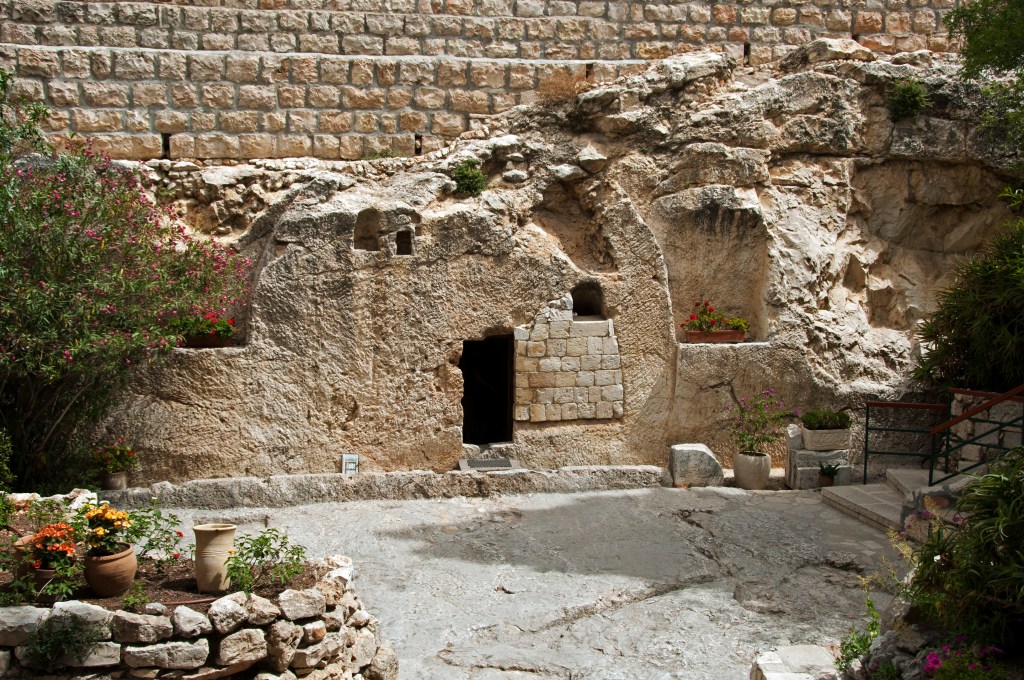
Thought to be the place of the resurrection of Jesus Christ in Jerusalem Israel

The title of this piece is tongue-in-cheek, a play on the “minimal facts” evidence for the resurrection made famous by Gary Habermas. I don’t really have a killer piece of evidence that uses fewer facts (or no facts) that trumps all other arguments. But, maybe I got your attention!

As often is the case, my inspiration comes from what someone said or wrote. In the podcast interview linked below, Mason Jones describes how he he decided to read through the Gospel accounts as an atheist who knew next to nothing about Christianity. He quickly caught on that the resurrection is the centerpiece of Christianity, so he focused his attention on that.

He researched the evidence for the resurrection. He googled arguments for the resurrection and arguments against the resurrection. Though he was an atheist at that time, he was willing to give the evidence that exists a chance. (Whether there was any, he didn’t know.)

As he considered the arguments and counterarguments, he found that the arguments against the resurrection didn’t address very well the arguments for the resurrection. They didn’t take them seriously.

Then he realized that the arguments against the resurrection only work if you start with the presupposition that the resurrection didn’t happen. Because it is impossible. Because people don’t come back to life. Ever.

If you take that presupposition out of the equation, thought Jones, the evidence favors the conclusion that the resurrection occurred, and the arguments against the resurrection loose their luster. If you want to hear the rest of Mason Jones’s thought journey from atheism to theism to Christianity in his own words, you can listen here.

Meanwhile, I want to spend a little time considering the presuppositions people make about the resurrection.

Continue reading “The Minimalest, Non-Factual, Argument for the Resurrection”

What Good Is Apologetics?

If we do apologetics only to win arguments, we are missing something.


I recently heard someone say that apologetics is not good for anything because it is just about proving to other people that you are right. The statement was made by a Christian who is vocal about sharing his faith. So, this was not an excuse from someone who is ashamed to defend the reasons for his hope in Jesus Christ.

Indeed, some people approach apologetics as a kind of intellectual game of one-upmanship. Some people seem to think that apologetics is a kind of silver bullet or kryptonite to combat skepticism and atheism.

I have been drawn to apologetics over the last 12 to 15 years as I have gone through a renewal of my faith. I became a Christian in the academic setting of college, so apologetics was attractive to me. The intellectual exercise is invigorating and stimulating.

Along the way, I developed expectations similar to the ones criticized by my friend on social media – that apologetics has all the answers and engaging in apologetics will turn skeptics and atheists into believers, but it doesn’t necessarily work that way.

Just watch a debate and listen to the responses of the people who observed it. Most skeptics are going to walk away skeptical, thinking that the atheist won, and most believers are going to walk away believing, thinking that the Christian won.

We might call this confirmation bias. It’s human nature. We are naturally inclined to identify with the things we already believe in and to find the arguments that align with our beliefs to be compelling.

Debates tend to promote the kind of one-upmanship that my friend criticized. After all, that is traditionally the point of debate. For me, this seemed to be the wrong format for sharing the Gospel.

Therefore, I dismissed debating as an effective apologetics “tool”. It seemed to me that debates were not an effective way of delivering truth. Therefore, I gravitated toward platforms like the Unbelievable? Podcast hosted by Premiere Christian Radio in Great Britain where dialogues between theists and atheists are carried on civilly (usually) in a dialogue format.

But, I am not sure how much more effective dialogue is than debate in convincing people of the truth of Christianity. Most people remain convinced of their own views most of the time. Human beings are stubborn that way.

Many modern people see themselves primarily as rational beings, so we think apologetics reaches them where (they think) they live. I am skeptical that so many people are such rational beings. I have to question my own rationality sometimes. We are motivated by many things other than reason, and we use reason to cover up ulterior motives.

This is the thesis (more or less) of Jonathan Haidt in his book, The Righteous Mind: Why Good People Are Divided by Politics and Religion. He argues that we reach our fundamental moral judgments about right and wrong at a gut level – not at a rational level. We turn to reason to defend our positions, but our positions are formed at an intuitive level.

I have not read the whole book, and I don’t recall his data and evidential support for the conclusions he reaches, but the general proposition rings true to my own experience and observation, limited as it is. What good is apologetics, then?

If Jonathan Haidt is right, then apologetics is not going to reach people where they actually live – in their gut. If we are aiming at the head, we are missing the mark, perhaps.

Continue reading “What Good Is Apologetics?”

The Problem of the Intelligibility of the Universe

The Milky Way

The most incomprehensible thing about the universe is that it is comprehensible.” Albert Einstein

I am intrigued by the stories of peoples’ journeys, especially of their thought journeys. Some are more intriguing than others. The story of Pat Flynn fits squarely into the more intriguing category. (See the Side B Stories Podcast – Episode 78 – Science, Philosophy, and Reality – Pat Flynn’s Story)

Patrick Flynn has an educational background in philosophy. He embraced naturalism at an early age, but he encountered philosophical problems with naturalism when he read people like HL Menken and Frederick Nietzsche. These problems led him to seek answers that might provide a more coherent view of reality.

I am not going to try to summarize his whole story. You can listen to him describe his thought journey at the link in the first paragraph. I just want to focus on one aspect of his journey from atheism to theism.

Flynn’s journey took him from atheism to theism through the medium of philosophy. This process was intellectual for him, and not experiential. He became convinced of theism, first, before he even told his spouse, because he knew she was not particularly fond of religion.

He didn’t dive into Christianity after he became convinced of theism. He explored Eastern religions, first, perhaps because he had a good friend who was Indian. When the Eastern religions didn’t solve the philosophical problems posed by naturalism, he reluctantly began to explore Christianity.

One of the big issues Flynn had with atheism was the lack of explanation for the fact the universe is intelligible. Digging further, Patrick Flynn found that the fundamental, core commitments of science fit much better with theism than with atheism.

Continue reading “The Problem of the Intelligibility of the Universe”

Do We Have Any Evidence of the Resurrection? A Critique of Skepticism and Proof

People confuse proof, as in a mathematical proof, and proof, as in an offer of evidence that tends to support a proposition.


Some people say that we have absolutely no evidence for the resurrection (and no evidence that God exists in the first place). Nothing could be further from the truth. We have evidence. The issue isn’t a lack of evidence; the issue is how we approach the evidence and weigh it it.

A person who approaches “supernatural” phenomenon with purely materialistic assumptions will weigh the evidence differently than one who is open to nonmaterialistic possibilities. Jesus, though, lived in time and space in history. Many people in the first century who saw him die claim to have seen Jesus and interacted with him in the flesh after he died, and those people were willing to die for what they saw.

That is evidence. Full stop. People may be skeptical of it. People may assume Jesus couldn’t have risen from the dead, despite what people think they saw, because miracles don’t happen. But, now I am talking about how people approach and weigh the evidence.

People confuse proof, as in a mathematical proof, and proof, as in an offer of evidence that tends to support a proposition. Fallible, finite human beings deal almost exclusively in the latter realm of evidence, even in science, because we don’t know what we don’t know.

Mathematical proofs are an achievable goal in mathematics (though sometimes not even then). Such proof is impossible outside of mathematics.

Science does not provide us that kind of certainty, either. Science changes all the time on the basis of new evidence, and things we thought we knew in the past are constantly being adjusted, or even discarded, on the basis of additional evidence.

Finite beings such as ourselves are limited in our knowledge, our access to knowledge, and our understanding of how the knowledge we have fits together. We have to be humble as we cautiously put our confidence in the things we think we know because we are limited in our ability to know and understand our world, and we will always lack absolute proof for most, if not all, things.

The extent of our limitations can even be quantified. For instance, 95% of the physical universe is invisible to us! The vast, unseen reaches of the universe are comprised of things like dark matter and dark energy that we cannot see and know little about, except for what we can infer about them. We aren’t sure what these things are, but we know they exist by the affects we see on the matter we see and know.


According to scientific consensus, the universe is about about 13.7 billions years old, and the earth is about 4.543 billion years old (give or take about 50 millions years), and homo sapiens appeared only 300,000 years ago (and maybe even only190,000 years ago). Assuming those calculations to be true, human-like beings have existed for only 0.0066% of the time the earth has existed and only 0.002% of the time the universe has existed. (If my math is correct.)

If we view the existence of the earth (not even the universe) on a 24-hour scale from the beginning to the present time, life began at 5:00 AM, the first vertebrates appeared at 8:00 AM, and human beings appeared just a fraction of a second before midnight.

Homo sapiens have only developed knowledge and the ability to communicate and preserve a record of it for about 5,500 years. We have been developing and recording our knowledge for only 0.00022% of the time the earth has existed, which is only 0.00007% of the time the universe has existed.


During that relatively short, 5500-year time period we have developed the capability to see only about five percent (5%) of the universe, though we have actually examined very little of it – and then only at very great distances. We hnave only explored more than five percent (5%) of the oceans on this earth – a very small planet orbiting a very small sun in a very small solar system in the inconceivably large expanse of what we we call the universe.

The body of our scientific knowledge has grown tremendously, even exponentially, especially in the last 200 years, but we have only just begun to know and understand the universe we live in. If humans live another 5,500 years, we will not have explored all of the universe, and we will not know all that there is to know.

Our world is grand and almost inconceivably complex. The DNA of a single human cell contains so much information that if it were represented in printed words, simply listing the first letter of each base would require over 1.5 million pages of text! Imagine how much information exists in the universe and how much we don’t know.

We will likely never know all there is to know about the expanse of the universe and everything in it, large and small, in all the years mankind is on the earth. Thus, we are in no position to write off the possibility of God creating the universe and Jesus rising from the dead.

The title to this piece is (admittedly) a bit misleading, so I need to provide the following disclaimer. Some people will read the title and assume that I am attempting to prove the resurrection. I am not doing that. I am offering only the beginning of proof (as in offering evidence) in this article, but it is evidence. You can weigh it how you will.

We should at least be open to consider what evidence there is for the existence of God and not write off the possibility that God exists. If God exists and made the universe out of nothing, which is what the Bible claims in Genesis 1, John 1, and Hebrews 11, then He could certainly raise Jesus from the dead.

How arrogant it would be for us to determine for ourselves (categorically) that there is no God, that He did not create the universe, and that Jesus did not raise from the dead. We don’t know what we don’t know, and we don’t understand perfectly what we think we know.

With that said, I want to provide some minimal facts that provide some evidence that tends to support the resurrection. These things are not proof; they are an offer of proof. We cannot achieve definitive proof, but there is evidence for the credibility of the claims made that Jesus rose from dead.


Continue reading “Do We Have Any Evidence of the Resurrection? A Critique of Skepticism and Proof”