Can We Be Certain of God’s Existence? The Role of the Holy Spirit

Doubt is the common experience of saints and sinners alike.


Can we be certain of God’s existence? The short answer is, no. If the question is whether we can have something like mathematical certainty or proof, we have to answer that question in the negative. There is no evidence, no proof, or argument that can provide certainty that God exists for finite beings such as ourselves.

Such evidence, proof, or argument would have to be built on premises that are 100% certain, and that kind of certainty is impossible for beings that are not all-knowing. The best we can do is to arrive at evidence, proofs, and arguments that suggest a probability that God exists. The same is true, or course, for the proposition that God does not exist. Even then, the proof for a negative is always subject to change if such evidence turns up.

To this extent, doubt is the common experience of saints and sinners alike.

To put this another way: Can we be sure that God doesn’t exist? The only certainty is that we can’t be certain.

Many believers have doubts, and many nonbelievers have their own doubts.

Continue reading “Can We Be Certain of God’s Existence? The Role of the Holy Spirit”

Distinctions Make All the Difference

Key distinctions between religions come into greatest focus as we celebrate Christmas, which is the recognition and acknowledgement of the birth of the Christ child.

Photo courtesy of Tyler Drendel

Ravi Zacharias has spoken to orthodox theological scholars of Islam and orthodox theological scholars of Christianity around the world. He speaks from experience when he says that those orthodox scholars who know the sacred texts do not say that the God of the Quran and the God of the Bible are the same deity. Pluralism is a positive and important cultural value, and we can value pluralism without sacrificing distinctions or truth.

We don’t embrace the beliefs of “Flat-earthers” in the name of pluralism. They are free to believe what they want to believe, but we shouldn’t let the flat earth position affect how we do science or how we view the world because of pluralism. An appreciation and respect for different cultures and ways of viewing and living in the world should not dictate an embrace of positions that are inherently contradictory with each other or compel us to abandon reason or truth.

In the clamor and noise of the connected world in which we live, we are tempted to minimize or ignore differences. We often only see a rudimentary and distorted view of things, and we are apt, therefore, to come to incomplete and inaccurate conclusions without a nuanced understanding of those things. We might be tempted to think that all major world religions are fundamentally geared in the same direction, being merely different approaches to the same end. We might be tempted to think that Christianity is a very politically orientated and conservative, western worldview that is arbitrarily exclusive and, therefore, elitist.

Ravi Zacharias grew up Hindu in a world in which Buddhism, Islam, and other religions were more prevalent than Christianity. His background lends some credibility to his observation that no religion offers redemption like Christianity does. Other world religions offer a way of attainment that must be earned. Christianity is unique in this respect in its view of God and our relation to God, and Christianity is uniquely accessible to all people in all places to the same extent.

Continue reading “Distinctions Make All the Difference”

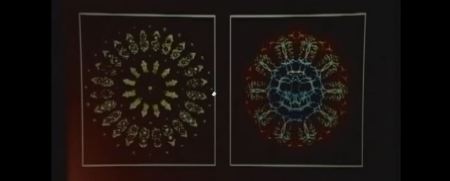
Inspiration or Artifice? Faith and Reason

From a presentation by Francis Collins at the Veritas Forum at the California Institute of Technology

Take a close look at the two images. What do they represent? We might say that one image represents science and the other represents religion (or faith). But which is which?

The images are similar, but one of them is manmade, and the other is something we find in nature. Do you know which is which? Is the manmade image the scientific one or the spiritual one?

I will answer these questions; at least I will answer them as they were described in a presentation given by Francis Collins, the manager of the Human Genome Project, at a Veritas Forum at Caltech University in 2009. In the process, we will explore the chief question examined by this eminent scientist: whether science and faith are compatible.

Continue reading “Inspiration or Artifice? Faith and Reason”

Faith Requires a Personal Encounter

We have a hard time believing on the basis of someone else’s experience.

Depositphotos Image ID: 22520023 Copyright: Iurii

This is a prologue to a previously published piece, Room for Doubters & Skeptics. In that original piece, I explored the fact that Jesus invited, embraced and nurtured doubters and skeptics, even in his inner circle of followers. We see this in the accounts of Nathanael (also known as Bartholomew) and Thomas (who we call “Doubting Thomas).

We meet Nathanael early on when Philip introduces him to Jesus. Nathanael was skeptical. Thomas we get to know in more detail in the middle of his time with Jesus and at the end. Even at the end of his time with Jesus, Thomas still doubted.

The stories of these two men leave us with a few important takeaways. First, honest doubt was no issue for Jesus, and should be no issue for us. This was the point of the initial piece that to which I linked above. In this piece we will see the importance of asking the critical questions and being genuinely interested in the answers. There are answers, but, more importantly, the answers lie in more than bare facts and reason; genuine faith requires a personal encounter.

Whether God exists is the most important question we can ask. Whether God exists, or not, is (or should be) the foundation for everything we do and everything we think about the world. On this point, we are either hot or cold. Lukewarm is the same as being cold because it means we haven’t’ cared or been thoughtful enough to be interested in the question.

There is no such thing as a follower of God who doesn’t seek him. There is a difference between intellectual ascent and faith (commitment) to God. Someone famously said that even Satan believes in God. Nathanael and Thomas provide us an example of the importance of persistence in getting answers to the questions that arise from our doubt and skepticism.

Continue reading “Faith Requires a Personal Encounter”

Room for Doubters & Skeptics

Depositphotos Image ID: 47465065 Copyright: AsierRomeroCarballo

Jesus formed an inner circle of people who were called apostles, and that group included doubters. Yes, Jesus invited doubters and included them in His inner circle. Two of those people were Thomas and Bartholomew (also known as Nathanael).

There is nothing wrong with doubt. Honest doubt is always better than false faith. We should never trade our integrity for something that isn’t genuine. It’s better to have no hope than a false hope.

I recently wrote about a statement made about Stephen Hawking: “A great scientist, even like Stephen Hawking, if he had to admit a creator, it would be unavoidable, he would have to seek him because he is a great scientist.” I don’t know if that statement is really true. I’m not sure if Stephen Hawking would really seek God if he thought God existed, but a person should seek God if God exists. There could be no greater or more important finding than that!

Ultimate truth for finite beings like us, however, is always accompanied by doubt. We don’t know what we don’t know. We don’t know everything, and we never will. Yet, we seek for something solid, something we can trust and something in which we can put our faith. We all do that, even atheists, even if all we trust is science (and the human intellectual capacity to understand it).

For these reasons, the stories of Nathanael and Thomas are so significant.

Continue reading “Room for Doubters & Skeptics”