Finding Humility and Civility in Loving the Truth and Loving Others

The shades of grey are difficult to navigate, no doubt, but it isn’t all black and white. Life isn’t that simple.

I am finding some solace today in the increasingly polarized world in which we live. I can always find some balm in humor! Over the last half decade or more, I have stepped outside the political fray psychologically, taking a seat in the audience and observing the circus. I vacillate from horror to sadness, but there is always humor to which I can turn for solace.

Today, someone posted on Facebook an article with the following clickbait headline: No one blamed Obama during the 2009 swine flu pandemic that killed over 12k! Killer headline, right? It didn’t take another poster to find this gem: Trump in 2014 said Obama was ‘a psycho’ not to immediately cancel flights into the US amid Ebola outbreak in West Africa.

I have not checked the facts, by the way. Does it matter anymore? Doubt everything. That’s just easier!

I have been meaning to “collect” a bunch of articles and memes in pairs that are the exact opposites of each other. For instance, one article might say, “Trump beats up little girls!” While, another article might say, “Hillary Clinton approves of beating up little girls!”

When I start looking for these supremely ironic pairings, I begin noticing them often, but I haven’t found the energy to do the collecting. Democrat says, “Scientists have proven the world is black”; Republican says, “Scientists have been debunked: the world is white.” Each posting is made with the certainty of inalienable truth.

Most people respond with hearty signals of knowing acknowledgment, replying according to the identities and protocols of their particular form of group think. Though one or two brave souls might dare to post rebuttal, this modern ritualistic dance on social media is practiced to perpetuate and strengthen what we already think, gaining the knowing approval of the people “who matter” in a series of empty triumphs over the time and energy it takes to be candid and introspective about truth.

The truth is that there is plenty of rebuttal to be found if one is simply looking for it. For every black, there is a white. It’s easy, of course, to get lost in the myriad shades of grey. And, perhaps, that’s the real problem of modern (postmodern) people. We fear getting lost and sucked down in the shades of grey. If we can “rise” above that gravitational force of contrary facts, virtually skimming the surface lest we get sucked under the waves, we can maintain our preferred position.

Might I dare suggest another course? The shades of grey are difficult to navigate, no doubt, but it isn’t all black and white. Life isn’t that simple.

That isn’t to say that truth doesn’t exist in a postmodern world. Truth is still truth. It just isn’t as simplistic as we prefer it to be.

Continue reading “Finding Humility and Civility in Loving the Truth and Loving Others”

Putting the American Church into Perspective

Our perspective should be colored by God’s global and eternal purposes, not by the smaller, immediate “world” that we know.


A recent article in Relevant Magazine online, Report: 8 in 10 Evangelicals Live in Asia, Africa and South America, was there to greet me this morning when I opened Facebook. The article title, and the concluding statement put things into perspective:

“[T]hese figures … underline an important point about the vast racial and ethnic diversity of the evangelical strain of Christianity — a diversity often neglected in American conversations about faith.”

Evangelicals make up a little over 25% of the Christians in the world, and only 14% of the Evangelicals in the world live in the United States. Let that sink in.

Let’s take another step back. Let’s gain a little perspective. Let’s look at American Evangelical Christianity for a moment from the larger perspective of the world.

Continue reading “Putting the American Church into Perspective”

The Martyrdom of the Apostles


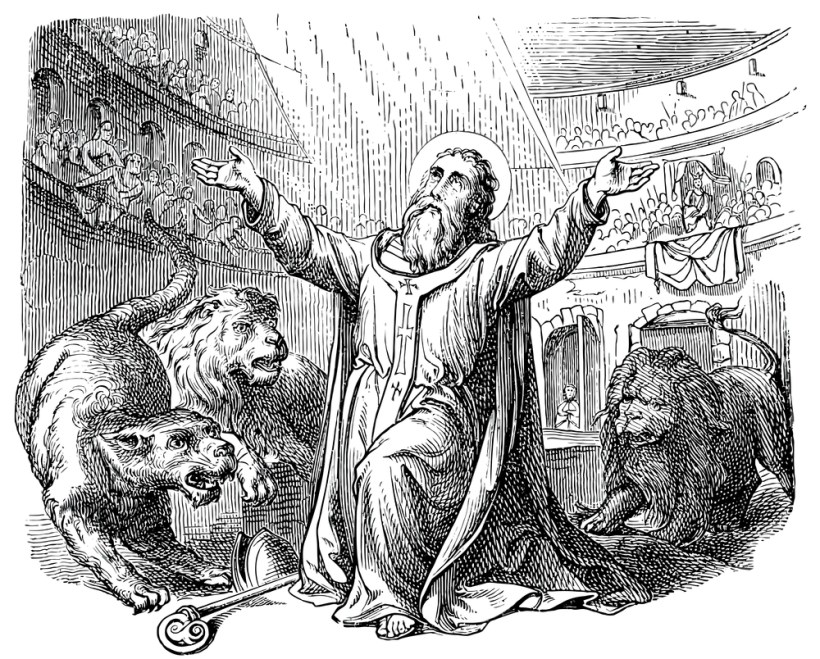
Sean McDowell did his doctoral dissertation on the fate of the Apostles of Jesus. Legend has it that they all died as martyrs, except for the Apostle John, because they witnessed the death and resurrection of Jesus and were willing to attest to it with their own deaths.

But is that really true? That is the question Sean McDowell set out to answer with scholarly research and analysis.

Church “tradition” maintains that all the apostles, except for John, were martyred. This is my understanding also, more or less, going back many years, though we may not have historical evidence that comports with modern standards to support what happened to all the Apostles.

The deaths of Peter and Paul are pretty well-attested. They died martyrs’ deaths, but what about the others?

Sean McDowell recently did a short video inspired by the results of his doctoral study, A Historical Evaluation of the Evidence for the Death of the Apostles As Martyrs for Their Faith, and the book, The Fate of the Apostles. While his study reveals we lack evidence that meets a standard of modern historiography about the martyrdom of most of the apostles, we have solid evidence for least two of them, and we have some evidence for the martyrdom of other eyewitnesses of the death of Jesus. From these facts, McDowell raises five key points.

Continue reading “The Martyrdom of the Apostles”

The Remarkable Consequence of Ritual Cleansing

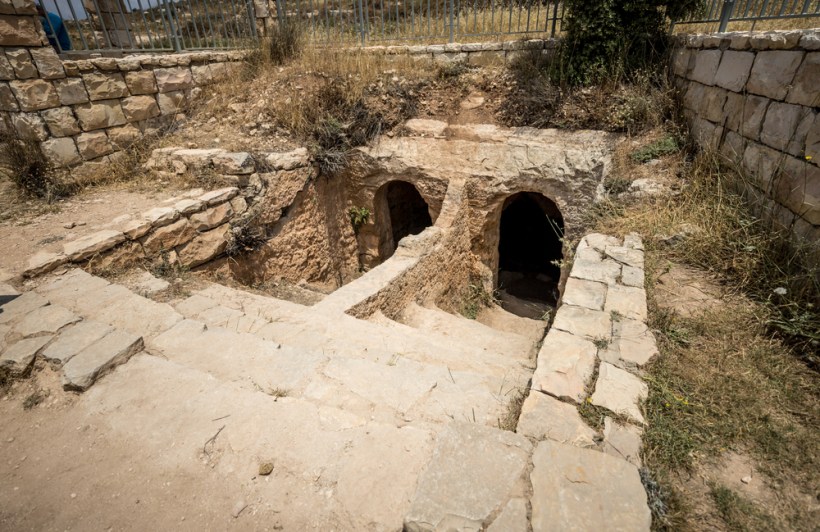
Ritual Baths along Way of the Patriarchs or Way of the Fathers. The name is used in biblical narratives that it was frequently traveled by Abraham, Isaac and Jacob. Samaria, Israel

I am reading through the Bible again this year, but I am reading it in chronological order using the You Version Bible app.  I am not sure how old I was when I realized that the books of the Old Testament are not in chronological order and that events in one book overlap events in other books. But that isn’t the point of this blog piece.

I am in Leviticus right now. The struggle is real! So many laws! So many times the text goes over the same things, or so it seems, but I am trying to maintain focus, and I am asking the Spirit for help in understanding what is going on, what God is saying, what He is foreshadowing, etc.

The last couple of days I have been reading the instructions for all the various types of offerings (animal sacrifices if we want to be blunt), and I have just gotten into laws for ceremonial cleansing for various “leprosies” and other “unclean” conditions. It can seem so mundane, archaic, maybe even naive and unenlightened to a modern mind.

For instance, it doesn’t take too long to figure out that all kinds of skin conditions were labeled leprosy. When we read in the English Standard Version about leprosy in houses, we realize that it’s probably talking about mold. (Some translations call it mold in fact.) The vocabulary and understanding of the Bronze Age mind was limited. It’s no wonder the Richard Dawkins of the world, reading these passages with a 21st Century mind, scoff at first blush.

But, underneath that temptation to scoff is a heavy dose of pride and lack of appreciation for what God is doing in the information and instruction that He was inspiring Moses to write in these passages. God was speaking to them in their language and according to their understanding to set the stage for a global plan that would be unveiled over many centuries and millennia that, even now in the 21st Century, is unfolding and being revealed.

Jesus is the key that unlocks the door to the Old Testament Scriptures.

I don’t claim to have all the answers or all the insights, though I am reminded of the words of Jesus to the Pharisees: “You study the Scriptures diligently because you think that in them you have eternal life. These are the very Scriptures that testify about me, yet you refuse to come to me to have life.” (John 5:39-40)  For the scoffer, Jesus might have said, “You don’t study the Scriptures because you think that they are mythical superstition that has no life. Those Scriptures testify about me, and you refuse to come to me to have life!”

Jesus is the key that unlocks the door to the Old Testament Scriptures. But, I still struggle sometimes to find the relevance, significance or meaning in some of these passages. I’ll be honest. I am sure I’m not alone.

One thought comes back to me today as was I reading about the ceremonial cleansing rituals. A thought that goes back many years, but with a new twist today. It has occurred to me before that many of the cleansing laws, laws about what animals they can eat and not eat, and so on, acted like in place of our modern knowledge of germs, disease and other health dangers that the people in that time simply didn’t know. I have long been struck by that thought, but I had never made the additional connection that strikes me with significance today.

Continue reading “The Remarkable Consequence of Ritual Cleansing”

For She Loved Much


The story begins with a prominent community leader inviting Jesus to a party at his house.  (Luke 7:36) Jesus went, of course, because that’s what Jesus did. He didn’t refuse anyone who gave him an invitation.

Jesus was most often found on the streets, in parks or local cafes engaging in small groups with impromptu crowds, but he was equally comfortable in larger, more formal crowds at churches, colleges and public meeting halls with politicians, priests, academicians. Jesus wouldn’t refuse any request to meet and be with people wherever he went. So Jesus went to the party.

Jesus had risen quickly to popularity. No one really knew that much about him, where he came from or what his credentials were, but anyone who was anyone knew about him by now. Many people wanted to meet him. He would be a draw to Simon’s party.

Of course, people alternately loved him or hated him. Few people were neutral about Jesus. Some people hung on every word he spoke, while others questioned everything, wondering what his intentions were, skeptical of everything he said or did.

We don’t know much about the particular party to which Jesus was invited or the host of the party, other than this name, Simon, and the fact that he was a prominent man in the community. One of the few things we really know about the party is the scandal that took place there.

Simon was a well-known leader in his community. His home was open to friends and neighbors. He was generous with his prominence, wealth and lifestyle. He loved to entertain. Inviting Jesus would be a hip thing to do, given the grass roots popularity  of Jesus.

Inviting Jesus might would be viewed as scandalous by some of Simon’s peers, but he considered himself to be different than them. He fancied himself more open-minded than that. He wasn’t afraid of a little controversy.

But Simon wasn’t at all ready for what would happen next. While his home was an open invitation to friends, colleagues and neighbors, no one who was not of a particular type would dare, surely, to enter those halls dedicated to showing off the influence, prominence and wealth to which Simon had attained. People who had not attained, or at least aspired to attain, a certain stature certainly wouldn’t think of it…. or would they?

Continue reading “For She Loved Much”