 via
via
Author: kevingdrendel
I am sixtiesh, an English Literature major in college and an attorney by profession. Faith informs my life, and this blog is about my faith journey.

The Story of the Napalm Girl and the Healing Power of Jesus
Kim Phuc saw another plane coming in low, fast and loud. She saw the bombs drop, and she froze….
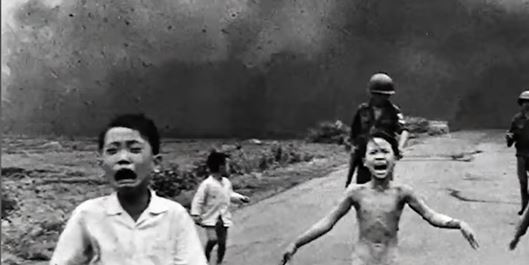
Kim Phuc is “the girl in the picture”, maybe the most iconic picture of the Vietnam War. It’s one of the most memorable wartime photos ever taken. She is the girl in the picture running from a napalm bomb that dropped on her village.
Kim grew up in a happy family that was well off and lived far from the war, or so they thought. Then, the war came to them. The villagers had taken refuge in the local temple, and the South Vietnamese Army had taken up guard to protect them.
One day, however, planes flew overhead. The first plane dropped a marker at the temple. The soldiers, knowing what that meant, screamed for everyone to run. As Kim reached the exit of the temple, she saw another plane coming in low, fast and loud. She saw the bombs drop, and she froze.
Before she knew what was happening, she was surrounded by flames. When she saw her arm on fire, she ran in panic and fear until she couldn’t run anymore.
When she stopped running, a soldier gave her water. She remembers crying, “Too hot! Too hot!” The soldier poured water on her, thinking it would ease her pain, but the water reacted with the napalm, intensifying the pain, and she passed out.
Kim suffered 3rd degree burns over a third of her body. The photographer who took the photo dropped his camera and took her to the hospital.
The hospital didn’t have enough room for her because of the number of injured from the raid on her village. She was in such bad condition they moved her to a morgue. They left her for dead to tend to the living.
Her mother and brother searched for her, found her, and carried her back to the hospital. When her father arrived, she was transferred to a burn clinic in Saigon. She was saved by her family’s determination to help her, but she would have a long, painful road ahead.
Every morning when the nurse took her to the “burn bath” to soften her dead skin to be removed, she cried through the excruciating pain until she passed out. She had a dozen laser treatments. She had eighteen surgeries. She spent years in physical and emotional pain.
Her father spent all his waking hours tending to her with a broken heart. She was in so much pain, he prayed she would die to end her misery. Her parents feared something would happen to them that would leave her alone in her pain.
She lived of course, but she was ashamed of her scars. Friends stopped wanting to be with her. Her family loved her, but she became lonely. She was no longer the beautiful, young girl she once was. She saw nothing but ugliness when she looked in the mirror.
She also lived with trauma and nightmares from her experience. She was filled with bitterness, hatred and anger. She kept asking, “Why me?!” She despaired of life. She felt like only death would give her an end to the suffering and pain.
Continue reading “The Story of the Napalm Girl and the Healing Power of Jesus”
Share this:

Where Are You Going?
Where we are going is more about the journey than the destinations, and the journey is about who we are becoming.
 I read recently in the book, Gospel Justice, about the parable of the good Samaritan. The book focused on the priest who failed to cross the road to help an injured man. Bruce Strom offers a few possibilities about where the priest was going and why he was in too big of a hurry to help the injured man.
As I reflect back on what Bruce wrote, I can imagine God asking the question to the priest that hangs in the air: where are you going?
Where are you going?
God might ask that question not because He doesn’t know. God knows our every move and the words we are about to speak even before we say them. God might ask that question because He wants us to stop and think about it.
Where are you going?
Most people would have an answer of course. My 20-year-old might say that she is going to take a semester off of college to work, not knowing what college will look like in the fall with the virus outbreak still ongoing. My 25-year-old might say he is taking a year off before starting grad school. My 27-year-old might say that he is working, saving enough money for a security deposit, and the first and last months of rent for an apartment that he will need if he gets the job as a grad assistant that he has applied for.
My 30-year-old might say he is going into his second year of seminary. My 33-year-old might say he is going to keep mulching and working from home until the stay-at-home order is lifted and he can go back to work. My 34-year-old might say that he is going to patent a UV light that kills the coronavirus.
We might have longer term answers, too. I joke that I am going to work until I am 80 to pay off the college debt I incurred for my kids. I think about the possibility of retirement, as remote as it seems.
The priest in the parable might have been going home or going to church or going to visit a friend. He might have even being going to help someone in need. The priest might have had a good destination in mind, but the parable is clearly meant to contrast the priest to the “Good Samaritan”.
Of course, “good” and “Samaritan” were two words that Jews in first century Judea would not have put together. Samaritans were heretics and second-class citizens in the Jewish world at that time.
And of course, Jesus chose a Samaritan to drive home the point that the Good Samaritan, not the priest, did the “right” thing in that parable. He did the better thing. He stopped to help the injured man on the side of the road.
It didn’t matter where the priest was going, ultimately; he passed up the divine opportunity to help the man right in front of him.
If God was asking the priest, “Where are you going?” I don’t think he would be looking for the immediate answer. If the priest said he was going to the temple to perform his priestly duties, I think God might have asked him again, “Where are you going?”
We all have places to go, things to do, people to see. We all have goals and aspirations. I imagine God asking this question, not about the destinations, goals and aspirations we have planned, but about the journey: what direction are you moving in?
When two of my sons were wrestling, I would sometimes say to them (and myself): “It’s not about the winning and losing; it’s about the journey.”
The ultimate question about the journey of life is this: Who are you becoming?
Continue reading “Where Are You Going?”
Share this:

God and the Impossibility of Goodness
It’s easier for a camel to go through the eye of a needle than for us to be good enough for God.
 The story of the rich young ruler resonates with me today in the seeming impossibility of living without sin. I suspect that I am not alone in the experience of certain sinful inclinations that I just can’t seem to shake. Try as I might, I fall into the same traps of temptation over and over again. I get angry at myself. I ask for forgiveness. I renew my resolve, but I inevitably trip and fall. And sometimes I despair.
“God cannot be mocked. Whatever a man sows, he will reap in return. The one who sows to please his flesh, from the flesh will reap destruction; but the one who sows to please the Spirit, from the Spirit will reap eternal life….” (Gal. 6:7-8)
I know this, but it doesn’t seem to help. My sinful flesh often overcomes the spirit within me. While the spirit is often willing, the flesh is weak; and sometimes, let’s be honest, my spirit isn’t as willing as it should be.
I think, “If I could just resist more and try harder and find just the right combination of thoughts and habits and resolve, I could lick this thing.” But, days come and go. Things change: busyness, or worry, or distraction, or boredom, or some dryness in my spiritual life, or difficulty, or disappointment or any number of things (or a combination of them) sets in, and when my guard is down, temptation comes and catches me off guard in a moment of weakness.
I truly believe it is possible to overcome the sin within me. Scripture seems to require it of me. What I reap I will sow. Yet I fail. I fully identify with Paul, who said:
“I do not understand what I do. For what I want to do I do not do, but what I hate I do. And if I do what I do not want to do, I agree that the law is good. As it is, it is no longer I myself who do it, but it is sin living in me. For I know that good itself does not dwell in me, that is, in my sinful nature. For I have the desire to do what is good, but I cannot carry it out. For I do not do the good I want to do, but the evil I do not want to do—this I keep on doing.” (Rom 7:15-19)
Continue reading “God and the Impossibility of Goodness”
Share this:

King David’s Secret
All of David’s life was lived in relation to and in orientation toward God.
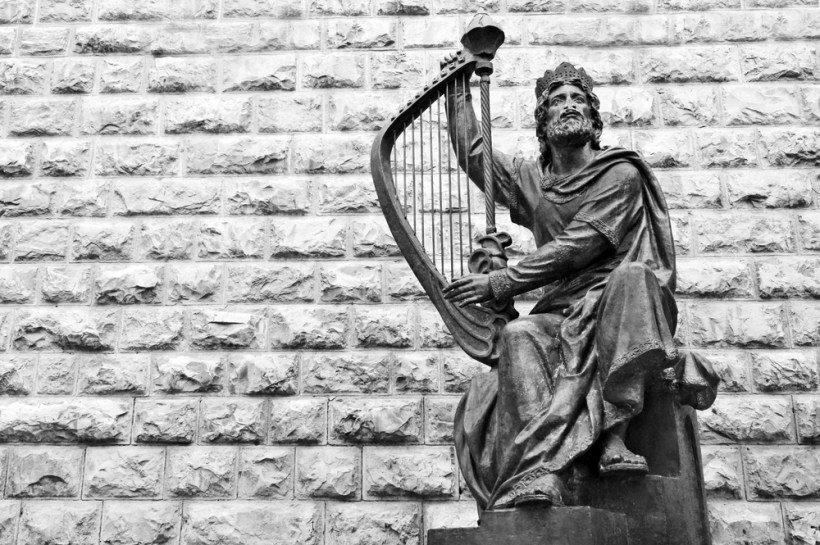
I am reading through the Old Testament in my daily devotions on a plan that will take me through the Bible chronologically throughout the year. I have been reading through the books of Samuel and Chronicles that tell the story of David’s life, among other things, and I am reading some of the Psalms David wrote. Today, I read Psalm 18.
Psalm 18 is a song David wrote to the Lord “when the Lord delivered him from the hand of all his enemies and from the hand of Saul.” The reading plan I am following is chronological, and that would put this Psalm near the end of David’s life. The timing of if make the things that strike me about it all the more… well… striking.
The most striking thing about the Psalm (and David’s life) is that he implicitly and intimately trusted God. We see this in the first five verses:
1 I love you, Lord, my strength.
2 The Lord is my rock, my fortress and my deliverer;
my God is my rock, in whom I take refuge,
my shield and the horn of my salvation, my stronghold.3 I called to the Lord, who is worthy of praise,
and I have been saved from my enemies.
4 The cords of death entangled me;
the torrents of destruction overwhelmed me.
5 The cords of the grave coiled around me;
the snares of death confronted me.
David always turned to God. When he was overwhelmed, as expressed in this Psalm, he turned to God. When he was victorious, he turned to God. When he failed to live up to God’s standards, he turned to God, and when tragedy struck, he turned to God.
In everything David did, he was fully and intimately mindful of God. Here David said, “In my distress I called to the Lord; I cried to God for help.” (Ps. 18:6) All of David’s life was lived in relation to and in orientation toward God.
Continue reading “King David’s Secret”

