Opening Our Eyes and Ears to the Global Church to Gain Perspective

American evangelicals can gain perspective from other believers

I recently read an article by Ed Stetzer and Andrew MacDonald, Waking Up After QAnon: How Can the Church Respond, posted by Christianity Today. The secondary headline is: Evangelicals disproportionately believed conspiracy theories in 2020. How do we recover?

I do not agree completely with everything in this article, but I think it is more “right” than wrong. The following assertion, for instance, certainly rings true to me:

“For years a segment of Christianity has sought to reclaim the United States of America as a Christian nation—or at the very least a nation founded upon Judeo-Christian values. However, they have, at the same time, witnessed the American culture (and, yes, what they see as American elites—media giants, big tech, politicians, and Hollywood) adopt a more secular and progressive agenda.”

I am familiar with the thinking of patriotic Christians because I “grew up” in Christianity in an atmosphere influenced by the Moral Majority and efforts to reclaim the Christian heritage of this country. It was a patriotic movement made “sacred” with Christian reference and fervor.

The community in which I was engaged out of college joined the effort. It seemed that some momentum was being generated in the direction of reclaiming the United States as a Christian nation…. at least while I remained in that community. When I left to go to law school, my perspective changed.

Looking back, I see that patriotic Christianity appeals to a certain narrative of faith and a desire to protect what is familiar and comfortable. It affirms a sense of place in the world as an American Christian who believes fully that the United States was blessed by God more than other nations in the world and stands like a city set on a hill for the world to see.

While I think there may be some truth to that blessing from God, we shouldn’t confuse His blessing for a time (and for His greater purpose) with our own desires for prosperity, influence, protection of lifestyle, culture and familiar life. God raises kings, and he takes them down.

The patriotic movement in the church going back in time was influenced, in part, by the “prosperity gospel”. The focus was on faith. A certain exhilaration accompanies the thinking that we are part of a sacred movement of God’s people uniquely blessed with faith. It was a kind of manifest destiny for the church.

I imagine the 1st Century Jews saw the world similarly, though they didn’t have the prosperity or power of American Christians in 21st Century. Their sense of being God’s people and being culturally “right”, however, made it difficult for them to accept that God loved Gentiles. That tribalism caused the first schism in the early church.

The American exceptionalism that is part of the allure of this politically-charged faith embraces modern Israel and the Jewish state. They see a kinship there, and I believe we are prone to the same kind of error that the early church fell into.

Moving on from that community of my early walk in Christ and seeing faith and the world from different angles changed my perspective. I loved my time in the community of my early Christian years. They did many things right, and they were eager and earnest in their faith in refreshing ways, but I have come to see that patriotic element differently. God is bigger than our patriotic ideas of Him.

(Not that all the people in the church I attended wandered down that road. I know many of them still, and many of them did not get swept up in the patriotic fervor. They have adjusted and adapted, and their perspectives have changed also.)

The real point here is that God has a global and universal purpose. We are as much a part of that purpose as our brothers and sisters in China, or India or in the African American churches in the US.

That is not to say that everyone is right about the way they view the world. We all have our own unique vantage points and perspectives, and for that reason I need to listen to others because they offer perspective that I have trouble seeing from my own, limited position.

Perhaps, if we can all come together in the shared experience of Christ who died for all mankind and learn to set aside the things that divide us, we can catch a more global and universal glimpse of what God is doing in the world. The Stetzer and MacDonald article makes the following statement regarding the headlong embrace of Donald Trump:

“Christians need to understand how this foolishness not only hurts relationships in the local church and community but diminishes our witness. In such situations, our gospel witness is at stake and we cannot afford to be passive.”

This is a major concern. We may have trouble seeing the ways in which we have wandered off the narrow path unless we take time to listen to what other believes are saying.

Continue reading “Opening Our Eyes and Ears to the Global Church to Gain Perspective”

How Can You Say your Religion is Right, And Everyone Else is Wrong?

“How can you say your religion is right and everyone else has it wrong?” This is a common challenge to Christianity, but not just to Christianity. All of the world religions make exclusive truth claims.

Even religions that ascribe to values like unity and universalism (like maybe the Baháʼí faith, which “stresses the unity of all people as its core teaching“) make exclusive truth claims. Their claims deny claims of other, competing religions and worldviews that are expressly more exclusive and/or which ascribe to unity and universal application with different parameters.  

The idea of exclusive religious principles is especially anathema in a post-modern world. It’s the cardinal sin of post-modernism. In such a world, it seems crude and out of step to believe, let alone admit that you believe, that some religious and philosophical assertions are true and others aren’t.

It’s much more acceptable to say that I can have “my belief”, and you can have “your belief”. We would quickly add, “What’s true for me doesn’t have to be true for you.” We believe with religious truth that people should be able to have their preferred spiritual cake and eat it too.

We do this with ethics also. People sometimes conflate religious or spiritual truth with ethics, but that’s another topic maybe for another time. People also, generally, don’t feel so magnanimous in allowing differing beliefs when they feel their own oxen have been proverbially gored. 

In the western, post-modern world, it’s ok for me to believe in chakras, or karma, or queer theory or a particular gender identity (even if my gender identity is unique to me), or aliens and whatever ethical construct goes with those things. It doesn’t need to be internally cohesive. It doesn’t really matter what a person believes, as long as she doesn’t claim it to be universal or exclusive. Claims of universality and exclusivity though, are not tolerated. 

Notice, however, that even this “tolerant” position can’t escape the charge of being an exclusive truth claim. The very claim that no one can make exclusive truth claims is an exclusive truth claim.

The person who says exclusive truth claims are not valid is making that claim contrary to all people who believe that exclusive truth claims are valid. 

I believe that people who are making the claim that religious people (especially) should not make excusive truth claims are doing so in response to people whoa re fanatical, self-righteous, judgmental, and even militant about their truth claims. Much tension in the world, cruelties perpetrated against other people, and even wars are the result of such exclusive religious truth claims. We can’t deny it. 

So what do we do? Following are some thoughts on the subject of truth claims, with some additional comments on the subject of tolerance and respect.

Continue reading “How Can You Say your Religion is Right, And Everyone Else is Wrong?”

How Core Identity and Lived Experience Affects Our Views on Immigration in the Church

People of faith live as aliens and strangers on this earth because we look forward to a better country

What is your identity? Are you just a name? A member of a family? A citizen of a country?

We might give different answers in different contexts, to the question, depending on who is asking “Who are you”? To a certain extent, our identity flows out of our lived experiences.

I identify as a son, a member of a larger family with ancestors who settled in Naperville, IL after emigrating from the Alsace region of France/Germany. I identify as a father and a husband. I identify as the son of a father, who is a lawyer, and I identify as a lawyer myself.

I also identify as a born-again Christian, oen who was once lost and is now found, a follower of Jesus Christ in the process of being renewed in my mind conformed to the image of God.

How we identify ourselves in an ultimate sense reflects our core values and what is ultimately most important to us. Thus, if someone is asking me about my highest identity, or the basis of all identities, or what is my central identify out of which all other identities now flow, I would say I identity as a child of God and follower of Jesus.

Such is the effect of being born again: born into the family of God – born of the Spirit. (John 3:7-8) It means that we now cry to God, “Abba! Father!” Romans 8:15) “Because you are his sons, God sent the Spirit of his Son into our hearts, the Spirit who calls out, ‘Abba, Father.’” (Gal. 4:6)

Our identity as children of God flows out of our experience of being born again. This identity is first and foremost. It is the identity that qualifies all other identities.

Or, at least it should….

Other identities flow from being born again. We no longer identify as being of the world, though we continue to live in the world. (John 17:16) We identify as citizens of heaven (Phil. 3:20), and we identify as “aliens and strangers” in this world. (1 Pet. 2:11)

We know these things, but we might ask, “How much has this identify taken ahold of me?” And, “How much do I identify as a child of God, a citizen of heaven, no longer of this world, but an alien and stranger here?”

“Is this my experience? Do I live this out as my fundamental identity?”


The pull of the world is great. I have to be honest, myself: I experience long stretches of time in which I could not say with integrity that I am living as an alien and stranger in this world. I find myself identifying more closely than I should, perhaps, with things of this world. My experience doesn’t always reveal close alignment with my citizenship in heaven.

The following story really brought the reality of the effect of experience on personal identity home to me. It showed me that how we identify at the core of our being is tied into lived experience, and our lived experience reveals our hearts.

Continue reading “How Core Identity and Lived Experience Affects Our Views on Immigration in the Church”

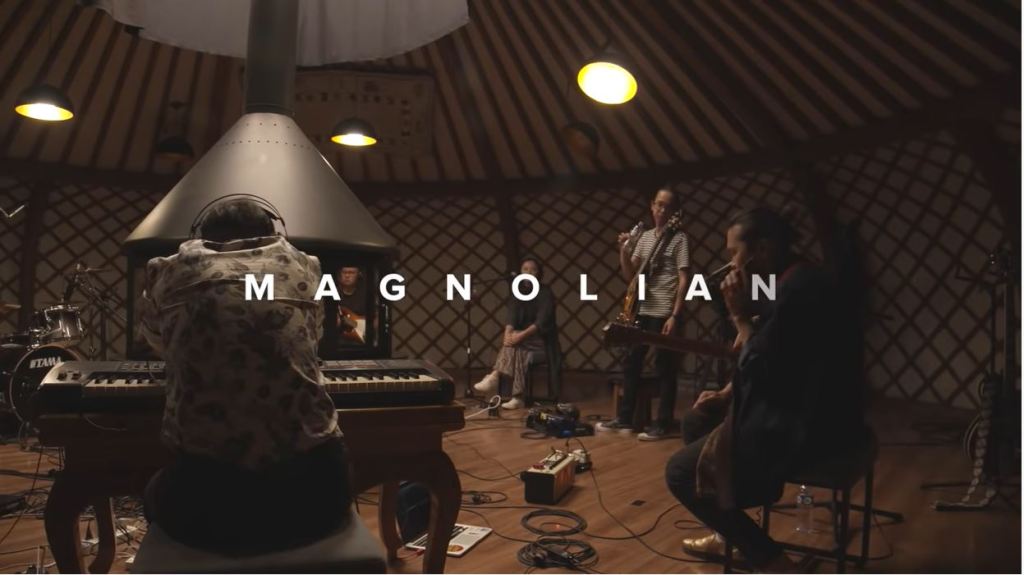
A Musical Detour through the Lush Soundscape of Mongolia

We are different in the way we look, skin color, and heritage, communal and historic experiences, but our roots and our lives are intertwined.

I took a detour today from my usual paths and discovered Dulguun Bayasgalan, an indie-folk singer-songwriter from Ulaanbaatar, Mongolia. Anyone who knows me well knows that I like exploring new music. I spend much more time listening to new music (mostly current music) then the older music of 1960’s and 1970’s that are my musical roots. I can now add new Mongolian music to my playlist.

Dulguun Bayasgalan goes by Magnolian because of another Mongolian artist with the same first name. Magnolian is a play on the words Mongolian and magnolia.

Magnolian made a debut of sorts at Mongolia’s biggest music festival in June 2015 as a solo act. Since then he released his first single, “Someday”, in September 2015, featuring his wife, Enkhjin Batjargal on vocals. In October of 2016, Magnolian played his first international showcase at Zandari Festa in South Korea. He made his North American debut at SXSW in Austin, Texas in March of 2017. He is now the second most streamed Mongolian artist on Spotify.

One of my interests in music is the roots of modern music. In that vein, let’s explore some traditional and modern Mongolian music, which would have had some influence on Magnolian, before we get to his music. I think you will see the influence, but he takes it in a much different direction. (If you are more into modern indie rock than Mongolian heavy metal, stick with me to the end.)

First, let’s listen to Chinggis Khaanii Magtaal (Ode to Chinggis Khaan) performed by Batzorig Vaanchig on top of a mountain in Bayanhongor Mongolia for full effect. He displays the “throat-singing” style of traditional Mongolian music and their heritage that is strongly influenced by Genghis Khan:

Following is a traditional Mongolian song, Toroi Bandi, that (to me) has a very modern feel to it. I’m not the only one, obviously, as one of the comments to the video is that it sounds like heavy metal before electricity.

I note the slowdown and change of pace in the middle of the song. I see the same kind of stylistic change in Magnolian’s music, leaving behind the throat signing, and sounding very much like current indie music in the United States.

But first, I want to showcase The HU, Mongolia’s most popular band making music currently. The HU fuse traditional Mongolian throat-singing and musical instruments with modern melodies and themes. You have may have heard them before, not even knowing it, in their song, Star Wars Jedi: Fallen Order. The HU aren’t singing in Mongolian here. They created their own language for the song that was incorporated into the Stars Wars game of the same name.

Continue reading “A Musical Detour through the Lush Soundscape of Mongolia”

Knowing Our Ultimate Destination, How Should Children of God Live in a Modern World that Is Foreign to Us?

We are part of a great multitude from every nation, from all tribes and peoples and languages….

Followers of Christ are going to end up as part of “a great multitude that no one could number, from every nation, from all tribes and peoples and languages, standing before the throne and before the Lamb… and crying out with a loud voice, ‘Salvation belongs to our God….’” (Rev.7:9) Knowing how our journey ends as children of God, how should we live in this world?

Jesus introduced the kingdom of God to the world and invited the world to “enter” it. Just as the first century Jews were only a portion of the world to whom Jesus extended that invitation, we in the West and in the United States of America are only a portion of the global world Jesus invites to enter God’s kingdom.

Jesus came, not to condemn, but to save the entire world full of people. We might as well get used to the diversity now.

I think it’s easy for us in the US to miss the fact that the global church today doesn’t look like us at all. The “average” Christian in the world today is a 22-year old brown female. Only 12% of the Christians in the world live in North America (including Canada). Only 37.5% of the Christians in the world live in the “west”.

It’s a human tendency to separate from and even to demonize things that are foreign to us. It’s also a human tendency to embrace things that are familiar to us, even to our detriment. Jesus calls us to separate from the world, which is familiar to us, and to embrace God’s kingdom, which is foreign to us in our “flesh” (as Paul calls it).

Jesus calls us to reject the sin that is familiar to us in exchange for His righteousness that is foreign to us. Righteousness is not of us or from us; righteousness is of God and from God.

Thus, Christians are uniquely called to be different from the rest of the world that embraces the familiar (both things of the world, generally, and specific aspects of this worldly specifically, such as gender, race, nationality, etc.). We are called to separate from this world that is familiar to us and to embrace a world that is foreign (the spiritual realm into which we must be born again).

This model of Christian living is demonstrated by Paul and the disciples in carrying out the Great Commission. Paul said that he became all things to all people that he might win some.

Paul quoted pagan poets and philosophers in his address on Mars Hill. (Acts 17) That means he read them and understood them. Thus, he was able to quote them appropriately and use those references that people knew to point them to God. This is because Paul embraced the fact that he was in the world, though he was not of the world.

This is what is means to carry out the Great Commission – to “go into all the world” making disciples. In the case of those disciples, God “encouraged” them with local persecution to scatter to Judea and and beyond. (We don’t always embrace what is foreign and unfamiliar to us willingly!)

We have the same command and challenge in our modern world. We don’t do these things easily or willingly. it takes us way beyond our comfort levels that are defined by what we know and what is familiar to us. When we take up our crosses and follow Jesus, he takes us into foreign territory!

One example of foreign territory is the modern worldview informed by Critical Theory. CRT informs the world on issues of racial injustice. As members of a kingdom comprised of every nation, tribe and tongue, we need to be able to speak into issues of racial injustice, and not just stand aloof.

Continue reading “Knowing Our Ultimate Destination, How Should Children of God Live in a Modern World that Is Foreign to Us?”