An Exercise in Looking at ‘White Privilege’ through Marxist and Gospel Filters

The inspiration for this article comes from an attempt by a black person to explain to a white friend what she means by white privilege. Much of the evangelical world resists the term, fearing its Marxist roots will poison the vine if we let it grow.

Before I get to the article explaining white privilege from anecdotal examples, I did a little research and found an article written by a Marxist critiquing of the concept, “white privilege”. Critique as I use it here means a critical (as in negative) view. (I found the article when searching for the origin of the term, thinking I would find its Marxist roots.)

I found the idea of white privilege can be traced back to a pamphlet, White Blindspot, generated by Noel Ignatin and Ted Allen in 1967 in which they presented arguments for “white-skinned privilege theory”. They argued that the white working class conspired with their exploiters against the non-white working class to achieve certain privileges that the non-white working class were denied. They called on the white working class to repudiate those privileges and stand with their non-white comrades.[i]

The 2020 article from which I take this narrative is critical of the “privilege theory” that developed. It identified the “privileges” that had been gained by largely white working class people included better access to medical care, better educational opportunities, and so on. The article took umbrage with the call for those workers to forgo those hard fought “privileges” to stand with their comrades of color against the capitalist elite.

“The problem with this conception is that these measures, rather than representing undeserved ‘privileges’, were in fact reforms won by the working class through bitter struggle. These class gains represented the return of a small part of the great wealth held by capitalists that workers had produced. Privilege theory – on the basis of unequal access to these gains under racist American capitalism – converted hard-won class victories, reforms and rights into “undeserved” workers’ ‘privileges’.”

The article says that “privilege theory” is “totally flawed” because it pits the white working class against the black working class. The article blames “privilege theory” on “divisive propaganda of the capitalist class” – a kind of divide and conquer strategy that served the interests of the capitalist class by creating tension in the working class on the basis of race. (Perhaps, the fact that “liberal elites” in cloistered universities developed “privilege theory” was another strike against “privilege theory” to a true Marxist.)

This article is not even a year old. Interesting, is it not? Just as the church is leery of white privilege, so are actual Marxists!

To a certain extent, this article exposes the weakness of Marxist theory which thrives on conflict. When conflict is part of the creed, it undermines itself; conflict conflicts with itself. Perpetual conflict begets perpetual conflict. “Privilege theory” is just one example of how Marxism pits factions against each other, even among factions with common interests.

On the other hand, I can argue that the idea of white privilege is actually more gospel than Marxist. I don’t necessarily believe that, but stay with me for a second. Paul urged the Philippians to have the same attitude as Christ Jesus, saying:

Though he was God,
    he did not think of equality with God
    as something to cling to.
Instead, he gave up his divine privileges….

Philippians 2:6-7 (NLT)

Most translations say that God “emptied Himself”. The Greek word, kenoó, literally means “to empty” and is translated empty, deprive of content or make unreal.[ii] The HELPS word study adds, to be “perceived as valueless”.

The idea that God “gave up His divine privileges” captures the essence of the meaning of the Greek word in a very modern way. I think about this often when I consider the concept of white privilege.

This is the example of Jesus – that he had the attitude of emptying himself and giving up his privilege. Jesus calls us to be like him, to deny ourselves, take up our crosses and follow him. Thus, if we have any privilege (white or otherwise), our attitude should be the same as Jesus. We should be willing to give up our privileges, literally or figuratively, and empty ourselves (consider those things valueless) for the sake of the gospel and others.

In the next chapter of Philippians, Paul says,

“I count everything as loss because of the surpassing worth of knowing Christ Jesus my Lord. For his sake I have suffered the loss of all things and count them as rubbish, in order that I may gain Christ ….” 

Philippians 3:8

Thus, the idea of recognizing the privileges we have, whether they are on account of being white, or American or whatever, actually has some biblical roots. Our willingness to recognize that privilege and to be willing to empty ourselves of it for others is consistent with Christian values and faith


The idea of recognizing privilege and being willing to empty ourselves of it may be more biblical than Marxist! (I am not completely jesting to suggest it.)

But this really isn’t the ultimate point I want to make today. I am not here to argue for the concept of white privilege in our interpretation or application of the gospel. I agree that foreign concepts, such as the notion of white privilege, should not be brought into the gospel message. The gospel message has integrity in itself and stands alone in its ability to transform lives and bear the fruit God intended of it.

I do want to argue, though, that Christians should not reflexively recoil from and demonize the notion of white privilege. It’s the language of the modern world, so demonizing it creates a divide between us and those God desires to save.

Rather, I think we can use the term to the advantage of the Gospel. If Paul used quotations from pagan poets and philosophers to bridge the gap to his Greco-Roman audience at Mars Hill (Acts 17), we can do the same with the notion of white privilege (and other words that are used in modern parlance).

Continue reading “An Exercise in Looking at ‘White Privilege’ through Marxist and Gospel Filters”
Looking at Some of the Oldest Extant Examples of Ancient Biblical Text

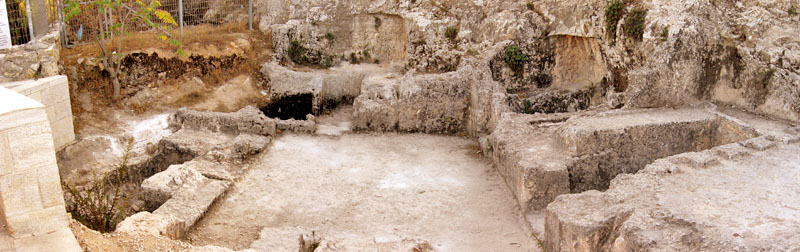
By Tamar Hayardeni, Attribution, https://commons.wikimedia.org/w/index.php?curid=23802552
Ketef Hinnom burial caves

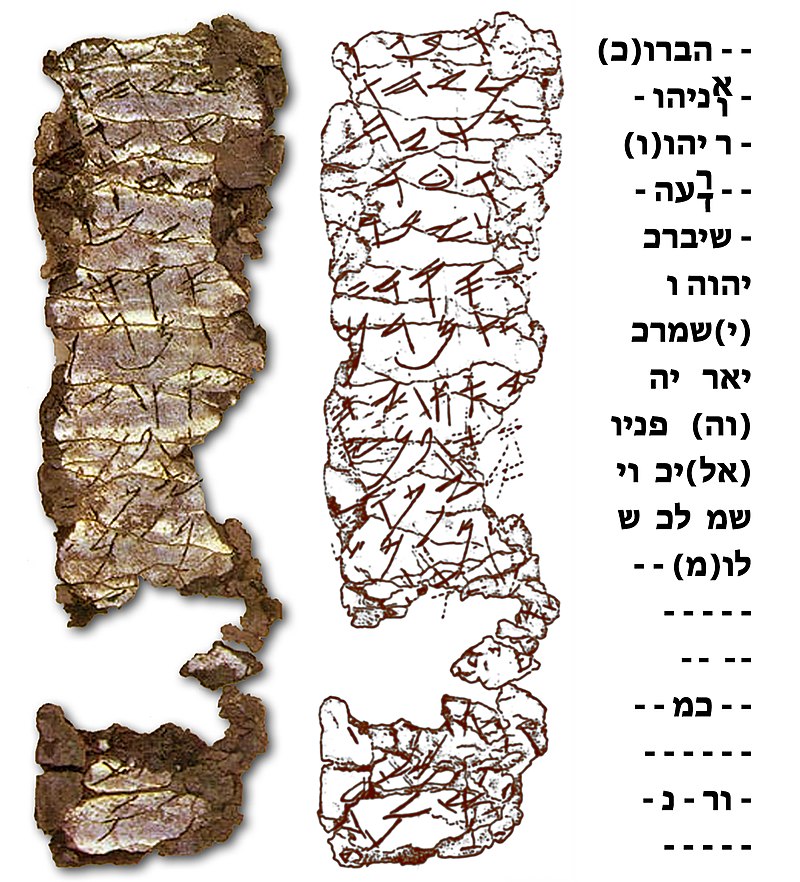
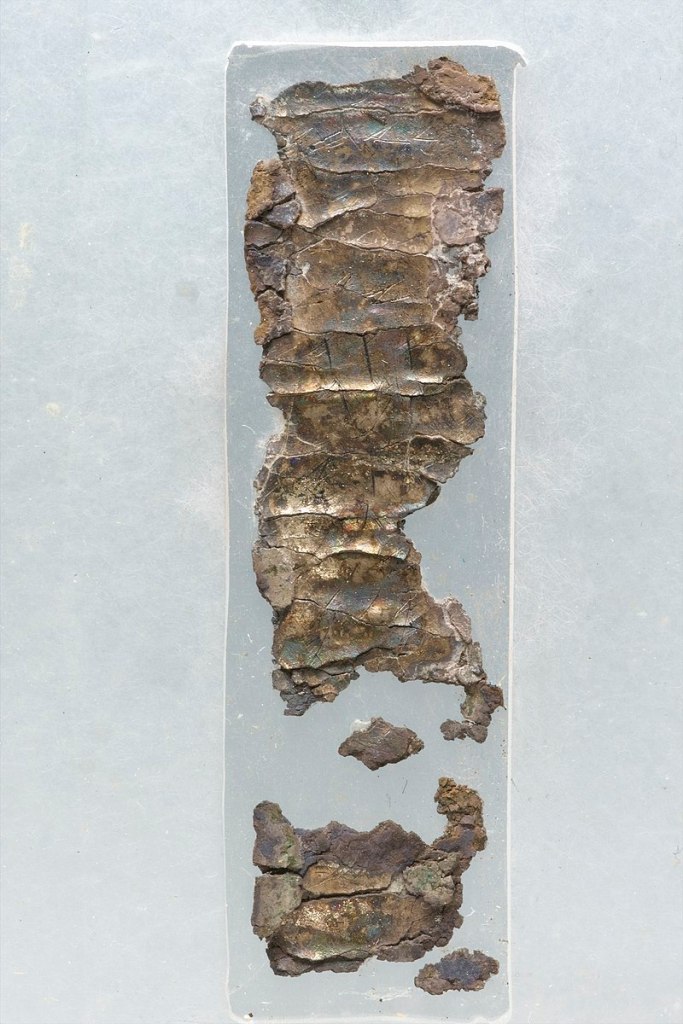
Some of the oldest extant examples of ancient biblical text are the Ketef Hinnom amulets.[i] The silver amulets meant to be worn around the neck are very small. They are actually tiny scrolls made of rolled silver with inscriptions on them. They were found at the First Temple funerary site of Ketef Himmom southwest of Jerusalem.[ii]

Discovered in 1979, the inscriptions on the amulets were not detected until the scrolls were painstakingly unrolled in 1994 by the West Semitic Research Project at the University of Southern California. The inscriptions on one scroll contain text similar to the blessings found in the Tora[iii]h at Numbers 6:24-26[iv]:

6:24 Yahweh bless you and keep you;
6:25 Yahweh make his face shine upon youand be gracious to you;
6:26 Yahweh lift up his countenance upon you, and give you peace.

(The italicized words are not found on the scroll but may have appeared in the area where the scroll has disintegrated.)

The other scroll contained language similar to the parallel passages in the Torah of Exodus 20:6; Deuteronomy 5:10 and 7:9, and the Prophets, Daniel 9:4 and Nehemiah 1:5.[v]


These amulets with the biblical inscriptions date to the First Temple period before the Babylonian exile. Conservative sources date them to the eighth–sixth centuries B.C.E.[vi] More liberal sources date them to the period immediately prior to the destruction of Jerusalem by the Babylonians in 586/7 BCE.[vii] No one dates them after the destruction of the First Temple.

This is significant because the consensus of scholars date the Torah post exile to the Persian Period (539-333 BCE, and probably 450-350 BCE).[viii] While classic rabbinic views hold that the entire Torah was written by Moses during his life in the second millennium BCE, the consensus of modern scholars is that the Torah was written by a number of authors post exile.

The confirmed dating of the Ketef Hinnom amulets doesn’t necessarily prove that the Torah was written and in existence at the time those amulets were created. They could have been produced from oral tradition. It does establish, though, that pre-exilic Jews were familiar with the sayings in the Torah.


It’s also consistent (or not inconsistent) with the view that the Torah was written down before the exile – perhaps, even by Moses.

All five books of the Torah, and every book of the Christian Old Testament, except for Esther, was found among the Dead Sea Scrolls. The earliest Dead Sea Scroll texts date to 300 BCE. The remarkable similarity of the versions of the Hebrew text in the Dead Sea Scrolls to the texts preserved from a millennium or more later amazed scholars. While most of the books of the Old Testament found at Qumran were fragmentary, a complete scroll of Isaiah was found dating to no earlier than the first century BCE.[ix] The Ketef Hinnom amulets, though are much older still.

I have referenced mostly sources that are secular or liberal in their leaning. I did that on purpose, as even these sources attest to a certain factual baseline that is consistent with the biblical narrative, and not contradictory to it. They don’t rule out earlier dates and facts that are not just consistent, but which match the biblical record. Thus, archaeology continues to reveal artifacts consistent with a view of the historical reliability of the Old Testament.


~~~~~~~~~~~~~~~

[i] See Ketef Hinnom at Wikipedia

[ii] See Miniature Writing on Ancient Amulets, by Robin Ngo for Bible History Daily at the Biblical Archaeology Society website March 5, 2021.

[iii] The first five books of the Christian New Testament known as Genesis, Exodus, Leviticus, Numbers and Deuteronomy.

[iv] See Wikipedia

[v] Ibid.

[vi] See Miniature Writing on Ancient Amulets

[vii] Wikipedia.

[viii] See Torah at Wikipedia

See Who Wrote the Dead Sea Scrolls? By Andrew Lawler for Smithsonian Magazine January 2010

[ix] See 6 Things You May Not Know About the Dead Sea Scrolls by Jennie Cohen at History.com

Ravi Zacharias: The Poison of the Allure of Greatness and the Antidote of Self-Giving Service

Whoever humbles himself like this child is the greatest in the kingdom of heaven.

I continue to consider and process the Ravi Zacharias scandal. The major issue with Ravi Zacharias, as I understand and perceive it, is that he thought too highly of himself. This is a serious danger for all great men, especially for men of God, because the poison of thinking too highly of ourselves can taint and distort our own thinking to our ruin and to the damage of those around us.

My determination that Ravi Zacharias thought too highly of himself comes from one of the stories told by one of his victims. He warned her after exerting his influence over her in a sexual encounter that she must not tell anyone because disclosure of their tryst would endanger millions of souls – as if their salvation rested on him.

Yes, Ravi Zacharias may have planted or watered the seeds of the gospel in many people, but salvation is the gift of God. People are saved by responding to the prompting of the Holy Spirit, however that prompting comes. We may plant and water, but God does the real work, and God causes the increase.

No man is indispensable to God. Though every man be a liar, God’s is true. His word goes out and does not come back void. We dare not think God’s work depends on us to such a degree that we must hide our own sin and manipulate other people in the process.

In light of the Ravi Zacharias scandal, my thinking, reading and meditating has led me to consider the dangers gifted people face due to their “greatness”. These were the same dangers the disciples faced as Jesus mentored them to be his representatives to the world.

The close relationship of the disciples to Jesus and the importance of their roles in God’s plan must have been intoxicating. It led them to argue between them who would be considered the greatest. These arguments broke out multiple times over the course of the disciples’ time with Jesus, and they tell us something about the dangers of greatness and our appropriate response to the temptation to desire greatness.

Continue reading “Ravi Zacharias: The Poison of the Allure of Greatness and the Antidote of Self-Giving Service”

Ravi Zacharias: The Isolation, Insulation and Danger of Greatness

The tendency to put gifted people with strong and charismatic personalities on a pedestal is a weakness in the church.

Anyone who pays any attention to apologetics has probably heard of Ravi Zacharias. Before his death last year, he traveled the world for decades as an evangelist and apologist. He spoke at secular universities and challenged non-Christian thinkers and leaders to consider Christian claims and the gospel worldview.

He was a winsome and charming speaker, erudite and polished. He toured the greatest institutions of higher learned on multiple continents and engaged people of all religions and atheists alike in deep conversations on the truth of the Gospel.

His organization, RZIM, boasted top notch Christian thinkers who contributed to the worldwide apologetics ministry. Sam Allberry, Amy Orr-Ewing, Abdu Murray, Nabeel Qureshi, and others were a formidable group of Christian apologists. Ravi Zacharias was greatly loved and much admired for his debonair, sharp-witted oratory and ability to answer people who challenged Christian thinking in public arenas.

I listened to him often and enjoyed his approach and insight. Thus, when a scandal erupted about the credentials on which he identified himself as “doctor”, I was quick to dismiss it. The accusation came from Steve Baughman, an atheist, charging Ravi Zacharias with falsely using the title, “Dr.”, and embellishing his connections to Oxford and Cambridge universities.[i]

Baughman seemed to “have it out” for Ravi Zacharias. He created a website, Ravi Watch[ii], in which he doggedly investigated the apologist and purported to document a number of false claims made by Ravi Zacharias. He was an atheist, so it was easy for Christians to dismiss his claims. Ravi Zacharias did have three honorary degrees, so the confusion about whether he earned a Ph.D seemed overblown.

Around the same time, though, some other allegations were emerging. A woman in Canada, who was a large donor to RZIM, went public with accusations that Ravi Zacharias developed a long-distance relationship with her, requesting nude photos from her and “sexting” with her. Ravi Zacharias strongly denied the claims, but he settled a lawsuit with the accuser for which the parties signed a non-disclosure agreement.[iii]

Most of the Christian world, including me, believed that Ravi Zacharias was being unfairly targeted by people who opposed his worldview and had an axe to grind. The allegations seemed out of character to the man we “knew” from his public ministry. The charges seemed wholly incongruent.

The charges, however, were true.

Sometime after his death on May 19, 2020, additional allegations began to emerge. They came from other sources, other women.

To its credit, RZIM hired an independent firm to investigate the charges. On February 9, 2021, a 12-page report was released from the investigation by RZIM.[iv]

The investigation confirmed allegations and disclosed many more. The report ends with these words:

“Our investigation was limited to Mr. Zacharias’s sexual misconduct, and even as to that issue it was not exhaustive. We acknowledge that we have not spoken to all individuals who may have relevant information to provide. We strived to balance the need for completeness with the need for expediency, and we are confident that we uncovered sufficient evidence to conclude that Mr. Zacharias engaged in sexual misconduct.” (emphasis added)

The release of the report was followed by an apology from the leaders at RZIM and shock from the rest of the Christian world.[v]

In the weeks that followed, the world of Christian apologists and the church have been wrestling with these disclosures. Everyone is talking about it. People are asking: How did it happen? What can we learn about it? What can we do to prevent this from happening again?

Like most shocking events or discoveries, the furor will die down, and we will go back to our daily lives after we have exhausted our initial angst.

We won’t really know the longstanding effects of this scandal for years. Even then, the ripples of this scandal in the Christian world will largely merge into the ether of all the happenings in the world, good and bad, that affect the way people see things and respond to them.  

It will be remembered by many as a reason why they no longer believe, or never believed in the first place. The hopes and faith of many people have been affected. Some will find a way to move on, but others will be dogged by it and a million other doubts.  Many will be tempted to categorize it as an aberration, and for many nothing will change.

I didn’t plan on writing about the Ravi Zacharias scandal. I wasn’t sure I had anything to add to what has already been said. I am skeptical of the real, long-term benefits of the hand-wringing exercises we do when these things occur. We go through the exercises, but we go back to our regular routines as quickly as we are done, and the change we think we are accomplishing isn’t realized.

Not that I have the answers. I have a hard enough time with long-term change in myself from the besetting sins of my youth that haunt me in middle age, and I am in no place of influence.

Yet, we must try. The Christian life is nothing if not a continual posture of repentance, turning to God to receive forgiveness, and desiring to do better. We would truly be doomed if not for a God who forgives us more than seventy times seven. So, we must turn to the Author and Perfecter of our faith – again, and again – for our answers.

Continue reading “Ravi Zacharias: The Isolation, Insulation and Danger of Greatness”

Loving the Sojourner Because God Loves the Sojourner

The terms, aliens, strangers and sojourners, were found throughout Scripture, and the Bible has a lot to say about them.

During the second half of the Obama administration and leading up to and through much of the Trump administration, immigrants were much in the news. The country was divided over how immigrants should be handled: whether we should build a wall and be more restrictive at the borders; how strictly we should enforce the laws; whether the laws should be changed; whether immigrants from certain countries should be restricted or prohibited; and so on.

Much of the public “discussion” was inflamed with political rhetoric. The tone was angry on both “sides”. It seemed that most people were talking past each other. People took extreme positions. The issues were couched in all or nothing language, as if the choices were to open the borders wide or shut them down completely.

As I talked with people privately on both “sides”, though, the tenor and tone was different. I didn’t speak with anyone who advocated open borders with no security or regulations. I didn’t speak with anyone who wanted to close the borders and keep everyone out. Most people really fell in the middle; it was the inflamed rhetoric that created the appearance that people were amassed at the polar extremes, like angry mobs with pitchforks in their hands.

The heat of the immigration discussion has died down, but the issues haven’t gone away. President Biden has undone most or all of the executive orders issued by President Trump to tighten up border security and other immigration controls, but the laws haven’t changed.

We can expect less and less enforcement and control of the border, but the laws haven’t changed. The issues haven’t been resolved. Our immigration system is still not very workable, and issues are bound to boil to the surface again and demand attention.

I first seriously dug into the “issue” of immigration during the Obama administration. I was buffeted by the opposing winds of political rhetoric, but I wanted to know how Christians should view immigration… if there was a definitive Christian position to be taken. Most Christians I knew were well-versed in the political rhetoric, but I wasn’t hearing a biblically focused critique of the subject.


The Syrian refugee crisis was flooding the news and my conscience. I had to confess that I didn’t know where God stood. I didn’t know what the Bible said on immigration, if anything. I wanted to step back from the political fray and do my own searching of Scripture and meditation to let God speak to me on the issue.


I spent a weekend searching the Scriptures. I discovered that the Bible has much to say on the subject. The terms, aliens, strangers and sojourners, are found throughout Scripture from the Old Testament to the New Testament, and those terms permeate everything from start to finish.

I found that Scripture speaks very clearly and directly on the subject, and it leaves me little room to wonder how we ought to respond to immigration issues in our current day. I wrote about it for the first time in November 12, 2014 in the article, Immigration: the Strangers Among Us.

God’s “view” of immigrants is closely aligned with how God relations with Abraham and his descendants. We might forget that God told Abraham his descendants “would be foreigners in a strange land, and that they would be enslaved and mistreated four hundred years”. (Gen. 15:13; and Acts 7:6) Abraham’s faith also prompted him to live “like a stranger in a foreign country” (as did Isaac and Jacob). (Heb. 11:9)


“For he was looking forward to the city with foundations, whose architect and builder is God.”

Hebrews 11:10


In fact, this identify of being an alien and a stranger on the earth applies to all people of faith in the past:


“All these people were still living by faith when they died. They did not receive the things promised; they only saw them and welcomed them from a distance, admitting that they were foreigners and strangers on earth. People who say such things show that they are looking for a country of their own. If they had been thinking of the country they had left, they would have had opportunity to return. Instead, they were longing for a better country—a heavenly one. Therefore God is not ashamed to be called their God, for he has prepared a city for them.”

Hebrews 11:13-16


The status of God’s people as aliens and strangers was built into the very fabric of the their relationship with God and emphasized by centuries of living with that status. It became their fundamental sense of identity, and it should be ours also. (1 Peter 2:9-12)

Continue reading “Loving the Sojourner Because God Loves the Sojourner”