
“Then Pharisees and scribes came to Jesus from Jerusalem and said, ‘Why do your disciples break the tradition of the elders? For they do not wash their hands when they eat.’ He answered them, ‘And why do you break the commandment of God for the sake of your tradition?'”
Matthew 15:1-3
The tradition Jesus is talking about is the practice of people “devoting to God” that which might otherwise have been used to help to their parents. Honoring your parents was commanded by God, but the religious leaders allowed people not to help their parents if they devoted offerings to the Temple. Giving offerings at the Temple instead of providing for parents is the tradition that Jesus criticized in this passage.
This criticism of the Pharisees came in response to the Pharisees’ criticism of the disciples who did not wash their hands before they ate. Washing hands, like devoting offerings to the Temple instead of honoring parents, exalts religious tradition over what God actually desires of us.
Jesus was not commenting on the propriety of washing hands. We all know that washing our hands is a good thing. We wash off bacteria and other things that can cause illness. Cleanliness is a good thing, but Jesus is not commenting on cleanliness. He is commenting on the hypocrisy of exalting form (tradition) over substance. Quoting Isaiah, Jesus concluded:
“‘This people honors me with their lips, but their heart is far from me; in vain do they worship me, teaching as doctrines the commandments of men.'”
Matthew 15:8-9 ESV
Throughout the ministry of Jesus, he consistently focuses on the importance of what is going on in our hearts. He prioritizes our hearts and our motivations over the things that we say and do, especially the religious things that make us look good to other people. Thus, Jesus concluded this encounter by telling the crowd:
“What goes into someone’s mouth does not defile them, but what comes out of their mouth, that is what defiles them.”
Matthew 15:11
He isn’t saying that we can do whatever we want as long as our heart is pure. He is saying that the wrong things that we do and say proceed from the defilement in our hearts. Even doing the right things with the wrong heart is wrong. The root of our sin is not in the things that we say or do, but in our heart. The sinful things we say and do proceed from our sinful hearts.
Even if we do things that are right or seem right are wrong if we do them with impure hearts. For instance, when we say or do things because we want other people to hear or see them and think well of us, we are missing the mark.
I am thinking about these things because I have been continually impressed lately about the importance of the trajectory of the Bible. The trajectory of the Bible is important because we can mistake the Bible for a code of law – a book of rules – if we are not paying attention to what I call the trajectory of the Bible. The emphasis Jesus placed on the heart over the things that we say and do is an example of that trajectory.
Skeptics mistakenly believe the Bible endorses slavery because they do not understand the trajectory of the Bible. There are passages in the The Mosaic Law that seem implicitly to endorse slavery – affirming slavery by commanding how it should be done rather than banning it altogether. People who focus on scriptural passages in this way do not understand that the Bible is a story of God reveling Himself to people over time, and that revelation has a trajectory.
God interacts with people like Noah, Abraham, and Moses progressively revealing Himself and the reality of His plans and intentions as they could grasp it. We have the benefit of seeing the progression of God’s revelation from the beginning of the Old Testament through the New Testament.
The ultimate demonstration of that trajectory is Jesus, whose Scripture identifies is God who became man. We see the trajectory most clearly through the teaching of Jesus in the Gospels.
Jesus demonstrated the reality of biblical trajectory in the Sermon on the Mount. For instance, Jesus said: “You have heard it said, ‘Thou shalt not commit murder’, but I tell you, do not even be angry with a brother, or despise him, or call him a fool.” (My paraphrase) Jesus said, “You have heard it said, ‘Thou shalt not commit adultery,’ but I tell you that anyone who lusts after a woman has committed adultery in his heart.” (My paraphrase)
In these ways and in many other ways, Jesus demonstrates that biblical revelation has a trajectory. It isn’t a book of rules given once for all time. It is a story of the unfolding revelation of God.
As Paul says, the law was only a tutor to give us instruction as spiritual children so that we can grasp the substance of the law (the spirit of the law) as we mature. The “what” of the law was intended to lead us to the “why” of the Spirit.
In the case of slavery, people like the abolitionists and Gregory of Nyssa in the third century, grasped that one human being should not own another human being because of the revelations in the Bible. I am not going to get into a long breakdown of how this works, but I will give you a couple of examples.
For instance, the Bible states in the very beginning that all human beings are created in the image of God. Gregory of Nyssa began to ask, “Can one image of God own another image of God?” Is not owning another image of God a violation of God’s creative order? Does it not seem out of order for one person created in the image of God to own another person created in the image of God?
Even in the Old Testament, we are instructed to love our neighbors and do unto others as we would have them do unto us. Would you want to be owned as a slave by another person like you? Of course not! Then you should not own another human being as a slave.
I will give you one more example that is applicable to my thoughts today. Jesus told the Pharisees that Moses allowed a man to give his wife a certificate of divorce, but but Jesus says that was not God’s ideal plan. “Because of your hardness of heart he wrote you this commandment.” (Mark 10:5)
The allowance for a certificate of divorce written into the law in Deuteronomy 24:1 was actually a legal concession to human stubbornness and sin. It was an addition to the law at that time because of the status of human beings. Think about that. If the law was timeless and unable to be broken, why did God bend it by allowing a certificate of divorce? God’s original design and ideal was/is for lifelong marriage – covenant relationship that is sacred. This is a stunning revelation! The law was bent to accommodate the stubbornness of sinful human beings.
Here is another way to look at it. Since men were hell-bent on divorcing their wives, Moses implemented a rule that mitigated the harsh consequences on women, giving them a clean separation, and allowing them to remarry. In that patriarchal society, a divorced woman was marginalized and had no plan to provide for her.
The “law instructing men to give women a certificate of divorce” mitigated the harshness resulting from the hardness of their hearts. This “law” was not God’s ideal. God’s ideal was that a man and a woman would leave their parents and become one for life, as laid out in the beginning of the Book of Genesis. Because people are hard of heart, however, and would not conform to the perfect will of God, God gave them rules to mitigate the harshness of the way they wanted to live.
God’s ideal was evident in the beginning but God needed to reveal Himself to fallen man over time as they were able to perceive it and embrace it. Paul says that the law was given in the nature of a tutor to instruct us while we were young and not fully knowledgeable of who God is and was. The Law remained in place to govern God’s people until Christ appeared and fulfilled the law.
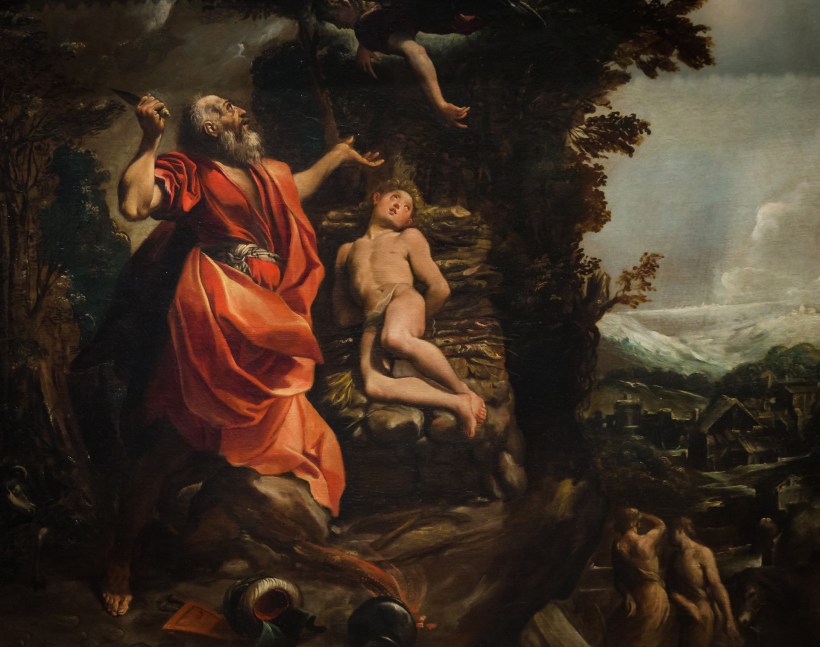
In the meantime, God counted Abraham’s faith and trust in Him as righteousness long before the law of Moses was given. People were set, however, in their preconceived ways. Even Abram thought he was obligated to sacrifice his son, consistent with the way the arbitrary and capricious gods with which he was familiar required such sacrifice. It was a revelation to Abraham that the Creator of the heavens and the earth did not require such sacrifice!
The law God gave Moses was intended to point in a different direction. That Law, in comparison to the laws of other ancient people in the area, was a moral advancement, but it was never intended to be permanent. It was simply a tutor to advance the unfolding revelation of God to mankind.
At the right time God became incarnate and introduced Himself to us in the form of Jesus. In Jesus, we have an exact representation of who God is. (John 14:9, Colossians 1:15; 2:9; 1 Timothy 3:16) The trajectory of God’s revelation to us goes through Jesus.
In the Sermon on the Mount, Jesus began telling people what they knew about the Law and he adjusted the way people though about itt. “You have heard it said …, but I tell you….”
Jesus is doing at least two things here. First of all, he is letting them know that keeping God’s law is much more than observing rules and checking off boxes. Keeping the law means internalizing it so that it becomes a guide for our hearts and the way we think. If we think we have satisfied the requirements of the law by our external actions, we are sadly mistaken.
I believe That Jesus is also ratcheting up the intended impact of the Law, which was to bring us to the realization that we cannot measure up to God’s standard on our own. The Law was meant to give God’s people an object lesson in their utter inability to measure up to the perfection the Law required so that we would realize we cannot attain to it.
If you read through the Old Testament and pay attention, you will see that God’s people do not keep His law. They never keep His law. They always fail in some aspect – often quite miserably. At the end of the book of Judges, for instance, every man was doing what was right in his own eyes.
Because religious people in particular failed to understand this, Jesus upped the ante in the Sermon on the Mount by telling us it’s not enough simply not to do the forbidden things. If we entertain them in our hearts, we have violated the Law. Paul echoes the words of Jesus when he tells us that anyone who lives by the Law must keep every part of it. If a person fails to keep even a single rule, they have broken the whole Law.
If we are depending on our ability to keep the Law for our salvation, we are going to be sadly disappointed. The point of the Law was not to give us a way that we can earn our salvation. It was to show us that we cannot measure up, and we need the righteousness that only God can give to us by His grace.
Our inability to be good enough should cause those who hunger and thirst for righteousness to cry out to God for help, because that is what we need – His help. We must come to the place where we realize our helplessness so that we turn to God and rely upon Him. This is the gospel. We needed the law to show us our inability to measure up so that we would understand the meaning of God’s grace and the importance of accepting it.
When we reduce God’s word to formulas and rules, we deviate from the path, just as the Pharisees did. The Pharisees added rules for keeping the Sabbath, but they didn’t understand the purpose of the Sabbath – resting in, trusting, and relying on God.
Jesus exposed this misunderstanding of the Law by allowing his disciples to pick grain for food on the Sabbath. Jesus healed people in front of the Pharisees on the Sabbath and he even healed them in the Temple to confront the religious leaders with their mistaken understanding of what the Law was intended to convey.
It is summed up in “Love God” and “Love your neighbor.” If our understanding of what God intended by the Law is not driven by that understanding. We miss the mark.
The Pharisees did not understand the trajectory of scripture and the importance of the heart in our relationship to God. All of Scripture, as Jesus points out, is intended to bring us to a place where we turn to God and find relationship in Him – a relationship that is from the heart. Only then can we be changed – born again as children of God our Father – so that we can become who God made us to be.
If we miss this trajectory that runs through Scripture, we will continue to see the Bible only as a book of rules and a code of law that describes how we must act. Our focus will be on external actions and not on the heart, which is where our focus should be. Our focus will be on doing what we think is required for salvation when God is calling us into a relation with Him as children to a Father, He is calling to love other people as He loves us.
It’s kind of like the colloquial statement, “It’s not what you know, it’s who you know.” We can know all of the right things but if we don’t know God, the things that we know are useless. If we are depending upon what we know and our ability to do it, we are missing the boat. Love God and love your neighbor.


