It is probably not exactly what you think

I have wanted to dig into the story of Sodom and Gomorrah for a while now, ever since someone suggested to me that the story isn’t what I think it is. Everyone knows the reference to Sodom and Gomorrah, right? God smote those villages with fire and brimstone because of homosexuality.
That’s what I was taught. At least, that is what I always believed, but I have learned there may be more to the story. The truth is right where we should expect to find it: in the Bible. If you are intrigued as I was, then read on.
First, let’s review the story in Genesis 13. Abram and Lot flourished, and their clans and flocks grew in size in the land God promised Abram. As their estates grew, tensions arose among their entourages, and they decided to separate and spread out. (Gen. 13:5-9)
“Lot looked around and saw that the whole plain of the Jordan toward Zoar was well watered, like the garden of the Lord, like the land of Egypt.” (Gen. 13:10) The desirability of the land prompted Lot to choose Sodom and Gomorrah in the plain of Jordon, while Abram remained in Canaan.
Although the land was desirable, the story ends with this ominous statement: “The people of Sodom were wicked and were sinning greatly against the Lord.” (Gen. 13:13) Did Lot know what he was getting into?
That statement is there for a reason. We should take note. The land was inhabited with “wicked” people, yet Lot moved there anyway. Perhaps, the allure of a well watered garden – like the garden of Eden and like Egypt – was so great that Lot ignored the fact that wicked people lived there.
The mention of similarity to Egypt should also recall the desire of the people in the wilderness to go back to Egypt. Though they were enslaved there, the land was lush, and they had food and comfort. It seems that these allurements caused Lot to overlook the obvious problem with choosing to live there.
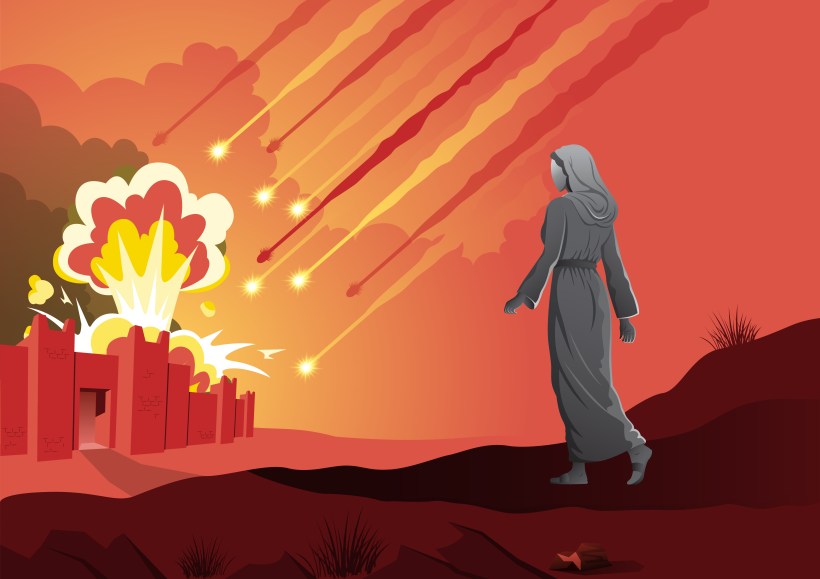
The comment also may provide an explanation for why Lot’s wife looked back in defiance of the angel’s warning. She may have regretted leaving such a desirable place to live, despite the wickedness of the people there.
She may have wanted to return to the abundance and comfort that drew them there, and that desire to hold on to abundance and comfort in the face of the abject wickedness of the people may have been her undoing.
We should also understand the backstory in Genesis 18 before we get to the story of Sodom and Gomorrah Genesis 19. Before the angels visited Sodom, they visited Abram.
Abram saw the three “angels of the Lord” from his tent. He went out to meet them, bowed in respect, and insisted they come to his tent to be refreshed. Abram and Sarai spared no expense to show them hospitality, and the angels returned the favor by affirming God’s promise to the elderly couple: promising that Sarai would bear a child within a year. (Gen. 18:1-15)
Before the angels left, the angels told Abram the reason they came: to investigate Sodom and Gomorrah because “the outcry against Sodom and Gomorrah [was] so great and their sin [was] so grievous.” (Gen. 18:20) This “outcry” that reached the LORD is the first clue to what was going on there. (Gen. 18:21)
The Hebrew word that is translated “outcry” in this verse is za’aq. It mean a shriek, cry for help, cry of distress, lamentation. The outcry means something was going on in Sodom and Gomorrah that was causing people to cry out for help in distress.
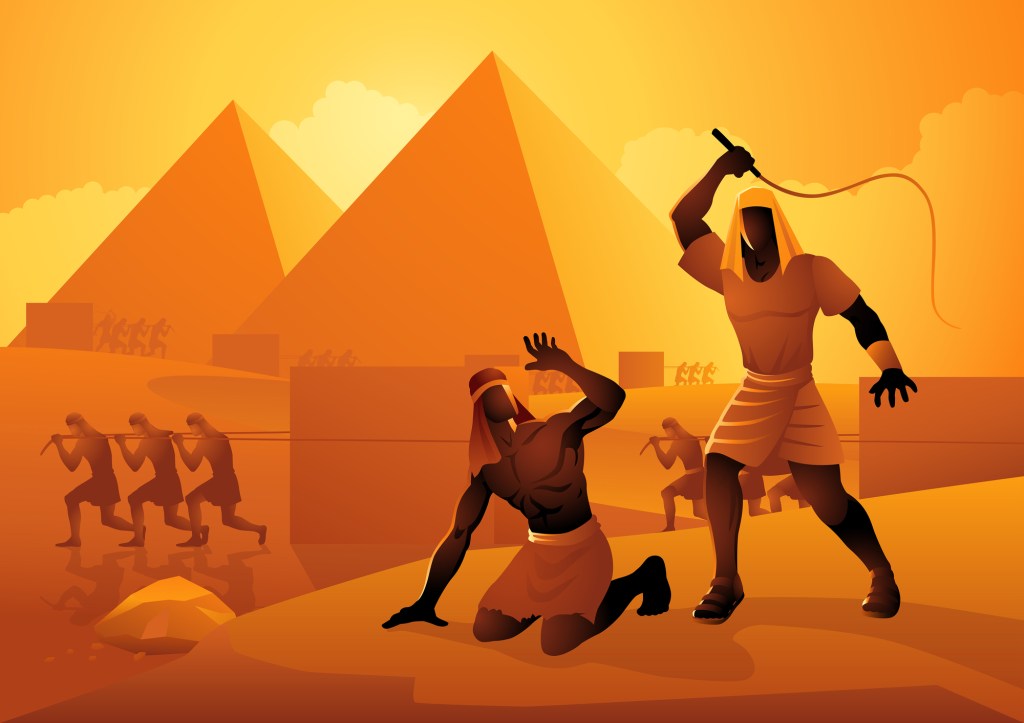
The word, outcry, in Genesis 18 should bring to mind Exodus 2:23 where God heard the Israelites cry out in distress over their oppressive treatment by the Egyptians. In both cases, in Egypt and in Sodom & Gomorrah, God responds to an outcry of the people living there.
They same word, za’aq, is used in both passages. God responded to the Hebrews cry for deliverance by sending Moses, and God miraculously rescued them from the land of Egypt. In Genesis 18, God similarly responded to a cry for deliverance from Sodom by sending His angels to investigate.
The parallel nature of these stories is important to recognize. The people cried out in distress, and God responded. Parallel stories and themes run throughout the Bible, and we should pay attention to them when they appear. They usually mean something.
We know why the people cried out in Egypt – because Pharaoh enslaved and mistreated them. The Bible is relatively silent, however, on the circumstances in Sodom and Gomorrah. If we pay close attention, though, we can find some clues!
Back to the story: In Genesis 19, Lot repeats the pattern of Abram’s hospitality. Lot saw two angels at the city gate, and he went out to meet them, like Abram did. Lot greeted them with respect the same way Abram did, and Lot insisted they come to his home where he prepared a feast for them, just as Abram did. (Gen. 19:1-3) These stories appear one after the other in the biblical narrative, and the parallel symmetry signals that we should pay attention.
Abram and Sarai, by the way, are known for generous hospitality. The generous hospitality of Abram is legendary in Jewish and even Muslim lore. Generous hospitality was a key distinctive of Abraham, God’s man of faith.
Lot, who was Abram’s kin, demonstrated the same kind of generous hospitality, but the story takes a bad turn. Everything seems great until the men of Sodom surround Lot’s house and demand that Lot bring the angels out to them, “So that we can have sex with them.” (Gen. 19-4-5) When Lot refused, they turned on Lot, This is what they said:
“This fellow [Lot] came here as a foreigner, and now he wants to play the judge! We’ll treat you worse than them.”
genesis 19:9
Most of us, I think, assume the sin of Sodom was primarily sexual in nature. The story certainly seems to suggest that if we miss the clues to what was really going on. The symmetry of the parallel stories leading up to the story of Sodom and Gomorrah suggest that something else is going on. The people crying out in distress, like the Jews in Egypt is another clue, and what the townspeople say to Lot is still another clue.
The clues are in the context and the contrast between the way Abram and Lot treated the foreigners/angels and the way the townspeople in Sodom & Gomorrah treated them. Abram and Lot go out of their way to greet the angels, bow to them in respect, make them feel welcome, and show them generous hospitality. The men of Sodom react the opposite way: they respond with hostility. They are angry that the foreigner in their midst (Lot) invited foreign guests into his home, and they came to punish and humiliate those guests by violating them sexually.
I never noticed these clues in the text before. They cast a different light on the story. It seems that the story is less about men wanting to have sex with men than it is about brutish inhospitality the strangers/foreigners.

This was a lynch mob. They came to run the foreign guests out of town and to demonstrate their extreme displeasure with Lot for inviting them in to his home. The men wanted to humiliate, violate, and punish Lot’s foreign guests in the worst possible way, and they wanted Lot to understand why: because Lot was a foreigner, and these men were foreigners, and they were not welcome in their town.
As side note, I would not likely have noticed this but for the book I am reading by James K. Hoffmeier, The Immigration Crisis: Immigrants, Aliens, and the Bible. He cites to the Sodom and Gomorrah story as an example of the way people in the Old Testament controlled their borders and their cities. (See also Judges 19-21 in which a similar scene plays out in Gibeah where the sons of Benjamin treat the Levites passing through in exactly the same way.)
I am reminded of the Parable of the Sheep and the Goats in which people did not realize the way they treated foreigners (and other vulnerable people) was like treating Jesus that way – good and bad. I am also reminded of Hebrews 13:2: “Do not forget to show hospitality to strangers, for by so doing some people have shown hospitality to angels without knowing it.” Mistreating strangers – similarly – might be nistreating angels!
This was the last straw for God. The angels returned the favor Lot showed them by protecting him and his family. The angels warned them to get out of town quick. As soon as Lot and his family were out of town, “the Lord rained down burning sulfur on Sodom and Gomorrah….” and reduced it to smoke and ash (Gen. 19:10-28)
Aside from some other details that do not seem directly relevant at the moment, that is the story of Sodom & Gomorrah. Most of the references to Sodom & Gomorrah in the rest of the Bible are used as warnings without much commentary, except for three passages. These passages tell fill in the rest of the story.
Jude
The first passage to note is in Jude. This passage seems to affirm the understanding I always had. Jude gives three examples of “ungodly people”, people “who pervert the grace of God and turn it into a license for immorality and deny Jesus Christ our only Sovereign and Lord.” (Jude 4) The examples are:
- The Israelites “who did not believe” and were destroyed out in the dessert (Jude 5);
- The angels who “did not keep their positions of authority but abandoned their proper dwelling….” (Jude 6); and
- “In a similar way,” the people of Sodom and Gomorrah, who “gave themselves up to sexual immorality” and “perversion” (NIV) or unnatural desire” (ESV) (Jude 7)
Jude prefaced the example of Sodom of Gomorrah by saying it is similar to the others, but the examples do not seem similar at first blush. The people who rebelled in the desert did not commit sexual sin; they opposed the authority of Moses. The angels who abandoned their place had sex with human women who gave birth to “Nephilim.” Sodom and Gomorrah (men having sex with angels) seems like the angels having sex with women, but those examples don’t seem similar to the rebellion in the desert.
Commentaries explain that “those who did not believe” in the dessert were people who complained and rebelled against God’s authority and refused to trust God. The examples of not believing and not trusting God include Korah, who challenged the authority of Moses. He stirred up 250 leaders to oppose Moses, and they were swallowed up in a huge sink hole when that challenge came to a head. (Numbers 16) (See also The Redemption of Korah: the Sons of Korah)
The people continued to grumble, however, and gathered again the next day in opposition to Moses and Aaron. They accused Moses and Aaron of killing Korah and the men who supported him. God responded to the rebellion by sending a plague, and 14,700 people died before God relented at the petition from Moses to have mercy. (Ibid.)
The second of the three examples from Jude is “the angels who did not keep their positions of authority,” Jude says they “abandoned their proper dwelling….” This example likely refers to Genesis 6:1-4 when one third of the angels (“sons of God”) rebelled by having sex with the “daughters of man” and intermarrying with human women who gave birth to the Nephilim.
This passage also seems to reference the Book of Enoch, which Jude references more directly in verses 14-15. The Book of Enoch goes into greater detail about the rebellion of the angels. (See bibleref.com)
The Book of Enoch is pseudepigrapha, which means it isn’t Scripture, but it was popular literature that Jews of the time knew and understood. Jude alluded to Enoch similar to the way we might reference a common fairy tale that people know – to convey a meaning that people understood. (I have included the detail on Sodom and Gomorrah in the Midrash, which includes the Book of Enoch, in the postscript to this article.)
The third example in Jude is the “perversion” or “unnatural desire” of the people of Sodom & Gomorrah. The King James Version uses the phrase, “strange flesh”. The Hebrew word translated as “strange” or “unnatural” (ESV) is heteros, meaning primarily different. It can mean the same but different (as in male and female); it can also suggest a stranger or neighbor (as opposed to kin). The word translated “flesh” is sarx, which means body (as opposed to soul) and can mean kindred (as opposed to a stranger or even a neighbor).
It’s easy to see why homosexuality is assumed to be the sin of Sodom & Gomorrah, but Jude is using a play on words here. He is highlighting sexual deviance and radical inhospitability to strangers.
The perversion/unnatural desire seems to be the men’s desire to have sex with men, but it could mean a desire to have sex with angels (because that is what those strangers were), and it could mean having sex for a wrong purpose (to punish and humiliate them as foreigners). It could even mean all of those things at the same time.
In the greater context of the passages of Abram and Lot, though, “strange flesh” should call to mind the difference between kin and foreigners – humans, but strangers. Perhaps, “strange flesh” is meant to emphasize the lack of proper relational connection (marriage between a man and woman). The context established by the backstory, though, suggests something else.
The men of Sodom & Gomorrah used sex in an unnatural way (with angels/strangers) with the intention to demonstrate their superior position, their anger and dissatisfaction, and to harm, humiliate, and shame the foreigners (not knowing they were angels) who dared to come and stay in their town at the invitation of another foreigner, Lot. They used the ultimate expression of love between humans that perpetuates kin in God’s design of human, familial relationship as a deviant weapon of punishment against angels in violation of God’s order of things) because they were foreigners – in deviation to the radical hospitality due them as vulnerable people in need.
Further, we need to align Jude’s qualification on the Sodom & Gomorrah example with the other examples: their sin operates in a similar way to the other examples.
It is similar to the “sons of God” who left their position (as angels) to have sex with, marry, and produce children with “daughters of men.” The angels were not of the same type as human women. They violated God’s order of things. They stepped outside their prescribed boundaries in rebellion against God to have sex with them and produce offspring with them.
The men of Sodom also sought to have sex with angels, but nothing in the text indicates that the men (or even Lot) knew they were angels. The deviance of the Sodomites was not necessarily sex with angels. People have assumed it was men having sex with men, but the more likely deviance in the context of this passage is the radical inhospitality of the townspeople to the strangers who sought protection and sustenance in stark contrast to the radical hospitality of Abraham and Lot.
But what of the rebellion in the dessert? What is the common theme there? There was no apparent sexual element to the sin of the people who rebelled in the desert.
About 15,000 or so men who died in the dessert died when they opposed the authority God gave Moses. The angels, too, defied God’s authority in having sex with the daughters of men. This suggests that the primary theme Jude emphasizes in his three examples is not deviant sexual relations. The primary theme is acting in opposition to God, refusing to honor God’s designed order, and acting contrary to it. Thus, even in Jude, the sexual nature of the sin of Sodom & Gomorrah seems to be secondary to primary point.
Matthew
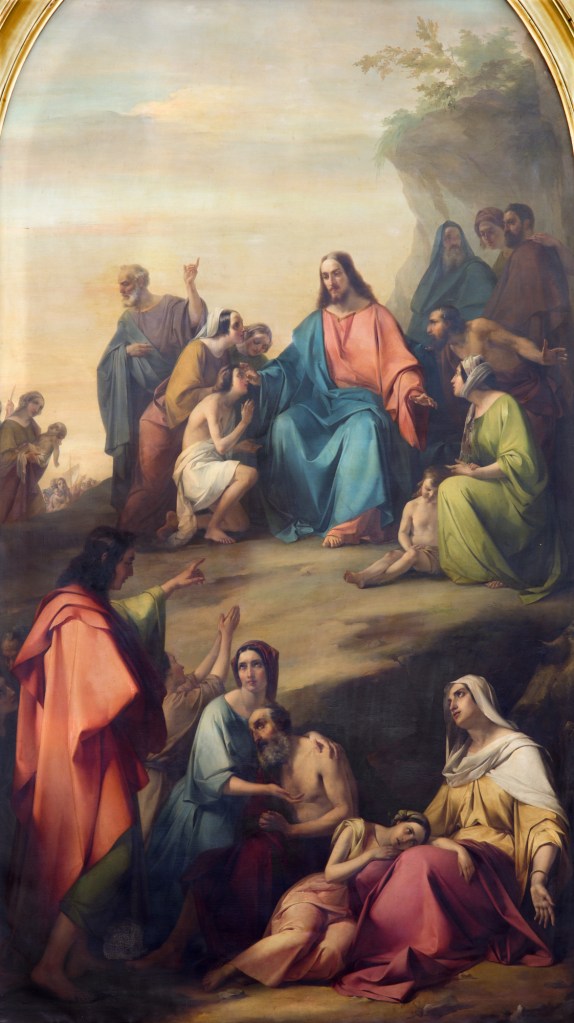
The second passage that provides more insight into Sodom and Gomorrah comes from Matthew. When Jesus sent out his disciples to the lost sheep of Israel (Matt. 10:5-6), Jesus told them, “If anyone will not welcome you or listen to your words, leave that home or town and shake the dust off your feet. Truly I tell you, it will be more bearable for Sodom and Gomorrah on the day of judgment than for that town.” (Matt. 10:14-15)
The idea of people not welcoming the disciples echoes the context of the story of Sodom & Gomorrah: the contrast between the generous hospitality of Abram and Lot to the brutal inhospitality of the townspeople in Sodom. The criticism of Jesus here has nothing to do with sexual sin at all. The sin in this passage is not welcoming the disciples (inhospitality) and not listening to the words of the disciples (unbelief).
The traditional Jewish understanding of Abram’s generous hospitality bears repeating here. Hospitality is considered by Jews and Middle Eastern people as one of Abram’s greatest attributes, which is why Middle Eastern people are proud even today of their hospitality. (See this Torah commentary on Abram’s hospitality) Abram’s example highlights how God values showing respect, hospitality, and generosity, especially to strangers (who are expected to return the favor).
Of course, the people of Sodom were not just unwelcoming; they were enraged by Lot’s hospitality to the foreigners he invited into his house. They were not just disrespectful, inhospitable, and ungenerous; they desired to punish, violate, and humiliate the strangers who showed up in their town, and they intended it to be a stern warning to the foreigner, Lot, for inviting them in.
The reference to Sodom & Gomorrah by Jesus in the context of how his followers should deal with inhospitality (and unbelief) seems to send a clear message: Jesus thought the sin of inhospitality was worthy, by itself, of the judgment that was meted out. I dare say this is not how modern Americans view that story. We seem to value hospitality shown to foreigners not nearly as much as Jesus did, especially in this present time as I am writing this article (2025).
Ezekiel
But, these passages don’t really give us a full and complete picture of what was going on in Sodom & Gomorrah. For that, we need to look to the prophet, Ezekiel, who gives us a detailed description of their sin:
“Now this was the sin of your sister Sodom: She and her daughters were arrogant, overfed and unconcerned; they did not help the poor and needy. They were haughty and did detestable things before me.”
Ezekiel 16:49-50 (NIV)
“Behold, this was the guilt of your sister Sodom: she and her daughters had pride, excess of food, and prosperous ease, but did not aid the poor and needy. They were haughty and did an abomination before me.”
Ezekiel 16:49-50 (esv)
I have provided two different translations of the passage for a fuller understanding. I will also examine the Hebrew words used to describe the sin of Sodom. First, though, we should note that Ezekiel does not mention sexual sin at all. Not really even a hint of sexual sin. This suggests that the sexual nature of the sin should not be our focus.
The Hebrew word translated guilt (NIV) or sin (ESV) is `avon, and it means perversity, i.e. (moral) evil. It is often translated as iniquity. We might tend to think of the words, perversion and iniquity, in terms of sexual sin, but the word, `avon, seems to be used most often in Scripture to mean sin, generically.
Thus, we need to pay attention to the more specific words Ezekiel uses to describe the sin of Sodom and Gomorrah. The first descriptor is arrogance (NIV) or pride (ESV).
The next word, though, seems odd: overfed (NIV) or “excess of food” (ESV). These are translations of the Hebrew word, sib`ah, which means satiety or fullness. This word appears in the Bible only in Ezekiel 16 (in verses 28 and 49).
Sib`ah appears in the adjective form in Ezekiel 16:28 as “not satisfied” (NASB) or “insatiable” (KJV), and it is combined with the phrase, “playing the harlot with the Assyrians.” Instead of relying on God for protection and provision, the northern kingdom of Israel formed political and military alliances with Assyria to protect themselves, and they adopted Assyria’s gods and religious practices in the process.
It seems that Israel’s desire for safety, wealth, and comfort (satiety or fullness) caused them to compromise their values. They looked to Assyria for these things instead of God. Playing the harlot with the Assyrians seems to suggest that the Israelites sought to appease the Assyrians to protect themselves in their excess and comfort. (Of course, that didn’t work out well for them, as Assyria eventually took them into exile.)
Ezekiel combines the words avon and sib`ah with shaqat, meaning “to be quiet or undisturbed”. Shagat comes from a root word that means appeased or idle. It is translated here to mean “unconcerned” (NIV) or at “prosperous ease” (ESV).

The combination of pride paired with overfullness and appeasing one’s own appetites at the expense of others suggests arrogance in pursuit of satisfying one’s self and in attaining comfort and ease. It suggests a prideful indulgence, idleness and comfort, with a lack of caring for other people.
Thus, the sin of pride in satisfying their appetites, comfort, ease, and idleness combined with being uncaring for others was what characterized the sin of Sodom & Gomorrah.
The reference to “playing the harlot with the Assyrians” in Ezekiel 16:28 suggests an abandonment of faithfulness to God for the things the world has to offer (symbolized by the Assyrians) and attempt to satisfy earthly desires and seek satisfaction with earthly things in opposition to God and at the expense of others. Lest we miss that last part, Ezekiel emphasized that “they did not help the poor and needy!”
This was the sin of Sodom, according to Ezekiel. They thought more highly of themselves than they ought to. Like Korah and the men who opposed Moses, they defied God. They fed their own appetites and compromised with wicked people to protect their comfortable, overfilled selves.
The significance of them not helping (NIV) or aiding (ESV) the poor ties back into the Sodom & Gomorrah story and provides better insight. It lets us know why people were crying out in distress. The people of Sodom were fat and satisfied with no concern for people in need. Not only that, they sought to punish and brutalize foreigners seeking provisions and shelter for intruding on their comfort and ease.
Verse 50 emphasizes the pride of the people again by adding another word for pride: gabahh, meaning to be high, exalted, lofty, or proud. Gabahh is an attitude of pride and lack of humility that leads us to be opposed to God. Their inhospitable character and actions that caused people to cry out to God opposes God’s character of love, mercy, and lovingkindness reflected in the contrasting stories of Abram and Lot’s generous hospitality shown toward the foreigners/angels.
Finally, the reference to “detestable things” (NIV) or “abominations” (ESV), tow`ebah, carries the connotation of idolatry. A thing is detestable or an abominable when it idolized. This rounds out Ezekiel’s description of the sin of Sodom & Gomorrah.
When we exalt ourselves, pursue our own appetites to excess, and desire comfort to the point of defying God and becoming uncaring and cruel to those in need, we make idols of these things.
In short, this is the essence of all sin: failing to love God, and failing to love others, and Sodom & Gomorrah did this to excess. The insatiability of the appetites can certainly include sexual appetite/sin, but anything we do to excess, and anything we exalt above God is an abomination (idolatry). The full picture of the sin of the people of Sodom & Gomorrah is much broader than their desire to have “unnatural” sex with the strangers in Lot’s house.
In the bigger picture, the sexual element of the sin is far from the worst part. The worst part was the idolatry (pursuing anything to excess and, therefore in opposition to God’s supremacy) and injustice (being uncaring, unloving, and inhospitable to strangers – and likely anyone else in need).

This makes sense to me as I dig into it. If loving God and loving others is the sum of the Law, then opposing God in idolatrous ways and not loving or caring for others are the main characteristics of sin. This combination also aligns with the two main themes of the prophets: idolatry and injustice.
Not only are idolatry and injustice the two main threads of sin addressed by the Prophets, they are intertwined with each other. Injustice exposes the root of idolatry, and idolatry leads to injustice. (See Injustice Reveals Idolatry) Where there is one present, the other is present as well.
God’s judgment was prompted by the outcry of the people who suffered the cruelties and injustices of Sodom & Gomorrah. Like the Israelites who cried out in Egypt, people oppressed by the inhabitants of Sodom & Gomorrah cried out, and God heard and responded.
The outcry that provoked God’s justice wasn’t the sexual sin; it was their arrogance in the prideful pursuit of their appetites and comforts at the expense of others and the intentional injustice they perpetrated on others that prompted God’s action. The last straw may have been their lynch mob action to gang rape the angels/foreigners who were guests in Lot’s home.
The face of the Lord is against those who do evil, to cut off the remembrance of them from the earth. When the righteous cry for help, the Lord hears, and delivers them out of all their distress and troubles. The Lord is close to those who are of a broken heart and saves such as are crushed with sorrow for sin and are humbly and thoroughly penitent.
Psalm 34:16-18
~~~~~~~~~~~
Postscript

Inspired by Jude’s reference to Sodom and Gomorrah, the Book of Enoch, and the Jewish Midrash, I decided to learn what the Jewish Midrash has to say about Sodom & Gomorrah. It turns out to be a lot, and the detail is very interesting in light of Ezekiel 16, Matthew 10, and Jude.
I relied on AI (Google Gemini) to get a quick response. (I welcome comments from anyone with more authoritative sources and more complete understanding.) According the prompts I asked, this is what I found without edits from me:
- Babylonian Talmud, Sanhedrin 109a-b: This is one of the most significant sources for the detailed narratives about Sodom’s cruelty and perverted justice system. It recounts stories like:
- The “Bed of Sodom”: A bed where guests were either stretched or mutilated to fit its size.
- The system of charity: Where everyone would give a coin to a poor person, but no one would give bread, so the poor person would starve, and then everyone would take back their coin when the person died.
- The burning of Lot’s daughter (or other women) for acts of kindness: This Midrash (also found in Pirkei de-Rabbi Eliezer) describes how a young woman who dared to give bread to a starving man was publicly executed, her cries reaching God and acting as the “outcry” that prompted divine intervention.
- The corrupt judges: Tales of judges who ruled in perverse ways, such as demanding payment from someone who had been injured, or giving an injured wife to her attacker.
2. Midrash Rabbah (especially Genesis Rabbah):
- Genesis Rabbah 48: This collection of homiletic interpretations on Genesis frequently elaborates on the Sodom narrative. It discusses:
- The general wickedness of Sodom, often linking it to economic selfishness and the “what’s mine is mine, and what’s yours is yours” mentality (also found in Pirkei Avot).
- The “outcry” (Za’akah) being the cry of the oppressed, especially those who were denied basic human kindness.
3. Pirkei Avot (Ethics of the Fathers):
- Pirkei Avot 5:10 (or 5:11 in some editions): This Mishnah states: “There are four characteristics among men: He who says, ‘What is mine is mine, and what is yours is yours’—this is a common characteristic; some say, this is the characteristic of Sodom.” This concisely encapsulates the Sodomite ideology of extreme individualism and lack of communal responsibility.
4. Pirkei de-Rabbi Eliezer:
- This work, a collection of rabbinic homilies, is another crucial source for the elaborate stories of Sodom’s cruelty, including the detailed account of Lot’s daughter (or other women) being executed for showing compassion.
5. Tosefta Sotah:
- Tosefta Sotah 3:11-12: Similar to the Talmud and other Midrashim, this text further expands on the concept of Sodom’s wealth leading to haughtiness and a refusal to share with outsiders.
6. Prophetic Books (Biblical, but influential on Midrash):
While not Midrash per se, the prophetic books of the Hebrew Bible also heavily influenced the Midrashic understanding of Sodom’s sins, particularly Ezekiel:
- Ezekiel 16:49-50: “Behold, this was the guilt of your sister Sodom: she and her daughters had arrogance, abundant food and careless ease, but she did not help the poor and needy. Thus they were haughty and committed abominations before Me. Therefore I removed them when I saw it.” This verse is foundational for the Midrashic emphasis on the social and economic sins (pride, gluttony, neglect of the poor) as primary, with “abominations” (often interpreted as sexual sins) as a symptom of this deeper societal illness.
FINAL COMMENT
These sources from the Midrash provide some Jewish context and understanding to the story of Sodom and Gomorrah. Since Jude refers to the Book of Enoch and the Midrash multiple times in his short letter, drawing on an understanding his audience would have had, it makes sense for us to read it for that context.
Pride, appetite, comfort, and uncaring inhospitality were at the heart of Sodom’s sin according to the Midrash. The people were not just inhospitable; they were wantonly cruel. They were not merely unjust; they punished acts of empathy, hospitality, and caring for others.
The sin of Sodom and Gomorrah is far more than sexual sin. The sexual sin was just an aspect of the far more serious sin of arrogance, rejection of God’s order (love and respect for God) and rejection of God’s character as loving, kind, and full of grace (loving and respecting others).
Jesus makes clear that what we do “unto the least” (including strangers) is a litmus test of our relationship with God – because what we do unto the least, we do (or do not do) unto Christ. Love of God and love of our neighbors are two sides of the same coin.
“Whoever claims to love God yet hates a brother or sister is a liar. For whoever does not love their brother and sister, whom they have seen, cannot love God, whom they have not seen.”
1 John 4:20
What does this mean for us? Perhaps, we have emphasized the sexual aspect of the sin of Sodom & Gomorrah too much and the more subtle (in the text) aspects of their sin too little. The hospitality of Abram and Lot stands in contrast to the way the men of Sodom treated the foreigner, Lot, and his foreign guests. God heard the outcry of the people who were distressed by the people of Sodom & Gomorrah, and He took decisive action. We should take notice of the reasons why.
Finally, this story seems more relevant to me today than ever in light of the daily examples of the way our nation is treating foreigners living among us. Yes, we need to control our borders, but we need to do it in a way that is consistent with God’s character, lest we be judged as Sodom & Gomorrah
.

 Navigating by Faith
2 thoughts on “What Was the Sin of Sodom and Gomorrah?”