Why Doesn’t God Reveal Himself to Me?

Have you prayed, and God didn’t respond?


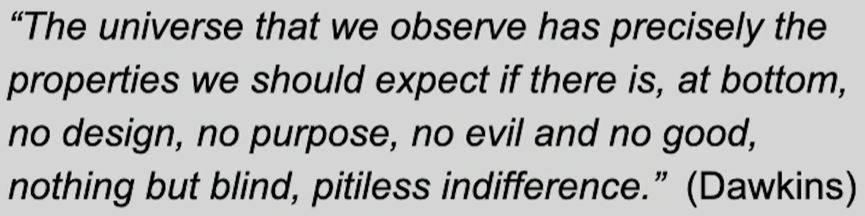
I have heard many people say that they would believe in God if God revealed Himself to them in clear, undeniable ways. Richard Dawkins, the New Atheist, said that God would have to write a direct message in the sky before he would believe (and then, he added, he would still assume that he was hallucinating or something else before believing it).

Young children tend to believe in God innately. This is true whether children are raised in religious homes or non-religious ones and in countries that are predominantly religious and in countries that are not. Even atheist sociologists have observed this phenomenon that some people have called “universal design intuition.” (See Universal Design Intuition & Darwin’s Blind Spot)

Since the Enlightenment, the general assumption in scientific and academic circles is that children outgrow naïve faith and civilizations do too as they advance in knowledge and sophistication. Thus, the modern assumption is that we outgrow faith in God as people and societies mature.

There is some truth to that assumption as we can see anecdotally (maybe in your own life or in the lives of people you know) and from the history of Western Civilization, with evidence of declining religious belief. Still, 81% of people in the United States in 2022 believed in God (or a higher power) (as reported in a Gallup poll), and the number increased to 82% in 2023 (according to a Pew Research poll).

We have all heard about the “Great Dechurching” – the 40 million Americans who used to go to church, but no longer do. We have also heard about “the rise of the nones“, the increase in the number of Americans who are atheist, agnostic or religiously unaffiliated, which increased precipitously from 16% in 2007 to 30% by 2022!

The nones include people of every age, but the highest percentage of nones are Gen Z and millennials. These age groups have largely grown up not going to church, yet, Bible sales surged in 2024 by 22% (after years of declining sales), and that surge is attributable to first time purchasers among Gen Z and Millennials. (See Bible boom: Why are people buying so many Bibles?; and US Bible Sales Jump 22% in 2024, Driven by First-Time Buyers and New Versions: Circana BookScan)

The hint of a spiritual renewal in the West isn’t limited to young Americans. Justin Brierley has reported on and written a book about the Surprising Rebirth of Belief in God in the UK. (See The Surprising Rebirth of Belief in God: Why New Atheism Grew Old and Secular Thinkers Are Considering Christianity Again) Agnositics and atheists, at least in the UK, are rethinking their positions on Christianity in noticeable numbers.

While Brierley’s thesis is largely based on anecdotal evidence, the volume of his anecdotal evidence is impressive. He has been hosting dialogues between atheists and Christians regularly since the mid-2000’s, and his data comes from a combination of atheists who have recently cozied up to the idea of God and religion and former atheists who unabashedly believe in God now.

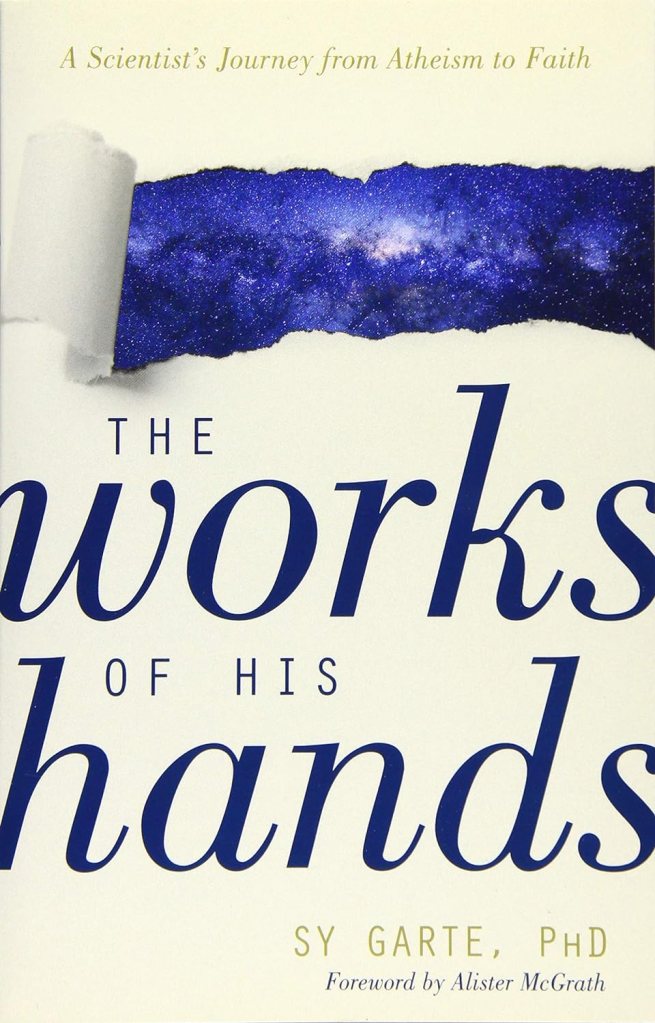
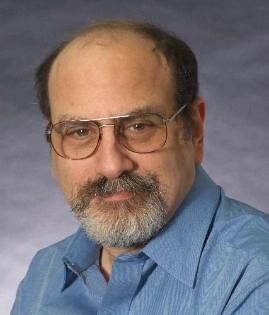
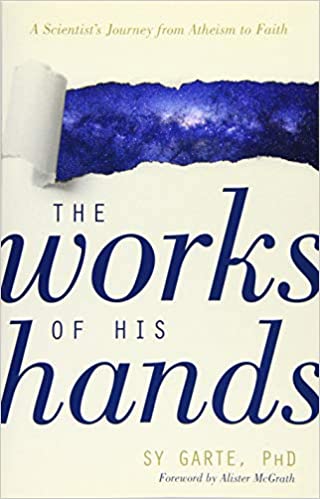
My writing today is inspired by one such former atheist, a bio-chemist with a robust career in science, who became a believer in his middle age. Sy Garte wrote a book about his journey from atheism to faith, The Works of His Hands: A Scientist’s Journey from Atheism to Faith, in which he explains how a combination of science and his experience led him to believe.

The science opened his mind to the possibility of God. His study of religions, philosophy, and theology led him to an intellectual acknowledgement of the likelihood of God, but his experience and willingness to embrace it brought him in the door to faith in God.
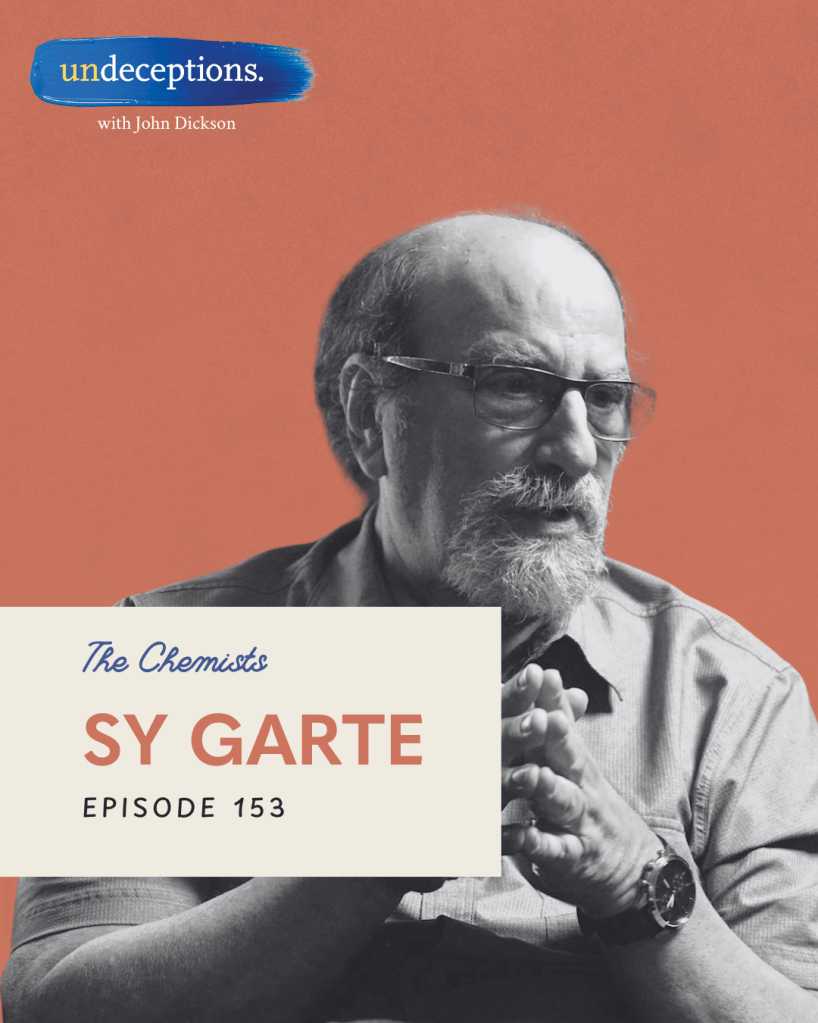

In a recent interview with John Dickson on the Undeceptions podcast, Sy Garte provides some advice to listeners who believe science holds all the answers to reality and truth by insisting that nothing in science contradicts the Bible.


If you read his whole story, he explains how science suggested the possibility of God to him, but he also emphasizes the importance of experience in belief. His acknowledgement of the role of experience, I think, is important, and it is underappreciated.

Skeptics and believers, alike, discount experience. A skeptic might chalk experience up to fantasy, a desire to believe, a disconnection with reality, or similar thinking. A believer might question the experiences of people who arrive at unorthodox beliefs based on their experiences.

Clearly, experience must be tempered by facts, science, and sound reasoning, but Sy Garte maintains that experience is good evidence, nevertheless, primarily for the one who has the experience. In doing so, he acknowledges the objection by the person who hasn’t had such an experience, and his response to the person who hasn’t had an experience with God is what I want to focus on today.

Continue reading “Why Doesn’t God Reveal Himself to Me?”
Science and Faith in Harmony: A Short Review of Sy Garte’s New Book

A scientist and former atheist explores the the strange light that emanates from the penumbra of science.


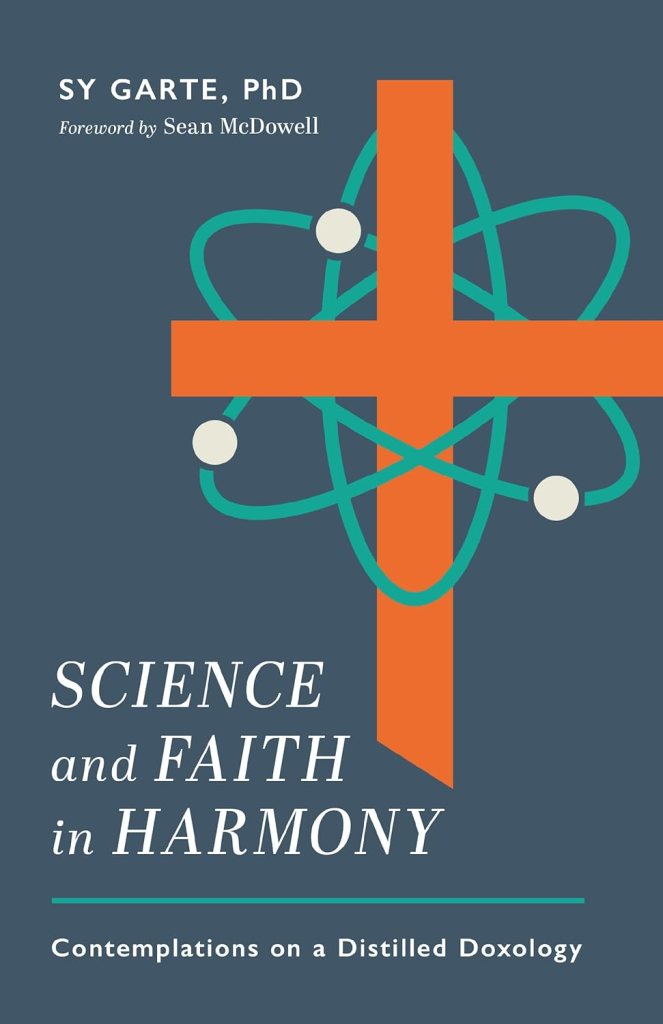
In his new book, Faith and Science in Harmony: Contemplation on a Distilled Doxology, Sy Garte makes the following statement:

“[Science] cannot be used to demonstrate the existence of God beyond doubt since it lacks the appropriate methodology and conceptual framework to investigate the divine. But if God exists, we would expect to find things about our universe outside of what we’d expect if there was no God – things that point to a Creator – and that is exactly what we find.”

Science in Harmony: Contemplation on a Distilled Doxology, p. 110

This statement is a good summary of the content of the book.

Sy Garte was a third generation atheist for decades, well into middle age. He is a retired scientist whose upbringing, education, and worldview was defined by materialistic and naturalistic assumptions. He was educated and trained to follow the science, and the science led him to him edges where science could not go.

The penumbra of a reality that was eclipsed to him in those materialistic assumptions emanated from behind those dark edges. He recognized the limits of those assumptions, and his curiosity led him explore the strange light at their edges.

Sy Garte tells his story in the book, The Works of His Hands: A Scientist’s Journey from Atheism to Faith. He followed the science where it led him. When it led him to dead ends where science could not go, he explored where science pointed. The journey took years. His story may not be your story, but it is well worth the read. It may even illuminate your own journey.


His most recent book, Faith and Science in Harmony: Contemplation on a Distilled Doxology, explores “the things that point to a Creator” in snippets of insightful science, poetry and story. He takes the reader to the penumbra and explores the light that shines out from behind it with snippets of science, stories, and unique insights.


Each chapter is short, packed full of a lifetime of insight, science, and faith that emanates from the science to which he devoted his life. The book illuminates a reality that was not accessible by that science alone, but to which that science leads. The book is as readable and accessible as it is intriguing and insightful.

The weaves science into a tapestry of personal stories, anecdotes, examples, quotations, Bible verses, and citations that explore the strange light that emanates from the edges where science meets faith.


Dr. Sy Garte is a biochemist and has been a professor at New York University, University of Pittsburgh, and Rutgers University. He has authored over two hundred scientific publications and four previous books.

Sy Garte has served as division director at the National Institutes of Health and Vice President for Research (acting) at the Uniformed Services University of the Health Sciences. He has also served on the Board of Advisors for the John Templeton Foundation. Sy is the Editor-in-Chief of “God and Nature” magazine and vice president of the Washington, DC, chapter of the American Scientific Affiliation (ASA). He is a Fellow of the ASA.

Sy is now a lay leader and certified Lay Servant in the United Methodist Church. Although retired from active employment, Sy keeps busy writing and evangelizing online and in the church. He also contributes to science and faith journals such as Perspectives in Science and Christian Faith, and keeps a blog “The Book of Works”.

The Chicken or the Egg and basic Assumptions on Origins

The chicken and the egg question confronts the basic assumptions about life


Which came first? The chicken or the egg? This is a school child’s question, but sometimes the most profound questions about life and reality as we know it can be boiled down (to keep with the theme) to simple questions and simple propositions.

Spoiler alert: I am not going to take a position on the chicken/egg controversy. That was just a teaser. The questions I want to address are far more fundamental (though actually related).

The assumptions we make, even the greatest geniuses among us, are pretty simple at their core. And we can’t prove them. We have to take them on “faith”, yet we construct our view of the world and how it works on the basis of those assumptions.

Many people develop those assumptions from an early age without much critical examination. Though our basic assumptions are the filter through which we view everything, and we use those filters constantly to make critical examinations of the world around us, we rarely examine or critique those filters, themselves.

Because our assumptions are the basis on which we reason, do science, and live our lives, we tend to be reluctant to subject them to rigorous examination. Two of the most fundamental filters by which people see the world are diametrically opposed to each other: 1) the assumption that a divine being exists through which the universe was created, and 2) the assumption to no such divine being exists, and all that exists is physical matter and energy.

(A third view is that the divine “entity” is one with matter and energy, but this view can be lumped in with the view that all that exists is matter and energy since this third view equates the divine with matter and energy. Only the first view assumes that divine reality exists separate and apart from matter and and energy and caused it to come into being.

I note that many people try to mix and match these fundamental assumptions. The view that the divine is “one with” and undifferentiated from the matter and energy that makes up the universe is such an attempt, and it runs into problems as a result.)

The assumptions could not be more simply stated: either God exists, or God does not exist. We vigorously defend whichever of these two assumptions we have embraced. We cannot definitely prove either of these assumptions, but we are often loathe to subject them to critical examination.

That doesn’t mean that we don’t “test” them. In some ways, our daily lives are a continual test of those basic assumptions – consciously or unconsciously. As we live our lives, our assumptions are repeatedly put to the test as we apply the filters derived from our assumptions.

I think all people have encountered some disconnection between reality and their basic assumptions. I think we have all struggled with feeling like the world doesn’t make perfect sense – it doesn’t add up according to our assumptions. I submit that is the inevitable state of a finite being who doesn’t know what she she doesn’t know (and, perhaps, never will).

Human beings are nothing, however, if not resilient. We are good at ploughing forward with vague feelings of unease that our basic assumptions are not adding up. We may not always be conscious of this unease. Some people simply shrug their shoulders and resign themselves to it.

“Eat, drink, and be merry” (for tomorrow we die), is the attitude people often hold onto who have reached a state of mental and emotional confusion and resolved it with indifference. Life has a way of confronting that indifference, however, when loved ones die, injustice hits close to home, and the age old question, “Why?!” pushes to the surface like rocks in a New England yard after a hard rain.

I submit that our faith is revealed in the way in which we hold to those assumptions, believing that they will be vindicated, despite the incongruities between those assumptions and the reality that continually confronts us. We put our trust in those assumptions and plow forward, moving the rocks to the edges of our intellectual territory.

Frankly, what else is a finite being to do?

A friend of mine, when I posed the question about the chicken or the egg, said the answer is easy: the egg came first. I don’t know whether he was being facetious or serious, but his confidence illustrates the point that we have faith/trust in our basic assumptions. He can’t prove the egg came first, but he was confident in his assumption.

In the following presentation, Sy Garte unpacks the basic chicken and egg question about the origin of life. Sy Garte is a scientist, a biochemist, who is retired from a career in science. He is published in scientific journals, and he is very familiar with the challenge of unpacking those basic assumptions.

His father was also a scientist. He grew up in an atheistic household that was hostile to the idea of God. He assumed that no God exists, and the world consists only of matter and energy into his 40’s.

At that point, he changed his mind on his basic assumptions. It was science that led him to question his basic assumptions and, eventually, to examine them rigorously. He came away from that rigorous examination with a new set of basic assumptions that, he says, make much more sense of science and reality.

If you are interested in his story, he wrote a book about his journey from a purely materialistic view of the world to the view that God exists: The Works of His Hands: A Scientist’s Journey from Atheism to Faith. But that isn’t the subject of my writing today.

I write today on the subject of our basic assumptions, and how they affect the way in which we approach the world. I hope you will take the time to watch the following presentation, which demonstrates how those basic assumptions affect our thinking. The presentation is only about 27 minutes long with Q & A at the end.

He presents the chicken and the egg question in two syllogisms. The first one is the assumption he grew up with and which formed the basis of his views for over 40 years:

As noted above, he was led to reexamine his basic assumptions through science. First, it was physics that posed a challenge to his basic assumption that no God exists. Much later, his beloved biochemistry led him further down the path. The second syllogism is the one he know assumes:

I have often thought of the importance of perspective for finite beings such as humans. Our individual and collective perspectives are unique and fixed in time and space to a very small connection with the universe. We are parochial with our perspective, and we tend to be adverse to other perspectives breaking in on our little corners of the universe. But, the universe is vast, and we should not be so fearful or defensive as to shield ourselves from other perspectives.

Risky Living: Jumping from the Ultimate Precipice

I have briefly explored the idea of good risks and bad risks in relation to the corona virus threat we have been facing over the last year. Using that as a springboard, I will explored the idea of tempting death, something, which we can’t avoid, regardless of how carefully we live. Now, I want to talk about the good risk of jumping from the ultimate precipice.

Some people gravitate toward risky behavior like a moth to the flame, and others impulsively withdraw into bubbles of protection for fear of sickness, injury and ultimately death. As one who gravitated naturally a little closer to the flames than the bubble, I lived a somewhat reckless youth. The precipice of physical danger, however, brought me to a more metaphysical precipice. The reckless attempt to find fulfillment in corporal, temporal things, led me far enough down that path to rule them out as the missing thing I really wanted.

As I read the Gospels for the first time in a college class, I recognized the truth in the statement that we should not lay up for ourselves treasures on earth. I could see that earthly treasures promised no lasting fulfillment. I had tested their capacity for fulfillment and found them wanting. I could see far enough down that road to know it contained a dead end.

Those experiences, eventually, led me to another precipice – a spiritual one. If God is real, I was on the outside looking in. I couldn’t see “in”. God stood behind a curtain to me, shrouded in mystery that I couldn’t penetrate.

I didn’t realize, then, that would find what I was seeking behind that curtain, but I was propositioned one day with the task of explaining God why He should let me in to His heaven…. That question brought me to the brink of that spiritual precipice.

His heaven… I realized in that moment that heaven (whatever heaven might be) was God’s place. He didn’t have to let me in. I was treading on His turf there, if indeed God existed, and He was under no compulsion to let me enter.

And why should He?

The answer that came from my mouth rang hollow in my heart. “I am trying to do better.” Better is a pretty relative term, but was my effort good enough? Was my effort even the best I could do? …. I knew it wasn’t.

If my best wasn’t enough, I was sunk, and I “knew” in my heart that it wasn’t enough. I knew in my heart I hadn’t even given my best.

When my questioner offered (finally) that heaven is a gift that God gives us, and we can’t earn it, I was dumbfounded.

My entire life was about earning something – earning attention, earning respect, earning grades, earning my own self-acceptance – and I was always falling short. I couldn’t even live up to my own expectations of myself. I wasn’t who I thought I should be!

My recklessness for seeking attention and acceptance and achievement turned to recklessness (for a time) in my abandonment to drinking, doing drugs and risky living. I saw that I was incapable of living up to my own dreams, so I abandoned those dreams for a time to the numbness of a narcotic stupor. Yet, I couldn’t escape the longing, and it only deepened the gap to realization of it.

I had turned back from the inevitable dead-end of a self-induced stupor to a purposeful seeking, but that which I sought I couldn’t exactly define. It wasn’t in me, but it seemed attainable. It was elusive, but I could almost taste it.

I stood at a new precipice that day, when I realized that a God who created the earth controlled whether I might enter His heaven. At the prospect that He offered it freely to me, if I would take it, I jumped.

(I have been to other precipices since that day for which the jump wasn’t as easy, maybe because I wasn’t as reckless, maybe because I took the jump more seriously, counting the cost more completely.)

I had jumped from other precipices, physical ones, in my life in attempts to find the right combination of thrill and daring that would make me feel better about myself, earn the respect or (at least) the attention of my peers and help me fit in to the world I wanted to live in and the person I thought I wanted to be. Those jumps had not brought me any closer to anything that was really satisfying, but that metaphysical jump I took when faced with the prospect of a God who “owned” heaven changed my life.

I accepted the offer. I “accepted” Jesus as my Lord and Savior (not knowing nearly well enough what that really meant). Fortunately, God took me at my word (little, though, that I knew what I was doing).

When I started this piece, I was reading The Works of His Hands: A Scientist’s Journey from Atheism to Faith by Sy Garte. He was a third-generation atheist, born to Russian immigrants who are members of the Communist party. He studied science and became a scientist. Along the way, the science that he was learning led him to question the philosophical naturalism and materialism that he had assumed was reality all his life.


I will end be telling the story of the precipice to which Sy Garte came. The landscape of this precipice looked different than the one to which I came many years earlier, but the decision to jump was no less momentous.

Continue reading “Risky Living: Jumping from the Ultimate Precipice”

My Answers to Questions about Christianity

Good questions are maybe more important than answers


A recent blogger posted the following challenge: Questions about Christianity, do you have answers? I am not sure I have all the right answers, but I feel compelled to respond, nevertheless. Good questions are maybe more important than answers. This blogger asks some good ones, so I will attempt some answers.

Question 1: The Christian religion portends God knows past, present, and future, and only a select group of people will go to heaven. The rest, whom he gave their own ability to think for themselves are condemned to hell for eternity. If God allows people to be born he ultimately already knows [sic] will reject Christianity and are destined for hell [sic] would this not preclude God’s love and benevolence?

I don’t like the word, religion. Growing up Catholic, I never felt good about religion. I didn’t feel comfortable in church, and I recoiled from dogmatism. I became a believer in college after reckless alcohol and drug use, becoming a seeker and exploring philosophy, literature, poetry and world religions. I still don’t feel comfortable with religion.

Religion is what people do and how people appear on the outside. Reality is on the inside. God sees the reality of people’s hearts; we don’t.

Religion, I believe, is too much of a man made construct. Not that there is no truth in religion; it’s just that religion is an effort at boxing in metaphysical reality that more or less defies the effort. The box (religion) often isn’t as flexible and resilient as it needs to be.

I think that God knowing past, present and future (from our perspective) flows out of who/what God must be. This gets into cosmological and other “arguments”. Simply, if the universe had a beginning, it had a cause. They cause of the universe could not possibly be the universe. The cause had to be something other than the universe.

The universe that came into being at the point of singularity (the so-called Big Bang) includes all of space/time and matter as we know it. Thus, the cause must be something other than space/time and matter. This basically means a cause that exists “outside” of space/time matter.

At this point, we don’t have the right words or perspective to flesh it out much further. Our perspective is subject to space/time and matter, so we naturally struggle describing something beyond it. The best conception we have is that God knows the past, present and future.

From our perspective, God did set the universe in motion “knowing” how it would play out. It sounds like you grew up in the Reformed tradition. I don’t understand that either. I don’t think God resigns some people to heaven and some people to hell, but what do I know?

I do think that will to choose is a necessity of love. If a man says he loves a woman but rapes her when she rebuffs his advances, no one would think that he loved her. Just the opposite. Love requires two freely willing entities. (Or it isn’t love.)

Did God know that some people would (or might) reject Him and go their own way? Yeah, I think we have to say He did. If He created a universe in which real love is possible, though, it has to be a universe in which there is real choice.

As for hell, I think it is a construct. It’s an attempt to define a particular reality that isn’t good. (Not all Christians believe in eternal flames.) It is the reality of not choosing or choosing not to love and embrace God. If God is love, rejecting or failing to choose God leaves a person without love (at a minimum).

I have come to conceive it kind of like gravity and other laws of physics. It’s just the way it is. I don’t know what hell really is. Some people say that people who reject or fail to choose God just cease to exist, and they have strong arguments from Scripture for that view. I really don’t know, and I am not willing to claim that I do.

CS Lewis, in the book, The Great Divorce, explores the idea of hell being an extension of our existence on earth (as is heaven) in which people are forever moving away from each other and fading into a shadowy existence. We choose the direction we go; and though we are free to choose otherwise, at some point, the inertia of our movement carries us along in the direction we have chosen. It’s not so much a single choice, but an untold number of small ones that can become reflexive over time.

CS Lewis also paints a picture in the last book of the Chronicles of Narnia that gets at the idea that we don’t know what is in the heart of a person, but God does. For want of time and space, the whole world is lined up in front of the Lion (the Christ figure) and most walk past Him. As each person approaches, they are either drawn or repelled.

At that point, they have no more choice left. People have made their choices (the sum of all the choices they made during life). The surprising thing is that some of the people who are drawn and some of the people who are repelled are not what you would expect.

One last thought: the conversation between Jesus and the thief on the cross suggests that a person can make the choice at the very last minute. Despite all the choices or failing to choose during life, if a person turns to God, even at the last minute, God will accept them. This makes sense if God is, indeed, love as Scripture says.

There is so much more to explore here, but time and energy suggest that I more on. Continue reading “My Answers to Questions about Christianity”