
Is Your Faith Determined by Where You Live, Your Parents and Your Culture?

People do tend to adopt the faith perspective that is predominant where they live, that their parents had, and in the society in which they were raised, but….


Richard Dawkins famously claims that religion and faith are a product of where people live and the influence of their parents and the culture in which they live. A quick look at data on religious faith might suggest Dawkins is right.

On other hand, Richard Dawkins was raised in the Anglican faith and was confirmed at the age of 13. He didn’t remain a Christian, though. In his later teens, he rejected the God and religion he was raised to believe in and the religion he was confirmed in.

Dawkins, himself, proves the falsehood of his own claims – unless, of course, Dawkins is the extremely rare outlier.

Dawkins’ assertion is generally true if we take a quick look at the data, but even the data reveals it isn’t so simple. People who live in areas in which religious belief is enforced by law and social custom tend to remain (at least) nominally loyal to that religious belief, but there are significant outliers in the data.

Iran, for instance, had 100,000-300,000 Christians in 1979, comprised of ethnic Armenians, Assyrians, and Chaldeans who had lived there for centuries. Organizations like ELAM Ministries and Transform Iran reported only 300-500 Muslim converts to Christianity in 1979.

In 1979, revolution dethroned the Shah formed an Islamic state. Since that time, Islam has been enforced by law and strong social mores. Onerous legal and social penalties are imposed on people who convert from Islam to other religions, including physical punishment, social exile, imprisonment, and even death.

For the past 44 years, Iranians who decided to become Christians have been persecuted with religious zeal and governmental force. (The World’s Fastest Growing Church, July, 20, 2023 (International Christian Concern)) “All missionaries were kicked out, evangelism was outlawed, Bibles in the Persian or Farsi language were banned and several pastors killed.” (A spiritual revolution in Iran?, September 16, 2020) Global Christian Relief))

Some people report that the number of Armenian, Assyrian, and Chaldean Christians has slowly dwindled to around 100,000. (See The World’s Fastest Growing Church) This kind of outcome is to be expected in a country like Iran in which one religion is not only predominant; it is enforced by legal decree and social coercion.

Unexpectedly, though, the number of Muslim converts has risen exponentially since 1979 according to faith-based groups that support them. Until recently, the claims of exponential growth in Muslim conversions to Christianity in Iran were largely anecdotal reports from faith-based organization.

Those claims have recently been affirmed by the secular, Netherlands-based research group, GAMAAN. A 2020 poll of 50,000 Iranians aged 20+ Iranians shows that 1.5 percent of then identify as Christian. (Survey supports claims of nearly 1 million Christians in Iran, Aug, 27, 2020, (Article 18)) With a population of 80M+, that works out to 1,200,000 Islamic converts to Christianity in 2020. (See A spiritual revolution in Iran?)

Continue reading “Is Your Faith Determined by Where You Live, Your Parents and Your Culture?”
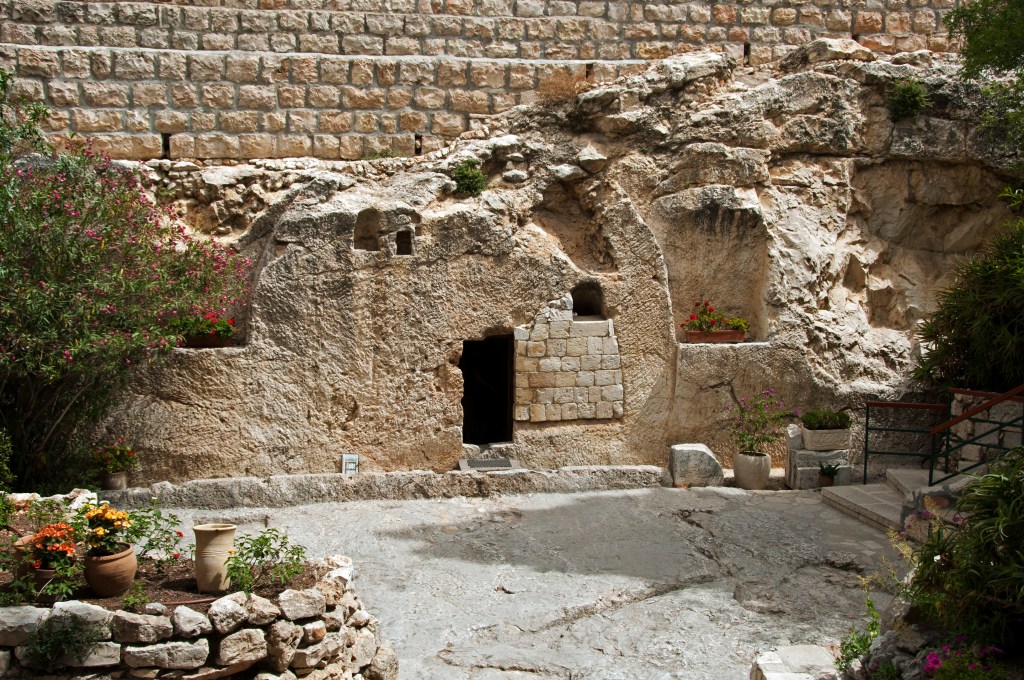
The Minimalest, Non-Factual, Argument for the Resurrection

Perhaps, the minimalest, non-factual argument in favor of the resurrection isn’t a factual argument at all, but a philosophical one.

Thought to be the place of the resurrection of Jesus Christ in Jerusalem Israel

The title of this piece is tongue-in-cheek, a play on the “minimal facts” evidence for the resurrection made famous by Gary Habermas. I don’t really have a killer piece of evidence that uses fewer facts (or no facts) that trumps all other arguments. But, maybe I got your attention!

As often is the case, my inspiration comes from what someone said or wrote. In the podcast interview linked below, Mason Jones describes how he he decided to read through the Gospel accounts as an atheist who knew next to nothing about Christianity. He quickly caught on that the resurrection is the centerpiece of Christianity, so he focused his attention on that.

He researched the evidence for the resurrection. He googled arguments for the resurrection and arguments against the resurrection. Though he was an atheist at that time, he was willing to give the evidence that exists a chance. (Whether there was any, he didn’t know.)

As he considered the arguments and counterarguments, he found that the arguments against the resurrection didn’t address very well the arguments for the resurrection. They didn’t take them seriously.

Then he realized that the arguments against the resurrection only work if you start with the presupposition that the resurrection didn’t happen. Because it is impossible. Because people don’t come back to life. Ever.

If you take that presupposition out of the equation, thought Jones, the evidence favors the conclusion that the resurrection occurred, and the arguments against the resurrection loose their luster. If you want to hear the rest of Mason Jones’s thought journey from atheism to theism to Christianity in his own words, you can listen here.

Meanwhile, I want to spend a little time considering the presuppositions people make about the resurrection.

Continue reading “The Minimalest, Non-Factual, Argument for the Resurrection”

God Speaks to Each of Us in Our Own Love Language

The poignance of human longing, existential angst, and the intimacy of God with us

Photo credit to Carolyn Weber: author, speaker and professor

Carolyn Weber has always been an academic, but she is no longer an atheist. She has a B.A. Hon. from Huron College at Western University, Canada and a M.Phil. and D.Phil. from Oxford University, England. She has taught at faculty at Oxford University, Seattle University, University of San Francisco, Westmont College, Brescia University College and Heritage College and Seminary, and she was the first female dean of St. Peter’s College, Oxford.

My inspiration today comes from an interview of Carolyn Weber by Jana Harman on the Side B Stories podcast. You can listen to the hour long interview in episode 4, Finding God at Oxford – Carolyn Weber’s story. She turned her personal story into a book, “Surprised by Oxford”, which is being made into a screenplay staring Phyllis Logan from Downton Abbey and Mark Williams from the Harry Potter movies.

In the interview, Carolyn Weber shared that she was drawn to the romantic writers of the 17th and 18th centuries in her college years because they wrote about infinite longing. Carolyn long recognized a similar longing in her own life, and they romantic writers resonated with that longing in her. 

Carolyn was raised in a non-religious home. She had no experience with religion, and she was not familiar with the detail of Christianity or the Bible.

She recalls that she knew nothing of the Bible until she read the Bible for the first time in a college class. As an undergraduate literature major, her first impressions of the Bible included included recognition of how well the story of the Bible holds together in intricate detail, though it was written over many centuries by almost four dozen different writers.

These elements of Carolyn Weber’s story remind me of my own story. I was raised in a religious home. We were Catholic, and we went to church every Sunday, but I had never read the Bible. I knew next to nothing about the Bible before college, and church seemed to have no relevance for me.

I was also an English Literature major. I also read the Bible for the first time in a college class. I wasn’t particularly drawn to the romantic writers, but I did notice the theme of longing, and it intrigued me. (You can read my story here.) Our first impressions of the Bible were also very similar.

I recognize that my resonance with Carolyn Weber’s story may not translate to every reader (and maybe not to any reader). A statement she made in telling her story, however, may. She said, “God speaks to us in our love languages.”

I can identify with that, perhaps, because my “love language” seems to be so similar to hers. The same things that spoke to her, spoke also to me. I will explain below, but I invite you to consider as you read (or go back to listen to her story) what your love language is and how God has spoken intimately to you in your love language.

Continue reading “God Speaks to Each of Us in Our Own Love Language”