Inspiration or Artifice? Faith and Reason

From a presentation by Francis Collins at the Veritas Forum at the California Institute of Technology

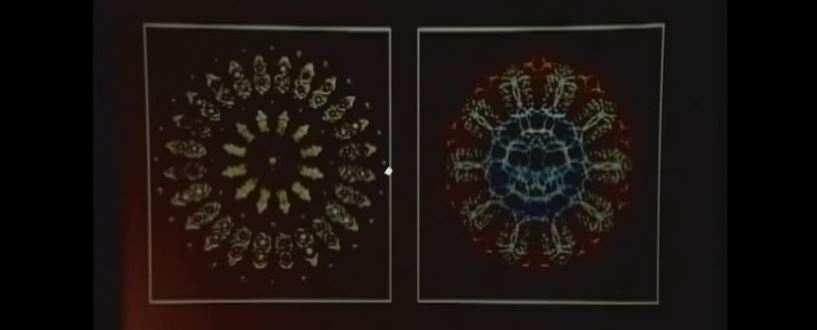
Take a close look at the two images. What do they represent? We might say that one image represents science and the other represents religion (or faith). But which is which?

The images are similar, but one of them is manmade, and the other is something we find in nature. Do you know which is which? Is the manmade image the scientific one or the spiritual one?

I will answer these questions; at least I will answer them as they were described in a presentation given by Francis Collins, the manager of the Human Genome Project, at a Veritas Forum at Caltech University in 2009. In the process, we will explore the chief question examined by this eminent scientist: whether science and faith are compatible.

Continue reading “Inspiration or Artifice? Faith and Reason”

An Inkling of Transcendence: Lewis and Tolkien

Some say today that science is the study of everything that exists. If Lewis, Tolkien and Williams were millennials today, they would “call BS”.

Despoitphotos Image ID: 121201272 Copyright: chrisdorney

“[His] father had taught him to absorb doubt and disbelief into his beliefs.”

This statement from the book, Inklings, by Humphrey Carpenter, is spoken of Charles Williams, who was a regular participant in the informal discussion group, the Inklings, formed by CS Lewis and JRR Tolkien at the University of Oxford, England. The group met at various times in Lewis’s classroom and a local pub from the late 1930’s to 1949. Charles Williams was an early member of the group and continued as a regular until his death in 1945. Williams grew up “a devout churchman” but was encouraged by his father “to appreciate the force of atheistic rationalism and to admire such men as Voltaire and Tom Paine”.

Lewis, of course, was an atheist when he arrived and began teaching at Oxford. His journey from materialism to agnosticism to Christian theism is chronicled in his autobiographical work, Surprised by Joy. Tolkien was already a Christian when Lewis joined him as a professor at Oxford, and Tolkien influenced Lewis in his transition to Christianity. Williams came along later. These men were attracted to each other as much by their love of language, literature and poetry as their faith, though their views on literature and faith often diverged sharply.

These three men, and others who joined them, were powerhouses of thought and creativity. CS Lewis, of course, wrote many books from fiction to philosophy. JRR Tolkien wrote, perhaps, the greatest mythological series of the 20th century in the Hobbit and the Lord of the Rings Trilogy. Charles Williams, though lesser known, was a prolific writer, literary critic, publisher and student of English literature who could recite hundreds of passages from sheer memory.

They influenced each other, despite their very distinct differences, and their collective influence has been felt by generations from their day to ours. They were Christian men, believing very authentically in the Bible as scripture, but they were also fierce academics who held their faith up to the rigors of intellectual exercise.

Continue reading “An Inkling of Transcendence: Lewis and Tolkien”

Is the Bible Scientifically Accurate?

Doesn’t the God of the universe know these things? Why doesn’t He get the facts right?!

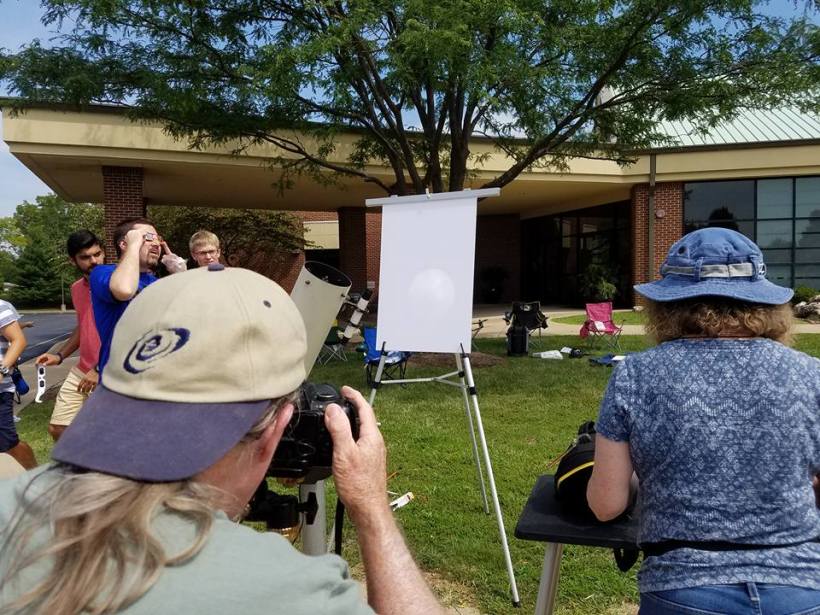
Photo taken of friends at a church in Missouri viewing the eclipse

I listened to a presentation by Jon Jorgenson on Science vs. the Bible in which he addressed the question whether the Bible has any scientific errors. Jon’s YouTube channel is aimed at teenagers and young adults, and he is a prolific producer of inspirational and devotional material.

He acknowledges, the answer, literally, is yes. For instance, in Genesis, the author describes the Moon as a “lesser light”, but we know the Moon is not technically a light. It doesn’t generate light of its own like the Sun.

Another example is the parable of the mustard seed. Jesus calls the mustard seed the smallest of all seeds. We know that there are other seeds in the world that are smaller than mustard seeds.

For these reasons, we cannot honestly say that the Bible, on its face, taken literally, is scientifically accurate. It simply isn’t.

Jon offers that we shouldn’t expect the Bible to be scientifically accurate because it isn’t meant to be.  2 Timothy 3:16 states: “All Scripture is inspired by God and profitable for teaching, for reproof, for correction, for training in righteousness”. (NASB) From this, he makes the point that the Bible is written for a different purpose.

Still, one might ask, doesn’t the God of the universe know these things? Why doesn’t He get the facts right?!

Continue reading “Is the Bible Scientifically Accurate?”

Turning from Idols toward God: the Human Intellect

Many Christians have abdicated the realm of the intellect to modern culture and secular institutions

Depositphotos Image ID: 20592505 copyright: olly18

Human beings can make idols out of anything. We can even make an idol of human intellect/mind. As with all created things, the human intellect is limited and finite. Many people, nevertheless, put their ultimate faith in the human intellect. This is idolatry when we trust in our own intellect instead of trusting in God.

Putting faith in our own intellect is, ultimately, foolish. What do we know that God doesn’t know? What can we understand that God doesn’t understand? Relying on ourselves in this way, to the exclusion of relying of God, is (to put it mildly) short-sighted. It is sin, to put it more bluntly.

Self-reliance is the mistake that Eve made in the garden when the serpent tempted her by saying “you will be like God”![1] We want to be our own gods. We would rather rely on ourselves and our own intellect.

This is the basis of pride, which is the essence of sin. Paul says that our pride and self-reliance is why “God chose the foolish things of the world to shame the wise”.[2] But, “the wisdom of this world is foolishness” to God.”[3] As Isaiah says:

“For My thoughts are not your thoughts,
Nor are your ways My ways,” declares the Lord.
“For as the heavens are higher than the earth,
So are My ways higher than your ways
And My thoughts than your thoughts.”

Isaiah 55:8-9

For these reasons, and others perhaps, Christians today tend to distrust science, worldly thinking, philosophy and even the mind, itself. Some Christians have all but abandoned the world of science, philosophy and the intellect to secular institutions and minds, and this is a terrible mistake!

Christians are skeptical of science. Christians are fearful of philosophy. Christians are even distrustful of their own minds. Many Christians have abdicated the realm of the intellect to modern culture and secular institutions. But here’s the thing: this is sinful too!

Sin[4] means literally (forfeiture or loss from) not hitting the target, to miss the mark. We can sin by directing ourselves in a way that God doesn’t approve, and we can also sin by failing to direct ourselves in a way that God approves. Sin has positive (active) and negative (passive) components.

Continue reading “Turning from Idols toward God: the Human Intellect”

When Scientists Stray From Science

Some people today have made the mistake of using scientific methodology that is limited to the study of the natural world to conclude there is no reality but for the natural world.

Depositphotos Image ID: 151533714 Copyright: avemario

Methodological naturalism is the basic approach of science. Since science is the study of the natural world, the methodology of science is limited to the parameters of the natural world. Methodological naturalism is theologically neutral.

So what does that mean?

On a very fundamental level, it simply means that science is the study of the natural world, and, therefore, science is limited to naturalistic methodology. Science is limited to the observations of matter, energy, space, and time.

Another way of putting it is that science has no preoccupation with anything that is super natural. Science is limited to a focus on the natural world. Science doesn’t bother itself with anything but the natural world (though scientists might stray beyond it).

Science does not and cannot comment on anything but the natural world (though scientists often do), because the natural world is the focus of science. It’s as simple as that.

None of this should be in the least bit earth-shattering. Confusion arises, however, when we begin discussing the supernatural, the metaphysical, the theological, and the philosophical realms in relation to science.

There are those scientists, for instance, who have recently suggested that the advance of science today has done away with the necessity of philosophy. People like Lawrence Krauss and Neil deGrasse Tyson have made statements like that, though they have both backed off of those initial statements more recently. It’s important to understand that those statements, themselves, are philosophical in nature, and not scientific.

To suggest that science has done away with the necessity for philosophy is to ignore the limitations placed on science in its very methodology. Science, itself, is not philosophical, but evidence from science can support premises that are philosophical, and scientists may draw philosophical conclusions from scientific facts.

Science may inform philosophy, but it can never replace philosophy. To think otherwise is to exalt science beyond its natural parameters (pun intended) and to fail to appreciate the difference between science and philosophy.

Continue reading “When Scientists Stray From Science”