As often happens with me, the things I have been listening to and reading have converged in a meaningful way. Whether we attribute these “convergences” to God’s presence in our lives or dumb luck, pure happenstance, or “coincidence” is a matter of speculation and faith.
Whatever you want to call it, I take special notice of these things. I pay attention. I take them seriously, and they become signposts on my journey through life.
Perhaps, I am just being a good attorney. I am trained to find harmony and contrast in nuanced fact patterns and to apply legal principals to them. Finding harmonies and contrasts and applying spiritual principals to them operates in the same vein. That’s the way my mind works.
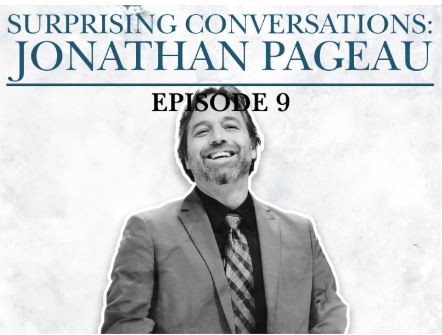
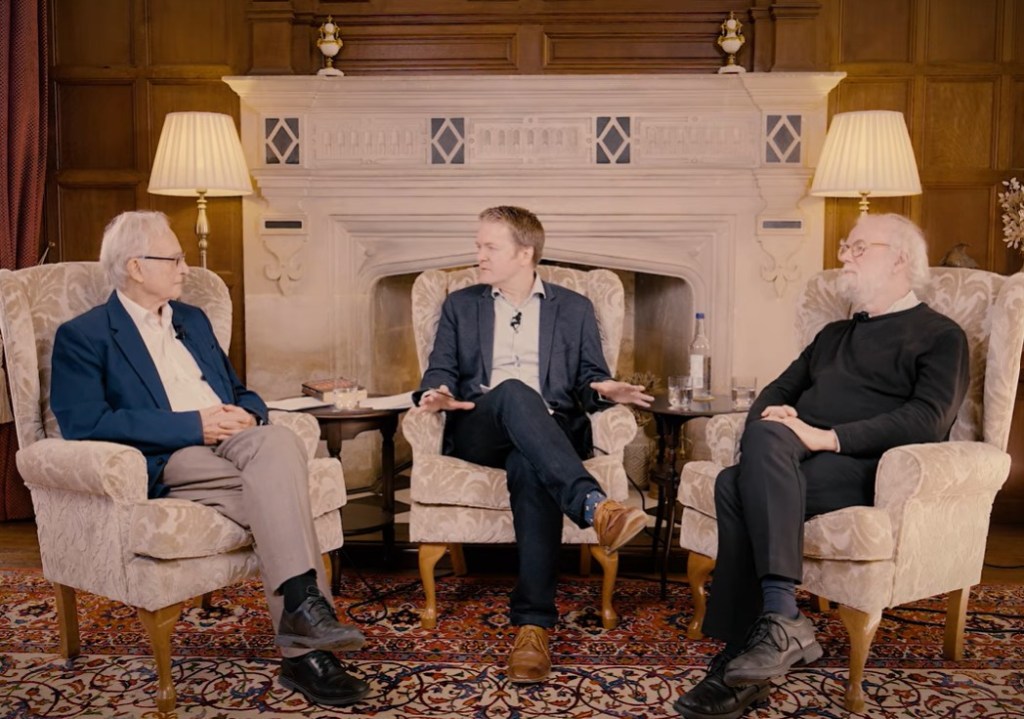
Yesterday, I listened to an interview of Jonathan Pageau by Justin Brierley. Pageau is an interesting character and a critical thinker. His recent conversation with Brierley inspires my writing today.
Raised in Montreal influenced by French Catholicism in a French Baptist Church community, Pageau has moved over to Eastern Orthodoxy by way of 4-year and 3-year stints in the Congo and Kenya. He has an undergraduate degree in postmodern art. He returned from Africa to obtain a degree in Orthodox Theology and Iconology from Sherbrooke University in Quebec. Along the way, Jonathan Pageau has become a cutting edge Christian thinker who is in demand as a speaker.
One line of discussion caught me ear in the interview with Justin Brierley that I want to explore. The subject touches on post-Enlightenment, neo-religious thinking and the proof of God.
People do tend to adopt the faith perspective that is predominant where they live, that their parents had, and in the society in which they were raised, but….
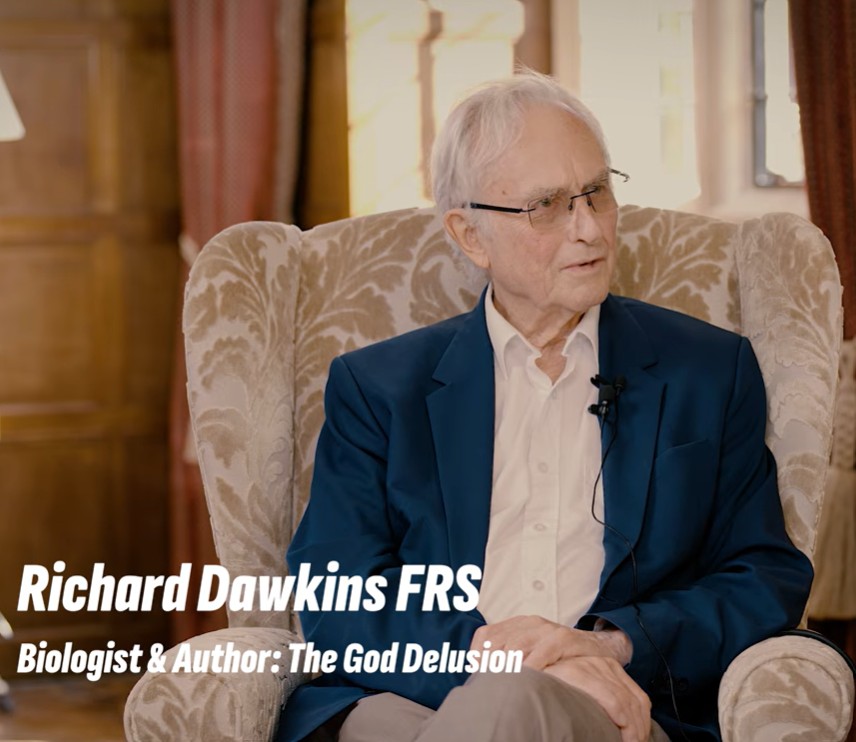
Richard Dawkins famously claims that religion and faith are a product of where people live and the influence of their parents and the culture in which they live. A quick look at data on religious faith might suggest Dawkins is right.
Dawkins, himself, proves the falsehood of his own claims – unless, of course, Dawkins is the extremely rare outlier.
Dawkins’ assertion is generally true if we take a quick look at the data, but even the data reveals it isn’t so simple. People who live in areas in which religious belief is enforced by law and social custom tend to remain (at least) nominally loyal to that religious belief, but there are significant outliers in the data.
Iran, for instance, had 100,000-300,000 Christians in 1979, comprised of ethnic Armenians, Assyrians, and Chaldeans who had lived there for centuries. Organizations like ELAM Ministries and Transform Iran reported only 300-500 Muslim converts to Christianity in 1979.
In 1979, revolution dethroned the Shah formed an Islamic state. Since that time, Islam has been enforced by law and strong social mores. Onerous legal and social penalties are imposed on people who convert from Islam to other religions, including physical punishment, social exile, imprisonment, and even death.
For the past 44 years, Iranians who decided to become Christians have been persecuted with religious zeal and governmental force. (The World’s Fastest Growing Church, July, 20, 2023 (International Christian Concern)) “All missionaries were kicked out, evangelism was outlawed, Bibles in the Persian or Farsi language were banned and several pastors killed.” (A spiritual revolution in Iran?, September 16, 2020) Global Christian Relief))
Some people report that the number of Armenian, Assyrian, and Chaldean Christians has slowly dwindled to around 100,000. (See The World’s Fastest Growing Church) This kind of outcome is to be expected in a country like Iran in which one religion is not only predominant; it is enforced by legal decree and social coercion.
Unexpectedly, though, the number of Muslim converts has risen exponentially since 1979 according to faith-based groups that support them. Until recently, the claims of exponential growth in Muslim conversions to Christianity in Iran were largely anecdotal reports from faith-based organization.
Those claims have recently been affirmed by the secular, Netherlands-based research group, GAMAAN. A 2020 poll of 50,000 Iranians aged 20+ Iranians shows that 1.5 percent of then identify as Christian. (Survey supports claims of nearly 1 million Christians in Iran, Aug, 27, 2020, (Article 18)) With a population of 80M+, that works out to 1,200,000 Islamic converts to Christianity in 2020. (See A spiritual revolution in Iran?)
Most people know well the checkered history of Christianity on racism, especially in the United States. Much less is said (and therefore known) on the checkered history of science on racism in the west. One reason for that difference in our collective memories is the Enlightenment narrative: that science rescued the world from Christianity. More on that below.
I am not writing today to criticize Christianity less or science more for the moral failing of the history of racism in America. I am writing to bring some clarity where a popular narrative muddies the waters.
I think most people can agree that American (and British) Christianity has a racist past, but we have short (and biased) memories on this score. History is replete with dominant people groups subjecting other people groups to slavery, genocide, and other atrocities. It wasn’t just Americans, or western civilization, or Christians that perpetuated the evil of slavery.
That we even call those things atrocities today is a credit to Christianity. The story of Jesus voluntarily dying at the hands of the dominant power of his day, urging his followers to live lives of self-sacrifice, and looking after the benefit of others as he did changed everything.
It took three centuries, but the cross eventually became the symbol of this religious movement characterized by self-sacrificial love.
Prior to the death of Jesus, the cross was the ultimate symbol of the exultant might of the dominant state over its subjects. Those in power determined the values of the society they ruled, and those values were imposed with Draconian force on those who lived under that power. “Might makes right” was just the way the world was for most of history.
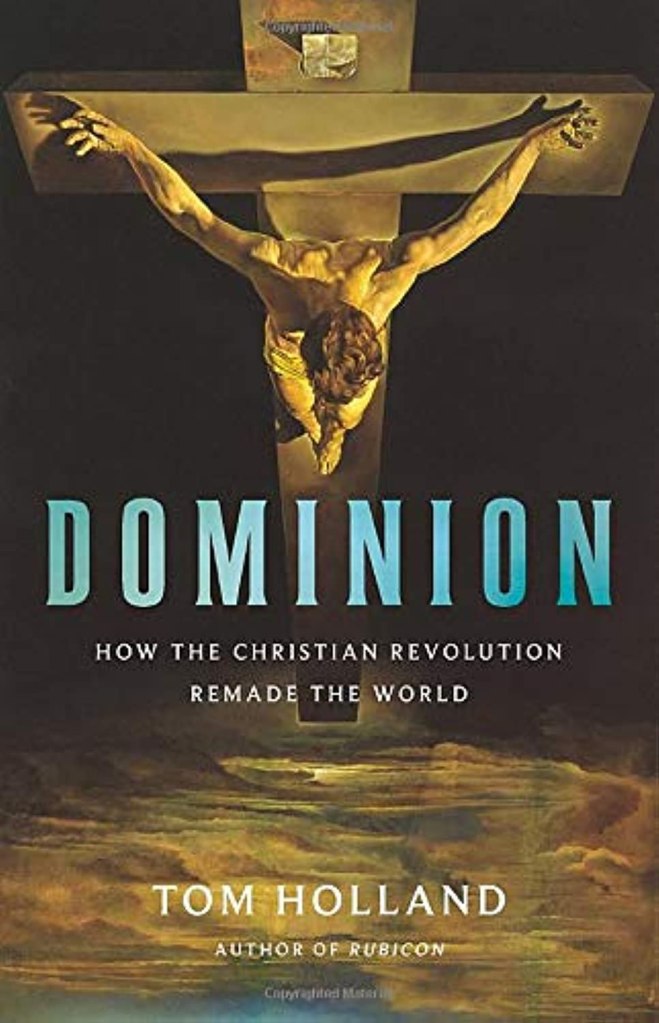
Tom Holland, in his seminal book, Dominion: How the Christian Revolution Remade the World, found the nexus for a radical change in the west in the crucifixion of Jesus. That event and the movement it inspired changed forever how the west (and now the rest of the world) views power and morality.
Tom Holland was an atheist When he did the research for this book. His area of expertise is Greco-Roman history. He was steeped in the brutish nature of the Roman world that championed power and elite, male dominance over all that was weak.
When he set out to trace his secular humanist values in western civilization, he knew there was some discontinuity between the Greco-Roman values he knew so well and his own, modern notions of basic human rights, so he was curious to locate the origin of that seismic shift.
His book, Dominion, traces our modern values from the roots where he found them in the history of western civilization. He found they go back to Jesus of Nazareth and the people who gave their lives to follow him.
The death of Jesus on the cross radically subverted the assumptions that ruled the world to that point. The Greco-Roman world that valued and honored power above all things gave way over time to the man who is claimed to be the Savior of the world who let himself be led like a lamb to his own slaughter. His life and message of self-sacrificial love became the bedrock for modern civil rights, human dignity, and the assumption that the powerful should shelter and care for the weak.
The criticism of Christians for racism and its worst manifestation – slavery – is deserved. Mostly because Christians “should’ve known better”. Of all people, Christians should have known better!
The water gets murky, though, in our modern memory because it has been influenced by a narrative that obscures the truth. The narrative that exposes the failing of Christianity often does so by directing attention away from the nonreligious world of reason and science, as if there is “nothing to see here.”
This view that rose to prominence during the Enlightenment is prevalent still today. It puts the full weight of condemnation for our failings on religion (and Christianity in particular). This is a false narrative, and, it obscures the truth and warps our perceptions that still persist.
There is nothing inherently wrong with science and reason. It is people who are flawed, and the flaws of people are not confined to science, or religion, or to any particular ideology or worldview. No ideology or worldview is immune.
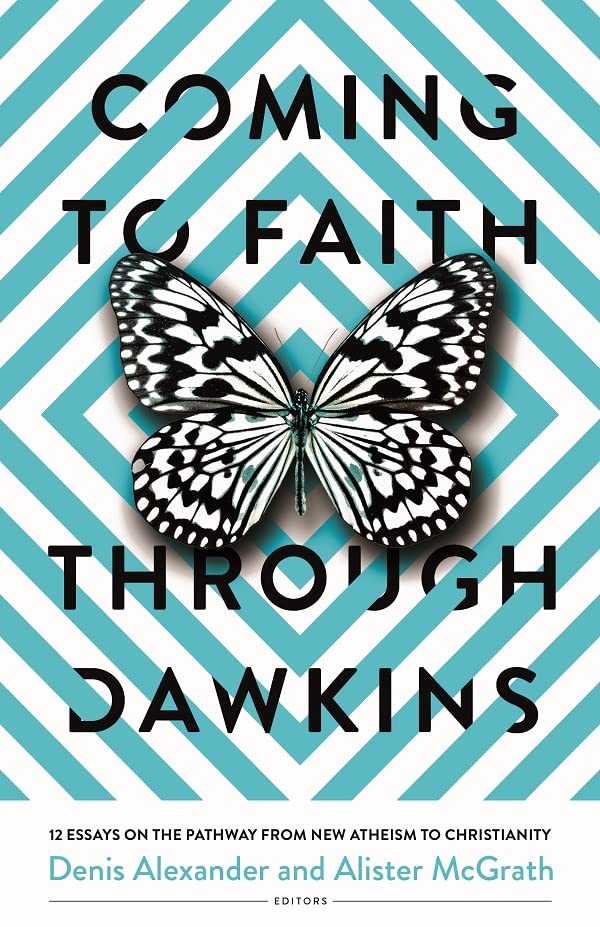
In case you don’t know, the book is a compilation of the stories of twelve people who were influenced by Richard Dawkins in their journeys from atheism to belief in the God of the Bible. Dawkins, of course, is one of the original (and most vocal) of the “new atheists. Thus, the title and subject matter of the book is ironic, intriguing, and not a little controversial.
O’Connor’s critique of the people whose stories are recounted in the book is that they seem to focus on their personal experiences. He says he is not convinced by the personal stories because they focus too much on personal experience and too little on syllogisms, rational arguments, and logical processes in their coming to faith.
This statement, as we shall see, is not a little ironic. O’Connor, though, expresses the modern western sensibility about personal experiences that are discounted and dismissed in favor of more objective evidence.
To be fair, many of the stories in the book recount the intellectual paths people trod on their way to faith, though the stories do not rigorously lay out the arguments, logic, and proofs. We shouldn’t be surprised by that, as the book focuses on peoples’ stories, and people’s stories are personal experiences.
Each of these journeyers from atheism to faith found problems, errors, bad philosophy, and nonsensical statements in Dawkins’s positions that led them to question his underlying assumptions (which were their underlying assumptions also). This, itself, was a rational process. The intellectual problems they saw in Dawkins’s positions made them skeptical of his skepticism.
O’Connor’s critique of the experiential nature of the stories might be discounted on that basis, but I want to focus on something else. This critique came up in the second of two segments. I want to go back to the first segment and contrast his critique with another statement O’Connor made to get to my point today. (See Coming to Faith through Richard Dawkins Part 1)
When asked what might convince him of the existence of God in the first segment, O’Connor said (without hesitation) that personal experience would be the most likely thing. Therefore, the critique O’Connor made in the second segment (complaining of the overly experiential nature of the stories) is ironic in light of O’Connor’s own admission that personal experience might be the one thing that could convince him that God exists (if he had such an experience).
This incongruity in O’Connor’s criticism about personal experience, and the value of personal experience in what we believe, is the thing I want to explore today. Atheists are not alone in being skeptical of personal experience. And with good reason. But personal experience is, nevertheless, vital to our human understanding of anything.
(Republished with permission from Bruce Strom, Executive Director of Administer Justice, a faith-based legal aid organization providing the help of a lawyer, the hope of God’s love and the home of the church.)
“Look up on high and thank the God of all.”
Geoffrey Chaucer
There is one God, and you are not Him!
Power of Perspective: There is a story of a man who worked at an aviary in a bird park. He was at an outdoor wedding and kept looking up. A friend finally asked him why. The man simply replied, “Sorry, I’m used to looking up to avoid falling bird poop.” If you want to avoid a lot of life’s poop – look up!
Perspective matters. Go outside and look up. You cannot see yourself, but you can see the vastness of space. Look down. You mostly see yourself and not much else. Circumstances cause us to look down and magnify our thoughts, feelings, and fears. Look up. Set your mind on things above. Don’t make you or your circumstance bigger than God.
Power of Purpose: The Westminster Catechism recites our purpose is “to glorify God, and to enjoy him forever.” That is true but can be misunderstood. If not careful, I think it can distort our purpose in the same way viewing Heaven as fluffy clouds where we play harps and sing praises forever can. Honestly heaven is a place of rewards given for work done on Earth. Work continues in Heaven. Work is a healthier view of worship – what it means to glorify God and to enjoy him forever.
You were created with purpose and that purpose was to worship through work. The Hebrew word for work is avodahwhich means work, worship, and service. True worship is rooted in work that serves God and others.
God has work for you in his family business. When you come to faith in Christ you are adopted as his son or daughter and join the business of advancing God’s Kingdom. Jesus came to establish this work – the Kingdom of God on earth. Like any family business, God’s business has a vision, mission, values, guidelines, and positions.
Your job title is vassal, a servant of the King. Your job description is vessel as you allow him to fill you for your work. God’s vision is that none should perish but all should come to faith. In other words, he wants to grow the business by expanding the Kingdom. His mission is to go into all the world making disciples by demonstrating what it means to love God and love others (Great Commission and Commandments).
God has an employee manual with guidelines for living – the Bible. Don’t just skim and sign off on it – read it, memorize it. It is your guide for finding purpose. Then talk to your boss. Can you imagine taking a job and never talking to your boss? I don’t think you’d last long. You will similarly wear out in the work of the Kingdom if you are not regularly communicating with God through prayer.
Finally, live the core values of the Kingdom. He has told you what is required of you: do justice, love kindness, and walk humbly with him (Mic. 6:8). You will discover and live God’s purpose for your life if you see yourself working in the family business.
Consider: What strikes you in this first key: look up through perspective and purpose?
Pray: Lord, forgive me when I make much of my circumstance and little of you. Help me to find joy in working in your family business of advancing your kingdom of justice and righteousness. Amen.