The Government Will Be on His Shoulder, But What Does it Mean that the Kingdom of God Is Now

How should Christians orientate themselves to the world in which we live and conduct ourselves in the political and governmental spheres of present life?

The following passage from the Prophet, Isaiah, isn’t just a platitude to recite at Christmas:

For to us a child is born,
    to us a son is given;
and the government shall be upon his shoulder,
    and his name shall be called
Wonderful Counselor, Mighty God,
    Everlasting Father, Prince of Peace.

Isaiah 9:6

Jesus has many names, but the one used (perhaps) the most is Lord. All authority on heaven and earth has been given to Jesus. (Matt. 28:18) Christians revel in that statement. In the next breath, after Jesus said this, he said:

“Therefore go and make disciples of all nations….”

Matthew 28:19

When we think of the authority and lordship of Jesus, we might jump immediately to the ultimate conclusion – of Jesus ruling and reigning at the right hand of the Father. When Jesus told the disciples that all authority had been given him, however, his instruction to follow does not take us where our minds might be tempted to go. He did command us to take over the government or set up a new government.

His charge to the disciples was to go to all nations and make disciples.

That is still his instruction at this time.

Perhaps, we can be excused for forgetting the last instructions he gave after almost 2000 years. Or maybe not…. He was pretty clear about it. We also have the following reminder from the Apostle, Peter:

“But do not forget this one thing, dear friends: With the Lord a day is like a thousand years, and a thousand years are like a day. The Lord is not slow in keeping his promise, as some understand slowness. Instead he is patient with you, not wanting anyone to perish, but everyone to come to repentance.”

2 Peter 3:8-9)

Of course, the government will ultimately be committed into His hands. (Is. 22:21) He will ultimately make a footstool of all his enemies. (Ps. 110:1) Jesus will ultimately sit on the throne with throngs of people proclaiming, “Holy, holy, holy. Lord God Almighty!” (Rev. 4:2)

Jesus will be seen as the Lion of Judah and the Root of King David (Rev. 5:5) at that time with a sharp sword coming out of his mouth, striking down the the nations, ruling them with an iron scepter, and treading “the winepress with the fury of the wrath of God the Almighty!” (Rev. 19:15)

But, that time is yet to come. We aren’t there yet.
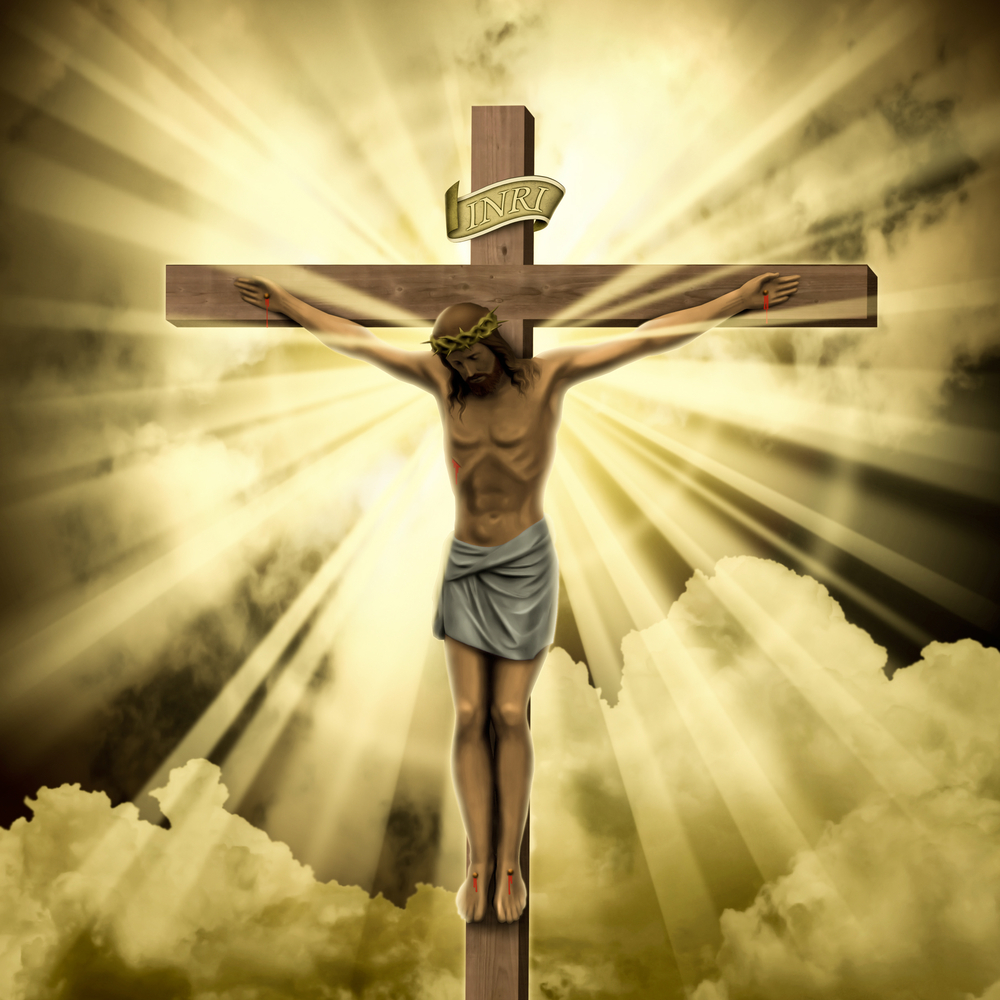
Even in John’s vision of this future time, the most common description of Jesus is as a Lamb (28 times). Jesus is first the Lamb who was slain, and that is the most prominent name he is given, even in the Book of Revelation.


We have yet to experience Jesus, the Lion of Judah, with sword in his mouth, a scepter in his hand, and a winepress at his feet. That time has not yet come.

Meanwhile, Jesus came not to Judge the world, but to save the world. (John 12:47) Jesus came not for the healthy, but the sick; and Jesus presently desires mercy. (Matt. 9:12-13)

Jesus is not yet the Judge, treading a winepress with the fury of the wrath of God Almighty; He is the Good Shepherd searching for the lost sheep. He is not presently in the business of condemning the world; he is currently in the business of seeking and saving the lost. (Luke 9:10)

So, we should be.

The charge that Jesus gave us – to go and make disciples of all the nations – is still our marching orders. It hasn’t changed.

No matter how close we think we are to the end, God is still currently in the mode of being patient, not wanting anyone to perish, but wanting everyone to come to repentance.

We are easily distracted by many things. We can be so obsessed about the past and we can be so forward-thinking that we forget about the present. We can be so focused on the end times that we do not understand the times in which we live.

We may be close to the end times, but we may yet be far off, by human reckoning. To God, a day is like a thousand years, and a thousand years is like a day. (2 Pet. 3:8) Jesus said we would not know the day or the hour. Most importantly, we are still in the times in which Jesus told us to make disciples of all nations.

He didn’t tell us to make enemies of the nations. He didn’t tell us to set up new nations. He didn’t tell us to take over nations. He said, “Go and make disciples of all nations.”

This, so far, is just a preface for talking about politics and government in the 21st Century. Yes, the government will be on the shoulders of Jesus, but what of the Kingdom of God now? How should Christians orientate themselves to the world in which we live and conduct ourselves in the political and governmental spheres of present life?

Continue reading “The Government Will Be on His Shoulder, But What Does it Mean that the Kingdom of God Is Now”

A Plea for Healing and Tending to the Garden in the Middle

The political and social atmosphere in America is playing into the hands of the radical fringe.

The events unfolding, the things going on in the world right now, are troubling from many angles. Racial injustice, polarization, the centrifugal force of political fringes, rhetoric over substance, political violence, conspiracy theories, fake news, the increasing control of popular speech by private monopolies of information, the abandonment of all semblance of non-bias by most media, the ability to choose our own tailored news, the hatred people are developing for others who don’t think like them, the unwillingness to show respect, listen and engage in real dialogue – these are things that are deeply troubling in “the land of the free and the home of the brave”.

The political, cultural, sociological, and philosophical winds are swirling chaotically and mixing at all levels into a tornadic gale that is bordering on dangerous. These forces are not coming from outside us but from within. Even if our present chaos is influenced by outside sources, they are merely putting pressure on elements already within us. “We have met the enemy, and the enemy is us.”

For four years, people have been blaming Donald Trump for every evil under the sun. (Pardon the hyperbole.) People have been lumping all Trump supporters into one group and condemning them (or so the rhetoric often goes). People have had good reason to be critical. (No hyperbole or rhetoric there.) But let’s take a step back (it may need to be a giant step) and attempt a look at the bigger picture.

Trump gained support over more than a dozen career Republican politicians in 2016 and was elected president over a person, in Hillary Clinton, who, perhaps more than anyone else, represented the entrenched political machine in America. Bernie Sanders mounted a credible offense with broad support against that machine but could not prevail.

I believe people gravitated to Trump and Sanders for the same reasons: they are tired of politics as usual. They feel that our political system has broken down. It has become big business designed to perpetuate power and control, rather than serve the people. Congress would rather do nothing and let presidents wield executive orders on issues that need their attention and a compromise solution (like immigration, for instance) because they don’t want to jeopardize offending their bases.

They are seemingly more motivated by a desire to remain in office, maintain control and serve themselves than the people who elect them. There is no give and take (in the good and appropriate sense) anymore. At least, not on anything that hits the hot buttons of political platforms.

We only have two choices. Those two choices are becoming increasingly unpalatable for people on both sides of the aisle, but practical wisdom suggests that voting third party candidates means taking a knee as the real game plays on without you.

Polarization is a serious issue that can’t be ignored. It is exasperated by social media that is designed for quick, shallow and knee-jerk reactions that cater to our worst instincts. Almost 100% of political campaigning involves demonizing opponents and “the other party”. We have become a nation that accepts rhetoric over substance.

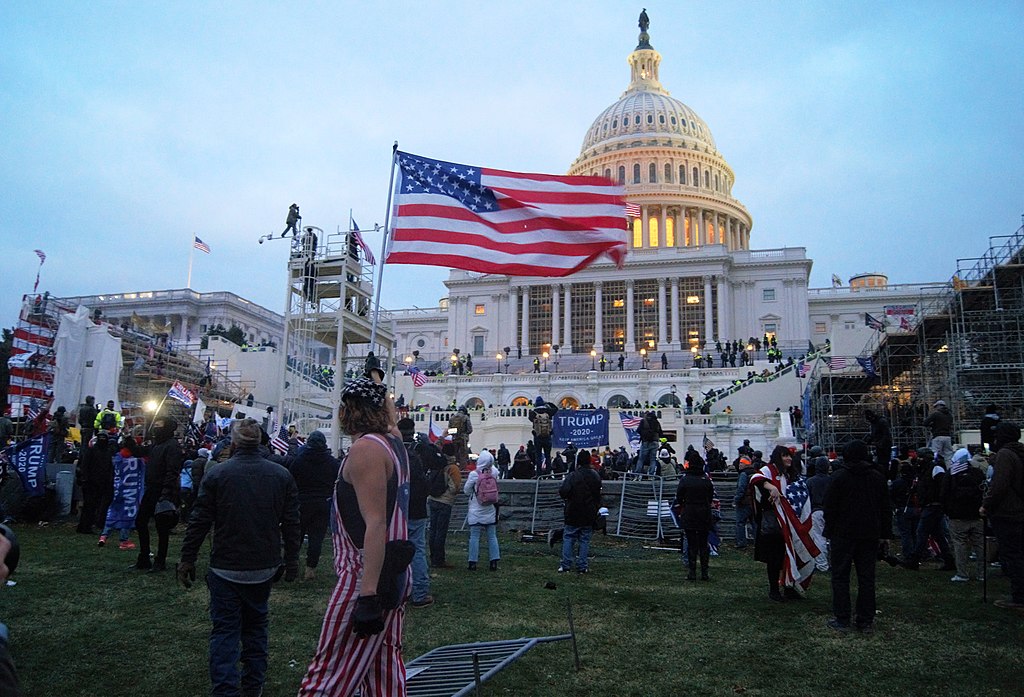
The extreme polarization has given rise to the voices of the radical fringes who threaten to pull us apart. In a “normal” world, those voices would seem like largely inconsequential and impotent shrills in the distance. Today, they sound like megaphones on the Capitol lawn, infiltrating into the very House of the People.

The Democratic party has always been more diverse (in my lifetime) and has always had its diverse, radical fringes. The conservative fringes have largely operated outside the fold until recently.

I dare say the conservative fringes are more dangerous, ultimately, than the liberal ones, perhaps because they are more unified by common principles. They also bear arms like political badges.

The fringes are pulling good people from the center because the center has largely been abandoned today. It’s a no-man’s land where no grass grows, and nothing happens. People in the center are labeled “other” by the people on either side and ignored by both.

We need a “radical” change. By radical, I don’t mean extreme or fanatical. I mean a different approach to politics and dialogue with each other. We need common sense and a commitment to a bigger picture than political partisanship. We need someone who can bridge the gaps that divide us. We need a voice that brings people together on the common ground that unites us, rather than forcing all conversations to the battle lines.

Continue reading “A Plea for Healing and Tending to the Garden in the Middle”

How Should Christians Act in Times Like These?

If we aren’t responding to current events in ways that display love and the fruits of the Spirit, we are “doing it wrong”

Tyler Merbler from USA, CC BY 2.0 https://creativecommons.org/licenses/by/2.0, via Wikimedia Commons

The events that are unfolding in the United States are troubling from many angles. Many Christians pinned their immediate and long term hopes on Donald Trump. With Biden as President, the fight against the killing of the unborn has been dealt a significant blow.

But there are many other problems. The racial divide, polarization, political fringe groups, extreme rhetoric, threats of violence, conspiracy theories, fake news, increasing control of popular speech by private monopolies of information, an abandonment of all semblance of non-bias by media, our ability to choose our own tailored news, hatred for people who don’t think like us, an unwillingness to show respect, listen and engage in real dialogue – these are things that are deeply troubling in “the land of the free and the home of the brave”.

To my brothers and sisters in Christ, Jesus said we would have tribulation in this world. He didn’t tell us to take up arms and fight it. He said we should follow him, spread the Gospel and make disciples.

His kingdom is not of this world. Jesus didn’t come to empower the Zealots, but to turn them into self-sacrificing servants of God and His kingdom – spreading the Gospel and making disciples.

Islam spreads by the sword. The Gospel spreads by people who wash others’ feet, turn the other cheek and love God, neighbors and even enemies. The Christian wields not a political flag, but a cross that he carries on his own back.

If we are going to fight for the mission of Jesus, our fight should be “to proclaim good news to the poor… to proclaim liberty to the captives and recovering of sight to the blind, to set at liberty those who are oppressed, to proclaim the year of the Lord’s favor”. (Luke 4:18-19) This was how Jesus described his own purpose on the day when he stood up in the temple and announced his ministry.

Should we not follow him?

Continue reading “How Should Christians Act in Times Like These?”

Heavenly Citizens In These Modern Times

What deserves our ultimate allegiance?

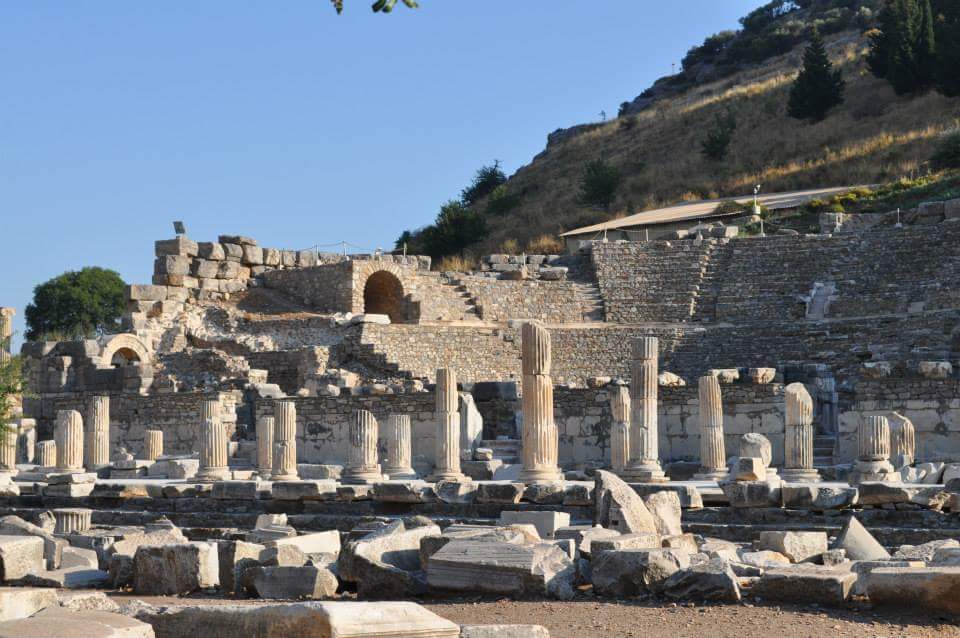
City Hall at Ephesus by Brooke Miller

Peter and Paul, the pillars of the Church, were clear that the only citizenship that counts is our citizenship in heaven. (Phil. 3:20) W are only “sojourners and exiles” in this world. (1 Peter 2:11)

Paul submitted to earthly authorities as though they had been established by God. (Rom. 13:1) He submitted to lashing by Jewish authorities five times! He appealed to his Roman citizenship, but, he clearly saw himself not as a citizen of this world. He was a citizen of the kingdom of heaven that is to come.

He used his Roman citizenship to gain an audience for the gospel among the Romans, to be an ambassador for Christ as he spoke to people in the public squares. He used his credentials as a Hebrew scholar to gain an audience for the Gospel in the synagogues.

Paul submitted to the processes and protocols of Roman and Jewish authorities. He recognized their earthly authority over him. He appealed to that same authority, not for his own advantage, but for the purpose of advancing the kingdom of God.

When we get involved in politics in the 21st century, do we submit to the authorities established by God as Paul did? Paul boasted of his lashings. Paul used his Roman citizenship, not to get out of prison, but to get to Rome to support the followers of Christ there.

Do we count ourselves, first, as citizens of heaven? Paul longed to be with Christ. He used his time on this earth to advance the kingdom of God while he longed for the day when he would put off his perishable body and put on immortality.

Do we use our earthly citizenship not for our own advantage, but to advance the Kingdom of God? When we fight for tougher laws and tighter borders and the right to walk around without masks, are we fighting for the kingdom of God?

Paul said what needed to be said for the sake of the Gospel, but he accepted the earthly consequences of his focus on heavenly things. Paul lived in an earthly world that was hostile to him and everything that he stood for. He submitted to the world’s authority, but he did it in obedience to the authority of God for the advancement of the Gospel, the good news of the coming of the kingdom of God.

Sometimes, I wonder whether we resist authorities that to advance our earthly objectives and appeal to political power and influence to secure our earthly advantage. I wonder how often we have it all wrong.

What are our priorities? To whom do we owe our ultimate allegiance? What are our ultimate goals? Are we seeking to advance the kingdom of God at all costs, including the cost to ourselves and our own position in the world?

Paul used his station in life as a Jewish scholar and a Roman citizen not for his own benefit, but for the benefit of the kingdom of God, to gain audience in front of people, and to spread the gospel. How do we use our station in life, our political power and religious knowledge? To whose benefit are our actions accumulating?

Are we fighting to protect and preserve our own families, communities and country in this world only to lose sight of our citizenship in heaven? Are we striving to save our lives only to lose our souls?

These are questions, not accusations. God knows the heart. I pose these questions in my own heart as write them.

Christian: Where is Your Focus?

If Christianity is true, individuals are not only more important, but incomparably more important, than nations.

Brothers and sisters in Christ in the United States (and anywhere around the world), I urge you to read this:

Don’t Let Your Politics Ruin Your Witness

If you don’t have the present time or inclination, consider at least this statement:

“[W]hen we blindly follow the agenda of party over the values of the kingdom, we are in danger of making politics our functional god. When our public discourse parrots the talking points of blue or red rather than the radical call of neighbor love, we are in danger of losing the credibility of our witness…..

“So how do we carry ourselves politically? Fuller spoke with characteristic wisdom on that issue as well: ‘If a wise man wishes to gain over a nation to any great and worthy object, he does not enter into their little differences, nor embroil himself in their party contentions; but, bearing good-will to all, seeks the general good: by these means he is respected by all, and all are ready to hear what he has to offer. Such should be the wisdom of Christians. There is enmity enough for us to encounter without unnecessarily adding to it.'”

“The gospel is offensive enough, so let’s allow people to be offended by it. When we replace the gospel with politics in our affections, we will draw the battle line in the wrong place and drown out the mesmerizing voice of Jesus beneath tired drone of petty partisan squabbles.”

I posted yesterday, Questions for Christians in America, out of frustration. My frustration is that so many Christians seem to be so colored by their politics that the Gospel is obscured in their rhetoric and the things they are focused on, at least on social media. The field is ripe for the harvest, and we seem to be stuck in out political tents, fixated on political platforms, defending actions Scripture condemns and  fighting for our own rights to a comfortable existence in which the world bows to us.

I don’t pretend sit in judgment on individuals in their personal walks with God. I don’t want to come across self-righteously. When I post things like that (and this), I am stirring up and exhorting myself and the tendencies I see within me. I don’t exempt myself from the fray.

But, I can’t stay silent. My soul grieves within me. We are missing opportunity to share the Gospel, to introduce people to love of Christ. Worse: we are turning people away from the Gospel by focusing too much on temporal things. We seem to be spending ourselves to protect institutions and current political positions, when eternity yawns ahead. Think about it:

“If individuals live only seventy years, then a state, or a nation, or a civilisation, which may last for a thousand years, is more important than an individual.

“But if Christianity is true, then the individual is not only more important but incomparably more important, for he is everlasting and the life of the state or civilisation, compared with his, is only a moment.”

–C. S. Lewis from Mere Christianity

Why do we spend so much time trying to reform a temporary nation when individuals with eternal value are getting lost in our rhetoric?

The following statement from Peter Wehner, a senior fellow at the Ethics and Public Policy Center, served in the last three Republican administrations, sums it up pretty well in an Op Ed in the NY Times (originally written in September 2016):

“Like water that refracts light and changes the shape of things, politics can distort and invert Christianity, turning a faith that at its core is about grace, reconciliation and redemption into one that is characterized by bitterness, recriminations and lack of charity. There is a good deal of hating and dehumanization going on in the name of Christ.”

We can – we must – do better for the Shepherd who died for us while we were yet sinners and gave us the blueprint for His purpose – to go into all the world spreading the Gospel (the Good news) of Christ.