Unveiling the Mystery of the Hiddenness of God

Why would God be hidden to us?


I have been meditating on the hiddenness of God lately and leaning into the mystery of God’s hiddenness. I am intrigued by it. The Bible is forthright about the hiddenness of God.

As I think about the hiddenness of God, the mind of the skeptic plays in my ear: “How do you know God exists? Why does God seem hidden? Maybe it’s because He doesn’t exist!” Believing in a “hidden” God is belief without evidence; it’s belief in the teeth of the evidence (as Dawkins says).

My response is that we all have faith in our basic assumptions about reality. The scientist assumes only matter and motion. He sees evidence for things like gravity and neutrinos, and dark matter and dark energy that cannot be seen. The scientist reasons to the best explanation for the things that cannot be seen in order to make sense of the reality in the world, and he does so within the “limitations” of materiality.

Science, after all, is the study of the material world. That is is the scope of science as it is defined in the modern world. Science is based on what is quantifiable, measurable, observable, and reproducible.

When I do theology or philosophy, I also start with assumptions. I start with an assumption, or a theory if you like, that God exists. The proof of God, however, is necessarily different than scientific proof.

God is not a substance in the universe to be quantified, measured, observed, or reproduced in the way we can study the natural world. He is not a component of the universe. He is not comprised of matter and motion like the universe. God is not a principle of physics that can be observed in its regularity and tested by its regularity.


If God exists and created the universe, He is separate and apart from the universe. That does not mean that God is not present in some way; it means that He is not present in the same way that you and I are present. Rather, God is transcendent. He is imminent (near in some way), but not contained within the creation.


God also must have agency to have determined to create. We understand the necessity for agency by our own agency. This makes sense of the question: why is there a universe; why is there something, rather than nothing.

For the life of me, I can make no sense of the assertion that a universe can create itself. What kind of voodoo magic is that? That conclusion is based on an assumption that matter and motion is all that exists, but we cannot prove that assumption.

To say that God must have agency is not to be anthropomorphic about it but to reason to the best explanation based upon what we know, which is our own agency and the way we conduct ourselves in the world. Where does a universe come from? The simple answer is that it comes from a creator who has agency, who has intentionality, and the ability to will and to act according to His purpose and design.

Where does intricate, fine-tuned complexity that is complex to the nth degree come from? It comes from a mind, from a creator who conceives a plan and then implements it. We know that from the way human beings create things. Where did we get that capacity? Like things produce or reproduce like things.

We know that the universe is “winding down”. That is what the law of thermodynamics tell us. Entropy is the rule. This means the universe is not getting more complex; it is breaking down, evening out, cooling, and becoming less complex over time.

Over course, this is occurring over a very, very long period of eons, so (perhaps) there is enough energy in the universe for complexity to form in areas of the universe even while entropy is working its very long way toward the inevitable heat death of the universe as a whole.


Maybe, but where did the energy come from to cause the so-called Big Bang? What triggered the universe to begin to begin with?

No one can explain that who doesn’t believe in a “Big Banger”, a Creator. It is the best explanation that we have. It makes the most sense of the reality that the Universe had a beginning.
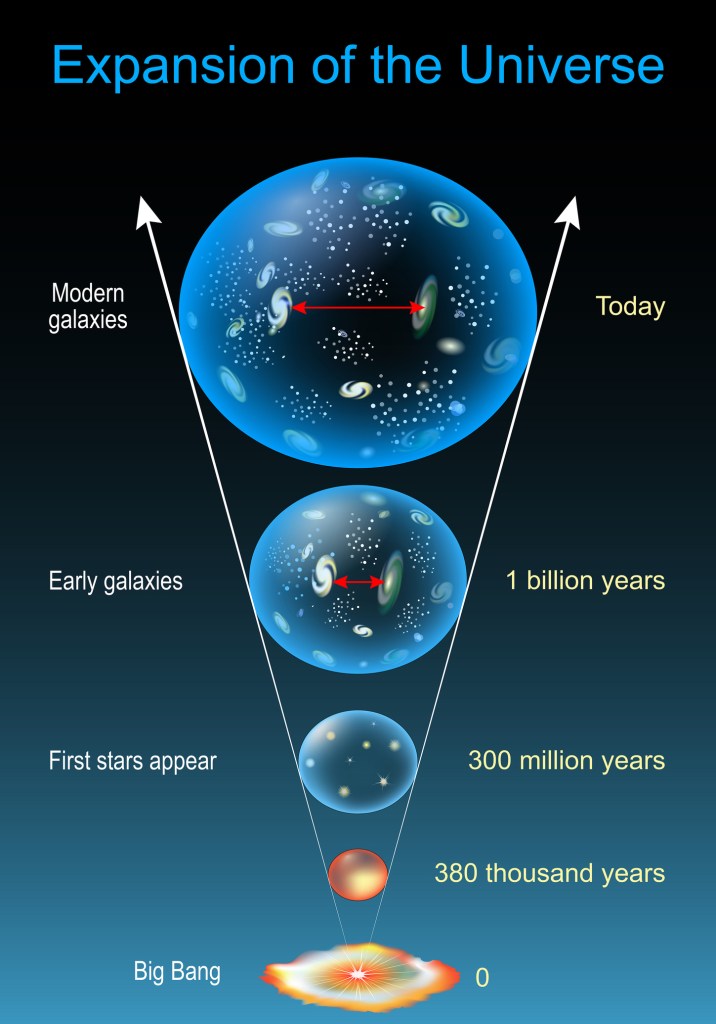

The multiverse doesn’t solve the “problem” of a beginning. It just kicks the can back down the road further. What triggered the multiverse into being? It’s an endless regression.

The Christian (Jewish and Muslim) conception of God is that God is the timeless, eternal being who always existed and was never created who chose to trigger the universe (or multiverse) into existence.

This, frankly, makes much more sense than a past eternal, non-sentient universe that just poofed life into existence. How do you get life from nonliving matter? What animates that matter?

But the questions don’t stop there. What triggers consciousness from inert, non-conscious matter? How do the fundamental “building blocks” of matter develop consciousness? It’s a complete mystery, and there is no mechanism known to modern science to explain it – other than the brute fact that human beings and (to some lesser degree) animals (and maybe plants) are conscious beings.

Consciousness is proven by the sheer fact that we are conscious of ourselves. It seems to “reside” in or be attached to the brain, but the brain by itself is not consciousness. The brain is a perfect, intricate receptacle for consciousness, but the brain and consciousness are not perfectly coexistent. They are not the same things, and science has no adequate explanation for that.

Because these things suggest looking outside the limitations of the material world for our answers, we have theology and philosophy, which can be “scientific” loosely in method and approach, but defies the limitations of scientific inquiry.

That doesn’t mean that theology and philosophy should be divorced from science (or that science should be divorced from theology and philosophy). All reality must ultimately cohere harmoniously, or we cannot call it reality.

But, I have digressed (only slightly) from the point, which is the mystery of the hiddenness of God.

Continue reading “Unveiling the Mystery of the Hiddenness of God”

An Exploration of God’s Hiddenness in the Bible

The Bible on the hiddenness of God


Divine hiddenness is an argument suggesting that God does not exist. According to J.L. Schellenberg, if a perfectly loving God exists, He would desire a genuine relationship with every person He creates. A loving relationship requires, at minimum, awareness that God exists, so a perfectly loving God would make Himself known. Some sincere and willing people who want to know God are unable to find sufficient evidence that He exists to believe in Him. Therefore, either God does not exist or He is not perfectly loving.

I don’t buy it. I think the argument is flawed, but other people have provided robust responses to this argument, so I am not going to attempt to provide a counter argument here. I am also unconvinced that arguments are the best way to achieve understanding.

On that ground, I am intrigued by the hiddenness of God, and I am intrigued that the Bible is forthright about the hiddenness of God. The Prophet Isaiah says it plainly: “Truly, you are a God who hides himself, O God of Israel, the Savior.” (Is. 45:15)

The entire Book of Job is about God’s hiddenness. Job assumed that God existed and had blessed him until he lost everything. When Job sought God in the desperation of his circumstances, he lamented, “Behold, I go forward, but he is not there, and backward, but I do not perceive him… I cannot behold him.” (Job 23:8-9)

David, who is held up in the Bible as a man after God’s own heart, lamented the hiddenness of God at various times in his life: “Why, O LORD, do you stand far away? Why do you hide yourself in times of trouble?” (Psalm 10:1); “How long, O LORD? Will you forget me forever? How long will you hide your face from me?” (Ps. 13:1); and “My God, my God, why have you forsaken me?… I cry by day, but you do not answer.” (Ps. 22:1-2)

Those last words were famously echoed by Jesus on the cross. Imagine, Jesus, who demonstrated and expressed the deepest and most intimate relationship with the Father, experiencing the utter absence of God at the moment of his greatest need.

I saw early in a world religion class in college when I wasn’t a believer that the Bible purports to be about the unfolding story of God’s encounter and revelation of who God is to mankind. Elsewhere, I have written about how God found in Abram a man who was able to grasp that the God of the universe is not like the gods of the provincial tribes and nations with which Abram was familiar. (For example, Abraham, Isaac and Paradigm Shift; and The Story of Abraham and Isaac Revisited: Introduction)

The revelation of God unfolded slowly as God needed to dispel notions of divine arbitrariness, capriciousness, brutality, and uncaring of the gods that Abram and ancient humanity understood. The gods of human imagination are no gods at all, and God is noting like ancient Near Easterners imagined.

While it is true that God is completely OTHER, the true God who made the heavens and the earth desires the benefit of and reciprocal relationship with the pinnacle of His creation. How does a God who is so completely OTHER than His creation communication Himself?

Consider a God who could make our universe with its vastness and detailed complexity down to the minutia of the precise intricacy of living cells and the unseeable building blocks of the physical world, like neutrinos, that are so small they can pass through your body and the core of the earth without hitting another particle. How does such a God who created such a world reveal Himself to finite creatures who live on a tiny planet in a tiny solar system among more stars, planets, and whole solar systems than such a creature can even imagine – how does such a God reveal himself to delicate, ephemeral creatures with limited perspective?

Continue reading “An Exploration of God’s Hiddenness in the Bible”

Understanding the Hiddenness of God: Insights on the Nature of and Mystery of God

God is not a physical being like we are in this material world

The “hiddenness of God” is a reality that causes some people to doubt the existence of God. If God is so great and so loving, why is He hidden to so many people? If God really exists, why isn’t God plainly evident to everyone? If God desires everyone to know Him, what’s the problem?

I have many thoughts about this dilemma, and I have written on the hiddenness of God many times before. Today, however, I want to highlight some thoughts that come through comments by an Australian YouTuber, Confident Faith, on a conversation between Jordan Peterson and Bishop Barron.

They discuss the nature of God – what kind of “being” God is. We naturally approach the idea of God from our human perspective. A person might wonder, “How can we even know what kind of a being God is?” Especially, if we are not even sure God exists!

But, we can know what kind of a “being” a God who could have created the Universe may be. Our reason suggests to us that a God who is capable of creating the time, space, and matter that comprises the Universe must be separate from and “other” than the reality of the Universe. Such a creating God must exist in a reality that is not contained within the Universe.

If we might think of the Universe as a box, we might say that boxes don’t simply for or create themselves. A box maker (who is not a box) creates them. Thus, we can intuit that Universes don’t form or make themselves. A Universe maker is required who is contained within a Universe.

If the box (or universe) is all we know, it’s hard to conceive of something outside the box (universe). It’s exceedingly hard for us to conceive of reality other than the basic units of time, space, and matter that comprise the physical Universe in which we live. Therefore, we have an exceedingly difficult time wrapping our minds around the idea of a Creator of those who is not contained within the reality of our Universe.

Even my attempt to describe the problem is inadequate, as the only reality we know is a physical one (comprised of that same time, space, and matter). For a God to have created those things and to have formed them into the Universe, that God would have to have been timeless, spaceless, and immaterial (not contained within that box), yet present with it.

I know that many people believe that a thing can create itself. Stephen Hawking famously said, “Because there is such a thing as gravity, the Universe can and will create itself from nothing.” This is a box creating a box analogy. Hawking is essentially saying that the substance that makes up the components of the box (Universe) self formed and self organized into a box (Universe).

I, personally, find it harder to believe that the Universe created itself than to believe that God, who exists “outside” time, space, and matter, created the Universe.

This fundamental difference in approach and perspective is the Continental Divide on the issue of the existence of God. A person who is unwilling or unable to consider anything “outside” the bounds of the time, space, and matter that comprise the Universe is going to be utterly incapable of “seeing” (grasping, conceiving, or even allowing for) the possibility of God.

But, this way of thinking is not foreign to any of us. In fact, it’s most natural for us to think this way, because all we know is the box (Universe) in which we live.

In dealing with this dilemma, Bishop Barron goes back to the ancient text in Deuteronomy when Moses asked God, who should I say sent me. Barron says that Moses was basically asking, “What kind of a being are you?” In doing this, Moses is trying to put God into categorical terms.

God’s response was, “I am who I am!”  God is saying that He cannot be categorized as we categorize things in this Universe. This response points Moses to outside the box (Universe). This means, says Barron,, “God is not a being, but Being, itself.”

If we follow down the path of Moses’s questioning, we inevitably end up as an atheist. If we insist on putting God into categorical terms, like the time, space and matter we can touch, see, feel, and measure, God remains a mystery. We can’t touch, see, feel, or measure God because He is not comprised of (or limited by) physicality (time, space and matter), and, therefore, God is not a categorical object in the world.

Augustine called God the “Prius” – the thing that is prior to being, itself. God is that upon which the categorical world depends. God is not the highest being (as we often conceive Him to be), the highest being is still just a being; rather, God is the essence of being.

I like the way Confident Faith wraps up these things. He says,

“God is not a physical being like we are in this material world. For example, humans, animals and plants are all physical beings in this physical world. However, the pitch of God’s existence is infinitely higher. He is not physical like we are. He is Spirit. God does not exist somewhere in this physical universe. You won’t find him hiding behind some distance galaxy way out on the known limits of the known universe. Likewise, you won’t find Him hiding somewhere in the subatomic realm. It’s foolish to expect or demand that God be found in this way…. God is not just one being among many in this world. God is the very source of being.”

We are finite; God is infinite. We are contingent and caused; God is non-contingent and uncaused. We are physical, but God is Spirit. Therefore, Confident Faith says,

“Taking these factors into account, it’s reasonable to hold that God’s existence in nature will always, to a degree, be a mystery or hidden from us.”

The hiddenness of God, therefore, is a function of the difference between a box maker and the things in the box. We are a “thing” in the box of this Universe, and God “outside” of it. We are constrained by our physicality, and God is not constrained by physicality because God is Spirit.

Our ability to grasp and to understand such a God, therefore, requires us to let ourselves think outside the box of this Universe. We have to be willing to think outside the box to be able to begin to gain some understanding of God.

I have embedded the short YouTube video on this subject below, but I will close with a few other passages in the Bible the speak profoundly of the nature of God. These passages reveal that God’s hiddenness has purpose, that God knew what He was doing in creating the world the way He did, and His “hiddenness” from us is part of that purpose.

“God is spirit, and those who worship him must worship in spirit and truth”

John 4:24

The God who made the world and everything in it, being Lord of heaven and earth, does not live in temples made by man, nor is he served by human hands, as though he needed anything, since he himself gives to all mankind life and breath and everything. And he made from one man every nation of mankind to live on all the face of the earth, having determined allotted periods and the boundaries of their dwelling place, that they should seek God, and perhaps feel their way toward him and find him. Yet he is actually not far from each one of us, for

“‘In him we live and move and have our being’;

as even some of your own poets have said,

“‘For we are indeed his offspring.’

Acts 17:24-28

Paul recognized in his address to Greek philosophers in the passage quoted above the “hiddenness” of God, such that we must “seek” Him and “feel [our} way toward Him”. I believe, as some have objected, that God could have made himself plainly evident to us, but He chose not to do that.

I believe the reason He chose not to reveal Himself plainly to us is to give us space to seek Him because we want to, not because we must. If God was plainly evident, what choice would we have?

I believe that God is not looking for automatons that are programmed to obey. God wants us to know Him and to love Him authentically. He does not desire that we merely believe in Him; He desires a reciprocal relationship with us. but A clue to this lies in the words of James:

Even the demons believe—and shudder!

James 2:19

The demons have no doubt that God exists, but they hate God, and they “bristle” at the thought of God!

In the event a person might be tempted to think that the hiddenness of god is unfair, we have these promises:

Ask and it will be given to you; seek and you will find; knock and the door will be opened to you. For everyone who asks receives; the one who seeks finds; and to the one who knocks, the door will be opened.

Matthew 7:7-8

 Behold, I stand at the door and knock. If anyone hears my voice and opens the door, I will come in to him and eat with him, and he with me.

Revelation3:20

God may be “hidden” to us, but He desires to be “found”. He promises that He will reveal Himself. We can’t be half-hearted about it, however.

 You will seek me and find me when you seek me with all your heart.

Jeremish 29:13

The Kingdom of God is like an Autostereogram

Autostereograms and the inability to see the image within the image remind me of the teaching of Jesus on the kingdom of God


If Jesus was walking the earth today, as he did in the 1st Century, he might have said, “the kingdom of God is like an autostereogram.” Until recently, I didn’t know what an autostereogram is, and I am pretty sure they weren’t invented yet in the 1st Century.

The image above is an autostereogram. It appears like a repeating, two-dimensional, abstract design, but it “hides” a three-dimensional image. It isn’t really hidden, but we must “look beyond” the two dimensional image to see it. Can you see the three-dimensional image? (Look to the end for help.)

Our eyes don’t naturally pick up on the three-dimensional object “hidden” in the abstract image. We have to “strain” to see it, though the image is right there in “plain sight”. In truth, straining isn’t the right way to see it. Relaxing is a better description of the “technique” for deciphering the 3D image the lies “behind” the 2D image.

I usually have to stare and stare at an autostereogram to see the three-dimensional object, and sometimes I give up impatiently. When I finally do see it, the image emerges. More aptly, it pops, out at me!

Some people who have eye conditions that inhibit their ability to see the three-dimensional images. If you can’t see them, you might be one of those people. (Or you might just be impatient, like I am sometimes.)

This web page on autostereograms provides the following instruction:

  1. Concentrate at a point in the middle of the 2D picture. Try not to get distracted by looking around the picture.
  2. Let your eyes relax and look through the picture rather than at it. You want to look at a point behind the picture. You will notice that the picture will go slightly out of focus. This is normal, and in fact, this is what you want to happen. For beginners, a useful way to start would be to look at pictures that have been framed. You can then learn to look beyond the picture by using your reflection as a guide.
  3. Once you notice the 3D image, it gets easier. Try to resist the temptation to refocus onto the 2D picture because you will lose the 3D picture if you do that.

People who have never been able to perceive 3D shapes hidden in an autostereogram find it hard to understand remarks such as, “the 3D image will just pop out of the background, after you stare at the picture long enough”, or “3D objects will just emerge from the background”. Until you see it, you can’t imagine what it is like.

A skeptic who can’t see the 3D image might be tempted to write it off as an illusion or the product of an active imagination. The reality of autostereograms with 3D images embedded into a flat, two-dimensional image, however, is fact. You can even generate your own autostereograms on the Internet.

Autostereograms and the inability to see the image within the image remind me of the teaching of Jesus on the kingdom of God. People who have gone from atheist or agnostic to believer often describe the switch in similar terms. Sy Garte, a highly intellectual bio-chemist by education and profession, described his experience of not being able to understand belief in God this way:

I found myself standing on the shores of a sea of mystery, certain that the waters hid treasures of beauty and goodness, but with no way to see them for myself.

(An excerpt from Sy Garte: Why I Believe in the Resurrection, commenting on his book in Peaceful Science, November 19, 2019) He recalled reading the Gospels when he still subscribed to materialism and atheism. At that point in his life, he read them only “to reinforce my atheistic scorn at the stupidity of Christianity, ” he said.

Back then I was focused on the magic, the contradictions, the naiveté of the ignorant who believed in scientifically impossible events like the resurrection.

Years later, no longer convinced that truth was bounded by the parameters established by materialism and atheism, Sy read the Gospels with an open mind. He “relaxed” his view, and this time, he saw the image within the image:

When I read the Gospels the second time, my mind was open, freed of the ideological certainty of atheism. I still saw the apparent contradictions, but now they appeared as evidence for truth, the kind of differences one would expect in true eyewitness accounts [citation omitted]. I still saw what looked like magic, but now it confirmed for me my new-found conviction that science is not the only pathway to truth. And now I saw the figure of Jesus Christ, and reading His words, I realized that God must have seen me standing on the shore, staring helplessly at the waves. Jesus Christ rose from those waters and held out His hand to me.

Sy Garte uses metaphoric language here. He didn’t actually see Jesus emerge or pop out of the pages like the hidden image in an autostereogram. The metaphor fits, though.

At one point in his life, Sy couldn’t even imagine what it would be like to believe in Jesus. Later, when he had relaxed his embrace of atheism and materialism, Jesus virtually leapt off the pages of the Gospels.

Sy Garte’s experience is far from unique. The lightbulb moment, the dramatic paradigm shift, is common to stories of conversion. The description Jesus gave for conversion, being born again, is beautifully descriptive of the experience many people have had who went from no faith to faith.

I recall one friend of mine who described that she suddenly realized she saw the world differently. As she gazed out over the landscape and told me it was alive in ways she never noticed before. In the most recent article I wrote, I described the conversion of an Afghan Muslim. He said recalled how he saw people differently after his conversion, saying that the difference was that he loved them.

These experiences are similar to suddenly being able to see the image inside the image of an autostereogram. Of course, the experience of “seeing” and understanding God, Jesus and the kingdom of God is much more dramatic, meaningful, and life changing. The autostereogram metaphor also makes some sense of the way Jesus described the kingdom of God.

Continue reading “The Kingdom of God is like an Autostereogram”