East and West Meet at the Tower of Babel

I have been listening to the BEMA podcast. I highly recommend it. As defined on the website, “‘BEMA’ (or bimah) is a Hebrew word that refers to the elevated platform in the center of first-century synagogues where the people of God read the Text.”

The early Christians knew their Scripture. They built their lives around it. They devoted themselves to it, and to prayer, and the apostles reaching, and to fellowship and shared meals. (Acts 2:42) The bema in was where early Christians gathered in first century synagogues before they were persecuted and scattered.

The BEMA podcast attempts to approach Scripture the way easterners would have approached Scripture – the way the early Christians in the Middle East would have approached Scripture. The idea that Hebrew people were more “eastern” in their thinking was first pointed out to m by my Jewish professor in college over 40 years ago, so following up with that concept intrigues me.

Christianity quickly became westernized, but the origins of Christianity are eastern, growing out of the Hebrew culture and scriptures. For that reason, we would do well to gain some new perspective from a more eastern way of thinking. I encourage you to listen to the first couple of episodes of the podcast linked in the opening paragraph if you want an introduction to an “eastern” perspective of the Bible.

Reading the first 11 chapters of Genesis from an eastern, Hebraic perspective, opens up new insights. Not the least of which is the genre of literature these chapters represent. They are poetry. They are written in chiasms with intricate organization and emphasis that is found in the structure of the chiasms.

The Tower of Babel story is one of those chiastic passages in Genesis. The story actually begins in the Hebrew with the last verse of Chapter 10 (as it is organized in English Bibles), and it goes like this (ESV):

These are the clans of Noah’s sons, according to their lines of descent, within their nations. From these the nations spread out over the earth after the flood.

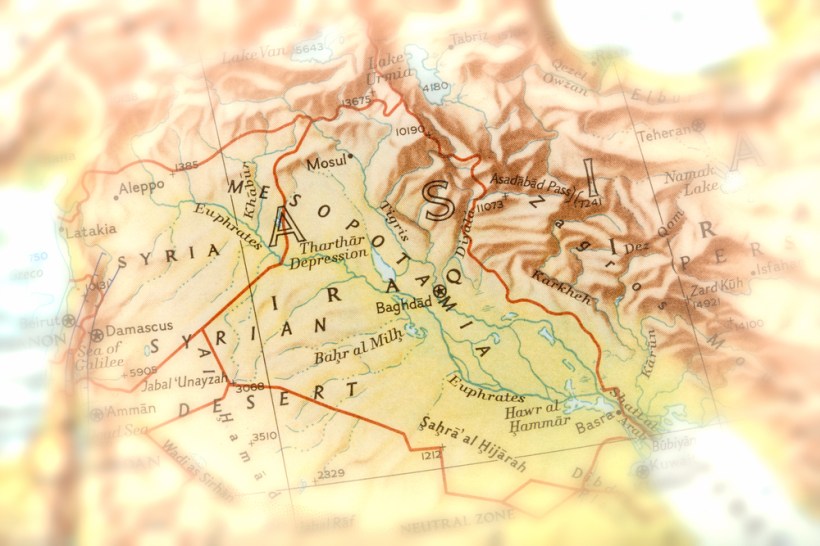
Now the whole world had one language and a common speech. As people moved eastward, they found a plain in Shinar and settled there.

They said to each other, ‘Come, let’s make bricks and bake them thoroughly.’ They used brick instead of stone, and tar for mortar. Then they said, “Come, let us build ourselves a city, with a tower that reaches to the heavens, so that we may make a name for ourselves; otherwise we will be scattered over the face of the whole earth.

But the Lord came down to see the city and the tower the people were building. The Lord said, ‘If as one people speaking the same language they have begun to do this, then nothing they plan to do will be impossible for them. Come, let us go down and confuse their language so they will not understand each other.’

So the Lord scattered them from there over all the earth, and they stopped building the city. That is why it was called Babel—because there the Lord confused the language of the whole world. From there the Lord scattered them over the face of the whole earth.

Hebrew has no vowels, only consonants. Rather, vowel signs are placed over the consonants to denote where breaths should be taken for anyone reading Hebrew out loud. 

The consonants in this chiasm are repetitive: N, B, L, H; then H, L, B, N in reverse. There is a front half and a back half to the structure. The middle of the chiasm is verse 11:4, which I have emphasized by bolding it.

The verse in the middle of the chiasm is where the emphasis lies: the peoples’ concern about being scattered over the face of the earth. They didn’t want to be scattered.

Why not? That’s the question we should be prompted to ask according to the emphasis we find built into the structure of that story.

I am not sure I can do any justice to the layers of meaning and the questions that arise in these verses in a short blog post. I can only scratch the surface, but here goes….

Continue reading “East and West Meet at the Tower of Babel”

God’s Ways: a Primer for What It Means to Follow Jesus in Babylon

God is orchestrating the people, the times, the events in history for one end.

Jeremiah wrote a letter to the Jews in Babylon. The Jews were exiled by God’s doing. He has been warning them about it regularly. Then, it happened. I am sure they were stunned anyway. Jeremiah opens his letter saying:

“Thus says the Lord of hosts, the God of Israel, to all the exiles whom I have sent into exile from Jerusalem to Babylon….”[i]

Jeremiah 29:4

God put you and I where we are, also. What God says to the Babylonian exiles then is instructive for us today, wherever we are.

I am going to break what Jeremiah says down and apply it to our world today, but first we need to set the stage. We need to step back and consider the big picture.

“From one man he made all the nations, that they should inhabit the whole earth; and he marked out their appointed times in history and the boundaries of their lands. God did this [marking out our appointed times and where we live] so that [we] would seek him and perhaps reach out for him and find him, though he is not far from any one of us.” (Acts 17:26-27)

Nothing in all of human history has caught God off guard. God saw the sweep and the details of that history from before time. He also knew you.

He knew where you would be born. He knew the hairs on your head. He knew the smiles and frowns on your face, your thoughts and every word that would slip from your mouth before they were even said. (Echoing Psalm 139)

God saw the United States of America, and all the nations of the world before they were established, their course in history and their demise. What we call future isn’t future to God. He exists outside of time. He existed before time began to tick. He exists now, and He exists in our future.

God is orchestrating the people, the times, the events in history for one end. John caught a glimpse of that end when he saw people of every nation, tribe and tongue gathered around the throne of the Lamb. (Rev. 7:9) Has Paul described God’s plan and purpose this way,

Romans 8:20-23My commentary
The creation waits with eager longing for the revealing of the sons of God.All creation is in on the purposes of God and is waiting for the fulfillment of God’s plan
For the creation was subjected to futility, not willingly, but because of him who subjected it,Our present conditions are part of God’s plans and part of the ultimate purposes of God to be accomplished in the world He set in motion
in hope that the creation itself will be set free from its bondage to corruption and obtain the freedom of the glory of the children of God.God’s plan and purpose is for creation to be freed from the present futility to which He subjected it as we obtain the freedom of becoming His children.
For we know that the whole creation has been groaning together in the pains of childbirth until now.It was so from the beginning. When Eve fell in the garden, God increased her pain in childbirth….
And not only the creation, but we ourselves, who have the firstfruits of the Spirit, groan inwardly as we wait eagerly for adoption as sons, the redemption of our bodiesWhen we are born again, by faith in God’s grace, and receive the Spirit, we taste the fruit of the life God offers and look forward to our ultimate redemption.
God’s Ultimate Plan

God marked out the appointed times in history of all the peoples of the earth and the boundaries of their lands throughout time, and that history is part of the larger creation that is waiting in eager expectation for the plans and purposes of God to be worked out in us and, ultimately, in creation. We are part of that plan.

We are at the center of the plans and purposes of God, who made us. Of all the creatures God created, we alone are created in His image. The creation waits eagerly for us to engage in that plan and purpose of God – each one of us and us, and us collectively.

Like the people of Judah in Babylon, we find ourselves exiles and strangers in the earth (1 Peter 2:11), if indeed we have been born again, born from above. When we are born again, we are born of the Spirit (John 3:1-21) by which we gain entry to the kingdom of God, which kingdom is not of this world. (John 18:36).

“But to all who … receive him, who [believe] in his name, he [gives] the right to become children of God, who [are] born, not of blood nor of the will of the flesh nor of the will of man, but of God.” (John 1:12)

When we receive Him, He gives us “the right to become children of God”. Though God knew us and “chose us in Him from before the foundation of the earth” (Eph. 1:4), He gives us, at the same time, the right (exousia, the right or authority) to become His children – it isn’t a forgone conclusion – at least not from our perspective.

We have to receive it, to begin with, and to believe (trust and commit to) it. In more popular parlance, we have to walk in it. Indeed, Jesus calls us as disciples to follow after Him, to “walk” the way he walked, to live as he lived. Paul says it this was:

So if there is any encouragement in Christ, any comfort from love, any participation in the Spirit, any affection and sympathy, complete my joy by being of the same mind, having the same love, being in full accord and of one mind. Do nothing from selfish ambition or conceit, but in humility count others more significant than yourselves. Let each of you look not only to his own interests, but also to the interests of others. Have this mind among yourselves, which is yours in Christ Jesus, who, though he was in the form of God, did not count equality with God a thing to be grasped, but emptied himself, by taking the form of a servant,[c] being born in the likeness of men. And being found in human form, he humbled himself by becoming obedient to the point of death, even death on a cross.” (Philippians 2:1-8)

Jesus is no longer with us to demonstrate in person how to walk as he walked, but we have Scripture and the Holy Spirit as our guide. Indeed, all Scripture “is God-breathed” (inspired), and it is useful for teaching, rebuking, correcting and training in righteousness”, so that we can be “thoroughly equipped for every good work”. (2 Timothy 3:16-17) The people who first heard these words would have thought primarily of what we call the Old Testament.

What we find in Jeremiah’s words to the people of Judah exiled in Babylon are instruction for those of us today who are exiled as aliens and strangers in this present world (if indeed we have truly been born again). What he says may not fit the modern Church narrative and example, though – or at least the poplar notion of what that is.

Continue reading “God’s Ways: a Primer for What It Means to Follow Jesus in Babylon”

God’s Plans Are Bigger than We Often Perceive, and He is Working Them Out Sometimes Despite Us

God promised Abraham, “In you all the families of the earth shall be blessed”.

In the service this morning, the message was about Joseph. As often happens, I saw something I hadn’t seen before. The depth and nuance and intricate tapestry that is Scripture often works that way.

I will get to the point, but first, I need to build the backstory. Most readers know of Joseph, so I will be brief. Joseph was the youngest of the 12 sons of Jacob. Jacob was the son of Isaac, the famous son of Abraham. Abraham was the man of faith to whom God gave the following promise:

Go from your country [land] and your kindred and your father’s house to the land that I will show you. And I will make of you a great nation, and I will bless you and make your name great, so that you will be a blessing. I will bless those who bless you, and him who dishonors you I will curse, and in you all the families of the earth shall be blessed.” (Gen. 12:1-3 ESV)

I added the emphasis and will come back to it. In the meantime, we need to recall that Joseph was betrayed by his brothers, who were jealous of him. They plotted to kill him and left him for dead in the bottom of a well.  He was “rescued” by a passing caravan that sold him into slavery in Egypt.

We could say much about the story of Joseph, but I want to fast forward. Joseph’s life teetered on the edge of utter desperation. He experienced a series of very high highs and very low lows. God ultimately blessed Joseph and elevated him to the second most powerful position in Egypt because of Joseph’s faithful use of the gifts and wisdom God gave him.

Many years after his brothers left him for dead, Joseph superintended a massive grain storage plan for Egypt that positioned his “adoptive” country to weather a long, severe famine and provide food for all its people and other nations besides. That same famine prompted his brothers to travel to Egypt when they were on the verge starvation and desperation.

When they arrived and got inline to buy grain, they had no idea they were appearing before their brother, Joseph, but Joseph recognized them and asked them to go back to Canaan and bring his father, Jacob, back down to Egypt with them.

Joseph’s brothers, his father and the whole tribe returned to Egypt. When they returned and finally realized the powerful man who sent them for their father was Joseph, they were ashamed. They also feared retribution against them for their betrayal, but Joseph was gracious and gave them favorable living conditions until Jacob died.

This is the point of the story that was addressed in the service today. Joseph’s brothers were fearful, still, that he held a grudge after Jacob died and would pay them back for their betrayal. (Gen. 50: 15) They didn’t immediately go to Joseph. Instead, they sent a message to Joseph containing instructions their father, Jacob, gave them to say to Joseph: “’I ask you to forgive your brothers the sins and the wrongs they committed in treating you so badly.’” (Gen. 50: 17)

Much could be said about the fact that they sent their father’s instructions to them, rather than their own, delivering own, heartfelt message to their brother, Joseph, but this story isn’t about them. It’s about Joseph.

“Don’t be afraid. Am I in the place of God? You intended to harm me, but God intended it for good to accomplish what is now being done, the saving of many lives. So then, don’t be afraid. I will provide for you and your children.” (Gen. 50:19-21 ESV) (Emphasis added)

Continue reading “God’s Plans Are Bigger than We Often Perceive, and He is Working Them Out Sometimes Despite Us”

The Story of Abraham and God’s Redemption of all Mankind – Part 3

God works through the hot mess of our choices to accomplish His purposes.

I am covering some ground in the story of God’s redemption of mankind through Abraham and his progeny. This is a story of God redeeming people because of their faith (trust in God), not for their morality. It’s also a story of God accomplishing His purposes through people despite their messiness.

Abraham and Sarah were childless for 25 years after God gave Abraham promises that He would give Abraham a land for his descendants who would be numerous and that God would bless all the nations through them. On the basis of those promises, Abraham left his ancestral home and journeyed to “a land God would show him”. 

Through those 25 years, Abraham and Sarah continued to live their lives. The moved many times over those years, in and out of the land of Canaan, which is the land God promised to them.

Abraham wavered at times. At one point, when God visited Abraham, Abraham questioned God, saying, “[Y]ou have given me no offspring….”, and telling God (as if He didn’t know), “[T]he heir of my house is Eliezer of Damascus.” (Gen. 15:2-3)

God God didn’t waiver, though. He renewed the promise, saying, “This man shall not be your heir; your very own son [out of your loins] shall be your heir.” (Gen. 15:4)

Years went by. Abraham and Sarah had been in Canaan for 10 years already (Gen. 16:3), and Abraham was 86 years old. (Gen. 16:16), Sarah got impatient and offered her Egyptian servant, Hagar to Abraham, they conceived, and Hagar gave birth to Ishmael. (Gen. 16:1-4)

We find out that this wasn’t God’s plan either, but He let 13 more years go by before letting Abraham know. Abraham was 99 years old when God visited again!

God said again, “I will make you very fruitful; I will make nations of you, and kings will come from you” (Gen. 17:6); and, “The whole land of Canaan, where you now reside as a foreigner, I will give as an everlasting possession to you and your descendants after you.” (Gen.17:8)

How would Abraham have taken that?

God had made this same promise since Abraham stood in Haran imagining the land God was promising him and the descendants he would have, but that was 25 years ago! Abraham was now 99, and Sara was 90. The likelihood that the two of them would have a child together was slim to none.

Thirteen years prior, Abraham had a son. His name was Ishmael. Surely, Abraham thought by that point that Ishmael was the fulfillment of God’s promise, but it wasn’t so.

After almost 25 years, God finally gave Abraham some missing details:

“As for Sarai your wife, you are no longer to call her Sarai; her name will be Sarah. I will bless her and will surely give you a son by her. I will bless her so that she will be the mother of nations; kings of peoples will come from her.” (Gen. 17:15-16)

Abraham’s response isn’t surprising:

“If only Ishmael might live under your blessing!” (Gen. 17:18)

Abraham had not only come to accept that Ishmael was the fulfillment of God’s promise; Abraham had embraced it. Abraham undoubtedly loved Ishmael, despite his abrasiveness. Thus, his response to God’s new direction was, “What about Ishmael?!”

Why did God wait 25 years from the time He first promised to fill the land with Abraham’s descendants to give Abraham all the details? Why did God let Abraham sleep with Sarah’s servant and have another son first? Why did God wait 13 more years before letting Abraham in on the additional details?

I’m not sure I know the answers. It was obviously God’s plan, though, to fulfill the promise to Abraham through Sarah, his half-sister, the daughter of Abraham’s father, Terah. God also wasn’t done with using the line of Terah in this story.

Continue reading “The Story of Abraham and God’s Redemption of all Mankind – Part 3”

What We Can Learn from Expectations about What God Is Doing


“Now there was a man in Jerusalem, whose name was Simeon, and this man was righteous and devout, waiting for the consolation of Israel, and the Holy Spirit was upon him. And it had been revealed to him by the Holy Spirit that he would not see death before he had seen the Lord’s Christ[i]. And he came in the Spirit into the temple, and when the parents brought in the child Jesus, to do for him according to the custom of the Law, he took him up in his arms and blessed God and said,

“Lord, now you are letting your servant depart in peace,
    according to your word;
for my eyes have seen your salvation
    that you have prepared in the presence of all peoples,
a light for revelation to the Gentiles,
    and for glory to your people Israel.”

(Luke 2:25-32)

“Belief in the eventual coming of the mashiach [Messiah] is a basic and fundamental part of traditional Judaism”; though [m]odern scholars suggest that the messianic concept was introduced later in the history of Judaism, during the age of the prophets. The messianic concept is not explicitly mentioned anywhere in the Torah (the first five books of the Bible)”[ii], but an expectation of the coming of an Anointed One, Messiah (Christ in Greek) developed in the writings of the Prophets, and it reached the height of expectation shortly before the time of Jesus.

“The term ‘mashiach’ literally means ‘the anointed one,’ and refers to the ancient practice of anointing kings with oil when they took the throne. The mashiach is the one who will be anointed as king in the End of Days.”[iii] This is the belief of traditional Judaism, going back, at least, to the Prophets, with expectations building up to the time of Jesus.

This is where Judaism, as it continues to be practiced today, and Christianity diverge. The Jews had very specific ideas of what the Mashiach would do when he appeared, and Jesus didn’t fit their expectations.[iv] They did not expect the Messiah to be God who became man to sacrifice Himself to save the world from sin. Though Jews today still expect the coming of a messiah, they don’t even use the term, “messiah”, anymore because Christians have associated it with Jesus.

They believed the Mashiach would be “well-versed in Jewish law, and observant of its commandments (Isaiah 11:2-5), … a “charismatic leader, inspiring others to follow his example.”[v] These expectations are consistent with Jesus in the New Testament, but other expectations were not. They expected a “great political leader descended from King David[vi]”; a “great military leader, who will win battles for Israel”; a “great judge”; and, most of all, he would be completely and only human. Jews believe the Mashiach will bring people back to Israel and restore Jerusalem, establish the center of world government in Israel, rebuild the Temple, re-establish worship in the Temple, restore the religious court system and establish Jewish law for the world.[vii]

These things are all consistent with what we read in the New Testament about the way the Jewish leaders did not receive Jesus. John 1 says that the Word (Jesus), who was with God in the beginning and through whom God made the universe, came to his own, and his own did not receive him. (John 1:1-11) He didn’t meet their expectations. The religious leaders, the ones who interpreted Scripture and set the expectations for the Messiah to come, rejected Jesus because of the way they interpreted Scripture and perceived what the Messiah would be like.

Continue reading “What We Can Learn from Expectations about What God Is Doing”