
Is Your Faith Determined by Where You Live, Your Parents and Your Culture?

People do tend to adopt the faith perspective that is predominant where they live, that their parents had, and in the society in which they were raised, but….


Richard Dawkins famously claims that religion and faith are a product of where people live and the influence of their parents and the culture in which they live. A quick look at data on religious faith might suggest Dawkins is right.

On other hand, Richard Dawkins was raised in the Anglican faith and was confirmed at the age of 13. He didn’t remain a Christian, though. In his later teens, he rejected the God and religion he was raised to believe in and the religion he was confirmed in.

Dawkins, himself, proves the falsehood of his own claims – unless, of course, Dawkins is the extremely rare outlier.

Dawkins’ assertion is generally true if we take a quick look at the data, but even the data reveals it isn’t so simple. People who live in areas in which religious belief is enforced by law and social custom tend to remain (at least) nominally loyal to that religious belief, but there are significant outliers in the data.

Iran, for instance, had 100,000-300,000 Christians in 1979, comprised of ethnic Armenians, Assyrians, and Chaldeans who had lived there for centuries. Organizations like ELAM Ministries and Transform Iran reported only 300-500 Muslim converts to Christianity in 1979.

In 1979, revolution dethroned the Shah formed an Islamic state. Since that time, Islam has been enforced by law and strong social mores. Onerous legal and social penalties are imposed on people who convert from Islam to other religions, including physical punishment, social exile, imprisonment, and even death.

For the past 44 years, Iranians who decided to become Christians have been persecuted with religious zeal and governmental force. (The World’s Fastest Growing Church, July, 20, 2023 (International Christian Concern)) “All missionaries were kicked out, evangelism was outlawed, Bibles in the Persian or Farsi language were banned and several pastors killed.” (A spiritual revolution in Iran?, September 16, 2020) Global Christian Relief))

Some people report that the number of Armenian, Assyrian, and Chaldean Christians has slowly dwindled to around 100,000. (See The World’s Fastest Growing Church) This kind of outcome is to be expected in a country like Iran in which one religion is not only predominant; it is enforced by legal decree and social coercion.

Unexpectedly, though, the number of Muslim converts has risen exponentially since 1979 according to faith-based groups that support them. Until recently, the claims of exponential growth in Muslim conversions to Christianity in Iran were largely anecdotal reports from faith-based organization.

Those claims have recently been affirmed by the secular, Netherlands-based research group, GAMAAN. A 2020 poll of 50,000 Iranians aged 20+ Iranians shows that 1.5 percent of then identify as Christian. (Survey supports claims of nearly 1 million Christians in Iran, Aug, 27, 2020, (Article 18)) With a population of 80M+, that works out to 1,200,000 Islamic converts to Christianity in 2020. (See A spiritual revolution in Iran?)

Continue reading “Is Your Faith Determined by Where You Live, Your Parents and Your Culture?”
Tales of Afghan Christians: Amazing, but Heartbreaking,

I am listening to the Quick to Listen Podcast, Episode 277: ‘My Heart Is Broken’: An Afghan Pastor Grapples with the US Withdrawal (America’s departure and the Taliban’s ascent is forcing Christians out of the country) I haven’t finished it yet. I stopped in my tracks at about 18 minutes and 40 seconds into the discussion with an Afghan pastor, and have paused to sift through it.

At the beginning of the interview, the unidentified pastor described himself as a Muslim in 2001, where the discussion started with the US invading Afghanistan. Even then, he said he welcomed the US interference. The country was in upheaval and chaos, and Western troops brought some hope for stability.

I do not want to get into my thoughts on the initial invasion or the US presence since that date. They are not relevant to my purpose for writing. I don’t want to be distracted by political assessment or judgment, of which I am deeply ambivalent.

The recent video footage from Afghanistan of people so desperate to leave before the Taliban takes over that they are clinging to airplanes as they take off, is heartbreaking to watch. The desperation in the faces of the people crowding unto Afghan runways still today (while there is still a sliver of hope to escape) is something I have never known. I can only watch in stunning silence.

Thus, I listened to the interview of the anonymous Afghan pastor with interest as he described from his personal experience the reality of life in Afghanistan for a Christian today.

About 18 minutes into the discussion, one of the interviewers recalled that the gentleman described himself as a Muslim when the US first stepped on Afghan soil and asked, “How did you come to faith? How did Jesus find you?”

Without hesitation, in his broken English, he said, “I don’t want to come to faith. I … hate Christians. I don’t like to become Christian because I [come] from a very religious Muslim background. My father was Imam. They taught me to be good Muslim. Six time I have been to Mecca. I practiced my religion very well.”

This man was not looking for a Christian savior when the US troops arrived in 2001. He just wanted peace and stability in his life and in his country, something most people in the western world take for granted. The idea of becoming Christian was abhorrent to him.

His personal story needs to be heard. It is the story of many Afghans who seek asylum today. They look to the US, and other countries, not as a savior, but as a refuge against evil that is hard to imagine for most of us. These people are not battle-hardened jihadists, as some people seem to fear.

Many of them are even Christians, despite the great risk personal risk involved. This is just one such story of a real person who has experienced a life most of us can’t even imagine and have a hard time appreciating. I will give him a name, Abdul, for personal affect, though he remains anonymous for obvious reasons.

Continue reading “Tales of Afghan Christians: Amazing, but Heartbreaking,”

Turning to the Lord, the Veil is Removed

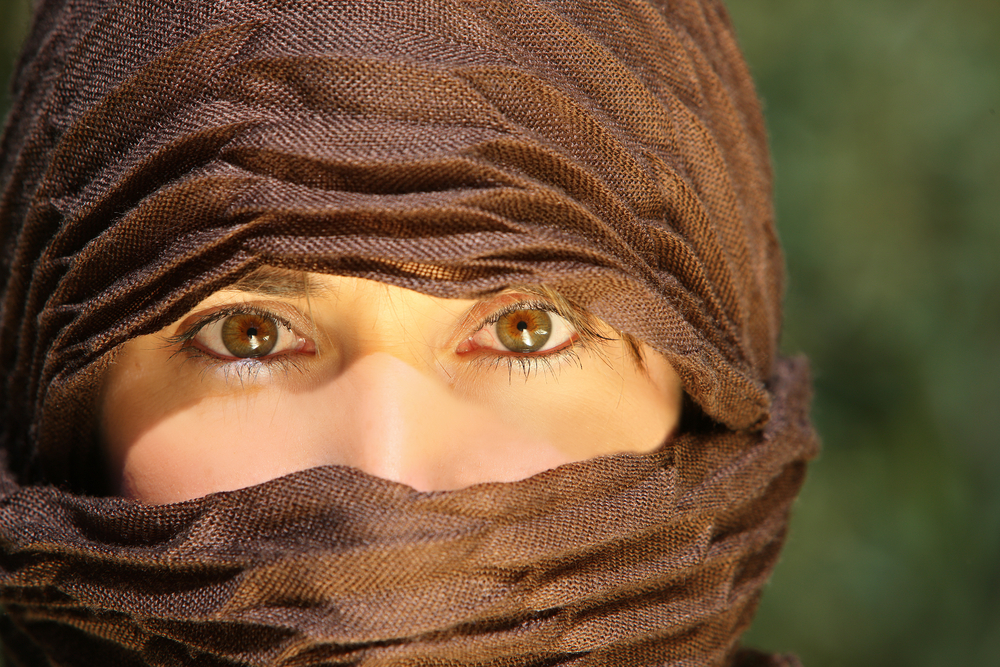
But when one turns to the Lord, the veil is removed.

2 Corinthians 3:16

Paul, the First Century Hebrew of Hebrews, wrote the statement above. He knew what he was talking about. Before a personal encounter with the living, risen Jesus Christ, Paul was aggressively opposed to Jesus and his followers.

He experienced life with a veil over his eyes, but he didn’t know it. That is the nature of a veil: what’s behind it is hidden. You don’t know what you don’t know until the veil is removed. When the veil is removed, a person sees what was previously hidden from view.

For Paul, the veil was removed suddenly and in dramatic fashion. Complete with a flash of light, a voice from heaven and blindness that was removed when the truth of Paul’s encounter was revealed (Acts 9), Paul’s experience was a bit unusual.

His words (or something similar), though, are a common way people describe their experience in coming to Christ, regardless of the drama, or lack thereof: when one turns to the Lord, the veil is removed. They resonate deeply with me as well.

The truth of Christ was veiled to me all of my life at one point. I became a searcher of truth, looking in all the suspect places, until “one day” the veil was removed when I turned to the Lord.

For me, it was a journey leading up to that point. It was a process. There were markers along the way that I followed, and some gates I went through. In the end, I was confronted with a choice: accept Jesus for who he said he was; I turned to him, and the veil was removed.

Looking back, we might say, I was blind, but now I see.” During the process, I didn’t know that I was blind, though I did feel like groping in the dark toward some point of light that was off in the distance.

Continue reading “Turning to the Lord, the Veil is Removed”

Sy Garte: From Atheism to Agnosticism to Christianity

The assumptions of materialism he carried with him into the study of science were challenged by the science, itself


Sy Garte grew up in an atheist household. His ancestors for generations were atheists. His lateral relatives were atheists, and the people close to him in his life were atheists. He assumed atheism was normal. He didn’t question atheism or materialism as the basic assumptions of his life.

Sy Garte earned his Ph.D. in biochemistry and BS in Chemistry from the City University of New York. He has been a Professor of Public Health and Environmental Health Sciences at New York University, Rutgers University, and the University of Pittsburgh. He has written over 200 scientific publications in genetics, molecular epidemiology, cancer research and other areas, and he is the author of five books, and numerous articles published in Perspectives in Science and Christian Faith (PSCF) and God and Nature.  He is retired from a senior administrative position at the National Institute of Health. (See his biography at Biologos)

Wait a minute… articles on science and Christian faith?

He was an atheist and a scientist. So, what happened?

Well, Dr. Sy Garte has written a book about “what happened” – The Works of His Hands: A Scientist’s Journey from Atheism to Faith. I recommend the book, though this article more closely follows the interview embedded below, and it’s a pretty interesting story. I also added an interview of Sy Garte hosted by a once professed Christian turned hardcore atheist (the kind who isn’t content to allow other people to remain Christians) for an interesting exchange from two people who switched poles in their beliefs.

Continue reading “Sy Garte: From Atheism to Agnosticism to Christianity”

Significance in the Way Christianity Spreads

Islam rivals Christianity in its “travel” around the world. But the spread of Islam looked different than the spread of Christianity.

Os Guinness talks about differences between Christianity and other religions in an interview with Justin Brierley a few years ago. He made a statement that Christianity is the only “traveling religion”.

He observed that Hinduism began in India and remains primarily in India. Buddhism began in India and remains primarily in India and Eastern Asia. Islam began in the Middle East and remains primarily in the Middle East. Christianity, however, began in the Middle East. Then it moved to Europe; and then it moved to North America; and now Christianity is growing fastest in Africa and Latin America and Asia.

While I think Guinness overstates the case little bit, he got me thinking about the how the major world religions have spread. For instance, Islam, which rivals Christianity in numbers, grew very rapidly during the life and immediately after the death of Muhammad. It spread throughout the centuries into Europe and down into Africa and more recently across Southern Asia.

Islam rivals Christianity in its “travel” around the world, but the spread of Islam happened very differently than the spread of Christianity. This is the significant fact, in my opinion – not so much that Christianity has traveled through all the world like no other religion. (Though it has.)

Continue reading “Significance in the Way Christianity Spreads”