
Are Christians Required to Evangelize? Are They Morally Wrong to Force Their Views on Others?

Evangelism should flow naturally out of relationship and community with God and His people. it should begin and end with community.


These competing questions bookend the following statement I borrowed from a social media group that was a preface to some questions about evangelism:

“As I’ve been doubting my Christian faith one of the issues I’ve been wrestling with (and frankly have always been averse about) is the reality of forced proselytizing.
 
Those of us raised in a Christian (and specifically evangelical) churches are all too familiar with being shamed, guilted, and forced to have awkward conversations with friends and strangers in which we were expected to sell them our brand of Christianity.
 
This sell was to be aggressive. We could not take no for an answer and we were to continually pester and compel the person until they either converted or broke contact with us (for obvious reasons).
 
Given that the message of Jesus seems to be that we are to give up our lives and enjoyment of them for the kingdom, to wear ourselves out in serving the poor, all while carrying a heavy moral burden, it appears all the more immoral to compel this message on people and to be indignant when they don’t take it.
 
This is not even mentioning the threat of hellfire for the salesman and prospect.”

The truth is that many Christians have difficulty with the thought of doing evangelism. Many people in our culture today think that forcing one’s views on others is morally wrong, yet evangelism has long been something expected of Christians, especially in evangelical churches.

Before diving in, I need to make the point that we all have freedom of speech in a free country. Exercising that freedom is no more forcing one’s views on others than expressing the belief that forcing one’s views on others is morally wrong. We have equal rights to speak and equal rights to reject what others say.

Aside from that, I don’t believe that sharing the Gospel is morally wrong. If it is, then it is morally wrong for you to tell me that it is morally wrong to share the Gospel. I don’t share your views on that position, but I would never say you are being immoral or have no right to express your views or even to try to convince me of the truth of them.

With that said, I feel fortunate not to have grown up in a church tradition that is “aggressive” about evangelism and “forces” people to evangelize or risk hellfire and brimstone. Not that anyone is “forced” to do anything. We all have a choice in the matter.

More importantly, though, God doesn’t work that way. In fact, I maintain that such an attitude is exactly contrary to the will of God. No one can be forced into the kingdom of God. People do not enter the kingdom of god kicking and screaming.

Jesus didn’t forced people to be saved. He said:

“The true light, which gives light to everyone, was coming into the world. He was in the world, and the world was made through him, yet the world did not know him. He came to his own, and his own people did not receive him. But to all who did receive him, who believed in his name, he gave the right to become children of God, who were born, not of blood nor of the will of the flesh nor of the will of man, but of God.” (John 1:9-13)


God became man, and He appeared to “His own people” – the ones with whom He established a close relationship characterized by great demonstrations of power in their favor for many years prior to the incarnation – and they didn’t even recognize Him. What did he do?

He didn’t rain down fire and brimstone. He also didn’t stop sharing the good news, but most of the people who were willing to listen to hi were the poor, the downtrodden, and the “sinners” who knew their own deficits.

People become children of God not by not by blood: not by being born into the right family line. People become children of God not by the will of the flesh: not by their own desire or wishing that it were so. People become children not by the will of man: not by decree, or force, or proclamation.

People who “receive him” (receive Jesus, believe on his name) are the ones to whom “he gave the right to become children of God”, and that is not of their doing, or of anyone else’s doing; it is God’s doing!

The key word here is “receive”. That is how we become God’s children: we receive him, which requires, first, that we believe him. The believing comes before the receiving. Believing is accepting what he is saying and trusting him so that we put our faith in him. Then we enter into relationship with him.

To receive him means more than simply believing, however. It means receiving him into our lives (into our “hearts”). It means not only trust, but commitment. It means entering into relationship with Him, but this is not of our own doing. The invitation is His, not ours!

“For it is by grace you have been saved, through faith—and this is not from yourselves, it is the gift of God….” (Eph. 2:8)

We simply have to receive it, accept it, and make “room” for him in our hearts and lives – as our Savior and Lord. We don’t do this on our terms, but on His terms.

Notice to the elite, religious leader, Nicodemus, Jesus said, “You must be born again to enter the kingdom of God”, but to the outcast woman at the well, Jesus said, “I will give you Living Water.” The invitation Jesus gives to everyone is ultimately the same (to receive Jesus), but people have to be willing to exchange what they have to receive him. Those are God’s terms.

The Gospel isn’t a dogma or propaganda to be enforced and forced on people who do not want to receive it. It is a gift that God offers, a “free” gift (Romans 6:3), but people must be willing to exchange what they have for it.

Though we have reason to believe that Nicodemus did ultimately receive Jesus and become a follower, the outcast woman at the well likely found it easier to receive Jesus than Nicodemus did. Nicodemus had most of what the first century world had to offer: power, position, prestige, wealth, reputation, etc. The outcast woman had little of it.

Perhaps, this is why Jesus presented a different way of looking at the offer to Nicodemus – you must be born again, you must be willing to give up what you think you have and start over. To the woman at the well, who had little to hold onto in this life, Jesus said, “I have Living Water to give you.”


Both of them had to give up what they had. There is a cost to the free gift of salvation that God offers, but some of us are unwilling to let go of what we have to receive it. We aren’t willing to make room.

How does this tie into the statements that prefaced the questions about “doing” evangelism?

We have to understand what evangelism is and why we might want to “do” it. We have to understand what it is that we are presenting when we do evangelism. We need to understand, ultimately, what God is offering and how people must receive it.

Continue reading “Are Christians Required to Evangelize? Are They Morally Wrong to Force Their Views on Others?”
Is the Darwinian Paradigm Exploding?

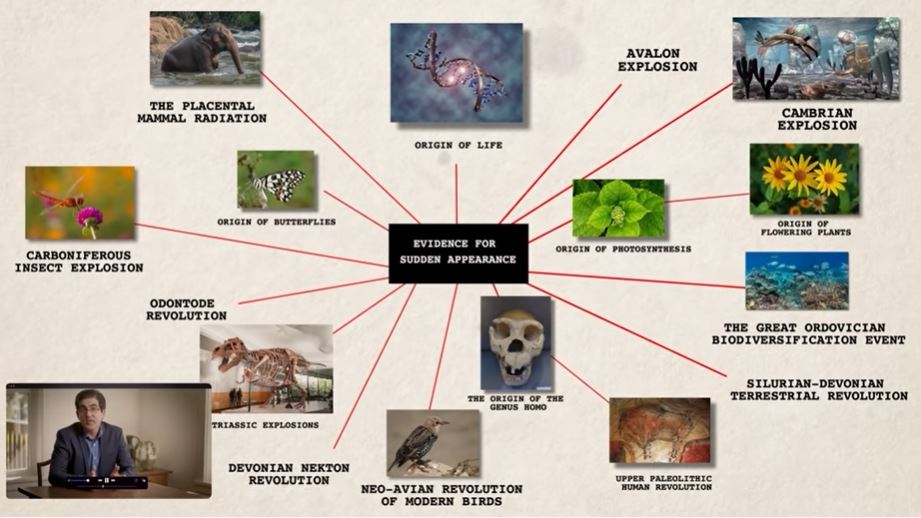
The Cambrian Explosion isn’t the only evidence of the sudden appearance of life forms.

Alright, I admit the title of this short article is a bit provocative, but I got your attention. I would actually say the Darwinian paradigm is going through something more like an evolution. The explosions are not in the paradigm, but in the facts that have been slowly uncovered in the fossil record since Darwin championed the evolutionary paradigm.

The short video at the end of this article produced by Science Uprising alludes to a number of “explosions” that elude a Darwinian explanation. Paleontologist Günter Bechly, summarizes,

“The phenomenon of sudden appearances in the fossil record is not just an exceptional case, but actually is a pattern that is found everywhere.”

The obvious example is the Cambrian explosion in which most of the phyla that exist today appeared in the blink of geological time, in a mere five to ten million year window. Charles Darwin, himself, acknowledged the problem the Cambrian Explosion posed for evolutionary theory, but he expressed confidence that future fossil discoveries would fill in the gaps and provide evidence of the precursors to the Cambrian life forms.

Since Darwin’s day, the gaps have not been filled by subsequent discoveries. Rather, the gaps have widened, as Stephen Meyer recounts in his book, Darwin’s Doubt. To make matters worse for the Darwinian paradigm, the Cambrian Explosion isn’t the only evidence of the sudden appearance of life forms. Other examples are numerous, including:

Technical scholarship is replete with the recognition of explosions (radiations or revolutions) of insects, fish, birds, dinosaurs, mammals, and the “big bang theory of human evolution” with no credible transitions in the fossil record. Many scientists, though continue to look for the precursors and clues to plug in the evolutionary gaps.

It seems that the evolutionary paradigm, which arose abruptly and transformed science overnight, is very slow in adapting to new information as it is uncovered. Not that we should be overly critical of the painstakingly slow progress. Science is slow and methodical with intention.

Explosions, though, such as the relatively sudden rise of Darwinian theory, may give way to equally sudden corrections, kind of like the mass extinction events that give way to new “radiations” or “revolutions'” in life forms. For more on the “time crunch” facing evolution, watch the short video that follows.

What It Means to Follow Jesus in Babylon

Live your lives, Increase and multiply. Seek the welfare of this world, BUT ALWAYS REMEMBER that this world is passing away

I tried to set the stage for what it means to follow Jesus in Babylon with a prior post: God’s Ways: a Primer for What It Means to Follow Jesus in Babylon. It is a kind of running start – a view from 40,000 feet. The purposes of God establish the context for understanding how we follow Jesus in Babylon.

Jesus, of course, did not live in Babylon during the 30-some years he walked the earth. I am speaking figuratively here. Jesus urged people to follow him, to live as he did and to “walk” as he walked – to be imitators of Jesus as he was an imitator of God the Father. We follow Jesus wherever we are.

Most people reading this blog don’t live in Babylon either, as in the ancient city. Rather, Babylon is symbolic of our lives in this world. Just as the exiles found themselves living as foreign people in a foreign land filled with foreign gods, followers of Jesus today are aliens and strangers in this world living among people who do not bow down to our God.

When Jeremiah wrote to the Jewish exiles in Babylon right after they were taken captive, right after they lost everything (their homes, their lives as they knew them, the Temple around which their community was organized), his words would have been difficult to receive.

“Thus says the Lord of hosts, the God of Israel, to all the exiles whom I have sent into exile from Jerusalem to Babylon….”

Jer. 29:4

That God “sent” them into exile would have been a painful reminder of all the warnings of the prophets leading up to the final siege of Jerusalem, captivity, and long march to Babylon. Jeremiah had their attention, though. The unthinkable that Jeremiah had long been predicting actually happened.

In that context, this is what he said:

“Build houses and live in them; plant gardens and eat their produce. Take wives and have sons and daughters; take wives for your sons, and give your daughters in marriage, that they may bear sons and daughters; multiply there, and do not decrease. But seek the welfare of the city where I have sent you into exile, and pray to the Lord on its behalf, for in its welfare you will find your welfare.”

eremiah 29:5-10

I don’t think we can emphasize enough the timing of these words: this was the very beginning of the exile. They just lost everything. They just got there. Their future was uncertain. Though they had some hope of returning to their homeland (because the prophets who warned them of the exile also predicted their return), their hope was faint at this point. 

I assume that most of the people reading this blog are not exiles, though many hundreds of thousands of people are refugees in this modern world. Even those of us who are not refugees are not “of this world” if we belong

In the rest of this blog, I will relate those words Jeremiah wrote to the exiled Jews in ancient Babylon to our lives in our modern “Babylon” today, and I will add in the warning, and the encouragement, that Jeremiah gave in the letter that are also instructive to us today. I believe Jeremiah’s words of instruction are how we should follow Jesus in Babylon.

Continue reading “What It Means to Follow Jesus in Babylon”

God’s Ways: a Primer for What It Means to Follow Jesus in Babylon

God is orchestrating the people, the times, the events in history for one end.

Jeremiah wrote a letter to the Jews in Babylon. The Jews were exiled by God’s doing. He has been warning them about it regularly. Then, it happened. I am sure they were stunned anyway. Jeremiah opens his letter saying:

“Thus says the Lord of hosts, the God of Israel, to all the exiles whom I have sent into exile from Jerusalem to Babylon….”[i]

Jeremiah 29:4

God put you and I where we are, also. What God says to the Babylonian exiles then is instructive for us today, wherever we are.

I am going to break what Jeremiah says down and apply it to our world today, but first we need to set the stage. We need to step back and consider the big picture.

“From one man he made all the nations, that they should inhabit the whole earth; and he marked out their appointed times in history and the boundaries of their lands. God did this [marking out our appointed times and where we live] so that [we] would seek him and perhaps reach out for him and find him, though he is not far from any one of us.” (Acts 17:26-27)

Nothing in all of human history has caught God off guard. God saw the sweep and the details of that history from before time. He also knew you.

He knew where you would be born. He knew the hairs on your head. He knew the smiles and frowns on your face, your thoughts and every word that would slip from your mouth before they were even said. (Echoing Psalm 139)

God saw the United States of America, and all the nations of the world before they were established, their course in history and their demise. What we call future isn’t future to God. He exists outside of time. He existed before time began to tick. He exists now, and He exists in our future.

God is orchestrating the people, the times, the events in history for one end. John caught a glimpse of that end when he saw people of every nation, tribe and tongue gathered around the throne of the Lamb. (Rev. 7:9) Has Paul described God’s plan and purpose this way,

Romans 8:20-23My commentary
The creation waits with eager longing for the revealing of the sons of God.All creation is in on the purposes of God and is waiting for the fulfillment of God’s plan
For the creation was subjected to futility, not willingly, but because of him who subjected it,Our present conditions are part of God’s plans and part of the ultimate purposes of God to be accomplished in the world He set in motion
in hope that the creation itself will be set free from its bondage to corruption and obtain the freedom of the glory of the children of God.God’s plan and purpose is for creation to be freed from the present futility to which He subjected it as we obtain the freedom of becoming His children.
For we know that the whole creation has been groaning together in the pains of childbirth until now.It was so from the beginning. When Eve fell in the garden, God increased her pain in childbirth….
And not only the creation, but we ourselves, who have the firstfruits of the Spirit, groan inwardly as we wait eagerly for adoption as sons, the redemption of our bodiesWhen we are born again, by faith in God’s grace, and receive the Spirit, we taste the fruit of the life God offers and look forward to our ultimate redemption.
God’s Ultimate Plan

God marked out the appointed times in history of all the peoples of the earth and the boundaries of their lands throughout time, and that history is part of the larger creation that is waiting in eager expectation for the plans and purposes of God to be worked out in us and, ultimately, in creation. We are part of that plan.

We are at the center of the plans and purposes of God, who made us. Of all the creatures God created, we alone are created in His image. The creation waits eagerly for us to engage in that plan and purpose of God – each one of us and us, and us collectively.

Like the people of Judah in Babylon, we find ourselves exiles and strangers in the earth (1 Peter 2:11), if indeed we have been born again, born from above. When we are born again, we are born of the Spirit (John 3:1-21) by which we gain entry to the kingdom of God, which kingdom is not of this world. (John 18:36).

“But to all who … receive him, who [believe] in his name, he [gives] the right to become children of God, who [are] born, not of blood nor of the will of the flesh nor of the will of man, but of God.” (John 1:12)

When we receive Him, He gives us “the right to become children of God”. Though God knew us and “chose us in Him from before the foundation of the earth” (Eph. 1:4), He gives us, at the same time, the right (exousia, the right or authority) to become His children – it isn’t a forgone conclusion – at least not from our perspective.

We have to receive it, to begin with, and to believe (trust and commit to) it. In more popular parlance, we have to walk in it. Indeed, Jesus calls us as disciples to follow after Him, to “walk” the way he walked, to live as he lived. Paul says it this was:

So if there is any encouragement in Christ, any comfort from love, any participation in the Spirit, any affection and sympathy, complete my joy by being of the same mind, having the same love, being in full accord and of one mind. Do nothing from selfish ambition or conceit, but in humility count others more significant than yourselves. Let each of you look not only to his own interests, but also to the interests of others. Have this mind among yourselves, which is yours in Christ Jesus, who, though he was in the form of God, did not count equality with God a thing to be grasped, but emptied himself, by taking the form of a servant,[c] being born in the likeness of men. And being found in human form, he humbled himself by becoming obedient to the point of death, even death on a cross.” (Philippians 2:1-8)

Jesus is no longer with us to demonstrate in person how to walk as he walked, but we have Scripture and the Holy Spirit as our guide. Indeed, all Scripture “is God-breathed” (inspired), and it is useful for teaching, rebuking, correcting and training in righteousness”, so that we can be “thoroughly equipped for every good work”. (2 Timothy 3:16-17) The people who first heard these words would have thought primarily of what we call the Old Testament.

What we find in Jeremiah’s words to the people of Judah exiled in Babylon are instruction for those of us today who are exiled as aliens and strangers in this present world (if indeed we have truly been born again). What he says may not fit the modern Church narrative and example, though – or at least the poplar notion of what that is.

Continue reading “God’s Ways: a Primer for What It Means to Follow Jesus in Babylon”

What Does It Mean to Be Known By God

What does it mean that the Lord knows the way of the righteous?

“Therefore the wicked will not stand in the judgment, nor sinners in the congregation of the righteous; for the Lord knows the way of the righteous, but the way of the wicked will perish.” Psalm 1:5‭-‬6 ESV

What does this mean? The Lord knows the way of the righteous. Doesn’t God know everything? Doesn’t God know the way of the wicked also?

God sees everything, and He knows everything. God numbered the stars. (Ps. 147:4) God doesn’t just number the stars; He knows each star by its own name! (Is. 40:26) He can count every hair on every person’s head. (Luke 12:7)

God knows our thoughts, our paths and our ways, and He even knows the words we speak before we say them. (Ps. 139:2-4) Why does Psalm 1 say God knows the way of the righteous (and not the wicked also)?

He certainly knows the way of the wicked. Nothing is hidden from God. (Luke 8:17 & Heb. 4:13) The statement that God knows the way of the righteous doesn’t necessarily mean that He doesn’t know the way of the unrighteous. I think He certainly does.

This passage is not talking about bare knowledge. Clearly God is all knowing. This is not a statement contrary to the omniscience of God. God must know the way of the wicked to judge them, which this verse says He will do.

This statement is about a different kind of knowing. It is a statement of familiarity and identification. God is familiar with and identifies with the righteous because the righteous have adopted God’s ways. God knows them in the sense that he knows his own ways. 

It is a statement of intimacy. God is intimate with the righteous. The righteous turn to God in good times and bad. They have opened themselves to God, and God knows them as someone knows a confidant.

It is a statement of connection. God connects with the righteous. The righteous are aligned with God in their ways. Thus, God knows them. Jesus prayed that we would be one with him as he is one with the Father. (John 17:20-23) God establishes connection with the righteous.

What connection does this knowledge have with judgment, perishing, or eternal life? (Which is the focus of the majority of this passage ) God’s knowing is somehow tied into the judgment, the wicked perishing, and implicitly the righteous not being judged and not perishing.

God is eternal. He always is, always was, and always will be. If we are aligned with God, connected with God, we partake with God in his eternal life through Christ. This was the good news (Gospel) that Jesus preached.

Abraham was counted righteous by the grace of God because of his faith (trust and commitment to God). Through Abraham’s seed came Jesus, his seed, who blessed all the nations of the earth.

In Jesus was God incarnate, emptying Himself of His glory and privilege (Phil. 2:5-7) to “connect with” us on our level. In Jesus, God demonstrated His love and character for us to see and connect with. (1 Jn. 1:2)

That blessing God promised to Abraham is the right to be called sons of God (Jn.1:12), to be born again (Jn. 1:13 & Jn. 3:3-8), to die with Christ and to live eternally in him in connection with the Father. (Rom. 6:6-8)

I think of Paul’s great words, “Now I know in part; then I shall know fully, even as I am fully known.” (1 Cor. 13:12) These are words of intimacy and personal connection. “Then we shall see face to face.” (Id.) This was God’s desire and his plan all along that we might have personal intimate connection with him and He with us.

God not only desires to “know” us – to have intimate connection with us; He desires to be known by us!

God the Father can seem distant and unapproachable. but He became one of us to connect with us and invite us to connect with Him in the form of Jesus. Jesus, in turn, leaves us the Holy Spirit, who is God who remains with us in intimate form who connect with us, and provides a way for us to connect with Him.

The Spirit is God’s guarantee that he will give us the inheritance he promised…. (Eph. 1:14)

[He] has given us the Holy Spirit in our hearts as the guarantee of all that he has in store for us. (2 Cor. 1:22)

The Spirit himself bears witness with our spirit that we are children of God…. (Rom. 8:16)