The Bible, Christ and Culture: Biblical Critical Theory as a Framework for Critiquing Culture

Letting the Bible frame and critique culture requires us to be aware of our cultural milieu


I am listening to a discussion of a new book by Christopher Watkin, Biblical Critical Theory: How the Bible’s Unfolding Story Makes Sense of Modern Life and Culture, dealing with culture on the Truth over Tribe podcast. Watkin’s premise for the book is that we should use the Bible to frame our critique of culture, but the reality often is that we frame and interpret the Bible through our cultural lens.
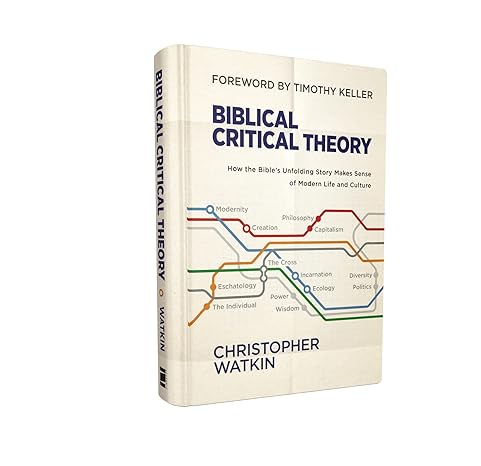
As an aside, I love the title of the book. “Critical theory” is part of our modern cultural vocabulary and milieu. Though many Christians recoil from the invocation of that term, it is the language of our times Watkins uses it to capture the attention, and he uses it as a springboard to take us back to the Bible, which I think is brilliant.


The discussion on the podcast focuses on the definition and meaning of culture, starting with the reality that culture pervades most of our lives and our thinking. Watkin notes that we see God working in and through cultural environments in the Bible, yet the thrust and message of Scripture is multicultural (and countercultural).

What appears to be exclusive is revealed to be inclusive. God works in the cultural milieu, but the message is not bound by it nor bound to it.

A multicultural theme is baked right into the fabric of Scripture, including the influence of three different languages that make up the biblical writings. This theme is borne out by the glimpse God gave John of the end of the Story. If we lift our eyes to see the horizon for all Christians off in the distance, this is what we see:

I looked, and there before me was a great multitude that no one could count, from every nation, tribe, people and language, standing before the throne and before the Lamb. They were wearing white robes and were holding palm branches in their hands.

Revelations 7:9

Our destination, the mansion with many rooms that Jesus spoke about, is filled with multicultural people worshipping God from every nation tribe and tongue crying out in unison, “Holy, Holy, Holy is the lamb!” From this we see that God does not negate culture or ethnic differences. (He confused our languages and scattered us after all.)

But, we also have to recognize that the trajectory of Scripture and God’s plan revealed in Scripture brings us to unity in Christ. Jesus broke down the walls of division (Eph. 2:14), and the thing that unites us is Jesus.

Watkin cautions that Scripture is not entombed in culture, but it takes root in culture. It spreads out to all cultures: Jesus told the disciples to spread the message in Jerusalem, Judea, Samaria, and to the ends of the earth. Thus, the Gospel speaks to all cultures, calls people out of all cultures, and provides the promise of redemption to all cultures.

Indeed, Christianity began as a near, middle eastern movement which spread into the Roman Empire: north, south, east, and west. It spread into the culture of northern Africa and southern, central, and northern Europe, It spread to Asia minor and further east. This spread happened extremely quickly, within a generation of the death of Jesus, and it continues to spread today. The center of Christian growth today is predominantly in the southern Hemisphere.

The roots of Christianity go back to Abram, whose family heritage and land was rooted in the area known today as Iraq. Abram traveled west to Asia Minor, and then south into the Levant at God’s calling and this promise:

“I will make you into a great nation,
    and I will bless you;
I will make your name great,
    and you will be a blessing.
I will bless those who bless you,
    and whoever curses you I will curse;
and all peoples on earth
    will be blessed through you
.”

Genesis 12:2-3

The emphasis added is mine. From the beginning, God called Abraham to be a blessing to all peoples on the earth! Paul picked up on this theme when he said:

Understand, then, that those who have faith are children of Abraham. Scripture foresaw that God would justify the Gentiles by faith, and announced the gospel in advance to Abraham: “All nations will be blessed through you.” So those who rely on faith are blessed along with Abraham, the man of faith.

Galatians 3:7-9

and

 So in Christ Jesus you are all children of God through faith, for all of you who were baptized into Christ have clothed yourselves with Christ . There is neither Jew nor Gentile, neither slave nor free, nor is there male and female, for you are all one in Christ Jesus. If you belong to Christ, then you are Abraham’s seed, and heirs according to the promise.

galatians 3:26-29

Jesus is the seed (descendant) of Abraham through whom this promise is spread to all peoples of the earth. The center of Christianity began in the Middle East, but it quickly found cultural centers in northern Africa, Asia Minor, and southern and eastern Europe. For much of the history of the church, Europe became the center of western Christianity, but Christianity flourished in in all parts of the world.

Christianity and its roots grew up embedded in culture. Christianity was born at the crossroads of culture where east, west, north, and south met with overlays of Hebrew, Babylonian, Persian, Greek, Roman, and Egyptian influences (to identify the major ones). Thus, culture is part of the story

Watkin cautions, though, that people who are immersed in their own culture don’t realize how influenced they are by it. Like a fish in water compared to a bird in the air, we don’t recognize how different our cultural environment is compared to people in other cultural environments.


This is the challenge for us today, just as it was a challenge for all generations, in all times, and in all places before us. We need to be absorbed in Scripture and allow the Holy Spirit to critique and frame our culture through Scripture, and not the other way around.

Continue reading “The Bible, Christ and Culture: Biblical Critical Theory as a Framework for Critiquing Culture”

The Curious Upside Down Kingdom of God Revealed in the First Prophetic Utterance in the Bible

The imagery in Genesis 3:15 is confusing in light of Isaiah 53, but that is a clue to our understanding


In my last blog article, I focused on the way that Genesis 3:15 anticipates and foreshadows the coming of a Messiah, generally, and how it was specifically fulfilled in the virgin birth of Jesus. Not only that, but it introduces a thread in Scripture (the elevation of women) at the very beginning that runs through the entire Bible.

That the Bible uniquely elevates the stature of women despite the distinctly male dominated history of mankind should be noted. That this thread is embedded in the earliest biblical texts despite the ancient, backwards culture of the time speaks to a creator God who is able to influence the course of history even when people have a tendency to go their own ways.

I am constantly amazed how many hidden threads are woven into the great tapestry that is the Bible. I see new ones all the time, and I am going to highlight another thread in this article that I see in Genesis 3:15. In fact, I only noticed it as I was writing the last blog.

Genesis 3:15 reads as follows:

“And I will put enmity between you and the woman, and between your offspring and hers; he will crush your head, and you will strike his heel.”

In the last article I focused on the woman’s (Eve’s) offspring (seed) as a foreshadowing of the virgin birth. In this article, I will focus back on the second half of God’s statement to the serpent: “he [the woman’s offspring] will crush your head, and you will strike his heel.”

In my contemplation of the prophetic quality of this verse for the last article, I was drawn to Isaiah 53, which is (perhaps) the clearest prophetic passage anticipating and foreshadowing Jesus in all of the Old Testament:

  • 2 – “He grew up before him like a tender shoot”;
  • 3 – “He was despised and rejected by mankind, a man of suffering, and familiar with pain…., and we held him in low esteem;
  • 4 – Surely he took up our pain and bore our suffering, yet we considered him punished by God, stricken by him, and afflicted”;
  • 5 – “But he was pierced for our transgressions, he was crushed for our iniquities; the punishment that brought us peace was on him, and by his wounds we are healed”;
  • 6 – “We all, like sheep, have gone astray, each of us has turned to our own way; and the Lord has laid on him the iniquity of us all”
  • 7 – “He was oppressed and afflicted, yet he did not open his mouth; he was led like a lamb to the slaughter, and as a sheep before its shearers is silent, so he did not open his mouth”; and
  • 8 – “By oppression and judgment he was taken away. Yet who of his generation protested? For he was cut off from the land of the living; for the transgression of my people he was punished”;
  • 9 – “He was assigned a grave with the wicked, and with the rich in his death, though he had done no violence, nor was any deceit in his mouth”;
  • 10 – “Yet it was the Lord’s will to crush him and cause him to suffer, and though the Lord makes his life an offering for sin, he will see his offspring and prolong his days, and the will of he Lord will prosper in his hand”
  • 11 – “After he has suffered, he will see the light of life and be satisfied; by his knowledge my righteous servant will justify many, and he will bear their iniquities”; and
  • 12 – “Therefore I will give him a portion among the great, and he will divide the spoils with the strong, because he poured out his life unto death, and was numbered with the transgressors. For he bore the sin of many, and made intercession for the transgressors”.

In reading through this passage again, I noticed multiple uses of the word “crush”. The Hebrew word, דָּכָא, (daka), found in Isaiah 53:5 and 53:10, is the same Hebrew word used in Genesis 3:15. It means, literally, “to crush” in English. It can also mean, figurately, to oppress (and it can mean contrite of heart for those who “are crushed”).

The appearance of the same word in both passages caught me eye. What are the odds of that? The imagery, however, is confusing.

Genesis 3 says that the offspring of the woman will crush the serpent. Whereas, Isaiah 53 says that God will cause the crushing and “cause him [the suffering servant] to suffer” as an “offering for sin”.

On the one hand, God will crush the suffering servant as an offering for sin (Isaiah), and on the other hand the woman’s offspring will crush the head of the serpent. (Genesis) These verses seem to describe very different things, but the very particular use of the same word in both passages is cause for further consideration.

Continue reading “The Curious Upside Down Kingdom of God Revealed in the First Prophetic Utterance in the Bible”

The Significance of Eve’s Seed in the Plan of God

The description of the virgin birth of Jesus harkens back to Genesis 3:15.


I am constantly amazed at the “new” things I see in reading the Bible year after year. I read the Bible for the first time in a World Religion class in college in 1978, and I have been reading it ever since. In the last 5 years (6, or 7, I don’t know), I have read the through the Bible from beginning to end – from Genesis to Revelation – in chronological order and in other ways.

At the beginning of this New Year, I am going to try writing some shorter articles, as I have noticed my articles are getting progressively more wordy and lengthy. The Bible is a rich tapestry, but some threads are longer than others, so I am going to try to pull on some shorter threads from time to time.

In this article, I am focusing on Genesis 3:15 inspired by a brief comment in a sermon I heard during the Christmas season. People often credit the following verse in Genesis as a foreshadowing of the coming of Jesus. God speaking to Eve after the fall said:

“And I will put enmity between you and the woman, and between your offspring and hers; he will crush your head, and you will strike his heel.”

Genesis 3:15 niv

I confess that this foreshadowing never seemed crystal clear to me. Jesus is the offspring of Eve, but so are billions of people. Thus, that connection didn’t seem obvious to me. I saw nothing in that verse that seemed to be specifically about Jesus.

I always figured that theologians connect the second phrase of Genesis 3:15 to Jesus: Eve’s “offspring” (Jesus) will “crush” the serpent’s (Satan’s) head, and the serpent will “strike” his heel. Crushing the head and striking the heel is imagery that doesn’t seem to tie in specifically to what happened with Jesus, except in a very general way. It isn’t completely inappropriate (Jesus certainly had the victory!), but the imagery doesn’t closely fit the details of the crucifixion (like Isaiah 53 does, for instance).

Crushing a head is a fatal blow. Striking a heel is not fatal. Satan’s blow wasn’t fatal, though it seemed to be the dramatic end to Jesus. The crucifixion turns out to be more like the striking of a heal, because Jesus rose from the dead! And that “blow” was crushing to Satan and his purposes.

The end!

Mic drop….

While this is generally accurate, the imagery doesn’t remind us of Jesus in the same way that other Old Testament passages clearly foreshadow him, like Isaiah 53 (by his stripes we are healed).

Hindsight helps us see Jesus in these words spoken by Isaiah hundreds of years earlier. Jews before the time of Jesus knew that many passages in the Psalms, the Prophets, and other places spoke of a Messiah to come. Scholars also go back to Genesis 3:15 to see the foreshadowing of the Messiah (an offspring of Eve crushing the serpent that fooled Adam and Eve into sin).

But, there is more in Genesis 3:15 than the crushing of the serpent’s head that may point to Jesus, and it points to Jesus uniquely and poignantly. It also reveals another thread that runs throughout Scripture.

To see the thread I want to pull on today, we need to focus on the first part of the verse:

And I will put enmity between you and the woman, and between your offspring and hers….

Genesis 3:15a
Continue reading “The Significance of Eve’s Seed in the Plan of God”

The Top Ten Articles on this Blog in 2024


I have written and posted fewer articles this year than any year since the first full year of this blog (2013). In fact, I posted only one more article in 2023 than I did in 2013. I have focused more on my work, operating a legal clinic, involvement in the nonprofit, Administer Justice, locally and nationally, and I have been distracted by personal circumstances in my life that have made 2023 difficult for me.

Though I have published only 52 articles this year (not counting this one), more than 29,500 people viewed articles on the blog this year. In 2022, I posted 73 articles to 30,614 viewers, and I posted 107 articles for 30,751 viewers in 2021. Thus, people have continued to visit Navigating By Faith in similar numbers though I published less than half the number of articles in 2023 as I did in 2021.

Though I had one third fewer views in 2020 (20,084), a foursome of article I wrote in 2020 led the way in most viewed articles this year. 2020, of course, was the dreadful year of COVID. COVID gave us all the time and cause to reflect.

The most viewed articles on NBF in 2023 reflect what was going through my head in 2020. The two most read articles in 2023 came out of my daily Bible reading in 2023. One article, which has become the most read article ever on NBF, was inspired by politics, conspiracy theories, Donald Trump, and the Evangelical preoccupation with end times eschatology. The other, which is the most read article in 2023, was simply inspired by Scripture.  

Perhaps, the popularity of The Redemption of Korah: the Sons of Korah (with 3645 views) is a positive reflection on where we are now compared to 2020.  It is a story of the great theme of redemption that permeates the Bible from beginning to end. It is a story of hope and of God’s loving kindness and our appropriate response in gratitude for the faithfulness of God and His mercy, which new every morning.

The article, Who Were the Sons of Issachar? And What Might They Mean for Us Today?, dominated the blog when I wrote it in 2020. It quickly became the most read article, outpacing every other article written since I started NBF in 2012. It continued as the top article in 2021 and 2022, but it comes in second (which 3014 views) in 2023.

I wrote this article in my angst and internal conflict over the enthusiastic support Evangelicals were giving Donald Trump (including good friends of mine) in the months leading up to the last presidential election. My friends were sending me “inside” information, podcasts, and “prophetic words” celebrating the inevitability of a Trump reelection.

I grew up spiritually in Charismatic circles. Though I saw some things there that trouble me, like a sometimes hyper focus on spiritual gifts and what I would now label errant theologies (like the prosperity Gospel), I am keenly aware of Paul’s admonition not to despise prophecy.

When my best friend from 40 years ago cautioned me lovingly to “understand the times” like the sons of Issachar, I was even more troubled. I dug into the passage in 1 Chronicles where men from every tribe of Israel risked their livres to join David in the wilderness as he hid from paranoid King Saul, including “the sons of Issachar who understood the times and knew what Israel should do”.

Did I misperceive what God is doing in the world today through Donald Trump? Was I on the verge of being left behind in my reticence to be uncritical of him? Had I grown insensitive to the Holy Spirit? Was I living in apostasy? Was I fooling myself to be so critical of the “Christian” support for Trump?

When my very good friend seemed to suggest that I was missing the boat, I took it to heart. “Understanding the times” has been become a Christian buzzword for being in tune with the Holy Spirit in the assessment of culture, politics, and what is happening in society. Writing is my way of working through what I believe God is saying to me, and this article, more even than most, is “prophetic” in that way. I can only pray and remain open and humble with hope that God is working in and through me in my writing.

The next two most read articles in 2023 also grew out of the solitude and reflection that characterized 2020. They relate to the last article to the extent that Evangelical flirtation with the power and influence promised by Donald Trump threatened (and did, I believe) damage the credibility of Evangelicals in the world.

What is an Evangelical if not a proclaimer of the Gospel? My criticism of enthusiastic Evangelical support for Donald Trump was carried by my concern for our witness for Christ to a wayward world he came to save. Our uncritical support of the brash, uncaring, pompous, and insensitive blusterer in Chief focused my mind and heart on how we should present ourselves to the world and seek lost sheep as Jesus did.

God Meets Us Where We Are (with 2126 views) comes out of reflection on my own past where God found me on a journey for truth and meaning. I was not so jaded by the world (and Christians in the world) that God was unable to use them to propel me along the path to Him. For this reason, I believe we must ever be sensitive enough to “where people are” and meet them “there.

In this vein, Paul became a Jew to the Jews, and he became a Greek to the Greeks. He quoted pagan poets and philosophers to pagans. If we divorce ourselves from the world in which we live, we lose our connection to people and our ability to connect with them. Just as God “met me” where I was in my early 20’s, He is “there” meeting people where they are today, and He invites us to join Him.

Fourth on the list (with 952 views) is Apologetics: What It Means for Our Speech to Be Seasoned with Salt. I don’t think I need to explain the obvious connection to how we conduct ourselves in the world – not the least of which is our speech! How we say things is as important as what we say. “Let your speech always be gracious.” (Eph. 4:6)

Fifth on the list of most read articles (with 557 views) is a throwback to a favorite subject: CS Lewis on the “True Myth”. I am a longtime Lewis fan, and I have long contemplated his conception of the “true myth” (which really comes from Tolkien). For Lewis, who was steeped in ancient myths, the redemption story in the Bible is the true “myth” as to which all other mythic stories in the world are only shadowy echoes.

Tuning In To God’s Frequency (497 views) and The Message in the Earliest Creeds in the New Testament (463 views) are the oldest articles in the top ten most read articles for 2023. Both were written in 2016. Tuning into God’s Frequency is an exercise in fleshing out how nature (in the form of a tuning fork) resonates a lesson in how we relate to God: we must “tune” ourselves to God’s frequency God to know Him. (It doesn’t work the other way around.)

The Message in the Earliest Creeds lays to rest a trope that was popular once in the academic world: that the message of the resurrection of Jesus arose as legend in the second or even third centuries. The academics who developed this thesis, claimed that early followers of Jesus didn’t claim that he rose from the dead; the resurrection idea developed generations later. Sadly (for them), modern scholars can point to many creeds throughout the New Testament that date back to the generation followers of Jesus who knew him, and they all focus on one thing: resurrection.

The article, Is Saul Among the Prophets? On Prophecy and a Heart for God (333 views), continues the theme of modern prophecy in light of the Old Testament. Saul was not known for his piety, or his ability to prophecy. Thus, the rhetorical saying developed in ancient Israel, “Is Saul among the prophets?” No, Saul was not a prophet, but he did prophecy (twice), and the instruction I see in that is what I develop in this article.

The ninth most read article in 2023 (312 views) is the only one written in 2023: Joe Rogan Interviews Stephen Meyer on Intelligent Design. Joe Rogan, who seems to be flirting reticently with Christianity, interviewed Stephen C. Meyer, who wrote the best book I read this year, Return of the God Hypothesis”, in one of the most intriguing and poignant discussions I encountered all year.

Is God a Hard Taskmaster? (with 301 views) rounds out the ten most read articles on Navigating By Faith in 2023. It deals with God’s character and our relationship to Him in the gifts each one of us has been given by God. How we use those gifts (and whether we use them at all) is a measure of our relationship to God.

I am amazed that so many people are reading Navigating By Faith, even though my article output has waned. I enter 2024 with some uncertainty and the loss of motivation that accompanies interruption and uncertainty. I hope to return to some stability in the coming year and to find my balance again.

I have found it increasingly difficult to write as I have in the past. I look forward to finding new motivation and inspiration to allow me to pull on threads that I continue to see in my daily Scripture reading and meditation as I try to live intentionally in this modern world.

I am thankful for the people who read, comment on, and share articles that I have written. I would like to think that I would write them whether anyone reads them or not. I began writing out of obedience to God (and to respect the abilities God has given me), but I realize I do not write in a vacuum. I am ever thinking about who might be reading what I write, and I endeavor to be true to what God has laid on my heart as I seek and explore the truth of God’s world the best that I can.

If anything I write resonates with you, please like what you read, share it, and leave your comments. If what I write doesn’t resonate or seems off to you, please feel free to comment also. I am certain that I don’t always get it right, and I don’t always communicate as well as I would like. Your comment challenge me to rethink sometimes and do communicate better.

Finally, I pray that God’s light will shine ever brighter in this dark world in 2024 and that I can be a vessel of that light. God equates Himself with one thing, and only one thing in Scripture, and that is love. Faith and hope are great, but the greatest of all is love. May we all learn to love God and to love our neighbors more in 2024!

The Minimalest, Non-Factual, Argument for the Resurrection

Perhaps, the minimalest, non-factual argument in favor of the resurrection isn’t a factual argument at all, but a philosophical one.

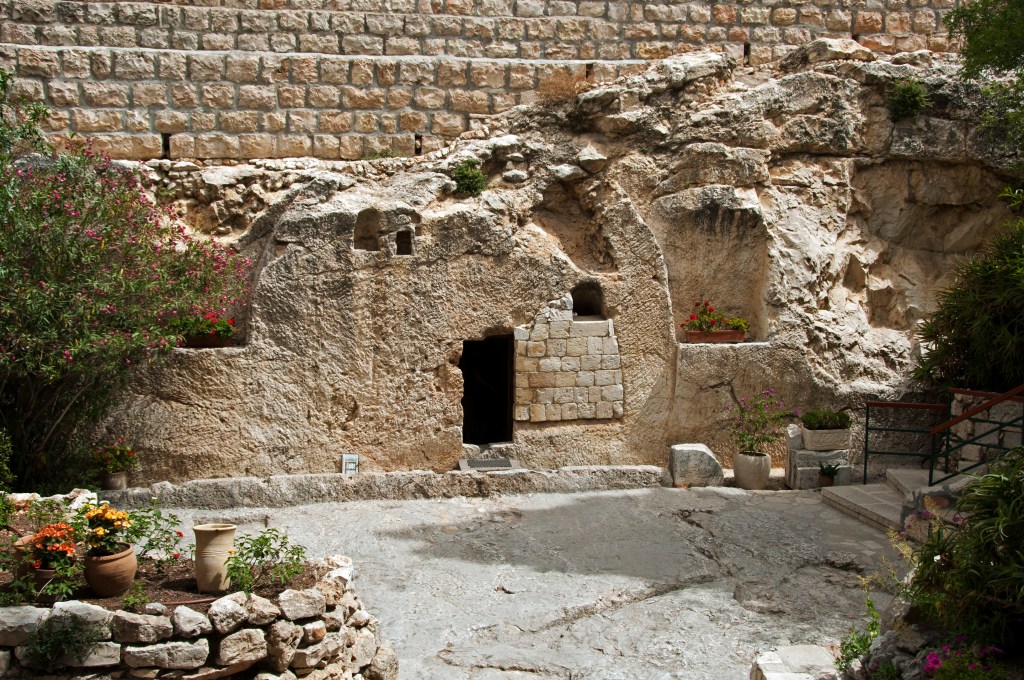
Thought to be the place of the resurrection of Jesus Christ in Jerusalem Israel

The title of this piece is tongue-in-cheek, a play on the “minimal facts” evidence for the resurrection made famous by Gary Habermas. I don’t really have a killer piece of evidence that uses fewer facts (or no facts) that trumps all other arguments. But, maybe I got your attention!

As often is the case, my inspiration comes from what someone said or wrote. In the podcast interview linked below, Mason Jones describes how he he decided to read through the Gospel accounts as an atheist who knew next to nothing about Christianity. He quickly caught on that the resurrection is the centerpiece of Christianity, so he focused his attention on that.

He researched the evidence for the resurrection. He googled arguments for the resurrection and arguments against the resurrection. Though he was an atheist at that time, he was willing to give the evidence that exists a chance. (Whether there was any, he didn’t know.)

As he considered the arguments and counterarguments, he found that the arguments against the resurrection didn’t address very well the arguments for the resurrection. They didn’t take them seriously.

Then he realized that the arguments against the resurrection only work if you start with the presupposition that the resurrection didn’t happen. Because it is impossible. Because people don’t come back to life. Ever.

If you take that presupposition out of the equation, thought Jones, the evidence favors the conclusion that the resurrection occurred, and the arguments against the resurrection loose their luster. If you want to hear the rest of Mason Jones’s thought journey from atheism to theism to Christianity in his own words, you can listen here.

Meanwhile, I want to spend a little time considering the presuppositions people make about the resurrection.

Continue reading “The Minimalest, Non-Factual, Argument for the Resurrection”