The Myth of Human Rationality

Rationality isn’t wholly missing from the human thinking process; it’s just that rationality isn’t always the driving factor


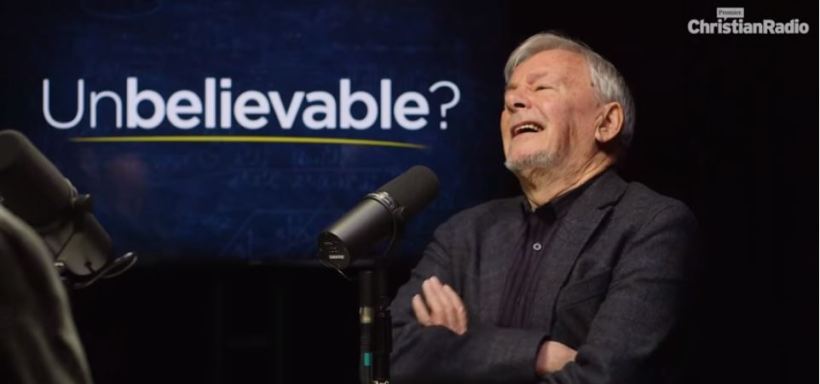
Ed Atkinson was recently interviewed with Austin Fischer by Justin Brierly on his podcast, Unbelievable, on the issue of doubt. (A Tale of Two Doubters) The personal story of both men involves their public dealings with doubt. One ended up on the unbelieving side of the faith divide, and the other on the believing side.

The point that intrigued me most about the discussion was when Ed Atkinson brought up Jonathan Haidt, who wrote a book called The Righteous Mind: Why Good People Are Divided by Politics and ReligionOne of the topics Haidt addresses is what he calls “the rationalist delusion”, which Atkinson summarizes as a “wild overestimation of our rationality that was … birthed to us in the Enlightenment”.

Atkinson says, “We like to think of ourselves as very rational beings [who] very rationally work and think our way through the world sorting through the syllogisms and … coming to what is the correct answer.” The work that Haidt and others have done on the subject have debunked that view of ourselves. Atkinson says, “Our decision-making process really isn’t very rational.”

I have often thought about this very thing. When I look back on my own journey, I recall that I went off to college with a passionate desire to discover meaning and truth, believing it was attainable, and having a naïve confidence in the rationality of the human mind. What I found in college was a very mixed bag. Though my quest for meaning and truth never waned, my confidence in the rationality of the human mind was disappointed.

I came to distrust that confidence in myself and in others, especially in others whose confidence in their own rationality seemed unwavering. Elevated self-confidence often seems more like brute will than rationality.

Since that time I have been continually disappointed in the rationality (or lack thereof) of the human mind, especially in those who seem to have no doubt about their own rationality. That I am sometimes guilty of the same over-confidence only adds to my disappointment and angst.

As a lawyer whose vocation is getting at the truth through the presentation of the evidence on both sides of a matter to a neutral judge, I have had generous opportunity to test human rationality. What I have found (over and over again) is that human rationality is often affected by things that have little or nothing to do with reason.

Continue reading “The Myth of Human Rationality”

Yearning for Perfection in an Imperfect World


Have you ever felt like all you do is spin your wheels, but you don’t get anywhere? I have days and weeks like that. Sometimes, it seems my life is like that.

Imagine a people like that….

Isaiah said this of the nation of Israel (Isaiah 26:17-18 NASB):

As the pregnant woman approaches the time to give birth,
She writhes and cries out in her labor pains,
Thus were we before You, O Lord.
We were pregnant, we writhed in labor,
We gave birth, as it seems, only to wind.
We could not accomplish deliverance for the earth….

As a lawyer, I have spent a lot of time in court. I have represented many people, and I have seen our system of justice at work. I can tell you from experience that it’s far from perfect. That is being kind really.

The truth is that not just our legal system is imperfect; our lives are far from perfect. We all desire perfection, but our attempts at achieving perfection are like giving birth to the wind. Though we strive to make the world a better place, for ourselves, our loved ones and others, we haven’t been able to accomplish deliverance from the imperfections that have been the blight of human existence since time immemorial.

What are we to do?

Continue reading “Yearning for Perfection in an Imperfect World”

The Trickiness of Consciousness

Is the ghost in the machine nothing more than information?


Justin Brierley has been doing a series of interviews entitled “the Big Conversation” on his Unbelievable? podcast on the British Premiere Christian Radio. In the latest, and I believe the last, episode, he interviews Daniel Dennett, the Tufts professor and so-called “new atheist” and Keith Ward, the British philosopher, theologian, priest and scholar. Their topic is consciousness. The idea of the “ghost in the machine” comes up about half way through the discussion, and Dennett responds in the segment below:


Among other things, Dennett says that the “ghost in the machine” is nothing more than information. He says, “Information is embodied in the brain”, and “the user of the brain is the brain.” There is no “ghost”.

Of course, to call what Keith Ward describes as the most important aspect of you and me a “ghost” is to minimize it and to reduce it to something of insignificance. Dennett, though would say that the information is the significant thing. There is nothing going on other than the embodiment, transfer and process of information.

So what about consciousness?

Dennett says, “Consciousness is the user illusion of the brain itself…. The brain has been designed to have user interfaces inside it…. Consciousness is a user illusion that is designed by evolution and by learning and by cultural evolution to make our brains capable of getting out bodies through this complicated world.” [Emphasis added]

These remarks are the backdrop for my thoughts today.

Continue reading “The Trickiness of Consciousness”

Responding to the Journalism Crisis

business man, aggressive businessman with typewriter and hammer


via Responding to the Journalism Crisis

We need to find a way to talk to each other, and not just at each other. We need to listen to each other, and not be so quick to respond with a put down or a label or an accusation.

Does the present state of journalism reflect our current attitudes toward “others”? Or does it drive our attitudes towards “others”?

Maybe its both.

We wouldn’t “buy” what they are dishing out if we didn’t want it. The biased, clickbait journalism that we consume is, sadly, just a reflection of who we have become. Maybe it’s who we always were?

At the same time, the hyped up “news” outlets of the left and right variety to a good job of stirring up the division among us and agitating us to fight with other. We toss meme hand grenades into the social media foxholes of our “enemies”, while we rally the troops hiding in the trenches, and they are fueled by a nonstop barrage of media assault.

What are coming too? Where does this end? Is there any hope?

Maybe, but we need to become better news consumers and demand more integrity from our news sources. We need to become more astute in our vetting of fact and eschew the clickbait headlines that dangle in front of our faces like garish posters advertising the wolf boy at a carnival.

We need to stop ourselves from posting knee-jerk responses on social media, labeling those we disagree with and parroting our talking points without really listening or engaging in independent thought. We need to stop the us-against-them mentality when it comes to politics and worldviews and see ourselves as neighbors who have different perspectives.

Yes, worldviews matter, but relationships matter more. No one is winning the social media debates. We are losing our connectedness in a sea of disjointed, clamorous rancor.

Followers of Christ should seek to set a better example. We should be salt and light. We should have a different flavor. We should not defined by the political positions that we hold, but by the love and character of Christ.

Seeking God and Finding Him

It isn’t a matter of God responding to us. It’s a matter of us responding to God.


As I was praying for my children this morning, I was reminded that no one comes to the Father except through Jesus (John 10:6), and no one comes to Jesus unless he or she is drawn by the Father (John 6:44). As I prayed for my children who have not acknowledged Jesus as Lord and Savior and have not professed faith in Jesus, I am also reminded that God gives us free will.

God won’t violate the free will He has given us. How, then, should I pray?

I wish there was another way! I wish that God could just make them believe! If I only I were a Calvinist!

I am only half joking. Maybe not even half joking!

I had a conversation with my youngest about a year and half ago in which she told me that she thought she was an atheist. She said all of her friends are atheists. (I doubt that is true, but whatever.) She told me that she asked God for something (I don’t remember what), and He didn’t respond.

That conversation has stuck with me ever since. I was taken aback. She was only about 16 or 17 at the time. I was painfully aware as we spoke, as I am now, that I can’t make her believe. I was thankful that she felt comfortable enough with me to be open and honest, and I told her so. But that doesn’t make the pain of it any less.

I don’t remember exactly what she said she asked God, but she seemed convinced, at least as we talked at that point, that God must not be real if he didn’t respond to her. I didn’t want to preach. I wanted her to know that she always has an open door to talk to me so I didn’t press the issue with her.

I also know that God is faithful. God drew me out of my darkness, and I believe He can draw her too. After all, no one can come to Jesus except the Father draws her. But will He? Can He?

Continue reading “Seeking God and Finding Him”