The Ebla Tablets Revisited

Ruins of the outer wall of Ebla and the “Damascus Gate”

One of the most popular articles on this blog is The Ebla Tablets Confirm Biblical Accounts. Though it was posted in 2015, it was still the most read article on the blog in 2016 and 2017 and was still third on the list in 2018.  Perhaps, that is why I feel prompted to revisit the subject today.

Digging a little bit deeper into the subject (pun intended), I found a 1979 Washington Post article that boasts no biblical claims. (Literally, it’s in the title.) The article asserts that, after initial enthusiasm that the tablets would reveal biblical treasures, “three years of intense study” disclosed no biblical claims. Dr. Robert Biggs, professor of Assyriology at the University of Chicago’s Oriental Institute, announced the verdict, “People who are looking to the Ebla tablets for proof of the authenticity of the Bible are going to be sorely disappointed.”

At the time of the article in 1979, 11,000 tablets had been discovered dating from 23 centuries before Christ in the ancient Sumerian city of Ebla in what is now northern Syria that was destroyed by fire around 2300 BC. Of course, only 48 tablets had been translated and published at the time of the article. While Professor Biggs was quick to render a verdict against the Bible, other scholars were not as quick to jump to judgment as noted by a Smithsonian expert who speculated at the same time that Ebla tablets may support the historicity of the Patriarchal narratives, “but we won’t know for decades.”

Fast forward to 2015, the number of tablets recovered from the ancient library in the ruins of Ebla had increased to 15,000, and the early verdict that they contain no “biblical claims” is much in doubt. (See Controversial Discovery: 15,000 Ancient Ebla Tablets Prove Old Testament To Be Accurate) The current number of tablets and portions of tablets may be closer to 17,000, and assessments are changing,

Continue reading “The Ebla Tablets Revisited” →

Perspective and Worldviews

We should not hold on so tightly to our own perspectives that we cannot be molded by God’s eternal perspective and gentle hand.


It’s always interesting to listen to people who come from outside our own circles. I have become a religious listener of the Unbelievable Podcast hosted by Justin Brierley in the UK. The difference of perspective that is driven by our different experiences, individual, familial and cultural, is the subject of this piece.

Two recent podcasts come to mind. The first included two Christians, one with an egalitarian view on women and the other with a complimentarian view on women (Unbelievable? #MeToo and the Church: Egalitarian vs Complementarian • Natalie Collins & Phil Moore). The egalitarian position is the progressive view, and the complimentarian position is the conservative view. That seems obvious enough. What interested me was not only the difference in opinions, but the influences that shaped those opinions.

The other podcast (Unbelievable? Render unto Caesar – Should the church keep out of economic politics? Andy Walton vs James Price) involved two more Christians, one with a view that the church should speak to politics, and another with a view that the church should not speak to politics, but should stick to theological things. These guys, being from Great Britain, turn the American views of these things on their heads. Thus, a difference in perspective that prompts me to write this blog piece.

Continue reading “Perspective and Worldviews” →

Stepping Into the Light of God’s Love

God knows us intimately – better than we know ourselves. And He still loves us.


Psalm 139 is a favorite of mine. It can be very comforting knowing that God is intimately familiar with me. He knows my struggles, my good intentions, what I long for and what I need.

You have searched me, Lord,
    and you know me.
You know when I sit and when I rise;
    you perceive my thoughts from afar.
You discern my going out and my lying down;
    you are familiar with all my ways.
Before a word is on my tongue
    you, Lord, know it completely.

(Psalm 139:1-4) On the other hand, God knows my demons, my sinful thoughts, my envious, hateful, spiteful and selfish thoughts. He not only sees the good things I do and think (that I want others to know); He sees the bad things I do and think (that I want no one to see).

The idea that God knows me so well – even better than I know myself – is both a wonderful and a fearful thing!

Amazingly, even so, God loves me. He knows me intimately – better than I know myself. And He still loves me. Continue reading “Stepping Into the Light of God’s Love” →

The Legacy of Dr. Martin Luther King, Jr.

National Civil Rights Museum located in the old Lorraine Motel, site of the Martin Luther King, Jr assassination, in Memphis TN including the balcony on which he was shot preserved as it was on that date

I am about ready to fly back to Chicago from Phoenix, AZ after participating in my first Board Meeting of the Gospel Justice Initiative as a board member. I am humbled to be part of this group that is attempting to implement and carry out in these modern times the words of the prophet:

“What does the Lord require of you? To act justly, and to love mercy and to walk humbly with your God.” (Micah 6:8)

It’s fitting that today is Martin Luther King Day. Last night as I drove back to my hotel, I listened to a podcast interview of Frank Viola who wrote books like Pagan Christianity and his most recent book, Insurgence. He pointed out in the interview that both the Pharisees and the Sadducees had a problem with Jesus. The Pharisees were the equivalent of the conservative right today, and the Sadducees were the equivalent of the progressive left.

That resonates deeply with me as I survey the world today in and out of my social media feed. While both sides might claim Jesus in their political platforms (more or less), I have the distinct impression that they would be put off by Jesus face to face in their presence. Jesus didn’t conform to the spirit of this world. His was the kingdom of God.

Followers of Jesus, it seems to me, should reflect the character and “aroma” of Jesus. I think of these things when I remember Dr. Martin Luther King, Jr. He was hated by the ultra-conservative, called a communist and scrutinized like an enemy of the state. He was also despised by the radical left who criticized him for standing in the way of real revolution, a violent takeover and overthrowing of the status quo.

I see Jesus in Martin Luther King and his legacy – not just because he didn’t sit comfortably with the far right and the far left, but because he exhibited the character and carried the aroma of Christ.

Continue reading “The Legacy of Dr. Martin Luther King, Jr.” →

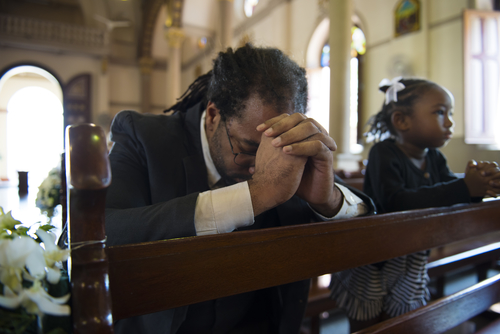
Where Is God in the Messiness of the Church?

I have never participated in a perfect church and have never met a perfect person, yet I believe in a God who is perfect and who is perfecting us, His people.


Toward understanding and healing the wounds of the church, I write this blog piece. The context is the very public struggles of two mega-churches in the Chicago are where I live. Last year, Bill Hybels resigned as the head of Willow Creek Church, after allegations of misconduct came to light. Just today I read about James MacDonald deciding to step down from leadership of the Harvest Bible Church in the wake of a lawsuit and allegations of poor leadership.

The two situations are different, though they both involve allegations against longtime leaders of two of the largest and most prominent churches in the Chicago area. Bill Hybels is accused of inappropriate relationships with women in the church. MacDonald is accused of mismanagement of money, heavy-handed leadership and related allegations. Both situations expose the nature of the human side of the church and the prevalence of sin in the church, even at the leadership level. (The Catholic Church is not alone in this respect.)

In the 1980’s, I became involved in a church that I thought, at the time, was the “perfect” church. It was a vibrant engaging church community. Worship was spirit-led and dynamic. The leadership was charismatic and inspiring. The church community was tight-knit and familial. This church had planted many other churches that were also thriving and growing. I spent 6 years there and knew the church intimately.

It wasn’t as perfect as I first thought, of course. People are people, even people who go to church. Within a year of my leaving to pursue what I believed God was directing me to do next, the church was splintering, disintegrating and falling apart. My pastor, the man who married my wife and I, divorced his wife within a few years of our leaving. Neither he nor his wife are involved in a church today (as far as I know).

We were devastated. This was over 25 years ago, and it still puzzles me. The coming apart at the seams of this church that I viewed as a model of what churches should be impacted me more than I would care to admit.

I realize now that I had invested more of my spiritual capital in the church and its leaders than I should have.

A friend of mine, a fellow church-goer, has been struggling with issues in his church – the leadership in particular. I have listened to him, recognizing the disappointment and disillusionment in his voice. Though I don’t know the details of the issues he has had with the leadership, I do know that he feels cut adrift; he is hurt; his faith is shaken. He has stopped going to church. He isn’t sure he can trust Christians anymore, and he is struggling to make sense of his experience. I can relate.

We left the last church we attended because of leadership, trust and personality differences that affected the people to whom we were closest in that church. Our friends were financially and personally hurt by leadership in the church. We felt we needed to stand with our friends and support them as they drifted away from the church, unable to remain in a church led by people who could not be trusted with their spiritual well being.

These are just the experiences I have had, but I don’t think I am alone in having difficult and painful experiences in churches and with the leadership of churches. Church is a messy business.

Many people turn away from the church and even from Christianity because of similar experiences. How many times have you heard someone say they don’t go to church because Christians are hypocrites? And the fact is that Christians are hypocrites!

But that shouldn’t be the end of the story.

Continue reading “Where Is God in the Messiness of the Church?” →