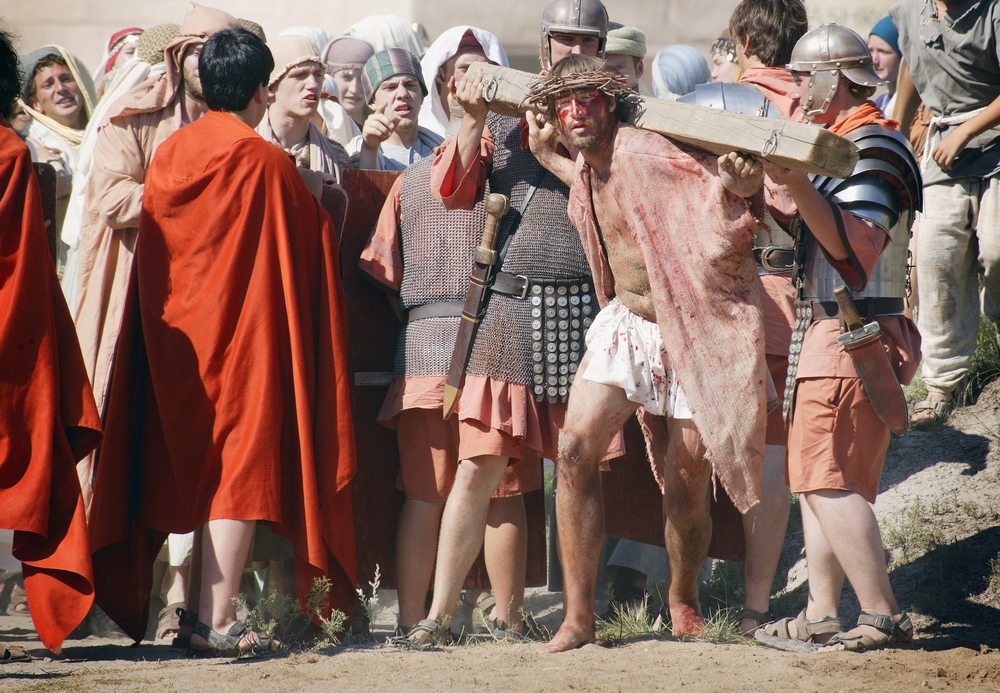
The Case for Jesus Christ Rests on the Evidence of Eyewitnesses

As a lawyer, I am keenly aware of the central importance of eyewitnesses to getting at the truth of any matter. There is no better proof in the law than eyewitness testimony. The rules of law allow hearsay testimony (the testimony of what someone else said) only in extreme and limited circumstances because eyewitness testimony is considered inherently much more reliable.

Eyewitness testimony is light years more reliable than secondhand testimony, but even eyewitness testimony needs to be carefully considered along with the credibility of the eyewitnesses. People aren’t always good at observing details accurately. People sometimes fill in the gaps in understanding of what happened with details that are assumed, but which aren’t accurate. People do this consciously and unconsciously.

Eyewitnesses can also be influenced by subconscious biases and influences. Sometimes eyewitnesses even lie about what they have seen.

Because eyewitness testimony isn’t foolproof, we always compare eye witness testimony with other evidence, including other eye witness testimony. Judges and juries weigh the credibility of the witnesses, and they look for evidence that corroborates or contradicts the eyewitness testimony. At the end, weigh the totality of the evidence to reach a verdict.

Still, most cases are built on eyewitness testimony. A case can be built on the testimony of a single, good eyewitness, but multiple eyewitnesses are always better. The more eyewitnesses that agree with each other on key facts, and the more evidence that corroborates that testimony, the stronger a case is.

The narrative accounts contained in the Bible that we call the Gospels keys in on eye witness testimony. The the biblical writings are expressly self-conscious of the eyewitness sources of the accounts. Following is a summary of the eyewitness testimony that runs throughout the New Testament.

Continue reading “The Case for Jesus Christ Rests on the Evidence of Eyewitnesses”

Jesus Wept with Mary, Though He Knew the Joy to Come

We live in a world in which Jesus wept at the tomb of Lazarus, knowing that he was going to raise him from the dead.


NT Wright commented to Justin Brierley in the 39th episode of Ask NT Wright Anything, “We live in a world in which Jesus wept at the tomb of Lazarus, knowing that he was going to raise him from the dead.”

Jesus was able to identify with and feel the crushing sorrow and the intense grief that the family and friends of Lazarus felt. When Jesus saw Mary, the sister of Lazarus weeping, he wept too. (John 11:32-33) Jesus felt her grief, and it moved him to tears.

Jesus weeping at the tomb of his friend, Lazarus, of course, reveals his humanity, his empathy and the fact that he felt the range of human emotions that we feel in our own lives. Imagine God taking on our form and experiencing what we experience!

The most remarkable aspect of this story, for me, is that Jesus felt the grief of the loss of a loved one and was moved to tears even though he knew he was going to raise him from the dead. He wept with grief though he know that joy would follow the raising of Lazarus from the dead.

In this way, we see that God doesn’t minimize our grief and suffering. He is able to identify with it because he felt the crush of it as we feel it.

He felt the crush of human grief even though he knew the miracle he was about to perform.

Perhaps, Jesus was weeping for all the people who feel grief without assurance or confidence or hope. Surely, Jesus had more than merely hope. He knew that he was about to raise Lazarus from the dead, but he also realized that his friends, the friends and family of Lazarus, didn’t know or appreciate what he was about to do.

Even though Jesus told the friends of Lazarus that he was doing “to wake him up” (John 11:11), and he told Martha, “Your brother will rise again,” they didn’t fully understand or appreciate what Jesus was saying. (John 11:23) They didn’t feel the assurance or confidence or hope that Jesus had.

I imagine Jesus also thought in those moments of all the people in the world who mourn without assurance, confidence or hope in the face of death. This is the human condition, and Jesus fully embraced it. He fully felt the weight of it, and it caused him to weep with them.

Continue reading “Jesus Wept with Mary, Though He Knew the Joy to Come”

At the Curve of a Waterfall: Matter Flowing Through Us

Harrison Wright Falls at Ricketts Glen State Park by Chris A. Fraley

A person posed this question to N.T Wright: “If my body decays, and goes on to become reconstituted into plants and animals and things, what remains? What is essentially me?” NT Wright responded by noting, first, that Tertullian and Origen discussed this question in the 2nd and 3rd centuries, and CS Lewis picked up the same theme in the 20th century in his book, Miracles.

CS Lewis observed that fingernails, hair, skin and the entire the human body are in a constant condition of flux. “Bodies change their entire molecular kit once about every seven (7) years”, Wright noted.

I am not the same person physically that I was when I was born, or graduated from college at age 22, or graduated from law school at age 31 or when my last child was born when I was 39. I am not the same person, physically, at 60, as I was when I was 39.

All of the molecules in my body have switched out many times over those years, yet I am still recognizably me. Maybe a bit larger, with gray hair and visibly aged from my mid-twenties, but I am still me even though none of the same molecules exist in my 60-year body.

NT Wright re-phrased the question in different ways: If a ship goes into a port and one year later, after all parts of it have been replaced, it goes into port again, is it the same ship? If my grandfather has a spade, and replaces the blade and handle several times, is it the still the same spade?

I don’t know about a ship or a spade, but as for me, I know that I am still me even though I don’t have a single molecule left over from my 22-year old self. I have more experiences; I have gained more memories. People can see in my body and mind some resemblance of the “me” they might remember.

Though memories aren’t physical things I can show anyone, I can describe them, and people who share those experiences with me can recognize them. Those nonphysical memories are undeniably “part” of “me” – things I have picked up along the way in addition to the extra weight in my physical body.

CS Lewis says that people are like the curve in a waterfall. They have continuity of form but discontinuity of matter. Matter pours through us. The “us” matter pours through is the real thing – not the matter.

On this day six (6) years ago, Facebook informs me that I posted this quotation from CS Lewis:

“You don’t have a soul. You are a Soul. You have a body.”

I don’t know if CS Lewis is exactly right, but he is getting at the same idea – that we are something more than our physical selves. We aren’t reducible to our physical selves. Our physical selves aren’t even made up of the same molecules that once existed in us. Not one molecule remains from my 22-year old self – yet my self remains.

This mystery is extended in the death and resurrection of Jesus. Through Jesus, God promises to give us new bodies. Our bodies will be changed, Scripture says, but each one of us will remain the same person and be recognizable. Biblical scholars say we will be more fully us then we were before.

In a sense, it’ will be the opposite of the saying about a sick person who is “just a shadow of himself.” Except, the perspective will be reversed. We will see that our bodies were just a shadow of what we will become. Wright says there is a “real you” that is much more like you, vividly more like you, then you are now.

Getting around to attempt an answer to the question posed, NT Wright says, “Nowhere in the New Testament does it describe a soul leaving a body and going to heaven.” What does he mean?

Continue reading “At the Curve of a Waterfall: Matter Flowing Through Us”

The Resurrection from the Point of View of Mary Magdalene

In the resurrected Christ, there is neither Jew nor Gentile, male nor female. We are all one.

Mary Magdalene, Mary, & Salom walking up to the bright empty tomb of Jesus Christ early Sunday morning

Three days and two nights ago, Mary’s entire world came crashing down. The earth opened up and swallowed Jesus, whom Mary loved, into the abyss. Mary’s world was thrown into darkness and confusion, leaving only soul crushing grief, bewilderment, and emptiness.

She barely had enough time to get him down from that tree on which he had died. A very generous leader risked his life and reputation to help her with the body and prepare the body properly for burial before Sabbath began. (John 19:42) It was the least they could do.

The shock of his arrest and the whirlwind of everything that followed came upon her in a rushing torrent so quickly that she was completely overwhelmed, reeling, barely able to breath. The that unbelievable, astonishing, implausible whirlwind of events ended with his death. It’s all too unreal.

When the devotion of last minute burial preparation ended and the tomb was sealed, tornadic activity gave way to the silent weight of reality. The yawning emptiness and overwhelming grief descended on Mary as she labored to get home in the darkness.

All the men abandoned Jesus as their world began to unravel. The petty squabbling at dinner the night before left Mary confused about what Jesus had been saying. Jesus was trying to tell them something important, but she could only remember bits and pieces….

Something about a cup… and pouring out his blood and…. It was all so surreal and confusing. So impossible to accept.

Igt seemed clear to her in retrospect that Jesus seemed to know what was going to happen. She remembered seeing it in his eyes. He was resigned to it, but she didn’t understand. How could she have understood?

All the mysterious things Jesus said during the exciting and hopeful years they traveled with him played in her mind like a long, beautiful symphony suddenly ending in a grand, discordant cacophony that would not resolve before it faded into a whimper. The mystery seemed so poignant, but no less momentous and ominously empty. Through the looming darkness, a slight flame of hope sputtered as she recalled these things like a lone survivor clinging to whatever is close hand in the receding waters of a tsunami .

As she reached her destination for the night, she recalled that Jesus wouldn’t let anyone try to defend him. “He just gave himself up!” she thought. He utterly gave himself over to them. It was so painful to watch.

But even in his weakness he was noble. He was so beautiful. He seemed like everything they thought he was. Even in the end. Even as he resigned himself to death…. She wept and the torrent of her tears broke through the dam of the brave front she put on through all of it.

“Those men!” she thought, “They didn’t do anything. The torrent took an angry turn. “They were always arguing about who was the greatest.” Her thoughts tumbled like rocks that could not withstand the current. “They couldn’t even stay awake with him! Jesus needed them!”

She let out a long, mournful gasp as she recognized the dark cloud threatening her and swallowed her anger.

“They could have, at least, gone with him! But, they left him,” she mourned. “They saw it happening, but they pretended not to know!” her thoughts raced again. “They didn’t lift a finger. When Jesus needed them most, they abandoned him. Peter even claimed he didn’t know Jesus! Peter!” She stopped as the dark cloud threatened again.

Mary and the other women would not leave him. They saw the whole, unimaginable thing … and John. “At least, John was there…. Not that he did anything, either,” Mary recounted.

She realized, “If it wasn’t for Joseph, who knows where his body would have ended up.” Mary was grateful that Joseph owned a tomb nearby and even more grateful that Joseph and the people with him helped with the body. (Luke 23:50-53). Even so, Mary couldn’t help but wonder, “Where they were earlier – when Jesus needed someone. Anyone!”

Even as she felt her heart constrict in anger and frustration, the realization came in like the gentle lapping of the waves on the shore, “They could not have stopped what happened.” There were powerful forces at work that Mary did not understand. She softened, and she wept.

They didn’t have time to prepare him properly. It was the Sabbath, and night was upon them. The hours labored by through the night. The force of things undone kept slept at bay. Everything weighed so heavily on Mary’s heart. She needed to get to him as soon as she could, as soon as the doaw broke and Sabbath was over.

Mary was up before the dawn. Sleep was not an option anyway. She hurried to the tomb, where she met Joseph and Nicodemus who came through with the spices and ointments for Mary to prepare the body in the soft light of the morning. (Luke 23:56)

The hopeful sounds of birds gently singing in the still of the early morning might have lifted her heart on any other day. She was drowning in sadness, as tears came in waves. She could hardly see at times.

Tears she could not manage to wipe way with the back of her hands fell from her cheeks into the mixture of ointment and spices. She recalled the day she wiped her own tears from his feet with her hair in repentant gratitude and joy, knowing her sins were forgiven, and her life was forever changed.

The dam of whatever shame might have remained was swept away. Her tears turned to waves of uncontrollable sobs. She could not resist them. She gave herself over to them in a gush of new gratitude for all Jesus had done, and she could not continue until the waves of emotion passed.

Mary could not adequately express the depth of gratitude for Jesus for rescuing her from the demons that haunted and tormented her from her youth. She tried. It wasn’t enough. She didn’t care what anyone thought, but it still wasn’t enough.

Nothing had been more precious to her than the ointments she collected… until Jesus set her free. None of those precious ointments mattered anymore. They were all she had, and they weren’t enough. She would have spent her entire life pouring her very self out for him.

The grief returned, and she desperately longed to wind back time. The impossibility of it all was maddening; it seemed so impossible, yet it was so formidably real. Those demons lurked again in the back of her mind. She caught herself again, shuddered, and and devoted her weary mind to the ointment and spices and the body of her precious love, Jesus, lying lifeless at her side.

Continue reading “The Resurrection from the Point of View of Mary Magdalene”

Sunday Worship is Evidence for the Resurrection

The sudden change from Saturday observance to Sunday observance in the First Century is evidence of a momentous occurrence that lead to the change.


Many of the things we do have become so traditional and commonplace that we don’t think about when they started and why. One of those things is the practice of Christians gathering on Sundays for “worship” or “church.” After all, Christians have been gathering on Sundays for almost 2000 years!

But why? What is the history? And why is that important?

We are approaching another Easter, so the death of Jesus and the resurrection is top of mind this time of year. That is the Christian story, or course. These central components of the Christian narrative give us the context to explain why Christians gather on Sundays.

Christians gather on Sundays because Sunday was the day of the resurrection according to the Gospel accounts (all four of them). While we take the Sunday gatherings for granted, the first followers of Jesus gathered on Saturdays.

Their people – the Jews – had always gathered on Saturdays – the Sabbath. The Sabbath was sacred to them going back hundreds – as many as fifteen hundreds – of years. The change from Saturday gatherings to Sunday gatherings by the first Christians (who were Jewish), therefore, was a watershed change that we might not appreciate so many years later.

Christianity grew out of Judaism, of course. Jesus was a Jew and so were all of his first followers. The Sabbath (from sunset of Friday evening to the appearance of the stars in the sky on Saturday evening) is holy in Judaism. (See Wikipedia) The Sabbath is the 7th day of the calendar week for the Jews and represents the day God rested from creation.

Keeping the Sabbath as a holy day of rest was first commanded by Moses as reflected in in the Torah (Exodus 16:26, 29) after the Exodus from Egypt. (Exodus 20:8-11) It is one of the Ten Commandments. The Sabbath continues to be faithfully and diligently observed in Jewish communities around the world to this day.

The Sabbath had been faithfully and diligently observed for many centuries up to the time of Jesus, but the followers of Jesus began a new tradition of gathering on Sundays. The relatively sudden change, after such emphasis on the Sabbath for so many centuries marks a pivotal, historic change that is best explained by a significant, historic occurrence.

According to those early Christ followers (and all Christ followers today), the resurrection on Sunday is the explanation for that sudden change in the First Century after fifteen hundred centuries of Saturday observances.

We have learned to be skeptical of biblical, historical claims since the Enlightenment, existentialism, modernism and post modernism have done their deconstructive work. People have posited that the resurrection didn’t happen and only developed as time and embellishment gave rise to the idea in the vein of a legend.

But the sudden change from Saturday observance to Sunday observance in the First Century is historical fact that few (if any) would challenge. It tells its own story about the historicity of that reason why the change was made.

Continue reading “Sunday Worship is Evidence for the Resurrection”