John Newton, who wrote Amazing Grace, said this about prayer in a letter to a friend:
Our ability to pray is so weak that, if we are sitting in a room trying to pray, we are over matched by the buzzing of a fly.
Tim Keller says that prayer is hard for us for a number of reasons, not the least of which is that we have “distance” from God is the due to the fact that we live in a physical world, while God does not. We are absorbed by the physicality of the world in such a way that is hard for us to contact to a non-physical God. What, then, is prayer that we can engage in it, engage God and overcome the obstacles that get in the way?
Ravi Zacharias is a well-known speaker on faith, culture and philosophy. He travels around the world, rubbing shoulders with the intellectual elite. He wasn’t always the intellectual sort. He wasn’t always a man faith. He called himself an atheist growing up.
In an interview, when he was pressed on that point, he said, “Atheism is a strong word. I was living like an atheist.”
“If I shut up the heavens so that there is no rain, or if I command the locust to devour the land, or if I send pestilence among my people….”[1]
We might view God as a Great Sugar Daddy in the sky. We want Him to pour out good gifts to us and make our lives easy for us. We are disappointed, disillusioned, and discouraged when we don’t experience the generosity we imagine and want from God.
God is benevolent for sure, but He is much more than that. He doesn’t just want to give us good things; He wants to give us Himself. In fact, He doesn’t just want to give us Himself, He wants to pour Himself into and through us to bless others consistent with His larger plans and purposes for the world He created.
But, this ultimate desire and purpose of God to bless us takes on a different form than we would like at times. God’s activity in our lives doesn’t always feel like a blessing.
In this verse from 2 Chronicles 7, we learn that God, Himself, may cause difficult things to happen to us. Even if He simply allows them to happen, God is ultimately responsible for them. Right?
But why? And what can we do about it?
We need to read the second half of the verse and consider the context in which it was written for a more complete picture.
And he said to them, “Which of you who has a friend[1] will go to him at midnight and say to him, ‘Friend, lend me three loaves, for a friend of mine has arrived on a journey, and I have nothing to set before him’; and he will answer from within, ‘Do not bother me; the door is now shut, and my children are with me in bed. I cannot get up and give you anything’? I tell you, though he will not get up and give him anything because he is his friend, yet because of his persistence[2] he will rise and give him whatever he needs. And I tell you, ask, and it will be given to you; seek, and you will find; knock, and it will be opened to you. For everyone who asks receives, and the one who seeks finds, and to the one who knocks it will be opened. What father among you, if his son asks for a fish, will instead of a fish give him a serpent[3]; or if he asks for an egg, will give him a scorpion? If you then, who are evil, know how to give good gifts to your children, how much more will the heavenly Father give the Holy Spirit to those who ask him!” (Luke 11:5-13)
Reading through Luke recently this passage impressed me in a way that hadn’t occurred to me previously. We often remember things out of context, but context is important and provides insight, and sometimes even changes what we think we know of the verse, standing alone.
It seems that the ask, seek and knock passage is often remembered for the proposition that God, our heavenly Father, will give us the good things for which we ask, seek and knock[4] because a natural father doesn’t withhold good things for his children. But that isn’t the central point of the passage.
This passage is beautifully laid out in a progression of intimacy that I had not seen before.
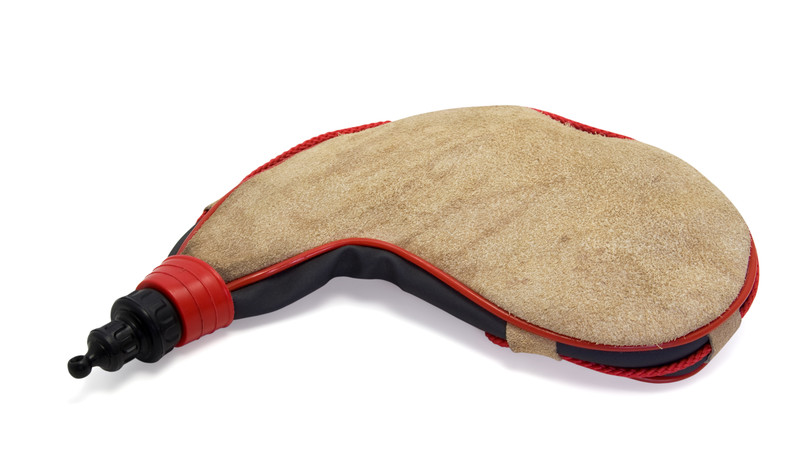
Jesus speaks of the need for new wine skins to hold new wine. We are the wine skins God desires to prepare. When we are born again, we are born of the Spirit.[1] Paul says we become new creations: “the old has passed away; behold the new has come”.[2]
Jesus says we need new wine skins to contain the new wine (of the Spirit).[3]
We often have a very anthropomorphic view of God. Many of us come to God through our own desires, wants and needs. That isn’t wrong. Jesus invites us to come. He invites us to seek, to knock and to ask. He tells us that a good father will not give his child a stone when his child asks for a fish. God expects us to come to him for our needs and even our desires.
We can’t remain in that posture (of seeking our wants and needs from God), however, and grow into the kingdom God desires for us. We can’t remain in the position of asking God only for our own wants and needs and grow in newness of life. We need to transition and mature into the new wine skin God desires us to be.