Who Were the Sons of Issachar? And What Might They Mean for Us Today?


A friend of mine referred to the “sons of Issachar… who understood the times” recently when speaking of the evangelical support for Donald Trump.  The reference comes from 1 Chronicles 12:32 where the “sons of Issachar” (descendants of the 9th son of Jacob) were described as men “who understood the times and knew what Israel should do”.

As I drifted near consciousness in my sleep last night, the phrase came back to me and ran through my head. I roused myself from a semi-conscious state and gave myself a reminder to look up the reference.

I followed up the next day. What does it mean? What does it mean for me? What does it mean in these times?

These were men who apparently understood the changing times in some unique way in a particular point in the history of Israel. The historical context was during the reign of King Saul when he became jealous of David and sought to kill him. David fled into the wilderness, taking with him other men who were loyal to him. As the various tribes learned of David’s plight and flight, they began to join David, including the sons of Issachar.  

Whether they were in tune with God’s purposes or simply saw that Saul was loosing stature in their society, while David was gaining in influence, we don’t know. My friend assumed the former meaning.

God was in the process of rejecting Saul and announced (at least to David) that He was making David king. Saul pursued David to kill him. Instead of confronting Saul, the man God chose as King of Israel, David went into hiding. David could have rallied the men who joined him to form a coup and dethrone Saul, but he would not do that.

The initial surge of supporters who joined David included warriors from the tribe of Benjamin, Saul’s own relatives. (1 Ch. 12:2) Members of the tribe of Manasseh joined David even though their desertion of Saul could cost them their heads. (1 Ch. 12:19) Day after day, men came to David’s aid at a place called Ziklag. (1 Ch. 12:20-22)

If the sons of Issachar knew the times, one might assume that they were among the first to join David, but that assumption would be wrong. They were not the first. They weren’t even in the first wave. The 200 sons of Issachar joined David at Hebron, after many others already joined David.

God had rejected Saul as king, and it was only a matter of time for Saul’s demise. God was making a change, and David was the one God chose to replace Saul. We know today that David was also the man through whom God planned, eventually, to raise up the Messiah – the root of Jesse’s seed – Jesus. (Jesse was the father of David, and Jesus is from the line of David and Jesse.)

Saul’s reign had run its course. Saul was out of touch with God. His head had gotten too big. Pride had taken over, and he no longer bowed to God in his heart. He was losing his grip on reality and the kingdom God had given him.

We know the rest of the story, but the men who joined David surely didn’t. Maybe they just believed it was time for a change. How much they knew of or perceived of God’s role in this story is just conjecture. I think we might take for granted that they did, but we have the benefit of hindsight memorialized in Scripture. They lived it in real time. 

As I read the story when I woke up in the morning, the number of the sons of Issachar who joined David struck me: 200 “chiefs” from the tribe of Issachar and all their kinsmen at their command. And, then I noticed something else.

Men from all twelve tribes of Israel joined David at Hebron, but only 200 “chiefs” from the tribe of Issachar were among them. Only 200 sons of Issachar actually joined David (though, perhaps, they represented all their kinsmen who were at their command). 

The number of men identified from the other tribes were far greater in number, including 120,0000 men from Reuben, Gad and the half-tribe of Manasseh; 50,000 men from Zebulun; 40,000 from Asher; 1000 “captains” and 37,000 men “with shield and spear” from Naphtali; and 28,600 from Dan.

So, what’s the big deal about only 200 men from Issachar? Why does Scripture say of them (and not of anyone else) that they were men who understood the times and knew what Israel should do?

One answer that occurs to me is that the rest of the “sons of Issachar” were not men who understood the times and did not know what Israel should do. Maybe only the chiefs of that tribe understood the times. In contrast, 1000 captains were accompanied by 37,000 warriors from the tribe of Naphtali! It seems none of the warriors of Issachar were willing to join the 200 chiefs of Issachar.

Were the 200 chiefs of the sons of Issachar the only people from all the tribes who understood the times? It seems not. In 1 Chronicles 12:32, it states, “And of the children of Issachar, which were men that had understanding of the times, to know what Israel ought to do; the heads of them were two hundred; and all their brethren were at their commandment.”

Of all the tribes of Israel, the men of the tribe of Issachar who came to David’s rescue were the least in number. Only the leaders were mentioned (who understood the times). Does that mean that they were least in tune with God’s plan and purposes? I don’t know. (I should acknowledge that God often works through the least, the smallest, the most unlikely.)

The backstory to all of this is that Saul was chosen (by God) as king, but God only chose a king for the people because they wanted “a king like the other nations”. In demanding a king, the people were actually rejecting God. They were putting their trust in a king, rather than trusting God to be all they needed. (1 Samuel 8:6-9)

So how does all this inform me and other Christians today?

Continue reading “Who Were the Sons of Issachar? And What Might They Mean for Us Today?”

Voting Christian: What Does Your Faith Allow?


I have to admit that I don’t look forward to the days ahead: the “election season”. I likely be “snoozing” quite a few people in the coming months. Voting, of course, is a protected right and a privilege in a free society, as is the freedom to speak our minds.

Still, I approach the inevitable increase in exercise of that freedom that will certainly escalate as we get closer to November with no small amount of angst. Daily reminders of the polarized, schizophrenic nature of our society with so many voices, each speaking with near absolute certainty, their diametrically opposing opinions is not my idea of fun or meaningful discourse.

That our voices in the church, the body of Christ collective, are no less disparate is downright disconcerting.

Of course, it’s always been that way. Even in the New Testament, even among the apostles, we find disagreement: Paul and Apollos, Peter and Paul, the Jewish and gentile converts, Gnostics and others. Having spent an entire Sunday exploring the early church fathers in North Africa last week, I waded through one example of disagreement after another.

Many of those disagreements at that time led to the formation and establishment of the fundamentals of orthodox belief: original sin, the Trinity, the nature of Jesus, how the church should deal with “lapsed” believers in times of persecution and the authority of the church.

Some, like Cyprian and Augustine, were sainted by the established church for their positions that became the accepted stance of a majority of the church leaders at the time. Others, like Clement of Alexandria, Origen and Tertullian, despite their significant contribution to early Christian thought, were excluded from sainthood because they took positions that did not line up exactly with the majority (even if many of their other positions did).

We tend to view church history in the west through a decidedly western lens. We forget that those early expressions of Christianity took different tracks: Eastern Orthodox, Russian Orthodox, Coptic and others. Some of those early leaders are viewed as saints by some of those “churches” and not by others.

Western Christianity has had its own splinters: Catholic, Protestant, Anglican, Anabaptist and others. I found the Charismatic movement in the early 1900’s fascinating as a young Christian for the way it moved through the various denominations at once and brought people together through the collective experience of the Holy Spirit. It too, though, resulted in new divisions: the Pentecostal and “independent” charismatic churches.

Thus, when I think about how Christians should vote in the next election, I find no solace in a clear direction. Christians are torn and divided. Continue reading “Voting Christian: What Does Your Faith Allow?”

Comments on Freedom and the Clash of Ideas

If any speech or expression is deemed unworthy of protection on the basis of its content, no speech or expression is safe.


“The clash of ideas is the sound of freedom.”  (Lady Bird Johnson)

I grew up in the 1960’s and 1970’s, bring born at the very end of 1959. My young, impressionable mind recalls the assassination of JFK, Robert Kennedy and Dr. Martin Luther King, Jr. I remember watching the riots during the Democratic National Convention in Chicago, the Kent State protest and shooting, the footage of the Vietnam War and the Nixon impeachment on the nightly news.

The world seemed a chaotic place, no less than it does today, on this 4th day of July, 2020.

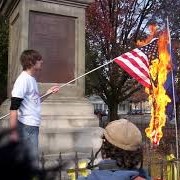
In the 1960’s, the dissident voice championed First Amendment rights that included the freedom of assembly and freedom of speech. I remember that freedom cry as a child superimposed over news footage of a burning US flag. The patriot in my young heart was equally shocked by the flag burning and impressed by the necessity of the freedom that allowed that flag to burn.

In law school, I learned the nuances of the jurisprudence that grows out of our US Constitution in which the First Amendment is enshrined. The clash of ideas is so sacred in our constitutional framework that it allows even the idea of abolishing that very framework to be heard.

In the 21st Century, many things have changed, while somethings have remained the same. Many of the dissident ideas from the 1960’s have become mainstream, and more “conservative” voices have become dissident. I am no longer shocked by the burning of the flag (and, perhaps, the point of burning a flag is no longer poignant for the same reason).

The angst of the 1960’s of my youth has been replaced by the angst of the 21st Century of my middle age. The reasons for my angst are much different, yet very much the same at their core. I have grown and changed in my views, but the emotional strain of the human condition remains.

I fear, at times, that the framework that protected the freedom to burn US flags in the 1960’s might, itself, be destroyed in my lifetime, or the lifetime of my children, by the fire of ideas that are antithetical to that freedom.


The ideas in colleges and universities around the country that seem to dominate those institutions promote the silencing of dissident voices. Speaker engagements are canceled as the loudest voices want not even a whisper to be heard in opposition.


One theme of the dominant social, philosophical and political ideologies that thrive on college campuses today is that certain voices should be silenced, while other voices should be magnified – a kind of totalitarianism of ideas. This worldview would destroy the foundation of the First Amendment if the First Amendment is not held firm.

I am shocked by this new predominant view as I was once shocked by the burning of a US flag. The shock stems not from the evils in society this ideological view aims to address, as I find some common ground in those concerns. I am shocked that the proposed remedy involves weakening the most fundamental freedom that protects freedom itself – the freedom of ideas and the right to express them.

The idea of “hate speech”, as well-intentioned as it sounds, is inimical to a framework of freedom that protects the clash of ideas. Nowhere is freedom more necessary to be protected, than at the intersection of ideas and the right to express them. One person’s hate speech is another person’s freedom of expression.

If we allow the idea of hate speech into the fabric of First Amendment jurisprudence, we threaten its very foundation. What we characterize as “hate” today is subject to change with changing societal norms tomorrow. No speech is safe from the label of “hate” if labels are allowed to silence speech.

While such a worldview has some appeal and laudable goals, it cannot be advanced by the abolition of freedom of speech. Yet, I realize at the same time, that freedom, real freedom, protects even those ideas that are antithetical to freedom and demands that they be heard.


As shocked as I was in my naïve youth to watch the US flag burn in the streets of America, I understood the importance of allowing that expression to be heard. That I am no longer shocked by that expression is of no consequence.


In fact, freedom of speech is nowhere more vital than the protection of speech that is offensive. Favored speech doesn’t need protection.  If any speech or expression is deemed unworthy of protection on the basis of its content, no speech or expression is safe.

Continue reading “Comments on Freedom and the Clash of Ideas”

Christian: Where is Your Focus?

If Christianity is true, individuals are not only more important, but incomparably more important, than nations.

Brothers and sisters in Christ in the United States (and anywhere around the world), I urge you to read this:

Don’t Let Your Politics Ruin Your Witness

If you don’t have the present time or inclination, consider at least this statement:

“[W]hen we blindly follow the agenda of party over the values of the kingdom, we are in danger of making politics our functional god. When our public discourse parrots the talking points of blue or red rather than the radical call of neighbor love, we are in danger of losing the credibility of our witness…..

“So how do we carry ourselves politically? Fuller spoke with characteristic wisdom on that issue as well: ‘If a wise man wishes to gain over a nation to any great and worthy object, he does not enter into their little differences, nor embroil himself in their party contentions; but, bearing good-will to all, seeks the general good: by these means he is respected by all, and all are ready to hear what he has to offer. Such should be the wisdom of Christians. There is enmity enough for us to encounter without unnecessarily adding to it.'”

“The gospel is offensive enough, so let’s allow people to be offended by it. When we replace the gospel with politics in our affections, we will draw the battle line in the wrong place and drown out the mesmerizing voice of Jesus beneath tired drone of petty partisan squabbles.”

I posted yesterday, Questions for Christians in America, out of frustration. My frustration is that so many Christians seem to be so colored by their politics that the Gospel is obscured in their rhetoric and the things they are focused on, at least on social media. The field is ripe for the harvest, and we seem to be stuck in out political tents, fixated on political platforms, defending actions Scripture condemns and  fighting for our own rights to a comfortable existence in which the world bows to us.

I don’t pretend sit in judgment on individuals in their personal walks with God. I don’t want to come across self-righteously. When I post things like that (and this), I am stirring up and exhorting myself and the tendencies I see within me. I don’t exempt myself from the fray.

But, I can’t stay silent. My soul grieves within me. We are missing opportunity to share the Gospel, to introduce people to love of Christ. Worse: we are turning people away from the Gospel by focusing too much on temporal things. We seem to be spending ourselves to protect institutions and current political positions, when eternity yawns ahead. Think about it:

“If individuals live only seventy years, then a state, or a nation, or a civilisation, which may last for a thousand years, is more important than an individual.

“But if Christianity is true, then the individual is not only more important but incomparably more important, for he is everlasting and the life of the state or civilisation, compared with his, is only a moment.”

–C. S. Lewis from Mere Christianity

Why do we spend so much time trying to reform a temporary nation when individuals with eternal value are getting lost in our rhetoric?

The following statement from Peter Wehner, a senior fellow at the Ethics and Public Policy Center, served in the last three Republican administrations, sums it up pretty well in an Op Ed in the NY Times (originally written in September 2016):

“Like water that refracts light and changes the shape of things, politics can distort and invert Christianity, turning a faith that at its core is about grace, reconciliation and redemption into one that is characterized by bitterness, recriminations and lack of charity. There is a good deal of hating and dehumanization going on in the name of Christ.”

We can – we must – do better for the Shepherd who died for us while we were yet sinners and gave us the blueprint for His purpose – to go into all the world spreading the Gospel (the Good news) of Christ.

Questions for the Church in America

There were many so-called prophets who said what the people wanted to hear, but they weren’t the real prophets of God.


The NPR headline reads – Survey: White Evangelicals See Trump As ‘Honest’ And ‘Morally Upstanding’. The tenor of the article runs counter to what the polled “white evangelicals” espouse. Some of the comments on social media reflect the same sentiment: “Nothing new to me as they are all my racist, homophobic relatives”; and “Scary”.

I am reading through the Old Testament in 2020 in chronological order this year, and I am currently slogging through Kings and Chronicles. It’s a tough go, and especially tougher as I think about the current political and religious landscape in the United States. It’s hard to know where religion ends and politics begins.

The depressing thing about Kings and Chronicles is how far the people of God go off the ranch. Starting with King David, the man after God’s heart, it’s a steady downward spiral with a few brief interludes of an effort to rid the kingdoms of idols, injustice, and immorality.

I say kingdoms (plural) because the people began to polarize under King Solomon, and they formed two kingdoms immediately after he died: Israel and Judah. They spent much of their time after that and before the Babylonian captivity fighting and killing each other!

Let me just say this before I go further: the United States is NOT a nation of God’s people like Israel (and Judah) was. Yes, we have been blessed by God. Our “founding fathers” honored God (more or less) and used some biblical principals (among other things) on which to form the Constitution and laws by which we are governed. BUT, the USA is not God’s chosen people like Israel (or Judah) was.

We shouldn’t flatter ourselves that way. The Roman Empire became a Christian nation, too, after Constantine. England, and France, and most of the European countries were Christian nations at one time – even more than the US is today because religion and state were combined. Church and State were married together in governance through the Middle Ages (though it didn’t stop them from warring with each other either).

There is only one people to whom God chose to reveal Himself and to enter into covenant relationship for the purpose of blessing all nations. He did this to set the stage for His own humble entry into history and eventual sacrifice for our sins. Those chosen people aren’t us.

God already accomplished His purpose for which He chose those people. Now He is on to the blessing of the nations part – the redemption of the world through all who follow Him.

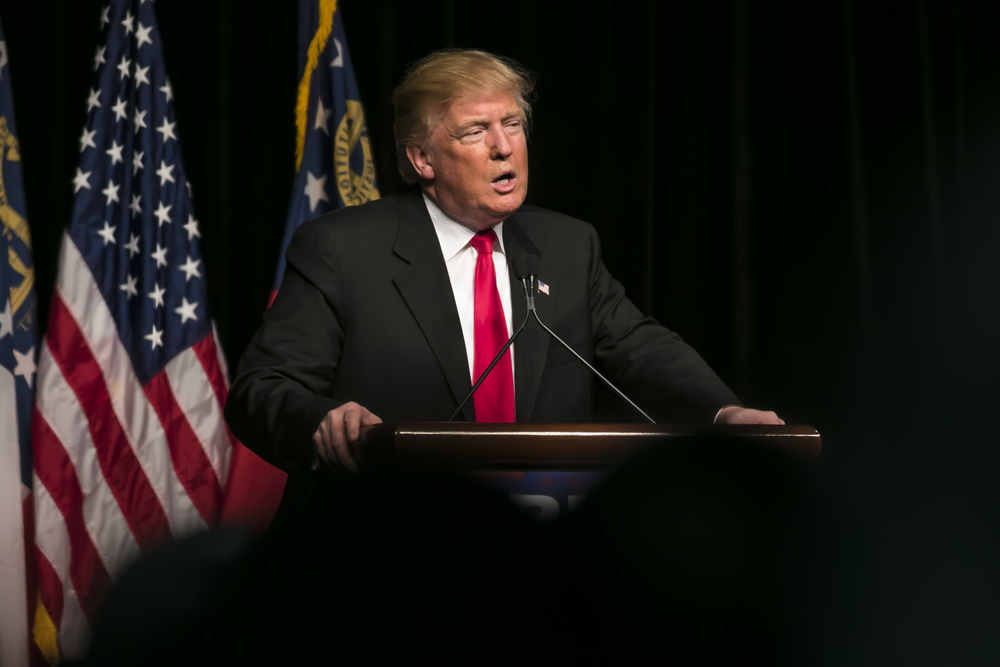
We can say with biblical confidence that God ordained Donald Trump as President (Romans 13:1), but for what purpose? Certainly God is working out His purpose, but it may not be what people think.

God gave Israel King Saul when they demanded a king, but their demand for a king was a rejection of God. Is Trump the king we wanted? Not that God is thrown off by those things. He works His purpose regardless of the vagaries and ambivalence of His people.

I am not concerned about God accomplishing His purposes. He will! But what about the church in America? Where do we stand in all of this?

Continue reading “Questions for the Church in America”