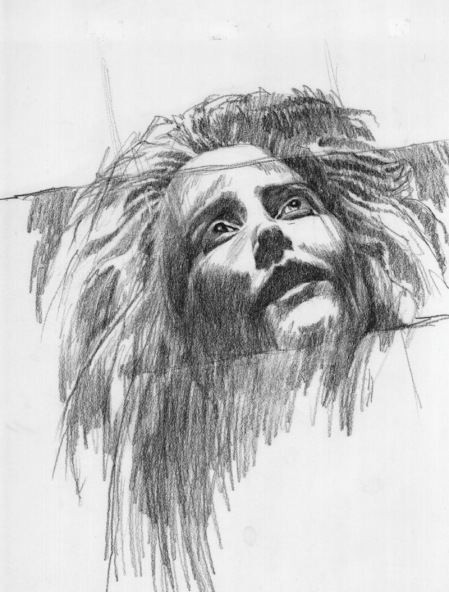
A Life Transformed


I stumbled on the video a few years ago that was posted in March of 2015 by Maz, a woman who was raised in a radical, abusive home. She had just become a Christian, against her families’ wishes, and she feared for her life. Though she filmed the video alone, she spoke in hushed tones. The weight of her plight was evident in her demeanor, yet she was willing to face the consequences for her commitment to Christ. You can watch it for yourself below.

The video was hauntingly beautiful in its testament to the life changing reality of an encounter with God in Christ. Her own father sought to have her beheaded. The emotion of the moment was raw and real. She was leaving a testament to her love for God, knowing that her life might not end well.

I wondered about her and prayed for her years after she posted the video. She posted another video about a year later, and she was still doing well. She had matured some in her faith, but the darkness of her past and the threat that hung in the air seemed still present.

I searched a few times for a follow up video after that, wondering what became of her. Did she survive? Was she ok? Was her faith as vibrant after time had passed as the day she posted that first video?

Today, I don’t have to wonder anymore. I had subscribed to her channel. Today as I was going through my YouTube subscriptions her video that she did in March of 2019 was there on my computer. I watched it, and what a gloriously different demeanor she has now! She radiates the love of Christ.

See and listen for yourself her story in the first video. Her original story is amazing and compelling. She had trouble putting her encounter in words, but the love of Christ she experienced was overwhelming. She knew little about Christianity, but she knew the risen Lord.


Continue reading “A Life Transformed”

Another Look at God In Light of the Evil in the World (Postscript)

The sufferings of this present time are not worth comparing with the glory that is to be revealed to us.

Self Portrait by Joni Eareckson Tada

This is a postscript to a series of blog posts that, frankly, could go on. It follows what was to be the conclusion of a series on the problem of evil – Another Look at God in Light of the Evil in the World (Part 4). Why does evil occur and God doesn’t prevent it? If God is God, and He is all-powerful and all-loving, why does He allow evil, pain and suffering?

I do need to bring this to a conclusion, but I have some “final” thoughts. I also have some experiences to relate: not mine, but of someone who knows pain and suffering better than I.

But first, we have to admit that, if God is God, and if He cares, and assuming He could prevent the pain and suffering in the world, why doesn’t He? It’s a legitimate question!

If Jesus didn’t rise from the dead, I believe we would not be talking about him still in the 21st Century. There would be no point in Christianity whatsoever. He would have fallen into obscurity as just another idealistic dreamer whose fate, like all the other ill-fated dreamers who ever lived, seals our doom as a people, as a species on this planet.

But if Jesus did rise from the dead, no over feat in the history of mankind is more important or more significant. We can’t just dismiss it.

Continue reading “Another Look at God In Light of the Evil in the World (Postscript)”

Another Look at God In Light of the Evil in the World (Part 4)

God is intimately acquainted with the pain and suffering we experience. The God of the cross who knows and understands our suffering can be trusted.


I have tackled the problem of evil – why is there pain and suffering in the world if God is good and all-powerful? – in a series blog posts, beginning with an introduction, followed by Part 1, Part 2 and Part 3. The impetus for the blog posts comes from the explore God discussion that was happening at over 800 churches in the Chicago area over the winter of 2019. The series of blog posts was more specifically inspired by the discussion of The Problem of Evil and Suffering on Veracity Hill between Kurt Jaros, the host, and John Peckham from Andrews University

The problem is easy enough to state, but it’s difficult to resolve, if, indeed, there is a resolution. Although not every religion maintains that God is personal, volitional, all-powerful and all-good, the problem of evil. Not every world religion faces the problem head on. Buddhism, for instance, posits that evil doesn’t really exist; it’s an illusion.

I have been exploring a Christian response to the problem, but it’s all pretty academic unless and until we are overwhelmed by evil, pain and suffering in our own lives. At the point of real evil, pain and suffering, an academic response doesn’t seem to satisfy.

Just last week, in the midst of thinking through the issues and writing the blog series, a tragedy of overwhelming proportions happened right in the city where all my kids went to school. An apparently disgruntled employee on the cusp of being fired from his 15-year position at a local manufacturing plant in Aurora, IL, opened fire on employees in the plant, killing five of them and wounding six other people, including six police officers responding to the alarm that went out. The youngest victim was a 21-year old college intern who started his internship in the HR department that day.

When a person is reeling from pain and suffering that hits close to home, especially from such a senseless, intentional and indiscriminate act of violence, the academic answers ring hollow and fall flat.

Without letting go of any of the attributes of God that are revealed in the Bible, we can work through the problem intellectually and logically to a solution, as I have tried to do in the summary that is contained in the previous blog posts. In some ways this solution is like the theory of gravity for Christianity. We can understand it, but knowing the cold, “scientific” facts are no consolation after falling off a cliff.

What remains, after we have worked through an intellectual solution to the problem, is the emotional, existential weight of the problem of evil. This is where we live. The weight of the problem of evil is hard to shake, quite frankly, when the pain and suffering becomes personal. When we come face to face with evil, pain and suffering in the world in our personal lives, an intellectual response isn’t enough.

This is exactly when people turn to religion and to God for comfort and answers…, or turn away. If all that Christianity has to offer is an academic response, what is the use?

Continue reading “Another Look at God In Light of the Evil in the World (Part 4)”

Another Look at God In Light of the Evil in the World (Part 2)

The issue at stake in the problem of evil isn’t God’s power, but His goodness, His character.


I have taken a prompt from the explore God discussion series going on simultaneously in over 800 churches in the Chicago area to write up a summary of the problem of evil. More specifically, I was spurred on by the discussion of The Problem of Evil and Suffering on Veracity Hill between Kurt Jaros, the host, and John Peckham from Andrews University.

I think this is the most difficult problem to deal with in the modern western world for the theist, and specifically the Christian who maintains, as Scripture reveals, that God is both all-powerful and all-good.

  • If God is all-powerful, why did He create a world in which evil, pain and suffering exist?
  • Does that mean He really isn’t all-powerful?
  • Or maybe God isn’t good?
  • Or maybe the God of the Bible doesn’t really exist?

Many people who can’t resolve this problem in their minds (or maybe their hearts) end up rejecting the idea of God altogether.

I began the discussion in an introductory blog, and I laid some groundwork to address the problem in Another Look at God in Light of the Evil in the World (Part 1). I can’t rehash it all here, other than to emphasize that we should not be lazy in our approach to the challenge. As with science, we need to work through the premises of the truth as understand to a resolution, if indeed there is a resolution to be had.

If there is a resolution to the problem, we can’t do it justice by abandoning the premises we are given. We need to work through them.

For the Christian, those premises don’t just include the omnipotence and omni-benevolence of God. We need to fit all the pieces of the puzzle together. I have come to believe that, if we hold on to and expand the premises we are given, and fill out the picture, some clarity begins to emerge.

One of the additional puzzle pieces is that God isn’t just good; God is love. In fact, God is love in His very nature.

Some people have trouble with the idea of the Trinity, three in one. We can understand God’s triunal (communal) nature in the context of love. As three in Person and one in Being, God’s very character is love from before time even began. (See The Plurality of God) God has community and relationship (love) within Himself.

And, Scripture says that He made us in His image. If we are made in His image, we are made to reflect His love. This is another of the puzzle pieces.

Love requires freedom. Coercion has no place in a loving relationship. Thus, for us to know love and to love God, we need to be free, and that includes freedom to reject God and what is good.

The Christian, who accepts the premise that God is good, rejects the idea that God is evil or caused evil to exist. Evil is not in the nature of God because God is who He is. Evil, then, must be a byproduct of the freedom God gave His creation. Evil is the rejection of God and what is good.

Pain and suffering aren’t, per se, evil, though evil produces pain and suffering. God created a world in which pain and suffering exist from the beginning. (see Part 1). Pain and suffering are actually part of the creation God made and called good.

Finally, we find that God’s grand plan and purpose is that His creation would enter into a loving relationship with Him, not because it must, but because His created beings want to.

These are the basic puzzle pieces. (If you want to examine these premises more closely, you will have to read the previous posts and do some research of your own.) From here, we will go back to the premise of God’s power (sovereignty) and examine more fully how it can be that an all-powerful God (who is also good) can allow evil to exist.

Continue reading “Another Look at God In Light of the Evil in the World (Part 2)”

Another Look at God in Light of the Evil in the World (Intro)

We live in a complex world, and sometimes the answers in theology, as in science, are complex.


Over 800 churches in the Chicago area have been carrying on a discussion under the heading, Explore God. The discussion is prompted by a series of seven questions. A couple of weeks ago, the question was this: Why Does God Allow Pain and Suffering?

This is “the” hard question. It’s a question with which most believers struggle to reconcile with the idea of a loving and all-powerful God. It is the stated reason why men such as Darwin and Einstein were not believers in the God of the Bible.  It’s a question we should take seriously, though the answers may not be easy or simple to understand.

As with the natural world, answers to very difficult questions like the problem of evil may be complex. We live in a complex world in which the theory of relatively seems to be contradicted by quantum theory. Sometimes answers aren’t readily seen and require careful study and reflection to determine. Sometimes we have to dig, and engage our minds and work through the details.

How long have we been studying the stars and galaxies and the tiniest particles of the world? And we haven’t yet begun to fathom all the mysteries. Little by little we make progress. Since the days of Job (from the oldest book in the Bible), the problem of evil has been a mystery to be fathomed. As with science, we have made a great deal of progress, but to begin with, we need a good understanding of the problem.

In a nutshell, it is this: If God is all-knowing, all-powerful and all good, there should be no evil in the world.

I have written about and around this issue for years. There are answers. There are explanations and ways of understanding why a good, all-powerful God puts up with evil in the world. For some, the answers may be intellectually viable, but they fall short emotionally. I would not pretend that the issue is an easy one to grapple with.

As in science, though, we have to start with a premise. For this issue, we start with the premise that God exists, that God is good, and God is all-powerful. How do these things fit together in harmony (if they can be fit together in harmony)?

Continue reading “Another Look at God in Light of the Evil in the World (Intro)”