A Tale of Two Processions, Two Kingdoms, and the Triumph of God

Two processions, two kingdoms clashing, and God’s triumph in the death of God incarnate on the cross


Episode 124 – Statement of Triumph – from the BEMA Podcast, with Marty Solomon and Brent Billings, inspires my writing today. It was the subject of discussion for the Saturday morning Bible study I have attended off and on with an exceptional group of men for several years.

The subject was Matthew 21:1-11. The chapter heading in the NIV translation (which would not have appeared in the original text, because there were no chapter headings in the original text) is “Jesus Comes to Jerusalem as King”.

This is usually how we read it: a “triumphal entry”. We celebrate it as a triumph, and it was. But not perhaps in the way we tend to think about it. Certainly, not in the way the erstwhile followers of Jesus perceived it when it happened.

Marty Solomon sets the stage in the podcast, noting that Jesus rode into Jerusalem on a donkey during the week of Passover, an unusually tense time in this region of the Roman world. The uneasy tension arose in that time in that region because it was home to the only group of people in the Roman Empire who refused to worship the Emperor.

The Jewish people were stubbornly true to their God. Even so, Rome allowed the Jews to have their own ruler, Herod the Great. Herod was Jewish and powerful in his own right, but he was happy to be propped up by the Romans, and the Romans accommodated him to maintain stability in the region.

Even so, this small piece of real estate was problematic for Rome. It sat at the crossroads of the earth. The Hebrew people long inhabited it, but they were a headache for the Romans because of their entrenched religious traditions and unabated worship of their God.

When Herod the Great died, three of sons took over different areas of this land that Herod ruled as a vassal of the Romans. Herod Phillip ruled the north (Caesaria Phillippi). Herod Antipas ruled the middle region, and Herod Archelaus ruled in the south (Judea).

Archelaus only lasted two years, so Rome brought in its own ruler, Pontius Pilate (the Roman Bulldog), to maintain Rome’s control over the region. Pilate didn’t live in Jerusalem. Pilate lived in Caesarea Maritime (Caesarea, By the Sea), a city built by Herod to honor Caesar.

The week of Passover would have been a particularly tense time in Jerusalem, the Jewish holy city. Jews from all over were in town to celebrate the feast that remembered their great deliverance and triumph over the superpower of an earlier time, Egypt. The last thing that Rome wanted was for this celebration to get out of hand after rebel Jews got all fueled up with wine and remembrance of their former deliverance.

If there was any holiday that might make the Romans nervous in Judea, it was Passover. Zealots were always stirring up trouble, and Passover would be the most opportune time for a Jewish revolt against the Roman rule of this territory that the Jews long held out as their own. After all, the Jews still believed this land was to be theirs again through based on their understanding of prophecies about a military coup to be led by a messiah (savior) in the line of their once great King, David.

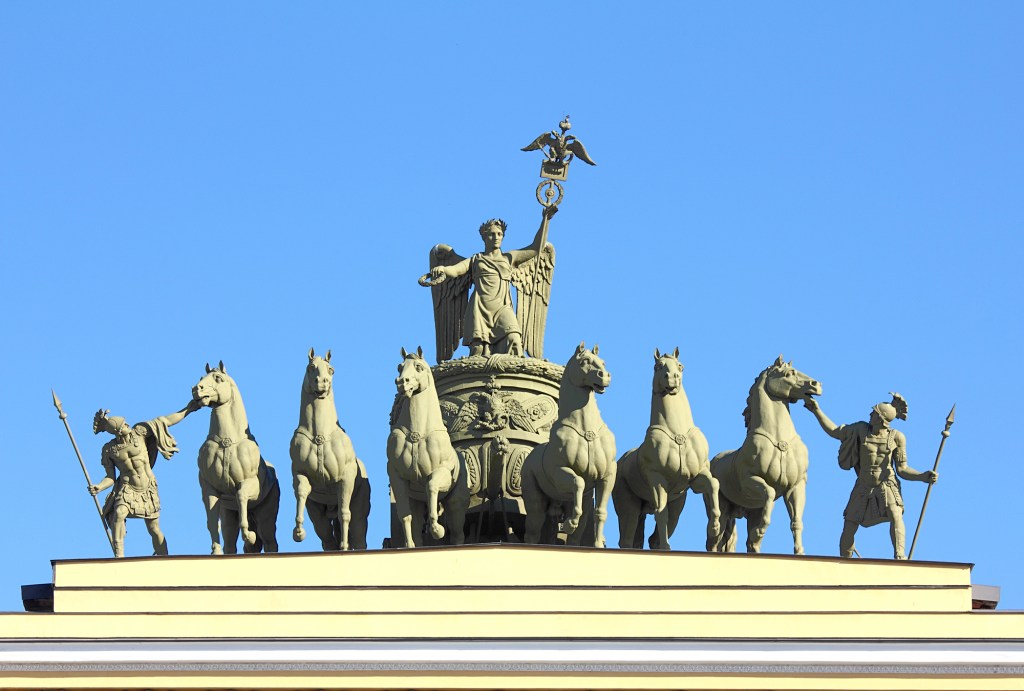
Every year at this time Pontius Pilate would head south from Caesarea down the coastal road to Joppa. He would head east from Joppa to make his way into Jerusalem. Pilate would enter Jerusalem from the west. He traveled with great pomp and a show of force, with an army of soldiers, trumpeters, heralds, banners, and pronouncements. Pilate would lead the way on a white stallion symbolizing Roman conquest and rule.


This show of power, of course, was intentional. I found the article, In Through the Back Door, September 24, 2022, by Terry Gau that describes these yearly processions made by Pilate into Jerusalem at the beginning of Passover week. He cites historians, John Dominic Crossen and Marcus Borg, in their book, Last Week, memorializing the historical and political context for the final chapter of Jesus’ ministry on earth. the procession is described this way:

“Traditionally, Pilate paraded into Jerusalem on the first day of Passover Week, entering the west gate – the front gate – with legions of chariots, horses, and foot soldiers, dressed for battle and armed with swords and spears.  Rome’s authority would not be questioned.  The majesty with which Pilate enters the front door of the city was meant to inspire awe and fear, respect and obedience.”

Marty Solomon says,

“You could have heard him coming from miles away. The message he wanted to send to the Jews was clear. ‘Don’t even think about it! Keep everything under control, or Rome will crush you!’”

BEMA Podcast, Episode 124

Pilate would stay in Herod’s palace in Jerusalem for the week until the festivities ended. Then he would go back to Caesarea. He wasn’t there to celebrate, though. He was there to ensure things didn’t get out of hand and to keep the peace.

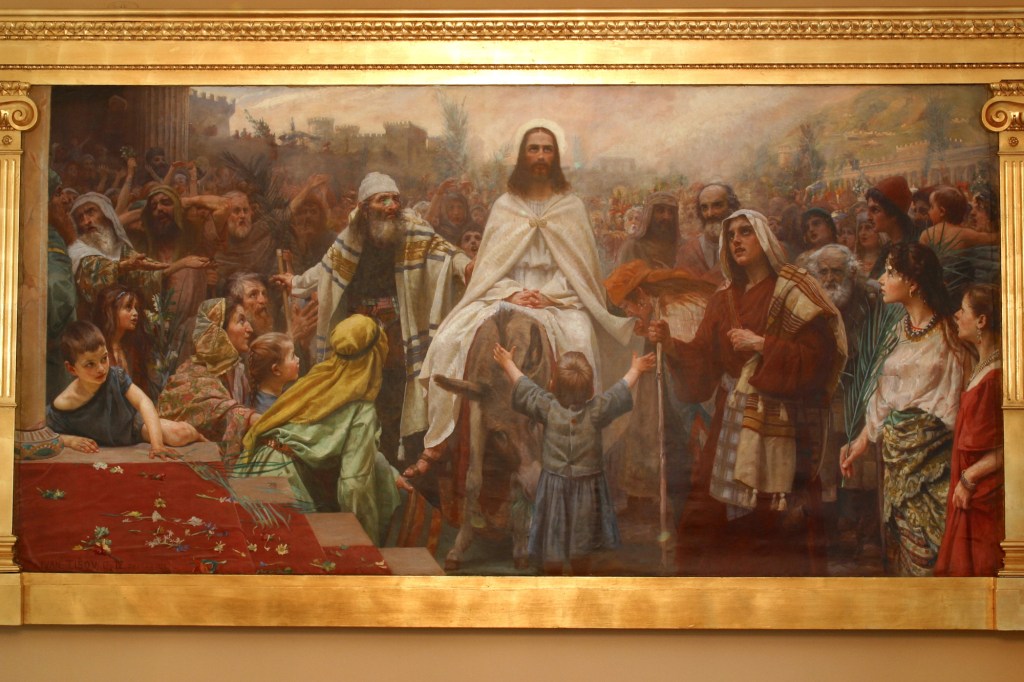
During one Passover week under the rule of Pontius Pilate in Judea another procession took place. It may have even happened on the same day at the same time that Pilate was entering the City from the west. This procession took place on the east side of Jerusalem where Jesus, riding on a lowly young donkey with a small, rag tag bunch of unarmed disciples entered through the east gate – the back door to Jerusalem.

“This parade was just as carefully staged as Pilate’s entry into Jerusalem. It was a counter-procession, a different vision of what a Kingdom should be, a subversive action against the powers that ruled Jerusalem. Jesus’ humble, yet triumphal, entry into Jerusalem stood in contrast to the magnificence and brutality on display at the opposite end of the city. Jesus brings peace, while Pilate brings a sword.”

In Through the Back Door

This was the backdrop for episode 124 of the BEMA Podcast and of our discussion. I sit writing at a temporary table with one chair left in my house that is all but cleaned out and being readied for sale. My future is uncertain as I recount one of the most pivotal times in human history and the dealings of God with man and what it means for us, today.

Continue reading “A Tale of Two Processions, Two Kingdoms, and the Triumph of God”

The Way of Righteousness and the Holy Command: an Introduction

We escape the corruption of the world by the way of righteousness and the sacred command. But, what if we lose the way and don’t know the sacred commandment?


Have you ever read a passage in the Bible that weighed heavily on you? A verse that caught you up short?  A verse that gave you great concern? A verse that made you question your own salvation?

I assume we all (who take the Bible seriously) have experienced that. I believe the Holy Spirit interacts with us as we read the Bible (which the writer of Hebrews says is “living and active”). Sometimes we are encouraged, and sometimes the light of scripture shines into the recesses of our hearts and exposes things that bother us. (And so they should!)

Indeed, I believe that this is one of the great benefits of reading Scripture on a regular basis. God talks to us through His revealed Word. He interacts with us in ways that get to the core of our being … if we let Him … to teach us, to convict us, to correct us, and to instruct us in righteousness. (2 Timothy 3:16)

I recently read the following verses in my daily Bible reading:

If they have escaped the corruption of the world by knowing our Lord and Savior Jesus Christ and are again entangled in it and are overcome, they are worse off at the end than they were at the beginning. It would have been better for them not to have known the way of righteousness, than to have known it and then to turn their backs on the sacred command that was passed on to them.

2 Peter 2:20-21

Peter goes on to quote two “proverbs” about: 1) a dog that returns to its vomit (quoting Proverbs 26:11); and 2) a sow that is washed that returns to wallowing in the mud.

These examples seem to be clear illustrations of people who, having been cleansed from sin, return to their sin. If you have ever returned to the sin you have walked away from, you know the angst that reading this verse can bring.

Peter says it is better that we never know Jesus than to have known him and walked away! People are worse off not to have known the “way of righteousness” than to have known it and turned their backs on the “sacred command” (or holy commandment).

I am convicted when I read these things. I sometimes despair of the sin I tend to repeat. I have often felt like a slave to certain sin, and I been anxious for my own salvation when I read a verse like this.

I think we should feel the full weight of verses like this. God is clearly interested in the fruit of our lives. A bad tree cannot produce good fruit. If we are tapping into the wrong tree, nothing we do can produce good fruit. The problem isn’t in the fruit; the problem is the source.

Continue reading “The Way of Righteousness and the Holy Command: an Introduction”

The Way of Righteousness and the Holy Command: The Way

We escape the corruption of the world by the way of righteousness and the sacred command. But, what if we lose the way and don’t know the sacred commandment?


I started this short series focusing on the second epistle of Peter where Peter warns his readers about false prophets with “eyes full of adultery”, greed, and depravity who are slaves to their own sin. These people seduce the unstable and entice others by appealing to the lustful desires of the flesh. Peter says,

It would have been better for them not to have known the way of righteousness, than to have known it and then to turn their backs on the sacred command that was passed on to them.

These are fearful words of warning. Anyone who might feel enslaved to sin has likely felt angst when reading this words.

In the previous article, I note that the actions Peter describes are the fruit of people who have “known the way of righteousness” and the “sacred [holy] command” and have turned their backs and walked away. The fruits are the symptoms, not the cause.

The important thing for us, therefore, is to know the way of righteousness and the holy commandment, and not to turn our backs on them! In this follow up to that introductory article, I will focus on the way of righteousness.

Continue reading “The Way of Righteousness and the Holy Command: The Way”

The Way of Righteousness and the Holy Command: the Holy Command

We escape the corruption of the world by the way of righteousness and the sacred command. But, what if we lose the way and don’t know the sacred commandment?


I started this short series with a passage from 2 Peter 2:20-21:

If they have escaped the corruption of the world by knowing our Lord and Savior Jesus Christ and are again entangled in it and are overcome, they are worse off at the end than they were at the beginning. It would have been better for them not to have known the way of righteousness, than to have known it and then to turn their backs on the sacred command that was passed on to them.

They “they” who escaped the corruption of the world only to be entangled in it again are the false prophets Peter accuses at the beginning of the chapter of introducing “destructive heresies” and “denying the sovereign Lord who bought them.” (2 Pet. 2:1) Peter says these false prophets are like dogs returning to their vomit. (v. 22) Seducing the unstable (v. 14) and appealing to the lustful desires of the flesh, they entice “people who are just escaping from those who live in error.” (v. 18)

In the introductory article, I note that the words of judgment Peter unleashes on these false prophets might lead to a concern that we could one of those unstable ones who are enticed and entrapped. Those who struggle with sins that so easily entangle us might easily feel condemned in this tirade.

The solemn warning that such ones are better off not knowing Jesus. than knowing the way of righteousness and turning their back on the sacred command is enough to send a shiver down the spine. The actions Peter describes, however, are the fruits of turning away from the sacred command. These fruits are not the problems in themselves, but the symptoms of disconnecting from the way of righteousness and the sacred command.

In the second article, I explored the way of righteousness. The way of righteousness is the way of Jesus, who is the Way! Knowing Jesus and knowing the way of righteousness is the same thing.

The way of righteousness means embracing and walking in light of his sacrifice on the cross by which we are justified and we are considered righteous before God the Father. It means trusting in Jesus and the grace of God the Father. It means ceasing from our striving to earn the way and the pride that goes with our achievement.

The way of righteousness means following Jesus and maintaining relationship with Jesus, who is our Living Water, our Bread of Life, and the Vine in which we have become the branches (extensions of him). Knowing the way of righteousness and turning from the sacred command is to disconnect and to go our own way.

But what is the sacred command? This was my big question as I read through this passage recently, and this question is ultimately what motives me to write this short series.

I admit, that I wasn’t sure as I read through this passage. I should have known, because Jesus was pretty clear about it. But, I didn’t. I had lost sight of it. It’s so easy to lose sight of what’s important in the turmoil in the world that often spills over into my own heart.

Continue reading “The Way of Righteousness and the Holy Command: the Holy Command”

The Surprising Elevation of Women in the Bible

The Bible was written by men during times in which men dominated thought and culture


I am reminded again in my daily reading of Scripture of the prominence of women in the life and ministry of Jesus. Every time I read through the Gospels, I see it. As I read through the Old Testament with eyes sensitized by the Gospels, I see the theme there also. This theme is somewhat, hidden, however.

We have only committed to the idea that women should be equals of men in very modern times, and that idea is still not universal around the world. A cultural revolution was required in the western world to change ancient paradigms. The change has been slow, difficult, and filled with tension.

Christianity was influential in bringing about that change, but many Christians have also resisted it. This is true even while the roots of that cultural revolution are embedded in Judeo-Christian Scripture.

Tom Holland, in his epic book, Dominion, traced modern, secular humanist values back to a surprising root. He had no idea where the values he took for granted came from: gender equality, racial equality, individual freedoms, civil rights, etc. When he searched for them, he for found them in Genesis, in the Gospel accounts of Jesus, and in the letters of Paul, the apostle.

Rebecca McLaughlin writes about the prominence of women in the Gospel accounts of Jesus in her 2021 article, Jesus Changed Everything for Women. She quotes Holland to remind us of the cultural context in which those accounts were written:

In Greco–Roman thinking, men were superior to women and sex was a way to prove it. “As captured cities were to the swords of the legions, so the bodies of those used sexually were to the Roman man,” Holland wrote. “To be penetrated, male or female, was to be branded as inferior.”

In Rome, “men no more hesitated to use slaves and prostitutes to relieve themselves of their sexual needs than they did to use the side of a road as a toilet.” The idea that every woman had the right to choose what happened to her body was laughable.

Jesus chantged Everything

Jesus didn’t introduce the these radical notions, however. They go all the way back to Genesis, where we read that God made men and women, together, in His image. (More on that below)

Modern westerners have learned to reject and even to despise the paternalism of most of the history of mankind (pun intended), so it’s easy to miss the way the Bible elevates women. After all, the Bible was written by many men many centuries ago, before anyone in the west (or anywhere else) got the notion that women should be treated as equals.

Let that sink in a moment: the Bible was written by men.

As much as modern westerners like to recoil from the idea of men treating women as second class citizens, the 1st Century Roman world thought nothing of it. Aristotle taught that women are “defective men”. He believed that “women were fit only to be the subjects of male rule“, and “they are born to be ruled by men”. Aristotle and most men for millennia thought that the inferiority of women was obvious, stemming from their nature as the “weaker gender”.

Nowhere, perhaps, were women more objectified and diminished in value than the Roman world. (See ‘Christianity gave women a dignity that no previous sexual dispensation had offered’: Tom Holland, by Shoaib Daniyal, Feb. 23, 2020.)

Given that context, the “clues” we find “hidden” in the Bible of a different narrative about women is remarkable. Though the Bible was written, literally, by men, Christians like myself maintain that it was inspired by God, and a divinely inspired narrative shines through it. This is true despite the obvious cultural influences we see on the face of it.

The Bible was written by men during times in which men dominated thought and culture. it is no wonder that the Bible is often criticized for being backward and paternalistic, but that view can only be sustained on a cursory, shallow reading of the Bible. A closer reading belies a very different narrative!

Continue reading “The Surprising Elevation of Women in the Bible”