NT Wright commented to Justin Brierley in the 39th episode of Ask NT Wright Anything, “We live in a world in which Jesus wept at the tomb of Lazarus, knowing that he was going to raise him from the dead.”
Jesus was able to identify with and feel the crushing sorrow and the intense grief that the family and friends of Lazarus felt. When Jesus saw Mary, the sister of Lazarus weeping, he wept too. (John 11:32-33) Jesus felt her grief, and it moved him to tears.
Jesus weeping at the tomb of his friend, Lazarus, of course, reveals his humanity, his empathy and the fact that he felt the range of human emotions that we feel in our own lives. Imagine God taking on our form and experiencing what we experience!
The most remarkable aspect of this story, for me, is that Jesus felt the grief of the loss of a loved one and was moved to tears even though he knew he was going to raise him from the dead. He wept with grief though he know that joy would follow the raising of Lazarus from the dead.
In this way, we see that God doesn’t minimize our grief and suffering. He is able to identify with it because he felt the crush of it as we feel it.
He felt the crush of human grief even though he knew the miracle he was about to perform.
Perhaps, Jesus was weeping for all the people who feel grief without assurance or confidence or hope. Surely, Jesus had more than merely hope. He knew that he was about to raise Lazarus from the dead, but he also realized that his friends, the friends and family of Lazarus, didn’t know or appreciate what he was about to do.
Even though Jesus told the friends of Lazarus that he was doing “to wake him up” (John 11:11), and he told Martha, “Your brother will rise again,” they didn’t fully understand or appreciate what Jesus was saying. (John 11:23) They didn’t feel the assurance or confidence or hope that Jesus had.
I imagine Jesus also thought in those moments of all the people in the world who mourn without assurance, confidence or hope in the face of death. This is the human condition, and Jesus fully embraced it. He fully felt the weight of it, and it caused him to weep with them.
The story of the rich young ruler resonates with me today in the seeming impossibility of living without sin. I suspect that I am not alone in the experience of certain sinful inclinations that I just can’t seem to shake. Try as I might, I fall into the same traps of temptation over and over again. I get angry at myself. I ask for forgiveness. I renew my resolve, but I inevitably trip and fall. And sometimes I despair.
“God cannot be mocked. Whatever a man sows, he will reap in return. The one who sows to please his flesh, from the flesh will reap destruction; but the one who sows to please the Spirit, from the Spirit will reap eternal life….” (Gal. 6:7-8)
I know this, but it doesn’t seem to help. My sinful flesh often overcomes the spirit within me. While the spirit is often willing, the flesh is weak; and sometimes, let’s be honest, my spirit isn’t as willing as it should be.
I think, “If I could just resist more and try harder and find just the right combination of thoughts and habits and resolve, I could lick this thing.” But, days come and go. Things change: busyness, or worry, or distraction, or boredom, or some dryness in my spiritual life, or difficulty, or disappointment or any number of things (or a combination of them) sets in, and when my guard is down, temptation comes and catches me off guard in a moment of weakness.
I truly believe it is possible to overcome the sin within me. Scripture seems to require it of me. What I reap I will sow. Yet I fail. I fully identify with Paul, who said:
“I do not understand what I do. For what I want to do I do not do, but what I hate I do.And if I do what I do not want to do, I agree that the law is good.As it is, it is no longer I myself who do it, but it is sin living in me.For I know that good itself does not dwell in me, that is, in my sinful nature. For I have the desire to do what is good, but I cannot carry it out. For I do not do the good I want to do, but the evil I do not want to do—this I keep on doing.” (Rom 7:15-19)
Mary Magdalene, Mary, & Salom walking up to the bright empty tomb of Jesus Christ early Sunday morning
Three days and two nights ago, Mary’s entire world came crashing down. The earth opened up and swallowed Jesus, whom Mary loved, into the abyss. Mary’s world was thrown into darkness and confusion, leaving only soul crushing grief, bewilderment, and emptiness.
She barely had enough time to get him down from that tree on which he had died. A very generous leader risked his life and reputation to help her with the body and prepare the body properly for burial before Sabbath began. (John 19:42) It was the least they could do.
The shock of his arrest and the whirlwind of everything that followed came upon her in a rushing torrent so quickly that she was completely overwhelmed, reeling, barely able to breath. The that unbelievable, astonishing, implausible whirlwind of events ended with his death. It’s all too unreal.
When the devotion of last minute burial preparation ended and the tomb was sealed, tornadic activity gave way to the silent weight of reality. The yawning emptiness and overwhelming grief descended on Mary as she labored to get home in the darkness.
All the men abandoned Jesus as their world began to unravel. The petty squabbling at dinner the night before left Mary confused about what Jesus had been saying. Jesus was trying to tell them something important, but she could only remember bits and pieces….
Something about a cup… and pouring out his blood and…. It was all so surreal and confusing. So impossible to accept.
Igt seemed clear to her in retrospect that Jesus seemed to know what was going to happen. She remembered seeing it in his eyes. He was resigned to it, but she didn’t understand. How could she have understood?
All the mysterious things Jesus said during the exciting and hopeful years they traveled with him played in her mind like a long, beautiful symphony suddenly ending in a grand, discordant cacophony that would not resolve before it faded into a whimper. The mystery seemed so poignant, but no less momentous and ominously empty. Through the looming darkness, a slight flame of hope sputtered as she recalled these things like a lone survivor clinging to whatever is close hand in the receding waters of a tsunami .
As she reached her destination for the night, she recalled that Jesus wouldn’t let anyone try to defend him. “He just gave himself up!” she thought. He utterly gave himself over to them. It was so painful to watch.
But even in his weakness he was noble. He was so beautiful. He seemed like everything they thought he was. Even in the end. Even as he resigned himself to death…. She wept and the torrent of her tears broke through the dam of the brave front she put on through all of it.
“Those men!” she thought, “They didn’t do anything. The torrent took an angry turn. “They were always arguing about who was the greatest.” Her thoughts tumbled like rocks that could not withstand the current. “They couldn’t even stay awake with him! Jesus needed them!”
She let out a long, mournful gasp as she recognized the dark cloud threatening her and swallowed her anger.
“They could have, at least, gone with him! But, they left him,” she mourned. “They saw it happening, but they pretended not to know!” her thoughts raced again. “They didn’t lift a finger. When Jesus needed them most, they abandoned him. Peter even claimed he didn’t know Jesus! Peter!” She stopped as the dark cloud threatened again.
Mary and the other women would not leave him. They saw the whole, unimaginable thing … and John. “At least, John was there…. Not that he did anything, either,” Mary recounted.
She realized, “If it wasn’t for Joseph, who knows where his body would have ended up.” Mary was grateful that Joseph owned a tomb nearby and even more grateful that Joseph and the people with him helped with the body. (Luke 23:50-53). Even so, Mary couldn’t help but wonder, “Where they were earlier – when Jesus needed someone. Anyone!”
Even as she felt her heart constrict in anger and frustration, the realization came in like the gentle lapping of the waves on the shore, “They could not have stopped what happened.” There were powerful forces at work that Mary did not understand. She softened, and she wept.
They didn’t have time to prepare him properly. It was the Sabbath, and night was upon them. The hours labored by through the night. The force of things undone kept slept at bay. Everything weighed so heavily on Mary’s heart. She needed to get to him as soon as she could, as soon as the doaw broke and Sabbath was over.
Mary was up before the dawn. Sleep was not an option anyway. She hurried to the tomb, where she met Joseph and Nicodemus who came through with the spices and ointments for Mary to prepare the body in the soft light of the morning. (Luke 23:56)
The hopeful sounds of birds gently singing in the still of the early morning might have lifted her heart on any other day. She was drowning in sadness, as tears came in waves. She could hardly see at times.
Tears she could not manage to wipe way with the back of her hands fell from her cheeks into the mixture of ointment and spices. She recalled the day she wiped her own tears from his feet with her hair in repentant gratitude and joy, knowing her sins were forgiven, and her life was forever changed.
The dam of whatever shame might have remained was swept away. Her tears turned to waves of uncontrollable sobs. She could not resist them. She gave herself over to them in a gush of new gratitude for all Jesus had done, and she could not continue until the waves of emotion passed.
Mary could not adequately express the depth of gratitude for Jesus for rescuing her from the demons that haunted and tormented her from her youth. She tried. It wasn’t enough. She didn’t care what anyone thought, but it still wasn’t enough.
Nothing had been more precious to her than the ointments she collected… until Jesus set her free. None of those precious ointments mattered anymore. They were all she had, and they weren’t enough. She would have spent her entire life pouring her very self out for him.
The grief returned, and she desperately longed to wind back time. The impossibility of it all was maddening; it seemed so impossible, yet it was so formidably real. Those demons lurked again in the back of her mind. She caught herself again, shuddered, and and devoted her weary mind to the ointment and spices and the body of her precious love, Jesus, lying lifeless at her side.
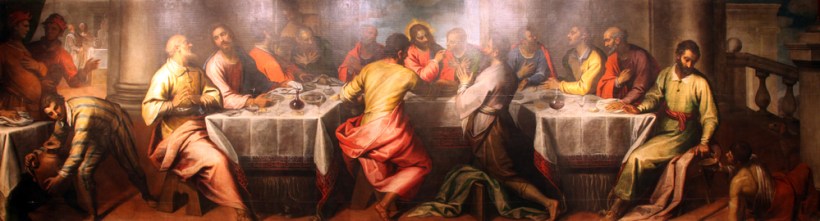
Imagine being a close friend of Jesus in the 1st Century, reclining at the table with him, eating a meal. It’s been a roller-coaster three years! Your whole world is buzzing about him. He is absolutely the talk of the town.
You are still not quite sure what all he is talking about, but you have come to believe in him. If he is not Messiah your ancestors have talked about for many generations, he is certainly a prophet. Maybe he really is the Messiah?!
Your people have held on to hope for hundreds of years of returning to former glory. This Roman rule is not the way it is supposed to be. God rescued your ancestors out of the land of Egypt, and He gave them the promised land. God drove out all the inhabitants of the promised land before them. He could do it again! Certainly, He would do it!
When Jesus rode into Jerusalem on that donkey, it seemed almost so real you could taste it. This really seems to be it! The people are behind him. Everyone is waiting to see what’s next. A new day for Israel seems to be right around the next corner!
But, you never know with Jesus. He is anything but predictable, and he says some really weird things sometimes. Hard things. You don’t completely understand what he is getting at when he talks about the Temple being destroyed and rebuilt in three days. What does that have to do with anything? All of those statements about being the Bread, and the Living Water and the Vine….
As you sit at the table, the talk is excited. It is Passover. Expectation in the air. This Passover is particularly poignant with all that has been going on, but Jesus is quiet.
Not that it’s unusual for Jesus to be quiet at times. They had gotten used to it. He often went off by himself, and he would often seem to drift into deep thought, especially lately.
Jesus had left all of you instructions about preparing the Passover meal. No one knew where Jesus was, but everything was left for you as he said it would be. He finally showed up and watched as you finished. You didn’t really notice his silence until he finally spoke as everyone was finally reclining at the table.
Jesus was obviously waiting for just this time. His voice carried a certain weight to it. More than usual. There was a firm, but calm, urgency to his words. The excited tones of the men around the table fell immediately quiet as Jesus opened his mouth to speak. Continue reading “The Cup of the New Covenant Poured Out for Us”→
“No one has ever seen God, but the one and only Son, who is himself God and is in closest relationship with the Father, has made him known.” (John 1:18 NIV)
John is talking about Jesus, of course. The progression in the beginning of John’s Gospel goes like this: In the beginning was the Word; the Word was with God; the Word was God; all things were made through the Word; in Him was life; and the Word became flesh and dwelt among us. (John 1:1-4, 9, 14) Then, John makes the statement I have recited above. No one has ever seen God but the one and only Son, who is God.
The Greek word that is translated “one and only Son” in the New International Version of the Bible is monogenés, derived from the world monos, meaning one of a class (one of a kind) and genos, meaning only of its kind. A more literal translation of the word would be “only begotten”.
The beginning of the Nicene Creed[1] captures the idea as follows:
We believe in one God, the Father almighty, maker of heaven and earth, of all things visible and invisible.
And in one Lord Jesus Christ, the only Son of God, begotten from the Father before all ages, God from God, Light from Light, true God from true God, begotten, not made; of the same essence as the Father. Through him all things were made. For us and for our salvation he came down from heaven….
These thoughts arise today in the context of a discussion between the great Anglican scholar, Tom (N.T.) Wright[2], and Justin Brierley[3], the Unbelievable? Podcast and Ask NT Wright Anything host out of the UK. They were talking about the corona virus threat that is plaguing the world.
Among other things, Tom Wright (who is an historian) observed that a pandemic like the corona virus is not unique in the history of the world. The Justinian plague is believed to have killed as many as 25 million people (6th century), the Black Death killed probably double that in the 14th century. The Italian Plague (1629-31), Great Plague of London (1665-66) and Great Plague of Marseilles (1720-22) took millions of lives in Europe, and the Third Plague Pandemic killed about 15 million people, hitting China and India the hardest.[4]
After a discussion of how Christians should respond to the threat (in the same manner as they always have – with compassion and self-sacrifice, helping those in need), Justin prompted Tom by asking him for a five minute response to the hard question: why does God let things like plagues happen?
Tom Wright’s response recalls articles I wrote on March 22, 2020 (Change of Perspective: From the God of Moses to Jesus) and on March 28, 2020 (Perspective in the Reminder of Our Own Mortality). In the first article, I addressed the seeming incongruity between the picture of God we see in the Old Testament compared to the person of Jesus we meet in the New Testament. In the second article, I sought some perspective on the bad things that are happening in light of God’s revealed purpose in creating us and the world in which we live.
Tom Wright’s brief response (focusing on the raising of Lazarus from the dead) sits right in the middle. Right where we live. Let me explain.


 The story of the rich young ruler resonates with me today in the seeming impossibility of living without sin. I suspect that I am not alone in the experience of certain sinful inclinations that I just can’t seem to shake. Try as I might, I fall into the same traps of temptation over and over again. I get angry at myself. I ask for forgiveness. I renew my resolve, but I inevitably trip and fall. And sometimes I despair.




 Navigating by Faith