American History through the Eyes of Four Female, African American Banjo Players: Our Native Daughters

Songs from Our Native Daughters is American history told with dignity, grace and tenderness.

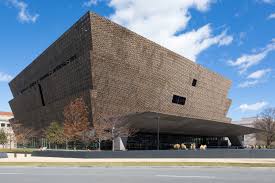
National Museum of African American History and Culture photo by Frank Schulenburg Copyright: CC BY-SA 4.0

For Black History Month 2021, I was more intentional than I normally am to listen to the voices of black people in America and to learn a little black history.


Rhiannon Giddens photo at flickr.com cropped

I have appreciated the voices of many people, including Rhiannon Giddens, formerly of the musical group, Carolina Chocolate Drop. Throughout Black History Month, she posted many biographies, and I followed her daily posts during the month.


So it was that I came across a project she created with a group of female, African American banjo players that was just released to the public. Yes, all banjo players, all female and all African American.

She set out to do an album of Americana music from the perspective of black history for Smithsonian Folkways. She put out a call for banjo players, like her, but she didn’t originally intend to gather together a group of four African American female banjo players: Allison Russell, Leyla McCalla, Amythyst Kiah and Rhiannon Giddens.

Four black female banjo players?!

It turns out she couldn’t have scripted a better group. The result of this collaboration is captured in song by the album, Songs of Our Native Daughters, and in the form of a documentary, Reclaiming History: Our Native Daughters. Their story, which is the story of their ancestors, and a story of overcoming through struggle, is a poignant one.

They met at Cypress House Studio in Breaux Bridge, LA, an old Creole cabin with “stories in the walls”. Dirk Powell, a longtime collaborator with Giddens, owns the cabin that houses the studio, and he produced the album.

They set out to reinterpret an existing canon of Americana music as part of the black narrative in the Americas, but they found their own voices and creativity in the process. The creative force of their shared history and experience led them to produce mostly original music for the album in the genre of Americana.

Part of that shared experience is the history of the minstrel banjo and slave narratives that are common to their collective ancestry. Giddens discovered her own history through her love for the banjo, which was an instrument brought to the Americas by the African slaves. Giddens commented:

“African American history is American history. It is important to know who the founding fathers were, and it’s also important to know who built the White House…. [I]it’s important to know who built the railroads; and it’s important to know the nameless people….”

Thus, Giddens found her own voice in the process of collaborating, writing and playing music for this project. In telling the African American story through Americana music, the group says the hope to prompt people to ask, “What can we do to be better as a society and as humans?”   

Continue reading “American History through the Eyes of Four Female, African American Banjo Players: Our Native Daughters”

Ten Reflections on 2020 and Three Things to do in 2021

If God isn’t our first love, we are putting other things first.

The writer of Ecclesiastes asserted boldly many thousands of years ago that “there is nothing new under the sun”. The ancient date of that statement has always been a poignant reminder to me that we aren’t as wise as we think we are for all our modern sensibilities. We struggle with the same basic issues that are common to humanity, despite our scientific and technological advances.

God stands enthroned over all of His creation. From His vantage point outside of space/time, He watches as His purposes unfold, including the groaning of creation as some of His crowning creation “seek Him, feel their way toward Him and find him”. (Acts 17:27)

We fit into His purposes by doing just that – to know God and to grow in the knowledge of God is the ultimate fulfillment of God’s purpose for us.

We easily get mired in the mundane concerns of daily life. Our future planning is often limited to the benefits we can obtain in our years in these jars of clay we call our bodies. We often fail to give full room for the eternity God set in our hearts. (Ecc. 3:11) We fail to allow the Holy spirit to have full sway in our hearts and our lives.

We are easily distracted and easily preoccupied by lesser things than our relationship with God the Father and His purposes.

I am forever grateful for the grace He has shown to us in the sacrifice He made for us that He has made a way for us to come to Him despite our frailties and sinful tendencies, and to continue coming to Him who receives us in Christ. I am more indebted to His mercy and grace now than ever before. His lovingkindness is truly new every morning.

As we watch the time closing out on 2020, looking backward, and straining forward, I am borrowing from another writer for my own ten reflections on 2020:

Continue reading “Ten Reflections on 2020 and Three Things to do in 2021”

The Inspiration Behind the Song Lean On Me


We have seen a lot of violence in the last few weeks as the American world has been stirred to protest over the death of George Floyd. His death, following on the heels of the death of Ahmaud Arbery, are the two most recent examples of the extreme results of racial attitudes in the US. The roots of these attitudes go back centuries.

Sometimes in our lives we all have pain
We all have sorrow
But if we are wise
We know that there’s always tomorrow

We’ve seen many videos of police violence posted on social media. We’ve seen many videos of rioting and looting in response. These constant reminders in the news fixate us on the violent side of humanity. In the meantime, we continue to wrestle with the isolation and fear of COVID-19 and economic recession.

If they make us uncomfortable, that’s probably good thing. If they stir up fear and anger, not so much.

The violent videos remind me that violence is not the answer. Dr. Martin Luther King, Jr. was clear on that (though he warned that violence would continue as long as racial injustice continued). Darkness cannot drive out the darkness.

Long term light and love is what we need – the light of understanding and the love of God who made us all in HIs image.

Lean on me, when you’re not strong
And I’ll be your friend
I’ll help you carry on
For it won’t be long
‘Til I’m gonna need
Somebody to lean on

Violence, fear and anger beget more of the same. Once the fire is lit, there’s no telling what will be destroyed in the process. Controlled fire can be used to our advantage, but fire burning out of control and uncontained does not discriminate in its destruction.

Just as violence destroys, love builds up. Love and understanding is something we can build on.

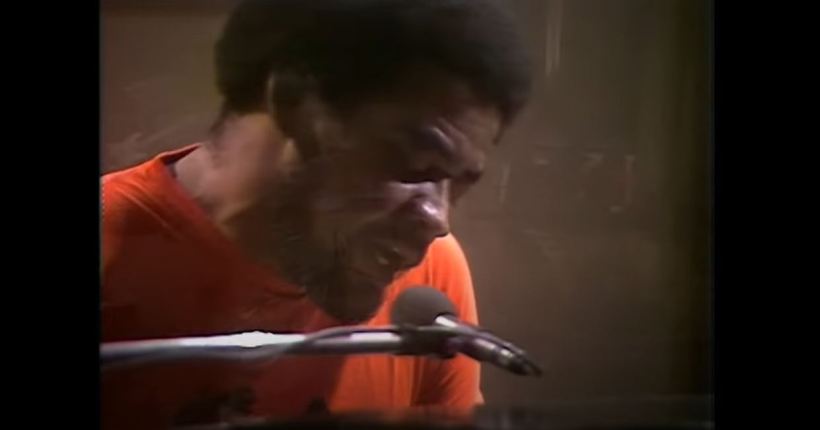
I was thinking about these things as I was listening to NPR on my way to a legal aid clinic I supervise once a month. The topic of discussion was the life of Bill Withers, the great songwriter of the 1970’s. Many people have covered his iconic songs.


Bill Withers died recently at the age of 81. His inspiration behind the song, Lean On Me, is what inspires me today in light of what is going on in the world.

Continue reading “The Inspiration Behind the Song Lean On Me”

Don’t Let Fear Win: Keep the Conversation Going


“When two enemies are talking, they aren’t fighting. It’s when the talking stops that the violence starts. Keep the conversation going.”

This is how Daryl Davis concludes his Ted X Talk, Why I, as a black man, attend KKK rallies, December 8, 2017. Yes, that’s right, a black man who attends KKK rallies!

Let that sink in a little bit.

It’s not that Daryl Davis has any affinity for the KKK. He certainly doesn’t, but he is an outside-the-box thinker. When he came to the realization that racial prejudice exists as a young boy, and that it was aimed at him (it took some time for that to sink in at 10 years old), he began to ask questions. In his boyish curiosity, he wondered, “How people could hate me if they didn’t even now me?”

That question led him to read books on white supremacy, black supremacy, and similar topics, but he couldn’t find a good answer. He figured, then, that the best way to get an answer would be to go to the source. By that time, he was an adult.

His curiosity led him to invite the Imperial Wizard, the national leader, of the Ku Klux Klan, to meet with him. He was warned, “Don’t fool with Mr. Kelly. He will kill you!” Daryl Davis, though, is no ordinary person. His curiosity was stronger than his fear.

His secretary set up the meeting, as requested, in a local hotel room. His imperial guest knew only that the interview was to about his involvement in Klan. No one told the Imperial Wizard that his interviewee was black.

Kelly showed up to the hotel room right on time with his armed body guard. They froze when they saw their host, but they entered anyway as Daryl Davis invited them to sit down.

The meeting was tense. About an hour into the meeting there was a strange noise that Davis thought came from his guest. He was instantly ready to lunge from his seat to take down his guest and his bodyguard as those previous words of warning rushed like lava ready to erupt to the surface. (“He will kill you!)

Daryl glared into the eyes of Mr. Kelly with the intensity of a man demanding to know what caused that noise! The Imperial Wizard glared back at him with the same urgent intensity as the body guard looked from one man, then to the other with his hand on his gun. Anything could have happened.

In a moment, Daryl’s secretary, Mary, realized what happened and began to laugh. She had filled a cooler with ice and cans of soda pop for the meeting. She knew immediately that the sudden noise was merely the cans falling as the ice melted and shifted underneath.

They all laughed in relief. It was a literal and figurative ice breaker.

The story gets better, and the lessons to be drawn from it are especially poignant in this time of increasing political, racial and religious polarization in the United States. This is the rest of the story of the black musician who invited the Imperial Wizard of the KKK to meet him in a hotel room.

Continue reading “Don’t Let Fear Win: Keep the Conversation Going”

The Story of the Napalm Girl and the Healing Power of Jesus

Kim Phuc saw another plane coming in low, fast and loud. She saw the bombs drop, and she froze….


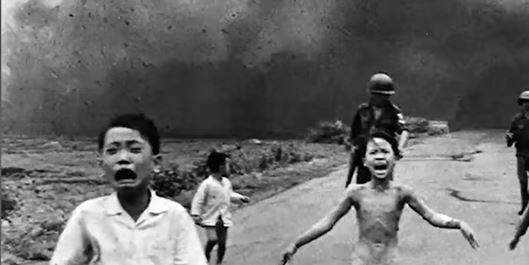
Kim Phuc is “the girl in the picture”, maybe the most iconic picture of the Vietnam War. It’s one of the most memorable wartime photos ever taken. She is the girl in the picture running from a napalm bomb that dropped on her village.

Kim grew up in a happy family that was well off and lived far from the war, or so they thought. Then, the war came to them. The villagers had taken refuge in the local temple, and the South Vietnamese Army had taken up guard to protect them.

One day, however, planes flew overhead. The first plane dropped a marker at the temple. The soldiers, knowing what that meant, screamed for everyone to run. As Kim reached the exit of the temple, she saw another plane coming in low, fast and loud. She saw the bombs drop, and she froze.

Before she knew what was happening, she was surrounded by flames. When she saw her arm on fire, she ran in panic and fear until she couldn’t run anymore.

When she stopped running, a soldier gave her water. She remembers crying, “Too hot! Too hot!” The soldier poured water on her, thinking it would ease her pain, but the water reacted with the napalm, intensifying the pain, and she passed out.

Kim suffered 3rd degree burns over a third of her body. The photographer who took the photo dropped his camera and took her to the hospital.

The hospital didn’t have enough room for her because of the number of injured from the raid on her village. She was in such bad condition they moved her to a morgue. They left her for dead to tend to the living.

Her mother and brother searched for her, found her, and carried her back to the hospital. When her father arrived, she was transferred to a burn clinic in Saigon. She was saved by her family’s determination to help her, but she would have a long, painful road ahead.

Every morning when the nurse took her to the “burn bath” to soften her dead skin to be removed, she cried through the excruciating pain until she passed out. She had a dozen laser treatments. She had eighteen surgeries. She spent years in physical and emotional pain.

Her father spent all his waking hours tending to her with a broken heart. She was in so much pain, he prayed she would die to end her misery. Her parents feared something would happen to them that would leave her alone in her pain.

She lived of course, but she was ashamed of her scars. Friends stopped wanting to be with her. Her family loved her, but she became lonely. She was no longer the beautiful, young girl she once was. She saw nothing but ugliness when she looked in the mirror.

She also lived with trauma and nightmares from her experience. She was filled with bitterness, hatred and anger. She kept asking, “Why me?!” She despaired of life. She felt like only death would give her an end to the suffering and pain.

Continue reading “The Story of the Napalm Girl and the Healing Power of Jesus”