Perspective in the Reminder of Our Own Mortality

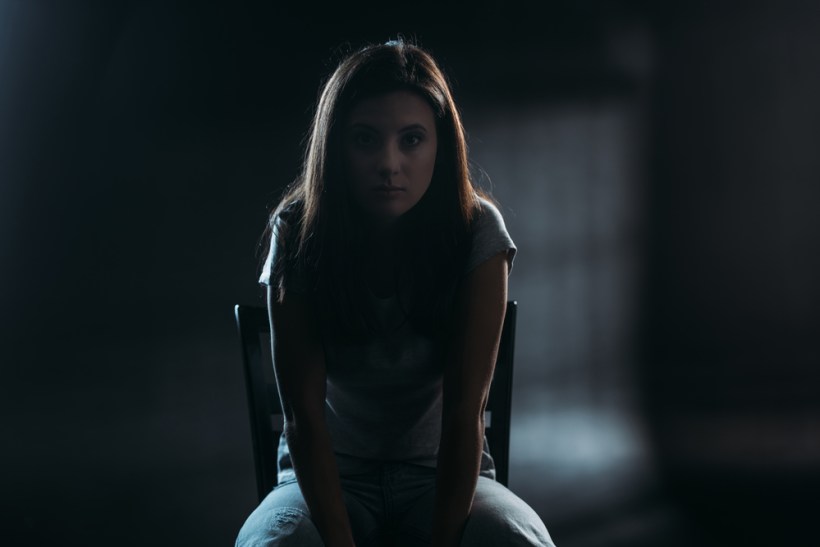
The lack of control that we feel is real, but there is purpose behind the chaos.


From the moment the Chinese government woke up to the significance of the corona virus threat, they kicked their efforts into high gear. I have a friend who described to me what it was like for his parents, who live in China. We have all heard reports of the virtual lock down of the country by the government.

That’s what totalitarian governments do. They exert the collective power of man by the force of governmental control en masse. Totalitarian governments rest on a foundation of top down, human power. The philosophies that gird them are largely humanistic, not reliant on divine power, but on the iron fist of self-governance.

Not that democracies, republics and other forms of government don’t rely equally on variations of collective human power, control and ingenuity. They all do. And we do the same on a personal level. In the face of the present corona virus threat, we have all taken personal measures to protect ourselves, our loved ones and our neighbors. As well we should.

Ultimately, though, the corona virus reminds us of things we can’t control, though we try.  Underneath the collective and individual determination to take control of this virus Thing that threatens us, and all the things that threaten us, runs an undercurrent of uncertainty and uneasiness, sometimes even dread. It ebbs and flows from conscious to unconscious. Some of us are more aware of it than others.

Its roots are found in the same place: try as we might, we know that we don’t ultimately control the outcomes. We don’t ultimately control our own fate.

Beginning with our own birth and the circumstances, time and geography in the world into which we were born, we are not in control. We didn’t choose any of it. If we strip away the façade, we don’t control our own lives.

We don’t control our nature or nurture. We don’t control the generations of DNA we carry in our genes, and we don’t control the way our parents raised us, the classrooms in which we were educated, the circle of friends that influenced us and the myriad influences that shaped us.

Things happen in our lives that we don’t control. We could be sailing along at a good clip when a rogue wave comes “out of nowhere” and knocks us overboard. The car we didn’t see coming, the cancer growing inside us, the closing of the place we always worked, an unseen virus that shuts down the state and national economy, putting hundreds of thousands out of work for who knows how long.

When we really think about it, there are so many things that we don’t control in our everyday lives that it can be quite overwhelming to spend much time thinking about it. It’s no wonder the undercurrent of alternating uncertainty, uneasiness and dread ebbs and flows in our conscious and unconscious minds. It causes many of us to panic and worry.

What’s the solution?

Continue reading “Perspective in the Reminder of Our Own Mortality”

It is Well with My Soul: The Story

it-is-well-with-my-soul

Now might be a good time for an inspiring story of resilience, faith and hope in a time of great personal tragedy: It is Well with My Soul: The Story

Jon Foreman singing It Is Well with My Soul


Pilgrimage to Another World

Pilgrims along the way of St. James – Spain

The baser instinct in me wants to write about the great frustration that is politics and the incongruity of people believing, perhaps, that they are preaching to a unified choir when they post their rants and memes on social media. Several people posted in my feed recently about how the Democrats unbelievably killed “the Coronavirus Bill” without a single vote in favor of the relief offered by the Republicans. While several people in my feed posted about how the Republicans tried to pass a Coronavirus bill that only benefited corporations to the detriment of all hardworking Americans.

Do we bother to listen to what each other is saying?

But I will resist the temptation to jump into that fray. Again.

I would rather write about the coronavirus… and death.

Not that I am being unduly morose. The reality of a deadly virus, and of death itself, is top of mind in these trying times of sheltered isolation social distance.

In more normal times, we are pretty good at keeping the thoughts of death at bay, even when they creep close to the threshold. We seem to have no end to the diversions gladly available to escape them or to drown them out.

It’s a brute fact, though, that one day we will die, and probably much sooner than we like to think. Not even taxes are as relentless as the inevitability of death.

In times like these, we are much more aware of it. We can’t escape it. It’s everywhere we turn, and we aren’t used to it.

We have it pretty good in these often not very United States. We haven’t had a war on our own soil since 1865. We are healthy and wealthy in comparison to much of the world. We have many diversions: national pastimes, myriad hobbies for every kind of enthusiast and we have as much entertainment at our fingertips as we can access beyond our front door.

But death inevitably lurks. With the current corona virus outbreak, the United States is experiencing something like the emotions we might feel in a war. Like Britain in WWII, death lurks closely to all of us in a way that most people alive in the United States have never really experienced unless they fought overseas.

As CS Lewis said to his British audience during the last World War[i], it (war then, the corona virus now) forces us to remember death. We have learned to deal with (and hold at abeyance) the cancer that steals the unfortunate life of a 60-year old, 80-year old, or even a child, accident statistics and such things.

The deaths that take the unfortunate and the vulnerable seem distant to most of us, but a war or a pandemic sneaks death into the bedroom of our thoughts where they presently haunt us.

And maybe that is just as well. We are going to die. “All the animal life in us, all schemes of happiness that centred in this world, were always doomed to a final frustration. In ordinary times only a wise man can realise it. Now the stupidest of us know.”

Nothing has changed. It’s just that we are now more aware of “the sort of universe in which we have all along been living”, and we have to deal with it. Humanist hopes are shattered in times like these. “If we thought we were building up a heaven on earth, if we looked for something that would turn the present world from a place of pilgrimage into a permanent city satisfying the soul of man, we are disillusioned, and not a moment too soon.”

The disillusionment inevitably, eventually will come sooner than we think, even if we escape these times with our lives, which most of us will do.

For the Christ believer, we have occasion to question: “Death, where is thy sting?” And we can answer: “This world is not the end game; it is the pilgrimage to another world.”

~~~~~~~~~~~~~~

[i] Yet war [the coronavirus] does do something to death. It forces us to remember it. The only reason why the cancer at sixty or the paralysis at seventy-five do not bother us is that we forget them. War [the pandemic] makes death real to us, and that would have been regarded as one of its blessings by most of the great Christians of the past. They thought it good for us to be always aware of our mortality. I am inclined to think they were right.

All the animal life in us, all schemes of happiness that centred in this world, were always doomed to a final frustration. In ordinary times only a wise man can realise it. Now the stupidest of us know. We see unmistakably the sort of universe in which we have all along been living, and must come to terms with it. If we had foolish un-Christian hopes about human culture, they are now shattered. If we thought we were building up a heaven on earth, if we looked for something that would turn the present world from a place of pilgrimage into a permanent city satisfying the soul of man, we are disillusioned, and not a moment too soon. But if we thought that for some souls, and at some times, the life of learning, humbly offered to God, was, in its own small way, one of the appointed approaches to the Divine reality and the Divine beauty which we hope to enjoy hereafter, we can think so still. (C.S. Lewis, “Learning in War-Time”, The Weight of Glory and Other Addresses (Harper San Francisco, 1980), pp. 62-63)

God In the Dark

We don’t expect to find God in our darkest places, and yet He is there.


Jess Lester, journalist writing for Christian Premiere Magazine out of the UK, told her story recently on the Unbelievable podcast in an interview with Justin Brierley. She is Jewish by descent and culture, but she attended a Christian school in her youth. Her parents are no-practicing Jews, but her grandparents were observant.

She grew up with exposure to the Judeo-Christian world, but God was more of an intellectual idea to her than a personal reality. As a teenager, however, she consciously turned her back on God when her very good friend suffered a brain hemorrhage that left her unable to speak. Jess spent several days a week in the hospital with her friend trying to help her speak again, only to experience her friend suffer another brain hemorrhage that left her brain dead.

After her friend’s parents took her off life support, Jess was devastated. She poured herself into her friend’s recovery and prayed along with the family for healing, and God didn’t deliver. God took her friend, she thought, and it angered her. Why would He do that to such a good person?! This experience led Jess to reject God openly and consciously. Following her friend’s death, Jess lived in open rebellion and defiance toward God.

Over the next few years, things went from bad to worse for Jess. She drank, did drugs and slept around in open hostility to the God she thought took her friend from her. She also fell into depression to the point where she had suicidal thoughts and even planned her own demise.  She got desperate, admitting to her mother that she needed help, but the turning point came in a very unlikely place.

Jess attended a concert where a favorite band of hers, the 1975s, were performing. They sang a song that that was defiant toward God. She had played it a dozen times a day and knew the lyrics well. It wasn’t a Christian song in any sense of the term, but she found herself crying out in the middle of the concert these lyrics: “Jesus, Jesus show yourself to me!”

While the lyrics are meant more as a taunt than a plea, she made it her plea from her heart. Looking back now, she says this is when God responded. Subtly at first, it became more apparent to her as time went on that God was with her in her dark times, and He was reaching out to her. I won’t recount the details, here, but they are well worth listening to, along with the other guests that were interviewed for the Christmas Special – Dean Mayes, Jess Lester and Rupert Shortt Share Their Stories.

This story reminds me that we do not always find God in the pious, religious places where we might expect Him. God is everywhere, and that means He is with us in our darkest times and in the darkest of places. While the song that prompted Jess Lester to cry out was actually anti-Christian in its intended meaning, God used that song that Jess knew well as the vehicle by which she connected with Him.

Jess makes the point in telling her story that things men might mean for evil God is able to use for good. That idea of God using bad things for good purposes comes from the Old Testament story of Joseph, who was left for dead in the bottom of a well by his own brothers and taken off into slavery.

Continue reading “God In the Dark”

Thanksgiving Thoughts 2019


This week, while my college age children were home for Thanksgiving, I had a conversation with my 20-year old daughter.  Like the youth of every generation, she is keenly aware of the mistakes of the past, my generation, the Baby boomers, in particular.  I can’t argue with her on that.

Still, my daughter is growing up in a post-modern that is, perhaps, more critical of the past than any generation in recent history.

I remember growing up in the sixties and seventies and being keenly, as well, aware of the mistakes of my parents’ generation. There were demonstrations, riots, anthems of angry youth and more. No generation in recent history, perhaps, was as vocal about the mistakes of their elders than my generation. The Civil rights movement, the Equal Rights Amendment, anti-war demonstrations, the sexual revolution, burning the flag and burning bras: social upheaval was the everywhere in the public and private conscience of my generation.

It’s ironically fitting, I suppose, that my daughter feels the same way about that very generation that blazed the trail for her.

But things have progressed far beyond the protests of my generation. Her generation rejects not only tradition, as we did; they reject history. They doubt the traditional historical narratives are true. They doubt the validity of history itself.  Skepticism and protest may be the only thing that survives. Truth assertions are not to be trusted.

How can we know truth at all in a post-modern world? Even the truth they feel in their gut? If post-modernists are being honest, they can’t! The same doubts, skepticism and criticisms eventually turn inward. They can’t even be sure of the truth they think they know. Such is the angst of this generation.

Continue reading “Thanksgiving Thoughts 2019”