Taste and See that God is Good: The Asbury Revival

We spend far more time praying for renewal of our strength than soaring on wings like eagles.


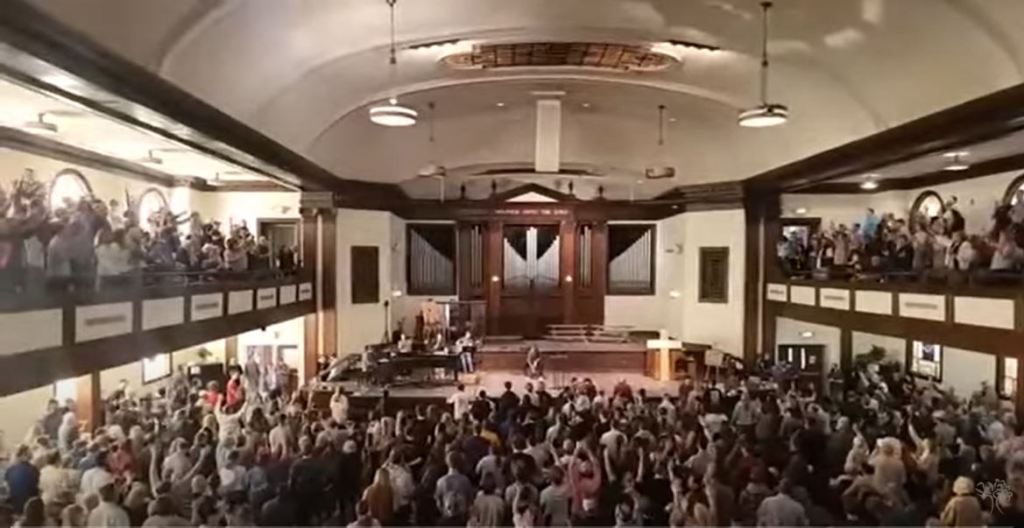
I have noticed with some mild interest at what is going on at the chapel on the Asbury University campus in Kentucky. Posts show up in my Facebook feed daily, as I am connected to many Christians (and many other people too) on Facebook. One post today, shared from someone who has been there from the beginning, described it succinctly as follows:

“A chapel service that didn’t stop but continued spontaneously for 8 days now.”

Today has been ten (10) days since that spontaneous beginning, and I have been watching various live streams of the February 8th chapel service that is still going on. This is how it started:

How the Asbury University chapel started on February 8, 2023

I have seen doubters and critics, I have seen posts from people who jumped in their cars and traveled hundreds of miles to see it for themselves: this chapel service that started and has not stopped. It has continued around the clock for 10 days now.

I have seen hype. I have seen caution. Critics caution about emotionalism. Critics want to de-emphasize experience and double down on the Bible and doctrine. Critics say that an omnipresent God should not require a person to travel to a particular location to experience Him.

I have been cautious myself. I am also aware that a sovereign God does what He wants to do despite our understanding of scripture, and theology and the way things ought to be. I have experienced “moves of the Holy spirit”, myself.

I have experienced that people cannot dictate how, when, or whether the Holy Spirit moves. “The wind blows where it will.” We don’t put the Holy Spirit in our pocket like a rabbit foot. We don’t command or possess Him.

People have described what is going on at Asbury University as a revival. That term may conjure up images of a “tent revival” and flamboyantly crass preachers, artificially slick hair, words that drip like honey, and ecstatic chaos.

The Asbury Revival is characterized by a different atmosphere. The person’s post from today who has been there from the beginning said this:

“To quote Professor McCall, a theology professor at Asbury Seminary, ‘what we are experiencing now—this inexpressibly deep sense of peace, wholeness, holiness, belonging, and love—is only the smallest of windows into the life for which we are made.’”

As a child of the 60’s and 70’s, I am reminded of the hippies who wanted “Peace and love. Not war!” I think of John Lennon who imagined a world without war – and without religion – with only peace. Hippies, however, were a contentious bunch, and John Lennon was no saint.

Not that I blame them for dreaming or trying. It’s just that people are completely incapable of making these kinds of dreams come true. Just when we think we have created our utopia, it is already disintegrating and slipping through our fingers like a mirage we feel we can grab hold of.

I lived for several years in a communal house. It was a leftover from the flower children of the 1960’s who became the Jesus people of the 1970’s. I loved it, but it was no utopia. The reality is that people have rough edges. So, “iron sharpens iron,” but the sharpening isn’t always a pleasant process.

Yet, when people get together to devout themselves to following God together, to worship and pray together, to do life together, God is in their midst. These words of Jesus are as true today as the day he spoke them:

“Where two or three gather in my name, there am I with them.”

Matthew 18:20

These words are true when our rough edges are rubbing against each other as much as when we “feel the love” (which may not be as often as we like). Even then, I have never experienced the intimacy with another human being as I have experienced when I have experienced the Holy Spirit “moving” in me, usually during times of group worship..

I have experienced the “inexpressibly deep sense of peace, wholeness, holiness, belonging, and love” described by the Asbury professor. It cannot be manufactured or trumped up. When it “happens”, words are difficult to describe it; the experience is life changing.

The experience is only truly life changing, however, if we recognize that the experience is not the point. The experience is a brush with God, who is the source of peace, wholeness, holiness, belonging and love.

If we walk away from the experience longing for another experience, we have missed the important thing. It isn’t ultimately the experience that we long for at all; we long for God, and relationship with Him.

If we chase the experience, it becomes ever more elusive. In our desperation and desire to repeat it, we may resort to emotionalism. We may even resort to trumping up experiences that are artificial.

We desperately need connection to our Creator and the lover of our souls.

Continue reading “Taste and See that God is Good: The Asbury Revival” →

The Surprising Context of the Idea that God’s Ways Are Not Our Ways, and God’s Thoughts Are Not Our Thoughts

How many times have you heard someone say, “God’s thoughts are not our thoughts, and His ways are not our ways”? Think about the context in which those words tend to be spoken….

The death of a loved one, a difficult time you are going through, plans that don’t work out, change you long for doesn’t happen, or unexpected change throws your life into chaos: these are the kinds of circumstances in which these words are often spoken.

Bad things are happening, or the good things we hope for seem never to come. That’s when someone says, “You know, God’s ways are not our ways.” The implication is that we should trust Him anyway, and that is good advice, but it’s often not very comforting in the moment.

Speaking those words in those kinds of circumstances also takes them completely out of the context in which they were spoken by the Prophet, Isaiah, whose words they are:


“Seek the Lord while he may be found; call to him while he is near. Let the wicked one abandon his way and the sinful one his thoughts; let him return to the Lord, so he may have compassion on him, and to our God, for he will freely forgive. 

“’For my thoughts are not your thoughts, and your ways are not my ways.’ This is the Lord’s declaration. ‘For as heaven is higher than earth, so my ways are higher than your ways, and my thoughts than your thoughts.'”

Isaiah 55:6-9 CSB


Until today I had not considered these verses in the context of the previous two verses. Or in the context of the whole chapter, for that matter. In fact, Isaiah 55 begins with the words, “Come, all you who are thirsty!”[i] I encourage you to read all of Isaiah 55, which I have provided at the end of this article.

But the focus of this article is the two verses spoken right before the enigmatic words of comfort that we often hear: “For my thoughts are not your thoughts, and your ways are not my ways.”

These verses are spoken in the context of encouragement to seek God and return to him so that God may have compassion on you, for God freely forgives. This is the context for the statement that God’s thoughts are not our thoughts, and His ways are not our our ways.

The implication here is that God forgives where we are not likely to forgive. God has compassion where we fail to have compassion. God freely forgives where we have much difficulty forgiving, and He has compassion when we would not have compassion.

That God’s thoughts are higher than our thoughts is often mentioned in the context of things we do not understand about life, such as the death, tragedy, catastrophe, and hopelessness. We think of the negative things that happen to us and the good things for which we hope that never seem to come about.

While it’s true that God sees things we do not see, and He has purposes that He is working out in history, throughout the earth, and even in our own loves that we do not understand, Isaiah’s statement that God’s way are not our ways, and His thoughts are not our thoughts, was not spoken in that context at all.

God’s thoughts are not our thoughts because He has compassion that we do not have and do not understand! God’s ways are not our ways because God freely forgives those who turn to Him.

Thank about that: This means that God is much more compassionate and forgiving than we understand or give him credit for.

We sometimes fixate on God’s judgment. We struggle with God’s wrath and the problem of pain and suffering in the world. In these contexts is when we heard it said that God’s thoughts are higher than our thoughts, and His ways are higher than our ways.

God is much more compassionate and forgiving than we understand or give him credit for

The real import of these versus, however, it’s not that God is mysterious in some dark and tragic way, but that God is mysterious in a compassionate and forgiving way!

We may actually have more difficulty understanding the compassion of God, than the wrath of God sometimes. We may have more difficulty understanding the forgiveness of God than the judgment of God. We may not like the idea of God’s wrath or judgment, but we somehow grasp it in a twisted kind of way, even if only to hold it against him.

Yet, we sometimes struggle to understand His great compassion and forgiveness.

Why would God empty himself of His glory, give up His divine privileges, make Himself nothing (Phil. 2:7), and enter into His creation in the most vulnerable way? Why would He humble Himself in that way and be obedient like a servant (Phil. 2:8) to submit himself to the worst that his own creation could do to Him? Humiliating and excruciating death on a Roman cross!

And then, after all of that, the words of Christ, who was God Incarnate, spoken as he died on a Roman cross are the most mysterious thing we could ever imagine:” Father forgive them, for they know not what they do.” (Luke 23:34)

Continue reading “The Surprising Context of the Idea that God’s Ways Are Not Our Ways, and God’s Thoughts Are Not Our Thoughts” →

Look Up! Perspective and Purpose

You were created with purpose and that purpose was to worship through work.

(Republished with permission from Bruce Strom, Executive Director of Administer Justice, a faith-based legal aid organization providing the help of a lawyer, the hope of God’s love and the home of the church.)

“Look up on high and thank the God of all.”

Geoffrey Chaucer

There is one God, and you are not Him!

Power of Perspective: There is a story of a man who worked at an aviary in a bird park. He was at an outdoor wedding and kept looking up. A friend finally asked him why. The man simply replied, “Sorry, I’m used to looking up to avoid falling bird poop.” If you want to avoid a lot of life’s poop – look up!

Perspective matters. Go outside and look up. You cannot see yourself, but you can see the vastness of space. Look down. You mostly see yourself and not much else. Circumstances cause us to look down and magnify our thoughts, feelings, and fears. Look up. Set your mind on things above. Don’t make you or your circumstance bigger than God.

Power of Purpose: The Westminster Catechism recites our purpose is “to glorify God, and to enjoy him forever.” That is true but can be misunderstood. If not careful, I think it can distort our purpose in the same way viewing Heaven as fluffy clouds where we play harps and sing praises forever can. Honestly heaven is a place of rewards given for work done on Earth. Work continues in Heaven. Work is a healthier view of worship – what it means to glorify God and to enjoy him forever.

You were created with purpose and that purpose was to worship through work. The Hebrew word for work is avodah which means work, worship, and service. True worship is rooted in work that serves God and others.

God has work for you in his family business. When you come to faith in Christ you are adopted as his son or daughter and join the business of advancing God’s Kingdom. Jesus came to establish this work – the Kingdom of God on earth. Like any family business, God’s business has a vision, mission, values, guidelines, and positions.

Your job title is vassal, a servant of the King. Your job description is vessel as you allow him to fill you for your work. God’s vision is that none should perish but all should come to faith. In other words, he wants to grow the business by expanding the Kingdom. His mission is to go into all the world making disciples by demonstrating what it means to love God and love others (Great Commission and Commandments).

God has an employee manual with guidelines for living – the Bible. Don’t just skim and sign off on it – read it, memorize it. It is your guide for finding purpose. Then talk to your boss. Can you imagine taking a job and never talking to your boss? I don’t think you’d last long. You will similarly wear out in the work of the Kingdom if you are not regularly communicating with God through prayer.

Finally, live the core values of the Kingdom. He has told you what is required of you: do justice, love kindness, and walk humbly with him (Mic. 6:8). You will discover and live God’s purpose for your life if you see yourself working in the family business.


Consider: What strikes you in this first key: look up through perspective and purpose?

Pray:   Lord, forgive me when I make much of my circumstance and little of you. Help me to find joy in working in your family business of advancing your kingdom of justice and righteousness. Amen.

Lift Up Your Eyes for Perspective and Purpose

Though God’s ways are not our ways, and his thoughts are not our thoughts, God invites us into his perspective and purpose.

We live “under the sun”, as the writer of Ecclesiastes describes our existence, filled with existential angst.  We live year by year, month by month, week by week, day by day, and moment by moment. The inertia of our lives is focused on the here and now, with our dying always looming in the near distance like a great mountain range rising up to the clouds we cannot conquer.

Our perspective is limited. It is finite. We stand at any given time on a small planet in a small solar system in one of billions of galaxies that exist in a universe so expansive we struggle to comprehend it. We stand “under the sun”, and our perspective, therefore, is limited.

“As the heavens are higher than the earth,
    so are my ways higher than your ways
    and my thoughts than your thoughts.”

(Isaiah 55:9)

That verse from Isaiah is a way of saying that God has a different perspective than we do. God has His own purposes, and He invites us to consider the difference between His perspective and purpose and ours. He desires for us to seek to understand His perspective and to align with His purpose.

When Jesus says my yoke is easy and my burden is light, I believe he was encouraging us, at least in part, to attempt to understand and adopt his perspective and his purpose. Our momentary lives include existential angst, dread, suffering and pain, but God has a purpose and a plan for us that is greater than what we see and experience under the sun, and that purpose is liberating!

I see three concrete examples in scripture of the difference between God’s perspective and purpose and ours. (I am sure there are many more.) As God invites us to consider that His thoughts are not our thoughts, and His ways are not our ways, I think it is appropriate to consider and meditate on these three examples.

Continue reading “Lift Up Your Eyes for Perspective and Purpose” →

The Door On Which We Have Been Knocking

When I attempted to describe our spiritual longings. . . .

Photo credit to Steve Mazur

“When I attempted . . . to describe our spiritual longings, I was omitting one of their most curious characteristics. We usually notice it just as the moment of vision dies away, as the music ends, or as the landscape loses the celestial light.”


Photo credit to Deb Zeyher

“For a few minutes we have had the illusion of belonging to that world. Now we wake to find that it is no such thing. We have been mere spectators. Beauty has smiled, but not to welcome us; her face was turned in our direction, but not to see us. We have not been accepted, welcomed, or taken into the dance. We may go when we please, we may stay if we can: ‘Nobody [notices] us.'”


Photo credit to Rudy Vierickl

“A scientist may reply that since most of the things we call beautiful are inanimate, it is not very surprising that they take no notice of us. That, of course, is true. It is not the physical objects that I am speaking of, but that indescribable something of which they become for a moment the messengers.

Photo credit Paul Smith

“And part of the bitterness which mixes with the sweetness of that message is due to the fact that it so seldom seems to be a message intended for us, but rather something we have overheard. By bitterness I mean pain, not resentment. We should hardly dare to ask that any notice be taken of ourselves. But we pine. The sense that in this universe we are treated as strangers, the longing to be acknowledged, to meet with some response, to bridge some chasm that yawns between us and reality, is part of our inconsolable secret.”


Photo credit to Kevin Drendel

And surely, from this point of view, the promise of glory, in the sense described, becomes highly relevant to our deep desire. For glory means good report with God, acceptance by God, response, acknowledgement, and welcome into the heart of things. The door on which we have been knocking all our lives will open at last.”

CS Lewis from the Weight of Glory

Photo Credit Dee Rexroat