Who Are the “Least of These” Jesus Describes in the Parable of the Sheep and the Goats?

Jesus considers “the least of these” his brothers and sisters

I have discussed in two blog posts the odd qualification in the key statement of the Parable of the Sheep and the Goats: [W]hatever you did for one of the least of these brothers and sisters of mine, you did for me.” (Matthew 25:40)(NIV) Who are Christians to love? is the topic of the first blog article I wrote, addressing the question whether the “brothers and sisters of mine” limits the people we are to care for.

Elsewhere, Jesus tells his disciples that the world will know they are his followers by the love they have for one another (John 13:35), and John says, “[W]hoever does not love their brother and sister, whom they have seen, cannot love God, whom they have not seen.” (1 John 4:20) When Jesus learns from someone in a crowd that his mother and brothers are looking for him, Jesus says, “[W]hoever does the will of my Father in heaven is my brother and sister and mother.” (Matthew 12:50)

These qualifiers on who the followers of Jesus should love have prompted some scholars to conclude that we are only called to love fellow believers. They conclude that only the care we show to fellow believers who are hungry, thirsty, naked, a stranger, or a prisoner is showing care for Jesus in the Parable of the Sheep and the Goats.

This, however, is a minority view. Most of the early church fathers and theologians do not hold that view because of the many Bible passages that instruct us to love our neighbors and even our enemies. The Parable of the Good Samaritan makes this point rather clearly, as I show in the blog article linked in the opening paragraph.

In my second article, I tackled the question, Why, then, does Jesus repeatedly prioritize Christians loving one another? It seems that Jesus does prioritize our love for fellow believers. Paul also prioritizes Christian love for fellow believers when he says, “[A]s we have opportunity, let us do good to everyone, and especially to those who are of the household of faith.” (Galatians 6:10)

In short summary of the previous article, we should recognize that Jesus emphasized loving each other as he was preparing his disciples for the imminent reality of his death. In that context, he was encouraging them to stick together and to love each other.

In other contexts, Jesus told his disciples to love their neighbors and their enemies. Thus, Christian love is not exclusive to loving Christians, yet Jesus does seem to prioritize love for fellow followers of Christ.

Perhaps, he was also letting them know that they need to love each other, first, before then can love their neighbors (and then their enemies). If we cannot even love those who love us and think like us, how can we love our neighbors, and how in the world can we love our enemies?

I encourage you to read the previous two blog articles if you want a more compete analysis on the subject. In this blog article, I want to explore a different way of reading “whatever you did for one of the least of these brothers and sisters of mine, you did for me.” (Matthew 25:40)

Continue reading “Who Are the “Least of These” Jesus Describes in the Parable of the Sheep and the Goats?”

Divine Christmas Gifts

As another Christmas begins to fade in the rear view mirror, let us reflect on the One who we celebrate this time of year and pray that His light grows ever stronger as we fix our gaze on Him. These words from a writer I follow are apt today:

“I hope everyone was pleased with the gifts they may have received during their Christmas celebrations. As grandparents, my wife and I delighted in the presence of our children and grandchildren as we celebrated together Jesus’ Nativity. Which raises the subject of the proverbial ‘reason for the season.’ My hope is that Mere Inkling’s friends […]

Divine Christmas Gifts

Christmas: The Triumph of the Almighty God Is Not Exactly As We Might Have Imagined It

The hope we reflect on in wonderment at this time of year

The words of the ancient prophet, Isaiah, are spoken often this time of year:

“For to us a child is born, to us a son is given, and the government will be on his shoulders. And he will be called Wonderful Counselor, Mighty God, Everlasting Father, Prince of Peace. Of the greatness of his government and peace there will be no end. He will reign on David’s throne and over his kingdom, establishing and upholding it with justice and righteousness from that time on and forever. The zeal of the Lord Almighty will accomplish this.”

Isaiah 9:6-7 NIV

These words were spoken many centuries before one, Jesus of Nazareth, was born in Bethlehem while his parents were in town for a census. This passage is full of triumph: “Mighty God”, an “Everlasting Father”, and “Prince of Peace”. “The government will be on his shoulders,” and he will “reign on David’s throne” – the “Lord Almighty!”

These words foretell of a mighty, conquering, benevolent God. (Benevolent after the conquering bit, of course). Human beings have always venerated and celebrated strength, and what could be more compelling to us than a conquering king (provided he is benevolent also!)

This is the way people view God and the world. This view of God inspired the crusades. It inspired many kings and nobleman through the ages like Stephen I, Szent István király. Born in 975, Stephen took the throne on December 25, 1000, and he became the last “grand prince of the Hungarians”, and he is the first King of Hungary.


I took the photos I have reproduced here when I was visiting my daughter in Hungary this time of year 6 years ago. The prominence of Steven and other kings in Hungarian lore is evident in the statuary around Budapest and in the stately basilica named after him that lies near the Danube in the center of the City.


Stephen succeeded his father as a grand prince of the Hungarians, but he had to fight for the throne against his own extended family. He fought many wars against surrounding tribes and chieftains, including his own uncle. He “converted his uncle’s ‘country to the Christian faith by force’ after its conquest,” and he “encouraged” the spread of Christianity “by meting out severe punishments for ignoring Christian customs.” (See Wikipedia)

Many modern minded people with sensibilities trained over the last generation likely squirm (or fume) over stories like Stephen’s, as children are taught in grammar school to recoil at the “imperialism” of our Western/Christian forebears. The so-called “Christian nationalists” among us likely count Stephen a hero of the faith.

Indeed, Hungarians today proudly celebrate Saint Stephen as a national hero, but this celebration seems more focused on nationalistic pride than the spread of Christian faith – if faith can be commandeered by force. Stephen is hailed for unifying the tribal regions around him under his kingship, giving birth to the nation of Hungary.

That the nation was unified under a Christian flag seems to be more of a national identity than a statement of faith. While I was visiting, I observed that Hungarians did not appear, as a whole, to be a people of devout faith.

A 2017 poll reveals that Hungarians, indeed, are not very religious. While about 76% of Hungarians self-identified as “Christian”, only about 8% of Hungarians attended church services on a weekly basis, “placing Hungary among the countries with the lowest church attendance in Europe” (according to my very cursory research using Chat GPT).

While the notion of a king conquering in the name of Christ may be a source of national pride for some, it makes other people feel uneasy. It makes me uneasy.

We celebrate at Christmastime the triumphal prophecies foretold by Isaiah of the Lord Almighty taking the government on his shoulders with zeal and reigning on David’s throne. Yet, this imagery contrasts with the images of the story of the birth of Jesus, born of a humble virgin in a lowly manger because they had no influence to make room for themselves anywhere else.

As this story goes, God incarnate was born in poverty, on the edge of the Roman empire, in the humblest of circumstances, to parents who were not even married. God came into the world as an infant, weak and vulnerable.

God is human form became a refugee when his parents fled to Egypt to avoid King Herod’s decree to kill the male babies in the region of Galilee. They returned after Herod’s death but moved to the more remote and neglected area of Nazareth where Jesus grew up in almost total anonymity apart from the small community of people who knew him.

These realities stand in stark contrast to the conquering and reigning king imagery of Isaiah and the images of kingly might we celebrate in people like Saint Stephen. We consider these paradoxical images this Christmas day, December 25, 2024, as we recall the birth of our Savior and Lord, Jesus, and what it all means for us.

Continue reading “Christmas: The Triumph of the Almighty God Is Not Exactly As We Might Have Imagined It”

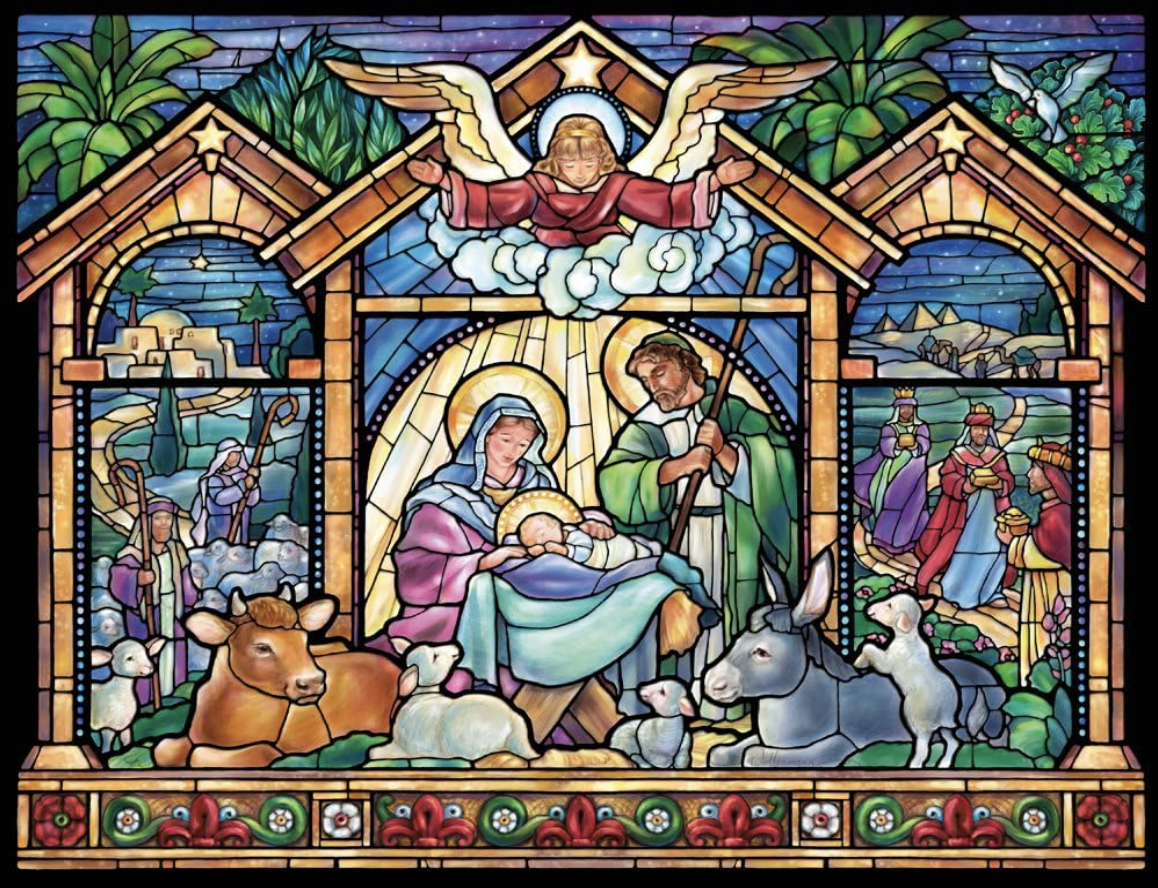
Of Shepherds, Angels, the Glory of the Lord, and the Christ Child Born in Humble Estate

At Christmas, we celebrate God coming to us and revealing Himself to us in human form to draw us to Him


“An angel of the Lord appeared to them, and the glory of the Lord shone around them, and they were terrified. But the angel said to them, ‘Do not be afraid. I bring you good news that will cause great joy for all the people. Today in the town of David a Savior has been born to you; he is the Messiah, the Lord.'”

Luke 2:9-11 NIV

This is a classic Christian text remembered at this time of year about the birth of the Christ child. The birth of Jesus in the town of David would have drawn the attention of 1st Century Hebrews who knew their Scripture. The significance of that understanding is preserved for us today by Luke, the traveling companion of Paul the Apostle.

Bethlehem was the birthplace and early home of King David, who is Israel’s most venerated and celebrated king. (1 Samuel 16:1, 1 Samuel 17:12). The prophet, Samuel, who presided over the coronation of David, foretold that God would establish from the lineage of David a kingdom that would last forever. (2 Samuel 7:12-16)

The prophet, Isaiah, lived about three centuries after David. Fourteen kings reigned between David and King Hezekiah, Isaiah’s contemporary. After a span of time longer than the United States of America has been a country, Isaiah repeated and expanded on what Samuel foretold:

“For to us a child is born,
    to us a son is given,
    and the government will be on his shoulders.
And he will be called
    Wonderful Counselor, Mighty God,
    Everlasting Father, Prince of Peace.
Of the greatness of his government and peace
    there will be no end.
He will reign on David’s throne
    and over his kingdom,
establishing and upholding it
    with justice and righteousness
    from that time on and forever.”

Isaiah 9:6-7

The prophet, Micah, a contemporary of Isaiah, He riffed on the same theme:

“But you, Bethlehem Ephrathah,
    though you are small among the clans of Judah,
out of you will come for me
    one who will be ruler over Israel,
whose origins are from of old,
    from ancient times.”

micah 5;2

According to the biblical chronology, these predictions of a coming kingdom and a king “whose origins are from ancient times” were declared 700-1000 years before the birth of Jesus. Those predictions were memorialized in the writings we identify with Samuel, Isaiah, Micah and others, and they were preserved for many centuries before Luke penned his own words tying them to the birth of Jesus of Nazareth, who was born in Bethlehem.

Though it was an ignoble birth by all accounts, we still remember back almost 2000 years now, recalling the prophecies declared from of old. We remember the birth of Jesus, lying in “humble estate” in a manger in the same space where the animals lived.

Hold that thought…. because today, I want to focus on the first half of the verse with which I introduced this article. The passage began with these words:

An angel of the Lord appeared to them, and the glory of the Lord shone around them, and they were terrified….

This may seem like a strange twist to the way I have started this article, but I will bring it back around. I think you will be glad to stick with me as I take seems like a left turn.

Continue reading “Of Shepherds, Angels, the Glory of the Lord, and the Christ Child Born in Humble Estate”

Christmas and the Transcendent, Imminence of God

Jesus is called Emmanuel, which means God, with us.


“If God is real, then He can be known.” This is the assertion made by Dr. Sharon Dirckx, who has a PhD in brain imaging from the University of Cambridge and has held research positions at the University of Oxford and the Medical College of Wisconsin. Dr. Dirckx does not say this lightly.

Dirckx grew up in a secular household, asking questions like “Why can I think? Why do I exist? Why am I a conscious being?” as a child. She was impressed with the “awareness of my own existence, of my own consciousness.” These questions led her on a lifetime quest.

Dirckx knew she wanted to be a scientist as a teenager. Her biology teacher gave her the book, The Selfish Gene, by Richard Dawkins. That book set the course of her thinking as a child “that we are just gene machines, that there’s just the material and that’s all that it means to be a human being.” She absorbed a materialistic worldview from Dawkins and the people around her.

“I arrived at university to study biochemistry assuming that we were material beings and that science and God were not compatible.”

Making Sense of Science and Faith – Sharon’s Story, By Sharon Dirckx, Jana Harmon,on September 13, 2024 Sharon DirckxeX-skepticSide B StoriesCSLI PodcastsJana Harmon

Dr. Dirckx achieved her dream of becoming a scientist, but her path deviated from the materialism she assumed and absorbed as a teenager. She is now the author of several books and a frequent speaker on the subject of faith in God. You can listen to her story on the eX-skeptic podcast embedded below.

I want to pick up and run with her statement: If God is real, then He can be known. I agree with her, but I believe many people make the mistake of thinking that God can be known on their terms. We make the mistake to think that if God exists, He exists within our own purview and within the limitations we experience as human beings that we can control on our terms.

He doesn’t. When we are talking about the creator God who made the universe, and all that is in it, including human beings and all of material reality, we are talking about a God who is transcendent. He is the uncaused causer and the uncreated creator. He is not found in his creation as if He was a component of it.

Such a God is said to be “outside” of the space/time continuum. The concept of such a God includes a spaceless, timeless, immaterial reality that is not contained within or limited by the material world.

Some quantum and theoretical physicists speak variously of consciousness that collapses the wave function of particles, Platonic or Mathematical Realism that imagines immaterial mathematical forms underpinning material reality, and Philosophical Idealism that imagines consciousness or mind-like properties out of which the material world emanates. These are non-theistic attempts to get at the idea that the material world is contingent, and immaterial reality is the fundamental building block of and force behind the universe and reality.

The most robust of these conceptions is the theistic one pulled out of the text of the 60 some writings by 40 some authors compiled in the work we call the Bible. If God is real, and He created the universe as these writings claim, with all of it’s immensity, and if He created life, including humans, He is completely different (Other) than us: God is transcendent.

Yet, people have always had some sense of this transcendent reality. Religious expression is among the oldest of the traces of human history we can find in the archaeological and written records we are able to find from our ancestors.

While we may tend to assume that all primitive humans believed in a panoply of Gods animating the material world, evidence exists to suggest that primitive people from diverse corners of the world believed in one, Creator God. This monotheistic conception of God may, in fact, by the oldest form of religious belief.

Perhaps, the pagan gods that inhabit the material world seem more accessible. They might make demands on our behavior, but they have no province over the thoughts in our minds, our wills, and our hearts.

That we would have a hard time finding a transcendent God and making sense of him is understandable. Imagine a living being the size of an electron viewing a human being from an electron’s vantage point: How does an electron-sized being make sense of a human being – or anything above the quantum level, for that matter?

The difference between a human being and a transcendent, creator God is much greater then the difference between an electron-sized being and a human being. For one thing, they are both part and parcel of the same material reality. The biblical conception of God understands that God transcends the material world.

To quantify this difference, we might imagine a human being compared to the infinitely vast space of the universe. Now add in the bit about God being completely “Other”: spaceless, timeless, and immaterial.

I maintain that such a God would need to reveal himself to us. How could we know such a God unless He revealed Himself to us?

I have written about this before. God must “stoop” to us to make himself known. We cannot “ascend” to Him.

Continue reading “Christmas and the Transcendent, Imminence of God”