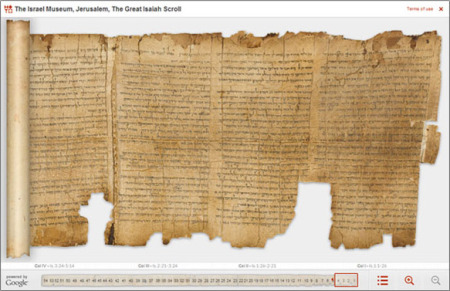
The Dead Sea Scrolls on display at the caves of Qumran that located on the edge of the Dead Sea in Israel.
Many people say they “do not believe” the Bible. But, what does that mean? The Bible is an ancient document that has been around in virtually the same form for centuries. For instance, the Dead Sea Scrolls reveal that the Old Testament has changed very little since well before the tie of Jesus. Less than 1% of the substance of the Bible has changed since the time of Jesus.
Some people argue over which writings should be included or not included in the canon that we call the Bible. The writings that are included in the current iterations of the Bible have been established for at least 1600 years. They were largely settled by consensus for at least a couple hundred years before that,
The Bible is an historical record of people and places. Many of those people and places and some events have been cross referenced by other sources, including Babylonian, Assyrian, Hittite, Roman, and other sources. Archaeological finds have also verified many of the people and places in the Bible. People may argue whether every person and place referenced in the text is actual, accurate and factual, but few people seriously argue that it has no historical value.
The Bible is also a collection of stories, poems, songs, and sayings (wisdom literature). As literature, it is full of imagery, compelling stories and words of wisdom. It has great literary value.
The Bible is a collection of writings covering a span of about 1600 years by many authors focusing on particular people group in a particular geographical area of the Middle East during a particular time period in history. Some of the writings purport to be relatively contemporaneous accounts, and others seem more like historical accounts when they were written.
The writings that comprise the Bible have been collected and preserved as sacred text. Scribes were carefully trained to copy the manuscripts. Those scribes devoted their lives to the careful transcription of the text from generation to generation.
What is most likely meant when people say they “do not believe the Bible” is that they do not believe the Bible is the “Word of God”. People do not believe it is divinely inspired. People do not believe that the Bible is the revelation of God to people.
When people say the do not believe the Bible, they most likely mean they do not believe the Bible can be taken at face value. At face value, the writings of the Bible purport to a collection of God’s communications with a certain group of people, in a particular region of the world, over a particular time span in history.
Various people have various theories about the Bible. I have even recently heard people say that the Bible was put together by Roman dictators to “control the people” by giving them something to believe in. There is little to no scholarly support for that position by the way, but this theory and other theories abound.
Most scholars agree that the Bible has cultural, sociological, literary, and other value. Though people disagree over the degree to which the Bible has historical value, it does have some historical value as any ancient text does.
Significantly, the evidence suggests that the Old Testament writings pre-date the first Century. The Dead Sea Scrolls, which pre-date the First Century, include manuscripts from every book in the Old Testament except for Esther. Among the manuscripts found in the Qumran caves that we call the Dead Sea Scrolls, was a complete scroll of the Book of Isaiah dating to at least 200 BC that is virtually the same as the “book of Isaiah” we have preserved in modern Bibles.
It is fact that the Bible is by far the most well-preserved and well-attested ancient text in the history of humankind. We have more ancient manuscripts of the Bible, by a large volume, than any other ancient text. The volume of New Testament manuscripts is stunning compared to any other ancient text.
From a Lecture – Dr Peter Williams – New Evidences the Gospels were Based on Eyewitness Accounts
The Bible is ubiquitous in our society. More people have an opinion on the Bible than people who have read it, or at least much of it. The text was written over a period of 1500 years by about 40 some different people. As a literary text, I was struck when I first read it (for a class in college) by how complex, yet harmonious the Bible is. There was an internal authenticity that spoke to me.
While our society tends to view the Bible as just another book, a piece of our history and common culture, something that people tend to like (the most read book), but nothing to be taken terribly seriously, people of faith view it as the Word of God, sent from heaven, a revelation of God’s purpose and design for mankind. Few people really study the Bible in-depth and detail from an “objective” view. Maybe no one does. We come to it with our preconceived notions, and we look for support for what we already believe is true.
I have a great deal of doubt in the human ability to be objective. Scientists who live by the scientific method, in my opinion, can be as guilty of bias as the common man, and are all the more culpable for claiming it is science. But that is the subject of another discussion.
At the same time, there are stories of people who set out to disprove the Bible who come to believe it is true. Many of them in fact.
I did not approach the Bible initially like that; rather I approached it as I approached everything in my life during my search-for-truth-phase: I assumed there was truth in the Bible like there was truth in the Bhagavad gita, the Quran, Khalil Gibran, Aristotle, Plato and all of the philosophers, and Emerson, Shakespeare and all of the great writers. I still believe there is truth in that assumption. Truth is truth no matter where it is found. If truth is attainable and knowable, people from all over the world should have some grasp of it.
As a much older person, I have also come to believe firmly in the human capacity to ignore, overlook and dismiss the truth. There is so much at stake, chiefly our own pride and self-esteem. We commit to principles quickly sometimes, and we hold fast to them in the face of contrary evidence because we do not want to be wrong, especially once we have invested ourselves in developing those principles.
We have fears and insecurities that we try to cover, and we try to protect ourselves from being exposed. There are probably hundreds of reasons, big and small, that we miss the truth – big truths and little truths. It takes a lot of energy to be on the lookout for truth, and many of us do not have that energy or the time in our fast-paced, busy lives to be that vigilant.
Much has been made of the apparent inconsistencies and contradictions in the Bible and a seeming lack of archaeological and historical evidence. The inconsistencies and contradictions that I have checked out are largely due to lack of knowledge, misunderstanding, or purposeful attempts to miscast the text. Archaeological and historical criticisms are based more on lack of evidence than contradictory evidence. Modern discoveries do more to substantiate the Biblical text than to disprove it. Still, we will likely never have absolute proof of the veracity of the Biblical text this side of heaven.
As intelligent beings, or at least beings capable of intelligence, we can not rationally claim to be all-knowing or all-understanding. We are finite creatures with no legitimate claims on ultimate truth – at least none of us can claim it with a straight face or a sound mind.
With that said, I have found no reasons to discount the Bible as the authentic revelation of God in the 40+ years since I came to be a believer. In that time, I have found even more reasons to trust it.
I recently saw Shakespeare’s King Henry VIII at the Chicago Shakespeare Theater. The play, Shakespeare’s last one performed at the Globe Theater approximately 400 years ago, was very well done. The story line is not as compelling as most of Shakespeare’s works, but the interrelationship of church and state theme struck a chord with me, albeit a discordant one.
King Henry the VIII was born into aristocracy. Young Henry was appointed Constable of Dover Castle at age two, Earl Marshal of England and Lord Lieutenant of Ireland at age three, inducted into the Order of the Bath soon after, and a day later he was made the Duke of York. A month or so after that, he was made the Warden of the Scottish Marches. He had the best education available from the best tutors, was fluent in Latin and French and was familiar with Italian.
For all of his privilege, he was not expected to become king. His brother, Arthur, Prince of Wales, was the first born and heir to the throne, but Arthur died only 20 months after marrying Catherine of Aragon (daughter of the King and Queen of Spain). Henry VIII was only 10. (Wikipedia)
Henry became the Duke of Cornwall and assumed other figurehead duties. His father, the King Henry VII, made sure young Henry was strictly supervised, did not appear in public and was insulated from real authority. Henry VII quickly made a treaty with the King of Spain that included the marriage of his daughter, Catherine, to young Henry – yes the widow of recently deceased brother Arthur. (Wikipedia)
From this point begins a history of manipulation, abuse of power, shameless excess and rationalizations twisting biblical and religious notions to serve the king’s self-interest. This is a story that parallels the “marriage” of State and Church. The two are intertwined in an adulterous affair of blasphemous indiscretions.
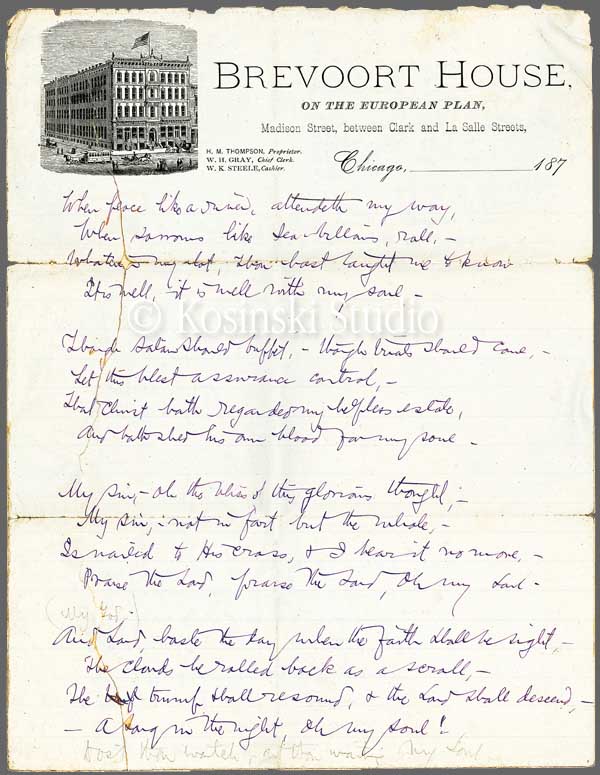 Sometimes songs we know have so much more meaning and power when we know the story behind the song.