What We Can Learn from Expectations about What God Is Doing


“Now there was a man in Jerusalem, whose name was Simeon, and this man was righteous and devout, waiting for the consolation of Israel, and the Holy Spirit was upon him. And it had been revealed to him by the Holy Spirit that he would not see death before he had seen the Lord’s Christ[i]. And he came in the Spirit into the temple, and when the parents brought in the child Jesus, to do for him according to the custom of the Law, he took him up in his arms and blessed God and said,

“Lord, now you are letting your servant depart in peace,
    according to your word;
for my eyes have seen your salvation
    that you have prepared in the presence of all peoples,
a light for revelation to the Gentiles,
    and for glory to your people Israel.”

(Luke 2:25-32)

“Belief in the eventual coming of the mashiach [Messiah] is a basic and fundamental part of traditional Judaism”; though [m]odern scholars suggest that the messianic concept was introduced later in the history of Judaism, during the age of the prophets. The messianic concept is not explicitly mentioned anywhere in the Torah (the first five books of the Bible)”[ii], but an expectation of the coming of an Anointed One, Messiah (Christ in Greek) developed in the writings of the Prophets, and it reached the height of expectation shortly before the time of Jesus.

“The term ‘mashiach’ literally means ‘the anointed one,’ and refers to the ancient practice of anointing kings with oil when they took the throne. The mashiach is the one who will be anointed as king in the End of Days.”[iii] This is the belief of traditional Judaism, going back, at least, to the Prophets, with expectations building up to the time of Jesus.

This is where Judaism, as it continues to be practiced today, and Christianity diverge. The Jews had very specific ideas of what the Mashiach would do when he appeared, and Jesus didn’t fit their expectations.[iv] They did not expect the Messiah to be God who became man to sacrifice Himself to save the world from sin. Though Jews today still expect the coming of a messiah, they don’t even use the term, “messiah”, anymore because Christians have associated it with Jesus.

They believed the Mashiach would be “well-versed in Jewish law, and observant of its commandments (Isaiah 11:2-5), … a “charismatic leader, inspiring others to follow his example.”[v] These expectations are consistent with Jesus in the New Testament, but other expectations were not. They expected a “great political leader descended from King David[vi]”; a “great military leader, who will win battles for Israel”; a “great judge”; and, most of all, he would be completely and only human. Jews believe the Mashiach will bring people back to Israel and restore Jerusalem, establish the center of world government in Israel, rebuild the Temple, re-establish worship in the Temple, restore the religious court system and establish Jewish law for the world.[vii]

These things are all consistent with what we read in the New Testament about the way the Jewish leaders did not receive Jesus. John 1 says that the Word (Jesus), who was with God in the beginning and through whom God made the universe, came to his own, and his own did not receive him. (John 1:1-11) He didn’t meet their expectations. The religious leaders, the ones who interpreted Scripture and set the expectations for the Messiah to come, rejected Jesus because of the way they interpreted Scripture and perceived what the Messiah would be like.

Continue reading “What We Can Learn from Expectations about What God Is Doing”

Loneliness, Singleness and the Church Family

Some values evident in the original church family have been lost over the years in western culture


Rebecca McLaughlin, in her book, Confronting Christianity: 12 Hard Questions for the World’s Largest Religion, made an observation that inspires my article today. I am indebted to Rebecca McLaughlin and to the many serious Christian thinkers who have plowed ground that make it easy for me to walk the paths after them.

In this book, about a third of the way into the ninth chapter (Isn’t Christianity Homophobic?), McLaughlin talks about loneliness and singleness in the church. She digs up some nuggets that seem to have gotten lost in our modern culture.

She observes that western traditions have developed over the years that have plowed under values that once informed the early church. A tradition of rugged individualism and self-determination that is, perhaps, unrivaled anywhere in the world, is inbred into our American culture. Our suburban lifestyle is uniquely American, with our manicured lawns separated from our neighbors by fences and hedges. These are, perhaps, the gentrified remnants of farmstead claims staked by American pioneers against predators, weather, enemies and neighbors alike.

We circle the wagons today around the family unit that has come under “attack” from secular constructs of village-raised children and re-imagined family structures designed to fit societal mores that clash with us. These changes have caused conservatives and Christians to double down on the traditional, American family construct.

Traditional, though, is normative, and norms change. Not more than 150 years ago families looked different than they do today. In fact, they looked a little more like the modern family than the average person might realize.

Not long after the first generations of immigrants reached the shore of the New World, families and communities of families began to migrate across the country, south, west and sometimes north, clearing areas for homesteads. The fluidity of family compositions can be traced from one decennial census to the next. Not may households remained static from one 10-year census to the next.

My father, who researches genealogies, shines some historical light on the norms of the frontier movement in writing books about those migrations. From census to census to census, stories are told of dynamic changes in family structures.

Family units were ever changing in the combination of husbands, wives, children (both minors and adults), extended family and sometimes even strangers. Family often included a grandparent, niece or nephew, neighbor or border.

Children were born; children died; children moved away and moved back. Spouses died. New spouses moved in, or neighbors moved in who helped with the children and then became spouses… or not. Extended family members, neighbors and strangers, too, moved in and out of family units.

Census records reveal the consistency of flux as frontiers were blazed across this country. One of the many challenges of doing genealogical research through the 19th Century is determining the relationships of the people in those households from one decennial census to another and tracing the changes from decade to decade. 

The end of trailblazing and the Industrial Revolution, however, began to affect the composition of family units. Trailblazing gave way to communities, and factories grew up in those communities.

Workers migrated to the fixed location of a factory, and they became grounded and less mobile in their vocations. Family structures became more static and defined in the process. These and other influences formed the mold of the “traditional” American family.

What we assume to be the traditional family unit today is of relatively recent vintage. The Little House on the Prairie is more of a sentimental, re-imagining of the way it was than raw history reveals.

Even then, we get a hint of an interdependence of community that was much more intimate in generations past than our anemic sense of community today. This is true even with more distance separating homesteads than a thin veil of fences and hedges separating suburban lots.

The distance that separates people in modern western life, however, might as well be miles. We live as if we don’t need our neighbors, and we largely don’t even know them. Those fences and hedges might as well be walls.

In that sense, McLaughlin digs up the back-filled soil of modern western culture to uncover an ancient value that has been plowed under by the progress of western development. When St. Paul spoke about the virtue of singleness, he did so in a culture and time when family and community were quite unlike our own – values that we have relatively recently lost.

Continue reading “Loneliness, Singleness and the Church Family”

Comments on Freedom and the Clash of Ideas

If any speech or expression is deemed unworthy of protection on the basis of its content, no speech or expression is safe.


“The clash of ideas is the sound of freedom.”  (Lady Bird Johnson)

I grew up in the 1960’s and 1970’s, bring born at the very end of 1959. My young, impressionable mind recalls the assassination of JFK, Robert Kennedy and Dr. Martin Luther King, Jr. I remember watching the riots during the Democratic National Convention in Chicago, the Kent State protest and shooting, the footage of the Vietnam War and the Nixon impeachment on the nightly news.

The world seemed a chaotic place, no less than it does today, on this 4th day of July, 2020.

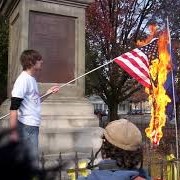
In the 1960’s, the dissident voice championed First Amendment rights that included the freedom of assembly and freedom of speech. I remember that freedom cry as a child superimposed over news footage of a burning US flag. The patriot in my young heart was equally shocked by the flag burning and impressed by the necessity of the freedom that allowed that flag to burn.

In law school, I learned the nuances of the jurisprudence that grows out of our US Constitution in which the First Amendment is enshrined. The clash of ideas is so sacred in our constitutional framework that it allows even the idea of abolishing that very framework to be heard.

In the 21st Century, many things have changed, while somethings have remained the same. Many of the dissident ideas from the 1960’s have become mainstream, and more “conservative” voices have become dissident. I am no longer shocked by the burning of the flag (and, perhaps, the point of burning a flag is no longer poignant for the same reason).

The angst of the 1960’s of my youth has been replaced by the angst of the 21st Century of my middle age. The reasons for my angst are much different, yet very much the same at their core. I have grown and changed in my views, but the emotional strain of the human condition remains.

I fear, at times, that the framework that protected the freedom to burn US flags in the 1960’s might, itself, be destroyed in my lifetime, or the lifetime of my children, by the fire of ideas that are antithetical to that freedom.


The ideas in colleges and universities around the country that seem to dominate those institutions promote the silencing of dissident voices. Speaker engagements are canceled as the loudest voices want not even a whisper to be heard in opposition.


One theme of the dominant social, philosophical and political ideologies that thrive on college campuses today is that certain voices should be silenced, while other voices should be magnified – a kind of totalitarianism of ideas. This worldview would destroy the foundation of the First Amendment if the First Amendment is not held firm.

I am shocked by this new predominant view as I was once shocked by the burning of a US flag. The shock stems not from the evils in society this ideological view aims to address, as I find some common ground in those concerns. I am shocked that the proposed remedy involves weakening the most fundamental freedom that protects freedom itself – the freedom of ideas and the right to express them.

The idea of “hate speech”, as well-intentioned as it sounds, is inimical to a framework of freedom that protects the clash of ideas. Nowhere is freedom more necessary to be protected, than at the intersection of ideas and the right to express them. One person’s hate speech is another person’s freedom of expression.

If we allow the idea of hate speech into the fabric of First Amendment jurisprudence, we threaten its very foundation. What we characterize as “hate” today is subject to change with changing societal norms tomorrow. No speech is safe from the label of “hate” if labels are allowed to silence speech.

While such a worldview has some appeal and laudable goals, it cannot be advanced by the abolition of freedom of speech. Yet, I realize at the same time, that freedom, real freedom, protects even those ideas that are antithetical to freedom and demands that they be heard.


As shocked as I was in my naïve youth to watch the US flag burn in the streets of America, I understood the importance of allowing that expression to be heard. That I am no longer shocked by that expression is of no consequence.


In fact, freedom of speech is nowhere more vital than the protection of speech that is offensive. Favored speech doesn’t need protection.  If any speech or expression is deemed unworthy of protection on the basis of its content, no speech or expression is safe.

Continue reading “Comments on Freedom and the Clash of Ideas”

Focusing on Following Jesus in a Chaotic World

God continues to work out His purpose in history.


There is so much angst in the world today. First the corona virus and now the explosion of racial tensions. The political and worldview polarization we we have experienced in recent years have been magnified as political machines ramp up for another presidential election. It even threatens to pull the church apart.

I have recently written about black lives matter and white privilege from a biblical perspective, in an attempt to redeem those phrases from a biblical point of view.  I realize that those terms are loaded. The Black Lives Matter organization has a specific message and worldview that runs contrary to biblical principles at various points, but I tried to find the kernels of truth in those phrases through a biblical lens.

We run a risk in the church of getting off the narrow path of following Jesus by aligning ourselves too closely with a particular political platform, secular philosophy or other way of viewing the world that is not gospel focused. We also run a risk of falling off the narrow path the other way, by  reacting in opposition to everything a particular political platform, philosophy or worldview stands, just because some of it (or even most of it) is contrary to “off”.

Truth is truth, and truth is objective. No one person or particular view is apt to be absolutely true, because we are flawed beings with limited perspective. The likelihood of one person, one church, one theology being absolutely true in every detail is not likely.

At the same time, truth is truth. It is objective, and people can see it. That means that even people who may not acknowledge the truth of the gospel may, nevertheless, accurately see some aspect of the truth.

It’s like science, the facts and evidence must be interpreted. We are all looking at the same facts and evidence, but we do not all interpret it the same way. Still, the facts and evidence are the same. We continually discover new facts and evidence that alters our interpretations of the facts and evidence we previously knew, and we sometimes discover that what we thought we knew is not accurate.

God, of course, never changes. He is the same yesterday, today and forever. Our perspective, knowledge and understanding, however, is finite and limited, and that requires we adopt a posture of humility in our understanding.

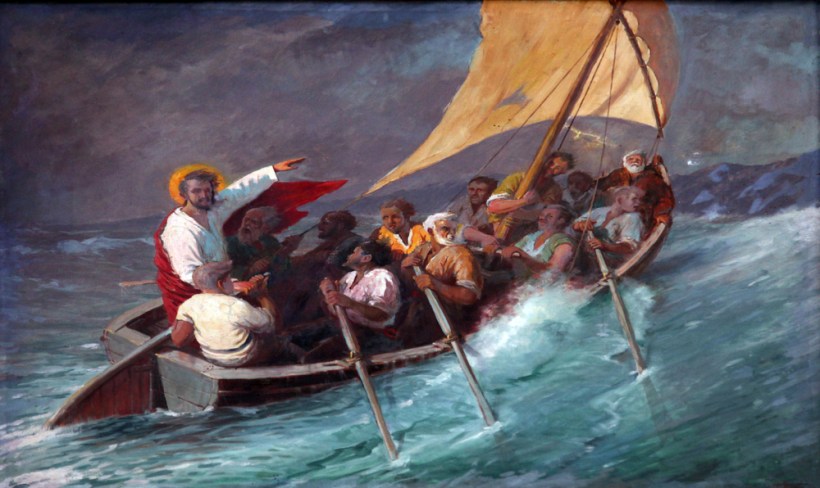
God’s Word doesn’t change, but our perspective of it changes. Think of the radical change of perspective Jesus introduced to the descendants of Abraham! God became man, came to His own people, and they didn’t even recognize Him!

Continue reading “Focusing on Following Jesus in a Chaotic World”

The Story of the Napalm Girl and the Healing Power of Jesus

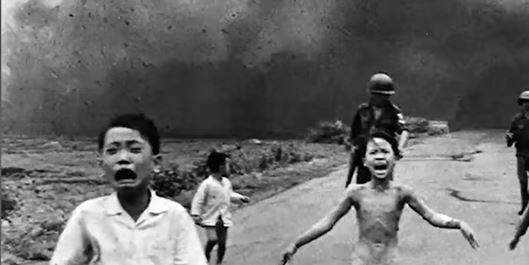
Kim Phuc saw another plane coming in low, fast and loud. She saw the bombs drop, and she froze….


Kim Phuc is “the girl in the picture”, maybe the most iconic picture of the Vietnam War. It’s one of the most memorable wartime photos ever taken. She is the girl in the picture running from a napalm bomb that dropped on her village.

Kim grew up in a happy family that was well off and lived far from the war, or so they thought. Then, the war came to them. The villagers had taken refuge in the local temple, and the South Vietnamese Army had taken up guard to protect them.

One day, however, planes flew overhead. The first plane dropped a marker at the temple. The soldiers, knowing what that meant, screamed for everyone to run. As Kim reached the exit of the temple, she saw another plane coming in low, fast and loud. She saw the bombs drop, and she froze.

Before she knew what was happening, she was surrounded by flames. When she saw her arm on fire, she ran in panic and fear until she couldn’t run anymore.

When she stopped running, a soldier gave her water. She remembers crying, “Too hot! Too hot!” The soldier poured water on her, thinking it would ease her pain, but the water reacted with the napalm, intensifying the pain, and she passed out.

Kim suffered 3rd degree burns over a third of her body. The photographer who took the photo dropped his camera and took her to the hospital.

The hospital didn’t have enough room for her because of the number of injured from the raid on her village. She was in such bad condition they moved her to a morgue. They left her for dead to tend to the living.

Her mother and brother searched for her, found her, and carried her back to the hospital. When her father arrived, she was transferred to a burn clinic in Saigon. She was saved by her family’s determination to help her, but she would have a long, painful road ahead.

Every morning when the nurse took her to the “burn bath” to soften her dead skin to be removed, she cried through the excruciating pain until she passed out. She had a dozen laser treatments. She had eighteen surgeries. She spent years in physical and emotional pain.

Her father spent all his waking hours tending to her with a broken heart. She was in so much pain, he prayed she would die to end her misery. Her parents feared something would happen to them that would leave her alone in her pain.

She lived of course, but she was ashamed of her scars. Friends stopped wanting to be with her. Her family loved her, but she became lonely. She was no longer the beautiful, young girl she once was. She saw nothing but ugliness when she looked in the mirror.

She also lived with trauma and nightmares from her experience. She was filled with bitterness, hatred and anger. She kept asking, “Why me?!” She despaired of life. She felt like only death would give her an end to the suffering and pain.

Continue reading “The Story of the Napalm Girl and the Healing Power of Jesus”