Abraham, Faith, and the Hope Deferred

I ended the article, The Story of Abraham and Isaac Revisited: Here I Am, with a promise to come back to the story of Abraham and Isaac one more time. Recall that Abraham had the intuition to tell Isaac “God would provide” when Isaac asked him where the lamb was for the sacrifice.

We do not know whether Abraham really believed what he told Isaac, whether he was simply being hopeful, or whether he was merely dodging Isaac’s question. We learn in Sunday school that Abraham truly believed it. Perhaps, that is the right answer.

I say that, not because of a Sunday lesson, but because of Abraham’s experience and particularly his experience with God in moments of great doubt and angst. One such moment was described in Genesis Chapter 15. The set up is interesting.

Four kings conspired together to attack Sodom and Gomorrah. They attacked and routed the inhabitants, seizing their goods and carrying off Abraham’s nephew, Lot, and his possessions. (Genesis 14:5-12) Abram (as he was still known at the time) responded immediately with “318 trained men in his household”. He pursued them, routed them, pushing them all the way to Damascus, and recovered Lot and all the goods. (Genesis 14:13-16

Melchizedek, “priest of the God Most High”, pronounced Abraham blessed by “God Most High”, and Abram tithed a tenth to him. (Genesis 14:18-20) After this great victory and blessing from Melchizedek, we read that the word of the Lord came to Abram in a vision:

“Do not be afraid, Abram.
    I am your shield [sovereign],
    your very great reward.”

Genesis 15:1

We might expect Abram to be exalting in the afterglow of his decisive routing of the four kings and blessing by Melchizedek, but he wasn’t. Abram appears to be struggling with the lack of fulfillment of the promises God gave him so many years before.

Abram is human. He has held onto the promise, but his faith is waning. The doubts are rising. Though God had just given him an encouraging word, Abram is focused on the unfulfilled promise:

“But Abram said, ‘Sovereign Lord, what can you give me since I remain childless and the one who will inherit my estate is Eliezer of Damascus?'”

Genesis 15:2

The text continues with Abram still talking. That means God hasn’t responded, and so Abram continues:

“And Abram said, ‘You have given me no children; so a servant in my household will be my heir.'”

Genesis 15:3

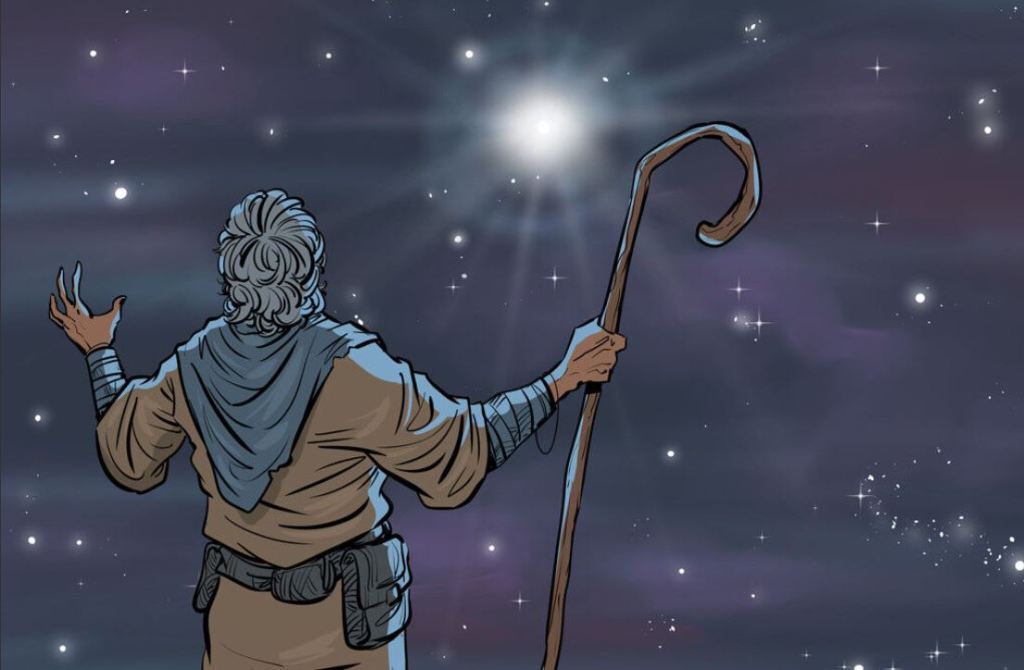
Finally, God breaks in, telling Abraham that his legacy would come from his own flesh and blood, taking Abram outside to look at the sky and telling him his offspring would be like the stars. (Genesis 15:4-5)

We are told that Abram believed in that moment, and God, who sees the hearts of men and knows the thoughts and the intents of mean’s hearts, credited that belief to Abram as righteousness. (Genesis 15:6) God also reminded Abram that He brought Abram out of Ur to the land Abram stood on to give it to him. (Genesis 15:7)

Though Abram believed, and though God had just given him more assurance, Abram kept pressing:

But Abram said, ‘Sovereign Lord, how can I know that I will gain possession of it?’”

Genesis 15:8

It wasn’t for lack of belief that Abram kept pressing God. We were just told Abram believed. In fact, this was the very moment that God credited Abram with righteousness for his faith!

At the same time, Abram was pressing God for something more than a bare promise. Doubt is not the absence of faith, and pressing God for assurance is not a lack of faith. I hear echoes here of another father who cried out for his son when Jesus promised deliverance, “I believe; help my unbelief!” (Mark 9:24)

God doesn’t rebuke Abram, and he doesn’t take away the righteousness God had just credited to Abram. In the same vein, Jesus didn’t rebuke the father who asked for help in his believing unbelief. Jesus commended him, and God tells Abram,

“Bring me a heifer, a goat and a ram, each three years old, along with a dove and a young pigeon.”

Genesis 15:9

If you are scratching your head right now, that is good! God’s response begs for some understanding and insight. Just as Abram pressed God, we should be pressing right now for understanding.

Continue reading “Abraham, Faith, and the Hope Deferred”

The Government Will Be on His Shoulder, But What Does it Mean that the Kingdom of God Is Now

How should Christians orientate themselves to the world in which we live and conduct ourselves in the political and governmental spheres of present life?

The following passage from the Prophet, Isaiah, isn’t just a platitude to recite at Christmas:

For to us a child is born,
    to us a son is given;
and the government shall be upon his shoulder,
    and his name shall be called
Wonderful Counselor, Mighty God,
    Everlasting Father, Prince of Peace.

Isaiah 9:6

Jesus has many names, but the one used (perhaps) the most is Lord. All authority on heaven and earth has been given to Jesus. (Matt. 28:18) Christians revel in that statement. In the next breath, after Jesus said this, he said:

“Therefore go and make disciples of all nations….”

Matthew 28:19

When we think of the authority and lordship of Jesus, we might jump immediately to the ultimate conclusion – of Jesus ruling and reigning at the right hand of the Father. When Jesus told the disciples that all authority had been given him, however, his instruction to follow does not take us where our minds might be tempted to go. He did command us to take over the government or set up a new government.

His charge to the disciples was to go to all nations and make disciples.

That is still his instruction at this time.

Perhaps, we can be excused for forgetting the last instructions he gave after almost 2000 years. Or maybe not…. He was pretty clear about it. We also have the following reminder from the Apostle, Peter:

“But do not forget this one thing, dear friends: With the Lord a day is like a thousand years, and a thousand years are like a day. The Lord is not slow in keeping his promise, as some understand slowness. Instead he is patient with you, not wanting anyone to perish, but everyone to come to repentance.”

2 Peter 3:8-9)

Of course, the government will ultimately be committed into His hands. (Is. 22:21) He will ultimately make a footstool of all his enemies. (Ps. 110:1) Jesus will ultimately sit on the throne with throngs of people proclaiming, “Holy, holy, holy. Lord God Almighty!” (Rev. 4:2)

Jesus will be seen as the Lion of Judah and the Root of King David (Rev. 5:5) at that time with a sharp sword coming out of his mouth, striking down the the nations, ruling them with an iron scepter, and treading “the winepress with the fury of the wrath of God the Almighty!” (Rev. 19:15)

But, that time is yet to come. We aren’t there yet.

Even in John’s vision of this future time, the most common description of Jesus is as a Lamb (28 times). Jesus is first the Lamb who was slain, and that is the most prominent name he is given, even in the Book of Revelation.


We have yet to experience Jesus, the Lion of Judah, with sword in his mouth, a scepter in his hand, and a winepress at his feet. That time has not yet come.

Meanwhile, Jesus came not to Judge the world, but to save the world. (John 12:47) Jesus came not for the healthy, but the sick; and Jesus presently desires mercy. (Matt. 9:12-13)

Jesus is not yet the Judge, treading a winepress with the fury of the wrath of God Almighty; He is the Good Shepherd searching for the lost sheep. He is not presently in the business of condemning the world; he is currently in the business of seeking and saving the lost. (Luke 9:10)

So, we should be.

The charge that Jesus gave us – to go and make disciples of all the nations – is still our marching orders. It hasn’t changed.

No matter how close we think we are to the end, God is still currently in the mode of being patient, not wanting anyone to perish, but wanting everyone to come to repentance.

We are easily distracted by many things. We can be so obsessed about the past and we can be so forward-thinking that we forget about the present. We can be so focused on the end times that we do not understand the times in which we live.

We may be close to the end times, but we may yet be far off, by human reckoning. To God, a day is like a thousand years, and a thousand years is like a day. (2 Pet. 3:8) Jesus said we would not know the day or the hour. Most importantly, we are still in the times in which Jesus told us to make disciples of all nations.

He didn’t tell us to make enemies of the nations. He didn’t tell us to set up new nations. He didn’t tell us to take over nations. He said, “Go and make disciples of all nations.”

This, so far, is just a preface for talking about politics and government in the 21st Century. Yes, the government will be on the shoulders of Jesus, but what of the Kingdom of God now? How should Christians orientate themselves to the world in which we live and conduct ourselves in the political and governmental spheres of present life?

Continue reading “The Government Will Be on His Shoulder, But What Does it Mean that the Kingdom of God Is Now”

The Story of Abraham and Isaac Revisited: Here I am!

I set the stage for digging deeper into the story of Abraham and Isaac in The Story of Abraham and Isaac Revisited: Introduction. Abraham’s faith is the lesson we all learned in Sunday school. Faith is the basic place we start, but Abraham’s faith is only scratching the surface of the story.

We often view this story as simply a test of Abraham’s faith, which it is, but it’s much more than that. This story is not simply about Abraham’s faith, because what we learn through Abraham’s faith may be just as important, if not more important.

Think about it: Does God need to test Abraham to know who he is? God already knows what kind of man Abraham is. He knows our thoughts from afar and the words we speak even before we say them! (See Psalm 139) That should give us a clue that there is more to this story, so let’s go back and see what else there is to see.

Many decades before, we are told that Abraham believed God, and his faith was credited to him as righteousness. When God called Abraham to leave his country, his people, and his father’s household – which was his legacy – and God said He would make a great nation of Abraham’s descendants, Abraham left – though he didn’t even knowing where he was going! Though he was 75, Abraham responded with faith and went. (Gen. 12:1-4)

Many years and adventures later, Abraham was still childless, living in the land God showed him, and Abraham still believed the promise God made to him, though he had nothing to show for it. Abraham’s faith was already counted to Abraham as righteousness, but the promise Abraham believed was not yet realized. (Gen. 15:1-6)

Isaac was not born to Abraham and Sarah until Abraham was 100 years old, a quarter century after the initial promise was made. (Gen. 21:1-7) All the while, Abraham had faith. The story of Abraham and Isaac is not just a story about Abraham’s faith, but about how God is revealed through Abraham’s faith.


Though the story begins with the statement that God was testing Abraham, it doesn’t say God was testing Abraham’s faith. (Gen. 22:1) Perhaps, God tested Abraham, at least in part, to show Abraham (and us) who God is!

I will explain, but first we need to understand something of the Ancient Near East culture Abraham lived in. A key element of this story is the fact that child sacrifice was a common and universal practice in the Ancient Near East.

Abraham would have been intimately familiar with how people understood the gods of his culture. They were considered unpredictable, arbitrary, and capricious, demanding allegiance and sometimes even child sacrifice to be appeased.

What Abraham may have sensed, but didn’t fully understand, was that his God was not like the other Ancient Near East gods. The character of God, as revealed to Abraham, would have been a complete paradigm shift from what he and his culture believed about gods.

In our western mindset, we might expect God to announce at the outset who He is: we might expect Him simply to tell us. In a more eastern mindset, we they expected to discover truth through their lived experience and the lived experiences (stories) of other people.

Similarly, it seems, God doesn’t simply tell us who He is; God desires to show us. To “know” God is not simply an intellectual exercise; it is a lived experience. Thus, all of Abraham’s life is an example for us, and we learn who God is through Abraham’s lived experience (and our own).

God reveals Himself to Abraham experientially through Abraham’s faith, and He reveals Himself to us through Abraham’s story and our own faith. If you haven’t read the introductory article yet, I encourage you to do it now at the link above.

With this basic understanding, I encourage you to read Genesis 22:1-14. Then, we get into the details of the story.

Continue reading “The Story of Abraham and Isaac Revisited: Here I am!”

What Does It Mean to Be Known By God

What does it mean that the Lord knows the way of the righteous?

“Therefore the wicked will not stand in the judgment, nor sinners in the congregation of the righteous; for the Lord knows the way of the righteous, but the way of the wicked will perish.” Psalm 1:5‭-‬6 ESV

What does this mean? The Lord knows the way of the righteous. Doesn’t God know everything? Doesn’t God know the way of the wicked also?

God sees everything, and He knows everything. God numbered the stars. (Ps. 147:4) God doesn’t just number the stars; He knows each star by its own name! (Is. 40:26) He can count every hair on every person’s head. (Luke 12:7)

God knows our thoughts, our paths and our ways, and He even knows the words we speak before we say them. (Ps. 139:2-4) Why does Psalm 1 say God knows the way of the righteous (and not the wicked also)?

He certainly knows the way of the wicked. Nothing is hidden from God. (Luke 8:17 & Heb. 4:13) The statement that God knows the way of the righteous doesn’t necessarily mean that He doesn’t know the way of the unrighteous. I think He certainly does.

This passage is not talking about bare knowledge. Clearly God is all knowing. This is not a statement contrary to the omniscience of God. God must know the way of the wicked to judge them, which this verse says He will do.

This statement is about a different kind of knowing. It is a statement of familiarity and identification. God is familiar with and identifies with the righteous because the righteous have adopted God’s ways. God knows them in the sense that he knows his own ways. 

It is a statement of intimacy. God is intimate with the righteous. The righteous turn to God in good times and bad. They have opened themselves to God, and God knows them as someone knows a confidant.

It is a statement of connection. God connects with the righteous. The righteous are aligned with God in their ways. Thus, God knows them. Jesus prayed that we would be one with him as he is one with the Father. (John 17:20-23) God establishes connection with the righteous.

What connection does this knowledge have with judgment, perishing, or eternal life? (Which is the focus of the majority of this passage ) God’s knowing is somehow tied into the judgment, the wicked perishing, and implicitly the righteous not being judged and not perishing.

God is eternal. He always is, always was, and always will be. If we are aligned with God, connected with God, we partake with God in his eternal life through Christ. This was the good news (Gospel) that Jesus preached.

Abraham was counted righteous by the grace of God because of his faith (trust and commitment to God). Through Abraham’s seed came Jesus, his seed, who blessed all the nations of the earth.

In Jesus was God incarnate, emptying Himself of His glory and privilege (Phil. 2:5-7) to “connect with” us on our level. In Jesus, God demonstrated His love and character for us to see and connect with. (1 Jn. 1:2)

That blessing God promised to Abraham is the right to be called sons of God (Jn.1:12), to be born again (Jn. 1:13 & Jn. 3:3-8), to die with Christ and to live eternally in him in connection with the Father. (Rom. 6:6-8)

I think of Paul’s great words, “Now I know in part; then I shall know fully, even as I am fully known.” (1 Cor. 13:12) These are words of intimacy and personal connection. “Then we shall see face to face.” (Id.) This was God’s desire and his plan all along that we might have personal intimate connection with him and He with us.

God not only desires to “know” us – to have intimate connection with us; He desires to be known by us!

God the Father can seem distant and unapproachable. but He became one of us to connect with us and invite us to connect with Him in the form of Jesus. Jesus, in turn, leaves us the Holy Spirit, who is God who remains with us in intimate form who connect with us, and provides a way for us to connect with Him.

The Spirit is God’s guarantee that he will give us the inheritance he promised…. (Eph. 1:14)

[He] has given us the Holy Spirit in our hearts as the guarantee of all that he has in store for us. (2 Cor. 1:22)

The Spirit himself bears witness with our spirit that we are children of God…. (Rom. 8:16)

The God Abraham Believed In

Abraham believed in a transcendent God at a time when people still made gods of wood and stone.

I have been busy of late (what else is new?), so I haven’t written much, though I always have thoughts swirling in my head that I would like to get “down on paper”. Today, I have just a short thread I want to get out of my head.

Paul speaks of the God Abraham believed in as the God “who gives life to the dead and calls into existence the things that do not exist.” (Romans 4:17 ESV)

Many are the gods that people have believed in since time immemorial. From gods made of wood and stone, to trees, mountains, the sun and other natural objects, to the pantheons of Greek and Roman gods, the number of gods people have believed in are legion.

Today, Hindus still have a panoply of gods, and pagans still worship objects of nature (or simply nature, itself). Christians and Muslims have whittled the legion down to one, and atheists believe in, simply, one less God than they. Other than the atheists of the world, most of humanity believes in something transcendent that is labeled divine.

The human drive is to attempt to discern the transcendent. Most agnostic believe that something transcends the natural worlds, though they won’t dare to divine what it is. Even some atheists hold out some form of believe in transcendence, even if they ultimately determine it is illusory. They acknowledge, like Stephen Hawking did, that it is helpful to believe it.

There is mystery in the transcendence we sense breaking into the world. There is intrigue. There is anticipation, and there is hope in the sense of transcendence that lingers often on the blurry edges of our mundane existence, sneaking into it at times leaving us breathless and wondering.

I often allude the curious statement in Ecclesiastes 3:11 that God put eternity in the hearts of men:

“He has made everything beautiful in its time. He has also set eternity in the human heart; yet no one can fathom what God has done from beginning to end.” (NIV)

If God didn’t put a yearning for transcendence into the human heart, where does it come from? I believe that is a rhetorical question.

For many, the idea of a transcendent being or reality is just too much to grasp. It is surrounded by too much uncertainty and requires too much strain and effort to attain even a dark understanding of it that they determine the simpler, easier and preferable course is to remain agnostic or to dismiss the idea of transcendence altogether.

Others have taken the leap to embrace one understanding or another and have committed themselves to that understanding. Thus, the legions of gods that have existed in the constructs of human thought. And that might just be what all or most of them are – constructs of human thought, attempts at putting a “face” on the transcendence we sense in he universe.

One man, Abraham, believed in a God “who gives life to the dead and calls into existence the things that do not exist.” This was a God above all gods. This was a God who spoke the universe into existence.

This was a God who Paul and other first century Judeans believed entered into the world He created in the form of a created being in whom He imprinted His own image. God could enter that being because He created room for Himself in that being. The writer of Hebrews says:

“[Jesus] is the radiance of the glory of God and the exact imprint of his nature…. (Heb. 1:3)

In very recent times, our best scientists have determined that the universe had a beginning. It came into existence a finite time ago. Stephen Hawking demonstrated the necessity of “singularity” (a beginning) mathematically.

The trio of Arvind Borde, Alan Guth and Alexander Vilenkin determined mathematically that any universe that is expanding had a beginning (a singularity) a finite time ago. Thus, a point of singularity, a beginning, would apply to any number of multiverses.

The fact that our universe, and any universe like ours that exists or could possibly exist, had a beginning a finite time ago raises the specter of the transcendent – a Beginner who initiated our universe into existence.

This is the God Abraham believed (a God who “calls into existence the things that do not exist”) in at a time when people were still making gods out of wood and stone. Though the entire world he knew thought they could conjure up and appease gods they made, Abraham believed in the kind of God that is utterly transcendent and which could create a universe out of nothing by speaking it into existence.

Abraham also believed in a God who could raise dead things to life. Paul in the first century, and all the followers of the man, Jesus, claimed that Jesus is the vindication of that belief. That Jesus was God who became man – emptying Himself (Phil. 2:7) to take on the form of a being (man) who God created in His image. (Thus, it was a good fit!)

That man demonstrated the character of God for us in the way he lived out his life. He reflected God’s love for us by his willingness to give his own life for us. He gave us the ultimate, transcendent hope by rising from the dead in that same body and inviting us to follow him.

Now, Paul says, we only have a partial understanding of that God who would stoop to come to us and demonstrate His love for us, but there will come a day when we shall know as we are fully known:

“For now we see only a reflection as in a mirror; then we shall see face to face. Now I know in part; then I shall know fully, even as I am fully known.”              (1 Corinthians 13:12)

We yearn for Him because of the eternity that He set in our hearts, and we have some understanding of him because of His image that He placed in us. We can put a “face” to God in the life of Jesus, and we have hope that we will see Him “face to face” because of the resurrection of Jesus in human body he inhabited.

He holds out the promise to all of us that He made through Abraham thousands of years ago – a promise that Abraham could not even articulate other than to say that, through him and his descendants, God would bless all the people of the earth.

And Jesus left for us the Holy Spirit, which is God in the form of Spirit who is available to come into and reside in each one of us (John 14:15-21) who have invited Him in to reside with us to bear witness with our spirits that we are children of God. (Romans 8:16)

These things characterize the God of Abraham who was revealed more completely through the incarnation of Jesus. These things set one conception of God apart from all other conceptions of gods, and even the conceptions of one god that remains aloof. The hope of the God of Abraham is Christ in us!

The Son is the image of the invisible God, the firstborn over all creation. For in him all things were created: things in heaven and on earth, visible and invisible, whether thrones or powers or rulers or authorities; all things have been created through him and for him. He is before all things, and in him all things hold together…. [and he is] Christ in you, the hope of glory.” (Colossians 1:15-17, 26)