God, Work Ethic, and the Children of God

We believe in what we can earn, and the justice we demand is commensurate with our ability to gain what we deserve. Not so with God. Or so it seems….


The parable of the workers in the field exposes an attitude and way of thinking that gets in our way of knowing and understanding God and our relationship to Him. This parable is confusing and nonsensical to our naturally prideful and selfish inclinations.

The parable of the workers in the field begins with some people at the break of day who agree with the owner of a field to work for one denarius (a day’s wage). Throughout the day, the owner went out and solicited more workers to work in his field.

Workers began at different times during the day. Some workers didn’t even begin to work until late-afternoon. When the day was over, the owner of the field paid everyone the same wage (one denarius), regardless of when they started.

The workers who labored all day were upset. They challenged the owner, saying “Why are we being paid only one denarius when the workers who didn’t work the full day are being paid the same?” Some of them didn’t work more than a couple hours!

The owner’s answer to their question is something that typical Americans have a hard time understanding and accepting: he said, “I paid you what you agreed to work for. If I want to be generous to everyone else, what is that to you?” (See Matt. 20:1-16)

But, it isn’t fair! Right? Isn’t that the natural response we have? Nothing gets the blood rushing to the head like someone getting more than what I got! Especially, if they didn’t earn it like I did!!

As a person who grew up Catholic, these things did not make sense to me either. People should get what they deserve, right? Naturally, people should earn their own way. I would not ask for more than what I deserve, but I have a hard time with people getting the same as I do when they work less than me.

We think this way generally as Americans with our rugged individualism, labor unions, and the American Dream (which may have more to do with hard work than dreaming to hear someone tell of it).

The message that comes through this parable load and clear is that God doesn’t think like we do. God does what He wants, or (at least) He seems to have a different measure of fairness than we do.

Romans in the day of Jesus weren’t completely different than modern Americans, though they valued power and might, perhaps, more than we do. They despised the poor and vulnerable. The people who were able to exert their power and influence over other people were valued (and envied) most. This parable wouldn’t have made sense to romans either.
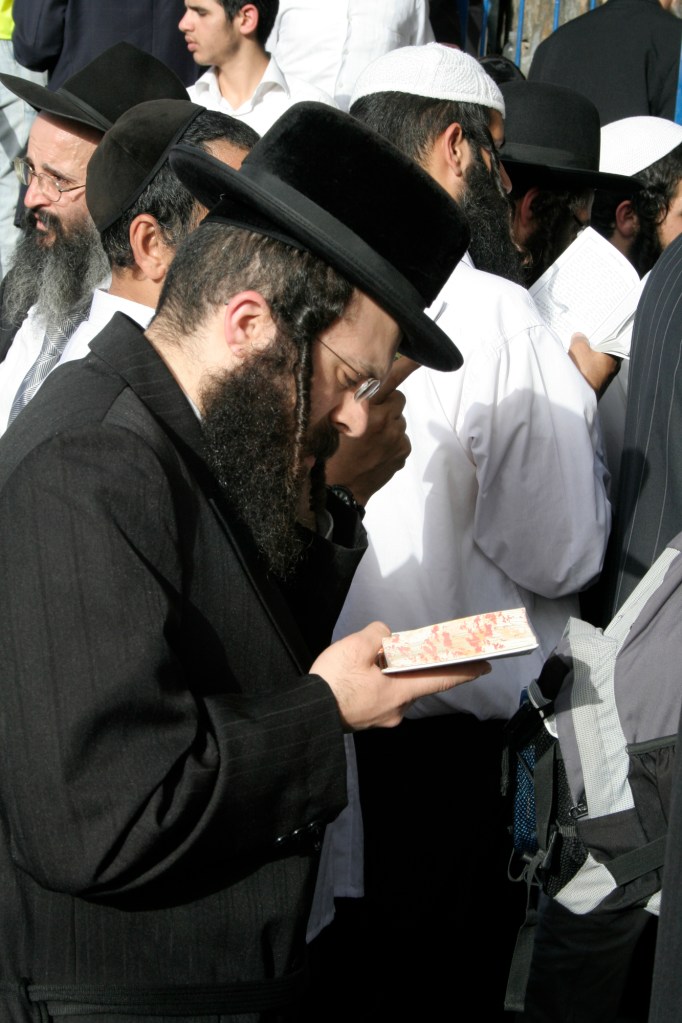
The Jews in Jesus’s day were proud of their heritage. They earned their status with millennia of adherence to the Mosaic Law. They bristled at the idea that upstart Gentiles might come along and gain some interest in God’s kingdom.

This parable made little sense to First Century Hebrews also. Maybe we all have our cultural barriers to this kind of message.


I image Jesus was a favorite son. He was the good young man, mostly polite, and obedient He was keenly interested in Scripture and all things pertaining to religious life that was the heartbeat of any Jewish community.

He was also not quite like the other young men, a bit odd, maybe a bit too into his heritage, if that is possible. They were all good Hebrews, but he seemed to take it a bit far, even for them.

Maybe they couldn’t put their finger on it, but people seemed to agree that he made them feel as if he thought he had an inside track. He sometimes made them feel like outsiders.

Jesus traveled one day to Nazareth where he grew up. He entered the synagogue on the Sabbath. (Luke 4:16) He stood up in front of his lifelong friends and neighbors, asked for the Isaiah scroll, and read from it:

“The Spirit of the Lord is on me,
    because he has anointed me
    to proclaim good news to the poor.
He has sent me to proclaim freedom for the prisoners
    and recovery of sight for the blind,
to set the oppressed free,

to proclaim the year of the Lord’s favor.”

Luke 4:18-19

When Jesus finished reading from the Isaiah scroll, he rolled it up, handed it back and sat down without immediate comment. All eyes were on Jesus during that pregnant pause. Then Jesus concluded:

“Today this scripture is fulfilled in your hearing.”

Mic drop moment. Followed by a moment of stunned silence. We might say they were flabbergasted. At least at first.

Jesus had a remarkable way about him that made people wonder about him, even if they were not completely comfortable with him. He had always seemed older than his age, but he spoke with insight and certainty like an elder of great age, experience, and learning.

They knew Jesus, though. They knew where he worked. He did not have the credentials fit for his seeming attitude. Nazareth was a forgotten, insignificant place in the Hebrew community, though it wasn’t far from more beaten paths. Jesus was always the enigma.

They knew Joseph was a quiet and simple man. He never called attention to himself. Mary always glowed with the pride of a mother who sees more in her children than anyone else on earth, especially in Jesus. No one could blame her.


As often was the case with Jesus, they didn’t know quite how to take him. “Good news to the poor”, “freedom for prisoners”, “sight for the blind”, and “the year of the Lord’s favor”: this was a good word. All good Hebrews have a hopeful expectancy for these things, even as they always seem just out of reach.

Still, they always hope. That’s what they do. They cling to God’s promise

That Joseph was always so quiet highlighted to them all the more how remarkable Jesus was that he seemed to have such a grand, if not slightly delusional, perspective. They were polite and appropriately appreciative, but they didn’t even have time to wonder what the elders had planned for Sabbath that day, when Jesus interrupted their thoughts. This time he dropped a grenade:

“Surely you will quote this proverb to me: ‘Physician, heal yourself!’ And you will tell me, ‘Do here in your hometown what we have heard that you did in Capernaum.’” (Luke 4:23)

What… is… he… saying? “Is he talking about himself? … Really?!

They were well aware of the zealots who riled people up in their area in recent years. Those trouble makers caused serious problems for good Hebrews just minding their own business and trying to get by.

Their minds played over the words Jesus just read: “The spirt of the Lord is on me, because he has anointed me.” …. “Don’t tell me he believes he is God’s anointed!” This guy has a messiah complex!

As if that were not provocation enough, Jesus really pushed them over the edge with what he said next:

“Truly I tell you,” he continued, “no prophet is accepted in his hometown. I assure you that there were many widows in Israel in Elijah’s time, when the sky was shut for three and a half years and there was a severe famine throughout the land. Yet Elijah was not sent to any of them, but to a widow in Zarephath in the region of Sidon. And there were many in Israel with leprosy in the time of Elisha the prophet, yet not one of them was cleansed—only Naaman the Syrian.” (Luke 4:24-27)

Not only did Jesus appear to be claiming he was God’s anointed one; he seemed to be claiming that God cared more about the Gentiles than his own people! What else could be the point of referring to the Elijah visiting the foreign widow and Elisha healing the foreign general?

Continue reading “God, Work Ethic, and the Children of God”

Why Should We Not Want to Make a Deal With God?

If you are bargaining with God for some immediate relief in your life, your view of God is too small.

Photo by Peter Avildsen

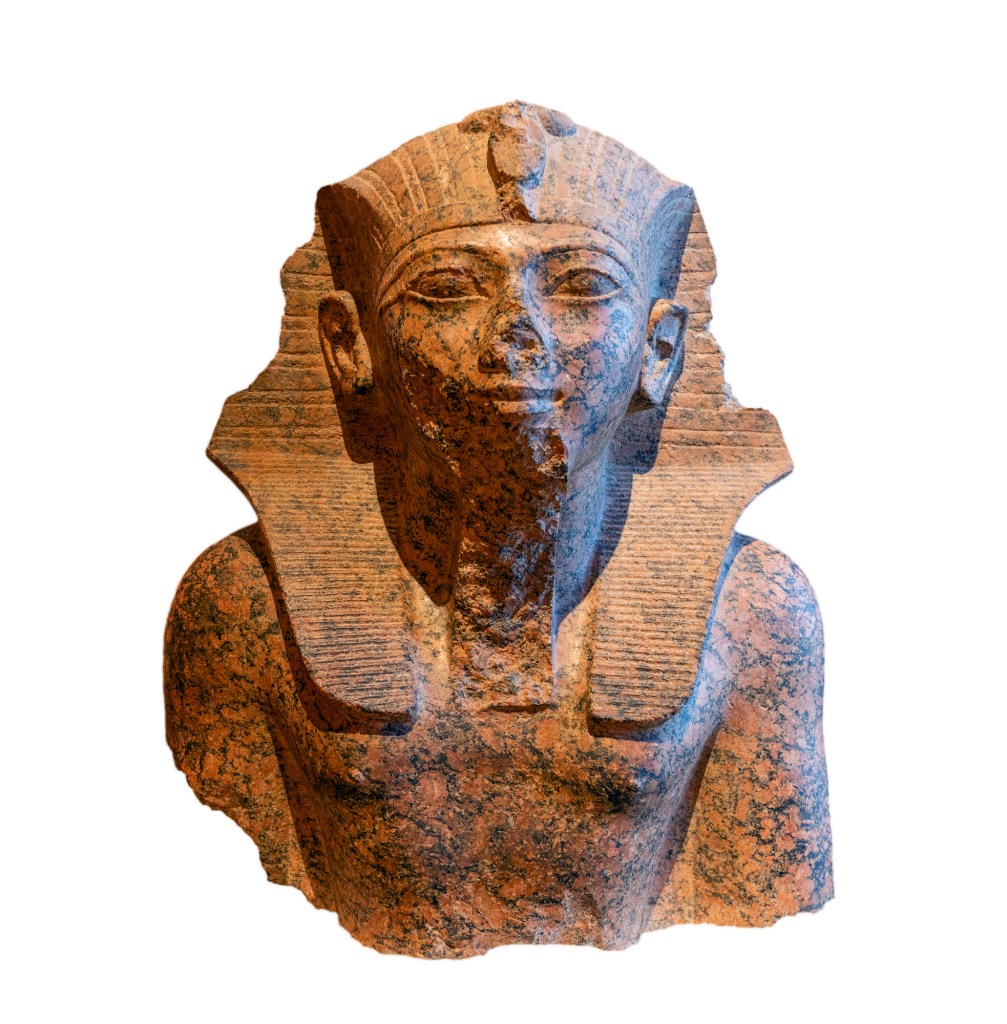
I have been reading through parts of Exodus. Today, I continued reading about Moses and Pharaoh. Pharaoh hardened his heart to the plea of Moses to let the Israelites travel three days into the wilderness to meet with God, and Pharaoh did not take the signs Moses performed to heart.

Up to this point, Pharaoh’s magicians matched all the signs Moses and Aaron performed, so apparently didn’t take those signs seriously. Aaron threw his staff to the ground, and the magicians did the same. It didn’t matter that Aaron’s staff swallowed up the magicians’ staffs. The magicians matched Moses and Aaron sign for sign, and Pharaoh paid no heed to them.

Moses turned the water of the Nile to blood. Pharaoh’s magicians did the same, “and Pharaoh’s heart became hard”, it says. (Ex. 7:22) He turned and walked away into his palace, and he didn’t take it to heart.

Aaron stretched out his arm with his staff and caused frogs to emerge all over the land. The magicians did the same, and Pharaoh was not moved, at least not right away.

Later, Pharaoh asked Moses and Aaron to “Pray to the Lord to take the frogs away…, and I will let your people go….” (Ex 8:8) Moses did it, “But when Pharaoh saw that there was relief, he hardened his heart and would not listen….” (Ex. 8:15)

Moses responded by having Aaron summon a plague of gnats. This time the magicians could not duplicate what Moses did, and they said to Pharaoh, “This is the finger of God.” But, “Pharaoh’s heart was hard….” (Ex. 19)

Notably, the Pharaoh’s heart became hard, or he hardened his heart, after the previous displays. After the plague of flies, however, the Pharaoh’s heart was hard.

Pharaoh’s heart was already hard at this point. He had been hardening his heart all along, but Pharaoh’s heart was already hard by the time Moses and Aaron summoned the plague of flies and the plague of flies “ruined the land”.


Even though Pharaoh’s heart was hard at that point, “Pharaoh summoned Moses and Aaron and said, ‘Go, sacrifice to your God here in the land.'” (Ex. 8:25)

Sometimes even people with hard hearts toward God will have moments in which they seem to believe, or seem to repent, but there is no heart change. They desire to be delivered from their dire circumstances, but nothing more. It isn’t really a true change of heart, and it doesn’t last.

Moses insisted that the people be allowed to leave the land and go into the wilderness, but “Pharaoh said, ‘I will let you go to offer sacrifices to the Lord your God in the wilderness, but you must not go very far. Now pray for me.”’ (Ex. 8:28)

People often make deals with God. People bargain for relief from the pain or difficulty that brings them finally to God as a last resort, but they turn to God out of desperation, and they don’t really mean to keep their part of the bargain. When people are “forced” to the point of praying to God as a last resort, they may not come willingly, and their hearts many not be changed if relief is all they want.

This was the case with Pharaoh:

“Then Moses left Pharaoh and prayed to the Lord, and the Lord did what Moses asked. The flies left Pharaoh and his officials and his people; not a fly remained. But this time also Pharaoh hardened his heart and would not let the people go.” (Ex. 8:‬30‭-‬32)

Pharaoh didn’t understand that the God of Moses and Aaron is the God who gives all people life and breath. He saw “their” God as a means to an end: a possible solution to the immediate relief he desired. Pharaoh didn’t perceive God as his God too!

We are often tempted in the same way to view the Bible, church, and God Himself as a means to our owns temporary ends. We aren’t looking down the road. We don’t appreciate that the universe, this earth, our world and our very beings are wholly dependent on God!

Once we get the relief we want from the immediate difficulty we are facing, it’s easy for us to harden our hearts again. Once we are out of trouble, we resort back to a hard heart and a stiff neck. There is no lasting change.

This is a human tendency we all have. All people can be “religious” at times. Many people go to church on Sunday, or once in a while, maybe on special holidays, but they live in Egypt the rest of the time.

We can be religious in the same way that we might carry a lucky rabbit’s foot or consult a medium. We want something. We want good fortune and good health, but we don’t want to change.

God should not have to make a deal with you. If you are bargaining with God for some immediate relief in your life, your view of God is too small, and you are missing the mark!

Continue reading “Why Should We Not Want to Make a Deal With God?”

The Surprising Context of the Idea that God’s Ways Are Not Our Ways, and God’s Thoughts Are Not Our Thoughts

How many times have you heard someone say, “God’s thoughts are not our thoughts, and His ways are not our ways”? Think about the context in which those words tend to be spoken….

The death of a loved one, a difficult time you are going through, plans that don’t work out, change you long for doesn’t happen, or unexpected change throws your life into chaos: these are the kinds of circumstances in which these words are often spoken.

Bad things are happening, or the good things we hope for seem never to come. That’s when someone says, “You know, God’s ways are not our ways.” The implication is that we should trust Him anyway, and that is good advice, but it’s often not very comforting in the moment.

Speaking those words in those kinds of circumstances also takes them completely out of the context in which they were spoken by the Prophet, Isaiah, whose words they are:


“Seek the Lord while he may be found; call to him while he is near. Let the wicked one abandon his way and the sinful one his thoughts; let him return to the Lord, so he may have compassion on him, and to our God, for he will freely forgive. 

“’For my thoughts are not your thoughts, and your ways are not my ways.’ This is the Lord’s declaration. ‘For as heaven is higher than earth, so my ways are higher than your ways, and my thoughts than your thoughts.'”

Isaiah 55:6-9 CSB


Until today I had not considered these verses in the context of the previous two verses. Or in the context of the whole chapter, for that matter. In fact, Isaiah 55 begins with the words, “Come, all you who are thirsty!”[i] I encourage you to read all of Isaiah 55, which I have provided at the end of this article.

But the focus of this article is the two verses spoken right before the enigmatic words of comfort that we often hear: “For my thoughts are not your thoughts, and your ways are not my ways.”

These verses are spoken in the context of encouragement to seek God and return to him so that God may have compassion on you, for God freely forgives. This is the context for the statement that God’s thoughts are not our thoughts, and His ways are not our our ways.

The implication here is that God forgives where we are not likely to forgive. God has compassion where we fail to have compassion. God freely forgives where we have much difficulty forgiving, and He has compassion when we would not have compassion.

That God’s thoughts are higher than our thoughts is often mentioned in the context of things we do not understand about life, such as the death, tragedy, catastrophe, and hopelessness. We think of the negative things that happen to us and the good things for which we hope that never seem to come about.

While it’s true that God sees things we do not see, and He has purposes that He is working out in history, throughout the earth, and even in our own loves that we do not understand, Isaiah’s statement that God’s way are not our ways, and His thoughts are not our thoughts, was not spoken in that context at all.

God’s thoughts are not our thoughts because He has compassion that we do not have and do not understand! God’s ways are not our ways because God freely forgives those who turn to Him.

Thank about that: This means that God is much more compassionate and forgiving than we understand or give him credit for.

We sometimes fixate on God’s judgment. We struggle with God’s wrath and the problem of pain and suffering in the world. In these contexts is when we heard it said that God’s thoughts are higher than our thoughts, and His ways are higher than our ways.

God is much more compassionate and forgiving than we understand or give him credit for

The real import of these versus, however, it’s not that God is mysterious in some dark and tragic way, but that God is mysterious in a compassionate and forgiving way!

We may actually have more difficulty understanding the compassion of God, than the wrath of God sometimes. We may have more difficulty understanding the forgiveness of God than the judgment of God. We may not like the idea of God’s wrath or judgment, but we somehow grasp it in a twisted kind of way, even if only to hold it against him.

Yet, we sometimes struggle to understand His great compassion and forgiveness.

Why would God empty himself of His glory, give up His divine privileges, make Himself nothing (Phil. 2:7), and enter into His creation in the most vulnerable way? Why would He humble Himself in that way and be obedient like a servant (Phil. 2:8) to submit himself to the worst that his own creation could do to Him? Humiliating and excruciating death on a Roman cross!

And then, after all of that, the words of Christ, who was God Incarnate, spoken as he died on a Roman cross are the most mysterious thing we could ever imagine:” Father forgive them, for they know not what they do.” (Luke 23:34)

Continue reading “The Surprising Context of the Idea that God’s Ways Are Not Our Ways, and God’s Thoughts Are Not Our Thoughts”

Lift Up Your Eyes for Perspective and Purpose

Though God’s ways are not our ways, and his thoughts are not our thoughts, God invites us into his perspective and purpose.

We live “under the sun”, as the writer of Ecclesiastes describes our existence, filled with existential angst.  We live year by year, month by month, week by week, day by day, and moment by moment. The inertia of our lives is focused on the here and now, with our dying always looming in the near distance like a great mountain range rising up to the clouds we cannot conquer.

Our perspective is limited. It is finite. We stand at any given time on a small planet in a small solar system in one of billions of galaxies that exist in a universe so expansive we struggle to comprehend it. We stand “under the sun”, and our perspective, therefore, is limited.

“As the heavens are higher than the earth,
    so are my ways higher than your ways
    and my thoughts than your thoughts.”

(Isaiah 55:9)

That verse from Isaiah is a way of saying that God has a different perspective than we do. God has His own purposes, and He invites us to consider the difference between His perspective and purpose and ours. He desires for us to seek to understand His perspective and to align with His purpose.

When Jesus says my yoke is easy and my burden is light, I believe he was encouraging us, at least in part, to attempt to understand and adopt his perspective and his purpose. Our momentary lives include existential angst, dread, suffering and pain, but God has a purpose and a plan for us that is greater than what we see and experience under the sun, and that purpose is liberating!

I see three concrete examples in scripture of the difference between God’s perspective and purpose and ours. (I am sure there are many more.) As God invites us to consider that His thoughts are not our thoughts, and His ways are not our ways, I think it is appropriate to consider and meditate on these three examples.

Continue reading “Lift Up Your Eyes for Perspective and Purpose”

Perspective: As the Heavens Are Higher than the Earth

We can perceive and feel our way to understand that time had a beginning at the point of a quantum vacuum, but we can go no further even to perceive, but for speculation, what lies beyond. We are left to grasp by pure faith that God initiated the universe into being.

Photo from the James Webb Telescope

Perspective can make all the difference in the way we perceive and understand anything. Our view from a position under the canopy of a dense forest will be different than our view from a drone in the same location flying over the same forest canopy. The higher we fly that drone, the more our perspective expands and understanding of our location grows.

From a great height, we see the expanse and contours of the forest, the streams and rivers that run through and beyond it, the mountains in and the oceans in the distance where the forest transitions into the hills, the foothills, the mountains slopes and the peaks in one direction, and the openings, meadow, plains, and coastlands in another direction.

The higher we go and farther out we see, the more we see and understand the forest in relation to other geographical features that surround it and the savannas, valleys, deserts, and coastlands and oceans in the grater world beyond the forest.


“As the heavens are higher than the earth, so are my ways higher than your ways and my thoughts than your thoughts.”

Isaiah 55:9


This verse has become so often quoted that it might seem trite to us. “Yea, yea!” we say. “We need to trust God. I get it.”

It’s hard to grasp and trust in the perspective God has from our place where light filters sparingly through the forest canopy. Our perspective is not much better in the barren expanse of a vast desert or on the waves of a vast ocean as far as the human eye can see. Knowing that the forest canopy, barren desert or vast ocean gives way to a different reality can seem like a small consolation from where we stand.

We have a harder time grasping and appreciating that God sees out over the universe where our planet sits tucked among other planets circling the sun in an opportune place in the Milky Way solar system where we peer out, however tentatively, into an expanse of other solar systems stretching out in all directions beyond our capabilities even to observe.

Ninety five percent of the universe we can see is comprised of dark matter and dark energy that we know exists, but we cannot even observe. Mystery surrounds us in every direction and beyond our capability to go or even to glimpse.

We can perceive and feel our way to understand that time had a beginning at the point of a quantum vacuum, but we can go no further even to perceive, but for speculation, what lies beyond. We are left to grasp by pure faith that God initiated the universe into being by His very Word and expends still into some unknown future and “void”.

Continue reading “Perspective: As the Heavens Are Higher than the Earth”