Change of Perspective: From the God of Moses to Jesus

Our perspective of God changes dramatically in the New Testament because God came to us in different form.


I can’t how many times I have been reminded and drawn to the words Paul penned in his letter to the Philippians about Jesus (Phil: 2:6-8):

Though he was God,
he did not think of equality with God
as something to cling to.
Instead, he gave up his divine privileges;
he took the humble position of a slave
and was born as a human being.
When he appeared in human form,
    he humbled himself in obedience to God
and died a criminal’s death on a cross.

Scholars tell us these words were an early creed. The creed that Paul recited to the people in Philippi was probably familiar to them, as it was intended to be recited. That is the nature of creeds: they are meant to be repeated.

Thus, I suppose, the fact that I find myself drawn over and over again to the Philippian creed is apt. It carries significant and timeworn meaning to me, as it certainly must have done for Paul and and the early followers of Jesus to be considered so worth repeating.

I found myself thinking again about these words today as I wrapped up another blog post (Lessons Learned from the Edge of the Wilderness). As often is the case when meditating on Scripture, meanings deepen, grow and broaden. The Philippian creed takes on new meaning for me in light of the exercise of comparing and harmonizing the “God of the Old Testament” with Jesus (another theme I have focused on in the past).

In Lessons Learned from the Edge of the Wilderness, I was thinking about the fact that Moses and the people of Israel were distanced from God – such is the fate of all people in our natural and sinful state. In this piece, I want to explore what that means (and why it is the case), and I want to explore why our perception of God changes in the revelation of Jesus.

Continue reading “Change of Perspective: From the God of Moses to Jesus” →

Lessons from the Edge of the Wilderness

The bodies we live in now are tents constructed for a temporary sojourn through the wilderness of this present life.

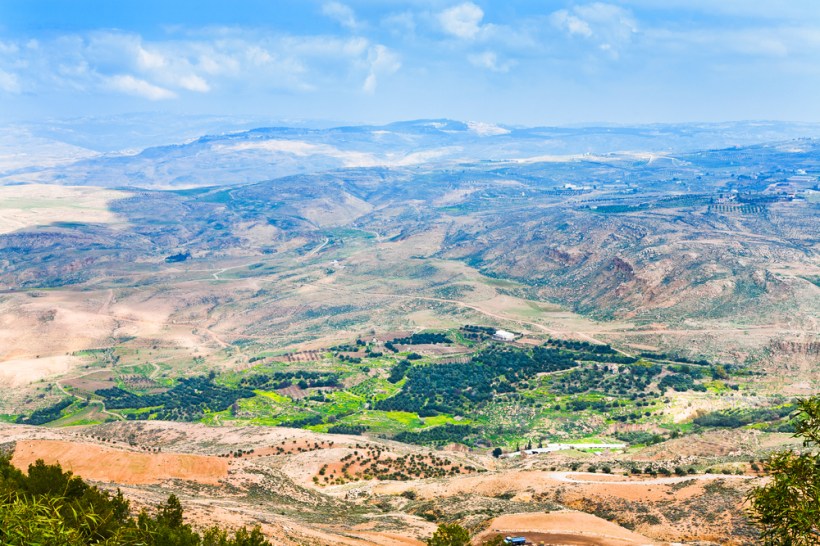
View of Promised Land from Mount Nebo in Jordan

I am reading through the Bible chronologically. The “books” of the Bible are only roughly chronological. Following the chronology closely requires jumping around a bit. I didn’t realize to what extent that is true before taking this journey that I am on.

Presently, I am right at the point where Moses stands on top of a mountain (east of Jericho, on the edge of the plains of Moab) to survey the land that God promised hundreds of years earlier to Abraham and his descendants. Moses dies right before they go in.

Before he dies, though, he reminds the people of all that has transpired. He reminds them how God delivered them out of slavery in Egypt and went with them every step along the way. The reminder of God’s presence was with them by fire at night and cloud during the day.

God revealed Himself in dramatic ways to these people. God instructed them through Moses in very detailed ways how they could have a covenant relationship with Him as a nation. He provided ways He could be approached through Tent of Meeting, Ark of the Covenant and the offerings they were to make through intermediaries (the Levite priests) among other things.

They had 40 years of wandering in the wilderness with God’s presence continually among them in visual demonstration and ritual reminders.

Reading through this history of God’s interaction with these people through a modern, intellectual lens can be unnerving. The skepticism of the age echoes in my mind and unsettles my heart. Of particular note are the times we read that people are stricken dead for ignoring or refusing to follow the instruction. For instance, the Sons of Korah.

The sons of Moses’ cousin, Korah, led a revolt against Moses. They and all the people who followed them died when “the earth opened its mouth and swallowed them and their households, and all those associated with Korah”. (Numbers 16:1-33)

Incidences like this prompt a person of modern sensibilities to wonder, “Why would a good God do such a thing?!”(Or to allow it.) It seems Draconian.

The stakes were high for these people, and even less intentional “slips” were sometimes met with the same fate. It’s hard to imagine living in those circumstances, especially in light of the grace that seems to color everything that Jesus said and did.

Continue reading “Lessons from the Edge of the Wilderness” →

Loving Our Neighbors During a Corona Virus Outbreak


We live in trying and interesting times. In the midst of enormous political and social polarization in the United States, we are now dealing with the announcement of a global pandemic. The reactions have ranged from virtual panic and hoarding of toilet paper to mocking and distrust.

Yesterday, a group of people I gather with once a month under the auspices of Reasons to Believe, a ministry that blends science and faith. We were live with Anjeanette (AJ) Roberts, who is a research scholar with RTB.

Timing was perfect. AJ is a virologist. She studies viruses for a living. She was one of the small group of people who studied the SARS virus in the early 2000’s at the National Institute of Health. SARS is a coronavirus, the same type of virus as COVID-19, the one we are dealing with now. She was on the ground floor of dealing with SARS, so she is in a unique position to provide wisdom and guidance.

I took notes as best I could yesterday and will pass on what I was able to capture in them. The facts are the facts, but how we respond to them is more important than the facts, themselves. As Christians, we need to be guided by the commands of our Lord to love one another, to love our neighbors.

Politics has a way of creeping into and tainting everything. We should not allow politics to color the facts or affect how we follow the clear direction of Scripture. Jesus is the way and the truth. We should not ignore truth in favor of political agendas or deviate from the way, which involves taking up our crosses and following Jesus, loving others as He demonstrated his love for us.

With that said, which is my paraphrasing of the guidance AJ Roberts gave us at the end of her presentation on the current state of COVID-19 in the world and in the US, I will summarize the facts she presented as best I can recall them. It’s important to note that the landscape is rapidly changing as the virus spreads around the world and in the US. In fact, she said the situation is changing on a daily and even an hourly basis.

Continue reading “Loving Our Neighbors During a Corona Virus Outbreak” →

Keeping God’s Commands By Loving Him


“If you obey the commandments of the LORD your God that I command you today, by loving the LORD your God, by walking in his ways, and by keeping his commandments and his statutes and his rules, then you shall live and multiply, and the LORD your God will bless you in the land that you are entering to take possession of it.” (Deuteronomy 30:16)

This is the way the English Standard Version translates Deuteronomy 30:16, the verse of the day today in a Bible I use. I highlight the phrase that jumped out at me today, the one I have been contemplating since I read it this morning.

When I went looking for some deeper meaning, I found the other translations take it in a slightly different direction:

“For I command you today to love the LORD your God, to walk in obedience to him, and to keep his commands, decrees and laws….” (NIV)
“I command you today to love the LORD your God, to walk in His ways and to keep His commandments and His statutes and His judgments….” (NASB)
“I command you today to love the LORD your God, to walk in His ways, and to keep His commandments, His statutes, and His judgments….” (NKJV)

Only one the English Standard Version instructs us to obey the commandments of God “by loving the Lord….”.  Most of the time I believe we think about loving God by obeying His commands – not obeying God’s commands by loving Him. It’s a subtle difference, but it piqued my curiosity further.

I also discovered that the Hebrew word for love in this verse is “aheb”, which means (not surprisingly) “to love”. But it dawned me as I looked at the other verses in which that word is used that it seems to mean to love with affection. Abraham loved Isaac (Gen. 22:2); Isaac loved Rebekah (Gen. 24:67); Isaac loved Esau (Gen. 25:28)(more than Jacob); Rebekah loved Jacob(Gen. 25:28) (more than Esau); Isaac loved the “savory meat” that Esau provided (Gen. 27:4); and Jacob loved Rachel (more than Rachel’s sisters that his father-in-law insist he marry first) (Gen. 28:18).

Clearly, all of these uses of the word for love used in the commandment in Deuteronomy to love God imply a kind of personal affection, even to the exclusion of affection for other things (or people). Thus, we are commanded to have affection for God and to walk in His ways and keep His commandments: or, as the ESV translates, to obey God’s commands by loving Him (with affection).

The real light bulb moment today, though, wasn’t in the breaking down of this verse, but in its juxtaposition with my daily Bible reading, which is taking me currently through Numbers (after having left the detailed instructions about the Tent of Meeting in Leviticus). So many rules for the priestly duties of the Levites in connection with the Tent of Meeting and Ark of the Testimony and the altar where endless sacrifices were to be offered up have me wanting to get through these passages quickly!

And they have me asking, why? I know… they foreshadow the sacrifice of Jesus on the cross. “Without the shedding of blood, there is no forgiveness of sins.” (Lev. 9:22; Heb. 9:22) The writer of Hebrews tells us Christ has appeared, now, as the ultimate high priest, entering once for all into the holy places, securing for us eternal redemption. (Heb. 9:11-13) All the sacrifices commanded by God in Leviticus, Numbers and so on were just copies of heavenly things: “For Christ has entered, not into the holy places made with hands, which are copies of the true things, but into heaven itself, now to appear in the presence of God in our behalf.” (Heb. 9:24)

All the many sacrifices offered by the Levites at God’s commands as God’s chosen people wandered in the wilderness, carrying with them the Tent of Meeting and all of its accouterments, were just copies of the one sacrifice, “once for all at the end of the ages to put away sin by the sacrifice of himself.” (Heb. 9:26)

As I read through these passages in the Old Testament, I find myself asking, “Why?” as if I were one of them, not knowing anything about the plans of God that were devised before the foundation of the world. What were they thinking as they did these things?

Continue reading “Keeping God’s Commands By Loving Him” →

The Remarkable Consequence of Ritual Cleansing

Ritual Baths along Way of the Patriarchs or Way of the Fathers. The name is used in biblical narratives that it was frequently traveled by Abraham, Isaac and Jacob. Samaria, Israel

I am reading through the Bible again this year, but I am reading it in chronological order using the You Version Bible app.  I am not sure how old I was when I realized that the books of the Old Testament are not in chronological order and that events in one book overlap events in other books. But that isn’t the point of this blog piece.

I am in Leviticus right now. The struggle is real! So many laws! So many times the text goes over the same things, or so it seems, but I am trying to maintain focus, and I am asking the Spirit for help in understanding what is going on, what God is saying, what He is foreshadowing, etc.

The last couple of days I have been reading the instructions for all the various types of offerings (animal sacrifices if we want to be blunt), and I have just gotten into laws for ceremonial cleansing for various “leprosies” and other “unclean” conditions. It can seem so mundane, archaic, maybe even naive and unenlightened to a modern mind.

For instance, it doesn’t take too long to figure out that all kinds of skin conditions were labeled leprosy. When we read in the English Standard Version about leprosy in houses, we realize that it’s probably talking about mold. (Some translations call it mold in fact.) The vocabulary and understanding of the Bronze Age mind was limited. It’s no wonder the Richard Dawkins of the world, reading these passages with a 21st Century mind, scoff at first blush.

But, underneath that temptation to scoff is a heavy dose of pride and lack of appreciation for what God is doing in the information and instruction that He was inspiring Moses to write in these passages. God was speaking to them in their language and according to their understanding to set the stage for a global plan that would be unveiled over many centuries and millennia that, even now in the 21st Century, is unfolding and being revealed.

Jesus is the key that unlocks the door to the Old Testament Scriptures.

I don’t claim to have all the answers or all the insights, though I am reminded of the words of Jesus to the Pharisees: “You study the Scriptures diligently because you think that in them you have eternal life. These are the very Scriptures that testify about me, yet you refuse to come to me to have life.” (John 5:39-40)  For the scoffer, Jesus might have said, “You don’t study the Scriptures because you think that they are mythical superstition that has no life. Those Scriptures testify about me, and you refuse to come to me to have life!”

Jesus is the key that unlocks the door to the Old Testament Scriptures. But, I still struggle sometimes to find the relevance, significance or meaning in some of these passages. I’ll be honest. I am sure I’m not alone.

One thought comes back to me today as was I reading about the ceremonial cleansing rituals. A thought that goes back many years, but with a new twist today. It has occurred to me before that many of the cleansing laws, laws about what animals they can eat and not eat, and so on, acted like in place of our modern knowledge of germs, disease and other health dangers that the people in that time simply didn’t know. I have long been struck by that thought, but I had never made the additional connection that strikes me with significance today.

Continue reading “The Remarkable Consequence of Ritual Cleansing” →