How Should the Church Act Regarding Authority?

If we have to ignore Scripture and the character God desires to work in us, we are moving in the wrong direction!

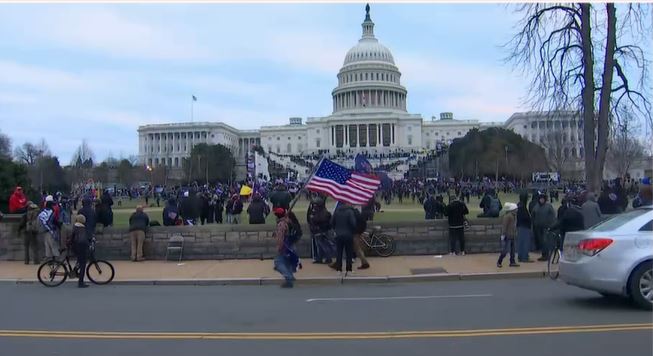
I come back to this with a heavy sigh. I started it yesterday as the news unfolded of people breaching the Capitol building as the Trump rally changed gears. I know there were people there peacefully gathering, but a good many of them crossed the line.

As I watched the events unfold, I struggled to find some solid ground to stand on as I see people who call themselves Christians continue to support Trump regardless of what he says and does. At best, he sent mixed messages that were ambiguous enough to encourage what happened. At worst he incited insurrection, and stood by watching it happen, saying nothing until it was too late. Even then, it was a poor excuse for what he should have said.

The thing that troubles me most as I think about these things is the way Christians who support Trump and this “resistance” at at all costs ignore Scripture that is inconvenient. Paul defined the way followers of Jesus Christ should act regarding authority:

“Let every person be subject to the governing authorities. For there is no authority except from God, and those that exist have been instituted by God. Therefore whoever resists the authorities resists what God has appointed, and those who resist will incur judgment.”

Romans 13:1-2

Peter, the rock on whom Jesus said he would build his church, said the same thing:

“Be subject for the Lord’s sake to every human institution, whether it be to the emperor as supreme, or to governors as sent by him….”

1 Peter 2:13-14

If anyone thinks insurrection is justified because Democrats are “bad” today, consider that Peter and Paul said these things at a time when their world was ruled by Nero.

Nero was a bad leader, even by pagan, Roman standards. He considered himself God. He persecuted Christians and had them publicly killed, setting them on fire at night to light the City. Peter and Paul were both martyred under the rule of Nero.

Democrats are not nearly as bad as Nero. Peter’s and Paul’s words were spoken at a time much worse than the political squabbling today. We can’t justify resisting authority because Democrats are bad – not when we consider the context in which Peter and Paul told believers to respect governing authorities!

At the same time, I am aware that people may justify their resistance on other grounds. Peter, himself, resisted the governing authority in the Book of Acts. Peter and John were arrested for preaching. (Acts 4:2-3) They were commanded not to preach about Jesus, but Peter and John refused to comply, saying,

“Which is right in God’s eyes: to listen to you, or to him? You be the judges! As for us, we cannot help speaking about what we have seen and heard.” 

Acts 4:19

They were arrested again for refusing to remain quiet. (Acts 5:20) Again, they were commanded not to speak. Again, they responded, “We must obey God rather than human beings!” (Acts 5:19) This time they were flogged and let go.

So which is it? Submit to authorities? Or boldly rebel?

It seems like a conundrum. Do we get to take our Pick?

Maybe those are not the right questions to ask. Maybe we need to be more careful to weigh the words of Peter and Paul together with their actions and divide the Word of God more accurately.

Continue reading “How Should the Church Act Regarding Authority?”
When the Smoke of Battle Clears, Where is God?

God is bigger than the battles in history and the lives of all the men who fought them, but He is with each one of us.

My great, great grandfather, Enoch Jones, and his brother, Silas Jones, fought in the Civil War for the north. They were members of the 40th Illinois Infantry, Company F. They mustered in August 10, 1961, at Springfield.

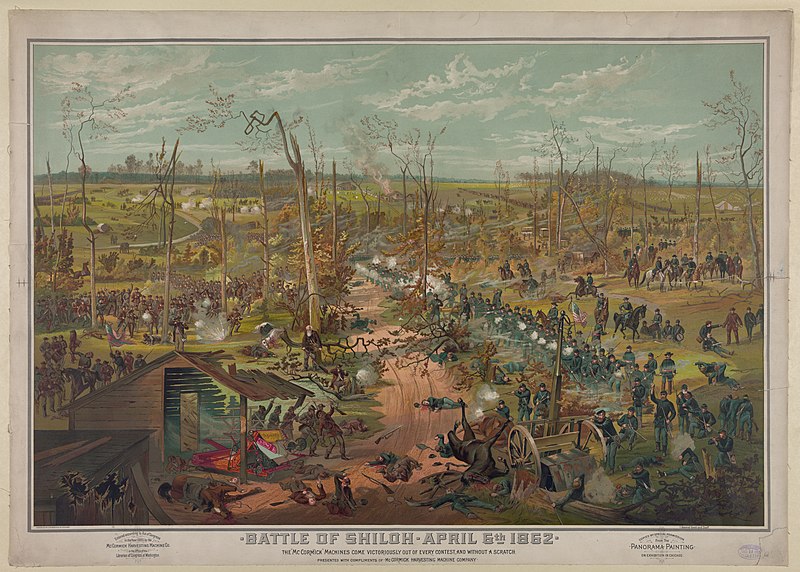
In March 1862, the 40th Illinois, 46th Ohio and Morton’s Battery was organized into a Brigade commanded by Colonel Hicks under General Sherman, and they boarded transport ships that carried them up the Tennessee River. They re-combined with the 6th Iowa under Colonel McDowall and entered the Battle of Shiloh. It would be their first armed conflict.

The north took a beating at Shiloh. The 40th Illinois was commended for standing ground under heavy enemy fire even after their cartridge boxes were empty. A total of 196 men of the 40th Illinois were killed or injured in the one battle, including Colonel Hicks.

Silas suffered mortal injuries. He mustered out of this life two weeks later. Enoch mustered out of the 40th Illinois Infantry on May 15, 1865, two days after Jefferson Davis was captured and one month after President Lincoln was assassinated. The north was victorious, but at great cost.

Enoch saw action at the Battle of Shiloh, Siege of Vicksburg, Battle of Missionary Ridge, Battle of Kennesaw Mountain and Siege of Atlanta, and other places before he returned to a humble life in central Illinois. Enoch didn’t participate in the famous “March to the Sea”, because he took a bullet in Atlanta. The bullet drove a button into his chest, but that button saved his life. It earned him the Purple Heart my parents have to this day.

I was fortunate at a Civil War memorabilia show years ago to find a tattered and yellowed dairy written by another volunteer in the 40th Illinois Infantry. He was in a different company, but his periodic reports of the movements and activities of the Brigade gave me a ground level view of the experiences of my ancestors as Union Civil War infantrymen.

When the diary opens, the author anticipates with patriotic and religious confidence the mission they are about to partake. The 40th Illinois was a completely voluntary unit. The diary expresses a kind of righteous hope and abandon to the cause of fighting for God and for country.

I could not help but think of the horrendous carnage of human and equine life they would encounter. Sinew, flesh and bone left exposed to the gaping air as the smoke slowly drifted off future battle scenes. The groans of shattered men lying in their own blood would be the only sound remaining as infantrymen regrouped to count their ranks. Trees splintered by the shrapnel of canons and muskets would stand starkly against the acrid stench of gunpowder lingering still that gaping air.

Did they know what they were in for?

I recalled seeing Civil War physicians’ bags. They carried saws, and picks, and hammers and other objects of painful reminders of the brutality of war without modern anesthetic or antiseptic. Saws saved what was left of the living by cutting off limbs susceptible of gangrene. Many, like Silas Jones, survived the battle with injuries only to die later of infection.

Knowing these things, I was intrigued to read the thoughts and expressions of resilient faithfulness to the duty fight for God and country continue on the pages of that diary after the Battle of Shiloh, and all the way past the Battle of Kennesaw Mountain. Then the diary ended – abruptly. No resolution. No postscript. No clue as to why it simply ended.

I can only imagine the writer mustered out early – maybe in Atlanta. I assume he wasn’t as lucky as my great, great grandfather. But I am not writing merely to tell a story of my ancestor. There is a bigger picture.

Continue reading “When the Smoke of Battle Clears, Where is God?”

Listening While White: Respecting the Image of God in People of Color

Jesus, himself, broke down the dividing wall that separates people.

I feel like I need to begin this with a request to “hear me out” (at the risk of appearing apologetic). I am a white, evangelical Christian. The title recognizes who I am. I realize as I wade out into these waters that they are treacherous today. Many are the rocks on which ships with good intentions have been dashed.

Should I even have to say that people of color bear the image of God? I shouldn’t have to say it, but I feel I need to say it nevertheless. Why?

That impulse, alone, signals to me that something is not quite right.

I just read that slavery is “the original sin of the United States”. It colors our past (pun very much intended). It continues to leave its imprint on the present. I have to admit to finding some truth in that statement.

Obviously, race is the subject of this article. But not just race. I am writing about Christianity, generally, and the church universal and global.

If any group ought to be able to speak with wisdom into the race issues that we continue to face, it should be the Church, right? Yet, we see as much segregation in the church as a whole as we do in society.

Spoiler alert. God has been orchestrating the entire course of human history from the beginning to this end:

“A great multitude that no one could count, from every nation, tribe, people and language, standing before the throne and before the Lamb….”

Revelations7:9

This is God’s endgame. Are we onboard with the plan?

This is the unity for which Jesus prayed for his followers. (John 17:20-23) Jesus, himself, broke down the dividing wall that separates people. (Eph. 2:14) God began working though His Holy Spirit toward His endgame soon after Jesus died and rose again, working through Paul and the disciples to break down the wall between Jew and Gentile. (See Reflection on the Unity for which Jesus Prayed: Peter & Cornelius)

We won’t participate in achieving the unity for which Jesus prayed without recognizing the big picture – the kingdom of God – and the foundation on which we all stand – Jesus. Given the purposeful prayer of Jesus for unity among his followers, disunity that exists in the Church means we have failed in some way to focus on the things that should unify us. We have allowed differences that shouldn’t matter to divide us.

If the endgame includes people “from every nation, tribe, people and language”, then we should not allow those kinds of differences, at least, to divide us. Racial matters should be a non-issue. We should be one in Christ, right?

Continue reading “Listening While White: Respecting the Image of God in People of Color”

Postscript to the Sons of Issachar Who Understood the Times

We receive the Holy Spirit, not so that we will know the times, but so that we can be effective as His witnesses!

I wrote a piece on the Sons of Issachar recently. They are referenced in 1 Chronicles 12:32. The Sons of Issachar were 200 “chiefs” of the descendants of Issachar, one of the sons of Jacob. These men joined David with a multitude from the other tribes of Israel when David was hiding in the wilderness from the murderous rage of King Saul.

Saul was Israel’s first king. He was the king the people demanded. He was the king God gave them, despite the fact that His people were rejecting God as their king in the process of demanding a human king, like the other nations.

Saul got caught up in his own power and position. Saul began to lose touch with reality as he stopped obeying God and became paranoid of losing a grip on the power God gave him. He became jealous of David. and suspected David was out to get him. Though David could not have been more loyal, King Saul sought to kill David to eliminate his perceived threat.

Indeed, God was about to reject Saul as king because Saul ceased to listen to and follow God’s instruction given through the prophet, Samuel. God had chosen David to succeed Saul, because David was a man after God’s own heart.

David, for his part, loved and honored Saul because God had made him king. David had multiple opportunities to kill Saul, but he refused to do it, leaving Saul’s fate (and his own fate) completely in God’s hands.

Still, men from every tribe of Israel began to gather where David was hiding, including men from Saul’s own tribe (Benjamin). The Benjamites were some of the first men to join David. The 200 chiefs of the Sons of Issachar joined David later. Scripture says of them, specifically, that they were men “who understood the times and knew what Israel should do.”

That phrase has been invoked by people who style themselves modern prophets who support the presidency of Donald Trump. They claim, of course, that they are men who understand the times. They claim to know what Christian in the United States should do, particularly in regard to support Donald Trump.

I don’t dismiss what they say out of hand. God has spoken at various times through people considered to be prophets. One of the hallmarks of “the last days” is prophecy, visions, and dreams. Peter announced the last days were starting when he stood up on the Day of Pentecost and quoted the prophet, Joel:

And in the last days it shall be, God declares,
that I will pour out my Spirit on all flesh,
and your sons and your daughters shall prophesy,
    and your young men shall see visions,
    and your old men shall dream dreams;
even on my male servants and female servants
    in those days I will pour out my Spirit, and they shall prophesy.

Acts 2:17-18 (quoting Joel 2:28-32)

Some people believe that these displays of God’s power and authority were only for a dispensation in time long enough for the Holy Spirit to lead the disciples into truth and preserve it in what we now call the New Testament. I don’t see evidence of that in the New Testament itself. I think we should expect God to work through people today through prophecy, visions, and dreams, and I believe He does.

We, in the west, are not very open to God working in that way. We have staked out our position on the embankment of reason, logic, and “sound doctrine”. We are quite uncomfortable with the “messiness” of experiential phenomena like prophecy, visions, and dreams.

Yet, outside our western sanctuaries and cloistered halls of learning, these phenomena are regular experiences of Christian life. People who have done short-term or long-term missions often encounter these phenomena in places where people are not presumptively skeptical of what God can do.

Visions and dreams are ubiquitous in the stories of recent Muslims coming to faith in Christ. I once spoke with a Muslim woman who described for me a vision of Jesus coming to her in the midst of a near death experience she lived through. She described a subsequent “waking vision” of Jesus gaining her attention in the nick of time to save her son from being hit by a bus. She became a believer in Jesus because of these visions, though no one preached a word to her.

Her supernatural visions, though, didn’t lead her to a place of sound understanding of God and His word. They caused her to believe in God and Jesus, but she gravitated toward extremes in biblical understanding. This is just an anecdote, but I think there is a lesson to take away from it.

It would be a mistake to dismiss out of hand the prophecies, visions, and dreams that people claim to have today, but we also need to be careful. Paul admonished the Thessalonians, “Do not despise prophecies…!” (1 Thess. 5:20) But he added an important qualifier:

“…. test everything; hold fast what is good.”

1 Thess. 5:21

Continue reading “Postscript to the Sons of Issachar Who Understood the Times”

The 2020 Election: Daylight Had Spoken

I woke yesterday to these words:

Daylight had spoken 
So clear and so plain 
I’m the keeper of nothing 
But an old flame 
Consuming the shadows 
Caught in the light 
Blinded by hunger 
And fed to the night 

I went to bed with the presidential election in the balance, teetering on the brink of madness – madness that we are so divided as a country over, perhaps, the two most unpopular candidates in our country’s long history.

We have gotten used to the “lesser of two evils’ voting mantra. Not that each candidate doesn’t have their crazy fans. And, that’s part of the madness too.

But daylight broke once again. Like Groundhog’s Day the movie, its constancy is inimitable. So, it is fitting that the Book of Lamentations states thus (3:22-23):

The steadfast love of the Lord never ceases;
    his mercies never come to an end;
they are new every morning;
    great is your faithfulness.

In my daily Scripture reading, the passages were no less apropos:

As evening approached, there came a rich man from Arimathea, named Joseph, who had himself become a disciple of Jesus. Going to Pilate, he asked for Jesus’ body, and Pilate ordered that it be given to him. Joseph took the body, wrapped it in a clean linen cloth, and placed it in his own new tomb that he had cut out of the rock. He rolled a big stone in front of the entrance to the tomb and went away. Matthew 27:57-60

So, it was the night Jesus was crucified.

The passages for the day also included the description of a small entourage of women waking in the morning to bring spices to the tomb. When they got there they found the tomb empty. (Mark 16:1; Luke 24:1-3)

Finally, the passages for the day included the appearance of Jesus to Mary Magdalene, the woman from whom he had cast out seven demons. (Mark 16:9) Mary was the first person to whom Jesus appeared. That significance can not be understated.

The men back were still hunkered down where they had been since darkness draped over the world the night Jesus died. They didn’t believe her when she told them she saw Jesus. (Mark 16:11)

So it is that we arrive quickly at assumptions and hold on to them. Jesus died before them and the onlooking world. Jesus was dead. Who would believe otherwise?

Of course, he had been telling them since they met him that his body would be destroyed, and he would raise it up three days later, but they never quite got what he was saying.

I left for the office pondering these things.

The votes are still being counted today. The outcome is less than certain. There is talk of fraud, injunctions and refusing to step down, and I can’t bear to think of four years of Biden… or Trump.

But the new day has dawned. God’s mercies are new every morning. Great is His faithfulness. Jesus defied sin and death, rose again and ascended into heaven. He sits, now, at the right hand of the Father. He will come again to judge the living and the dead – so the creed goes that was canonized over three centuries after Jesus died.

Pontius Pilate, the leader who presided over the death of Jesus, is nothing but a footnote to the world’s greatest event – the death of God at the hands of His creation, for the sins of His creation, to provide His creation a real hope that cannot not be eliminated by an election, injunction or even crucifixion – and the resurrection!

So, Donald Trump or Joe Biden will become their own footnotes in history as the purposes of God unfold. The world may seem to be teetering out of control at every turn, but the only thing teetering is our illusion that we are in control. God’s word goes out, and it does not come back void. Jesus is still on the throne.

The song that woke me yesterday morning ends like this:

My search was unending 
And my soul was bare 
And Darling, you came to me like a midnight flare 
Out of the ocean 
The stars had all gone 
My heart was broken 
Lost and alone 

[Outro] 
Darling, you came to me like a beacon, leading me home

Substitute Jesus, for Darling, and it’s just about perfect.

~~~~~~~~~~~~~~~~~~~~~

Job poetically says of God that He gives orders to the morning and shows the dawn its place. (Job 38:12) Because of the tender mercy of God, the “Dayspring” [Dawn/Jesus] came to us from heaven to shine on us who live in darkness – in the shadow of death – to guide our path into peace. (Luke 1:78-80)