Tina Turner sang, “What’s love got to do with it?” We might ask that question about theology. We might even ask that question about life, itself!
Most people, I think, would say that love has a lot to do with life and theology. Or, at least, it should!
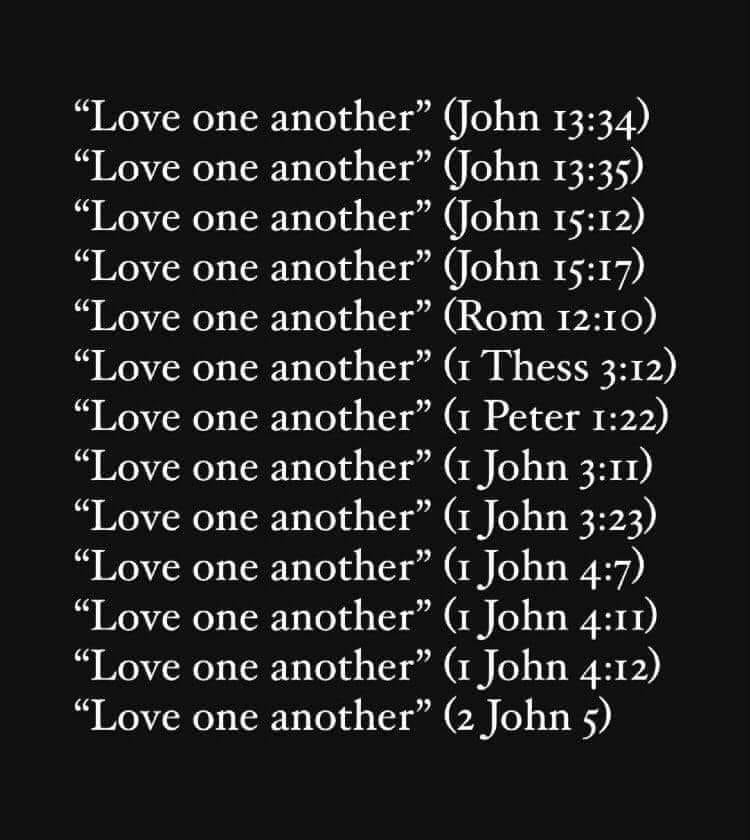
What does the Bible say? Does it affirm that intuition? The answer is clear that the Bible affirms that intuition of the importance of love ins spades!
What is love?
“Love is patient and kind; love does not envy or boast; it is not arrogant or rude. It does not insist on its own way; it is not irritable or resentful; it does not rejoice at wrongdoing, but rejoices with the truth. Love bears all things, believes all things, hopes all things, endures all things.” (1 Corinthians 13:4-7)
“This is love, not that we have loved God but that he loved us and sent his Son to be the propitiation for our sins.” (1 John 4:10)
“Greater love has no one than this, that someone lay down his life for his friends.” (John 15:15)
What is the source of love?
“[L]ove is from God”
1 John 4:7
“God is love.”
1 John 4:16
How important is love in the Bible?
“So now faith, hope, and love abide, these three; but the greatest of these is love.”
1 Corinthians 13:13
The supreme importance and place of love in Scripture reveals that love could not more more important or prominent in our theology! Any theology, therefore, that is light on love is light on truth.
As the story goes, when Mary was visited by an angel who told her she would conceive and give birth to great man who she would call Jesus, though she had never known a man, she was thoughtful, questioning and even troubled, but said she was willing. (Luke 1:26-35)
When she visited her cousin, Elizabeth, at the angel’s direction, and what the angel said was corroborated, Mary was thankful and happy. (Luke 1:39-47) She believed what the angel told her and gave thanks to God, but that is a mother’s response. Right? Siblings and strangers are a different matter.
On the subject of claims about Jesus, skepticism has always existed. We even find it in the narratives of the four Gospels, themselves. The Bible is candid that way.
The Pharisees and Sadducees (the Jewish religious leaders of the day) largely did not believe the claims of Jesus. Most of the Romans certainly didn’t believe them. Even among the common people, we get the sense that some people wanted to believe Jesus, but their good will toward him changed over the span of his public life.
Jesus was not initially well-received in his hometown, Nazareth. When he read from the Isaiah scroll in the synagogue and announced that the words he read were fulfilled that day in their hearing, they were not impressed. (Luke 4:14-21) They said, “Isn’t this Joseph’s son?” (Lk. 4:22), and they took offense at his assertions. (Mk. 6:3)
It wasn’t like Jesus tried to soften his approach. We might even say that Jesus provoked them. (Lk. 4:22-27) They changed from curiosity tinged with skepticism to anger as he presumed their rejection of him. (Lk 4:28) They became so angry, they drove him out of town and up to the brow of a hill where they threatened to throw him off a cliff. (Lk. 4:29)
During another encounter with a crowd in the wider area of Galilee, Jesus caused such a stir by the things he was saying that the people accused him of “being out of his mind”. The religious leaders accused him of blasphemy.
When his family heard what people were saying, they went to “seize him”. (Mk. 3:20-21) His mother and brothers would not even enter in the house where he was talking to the crowd. They stood outside calling to him, but Jesus refused to respond. (Mk. 3:31-35)
Jesus caused such a stir in Galilee that the Jewish leaders sought to kill him (Jn. 7:1) claiming that Jesus was “leading people astray” (Jn. 7:12). In the midst of the stir that Jesus was causing in Galilee (his home region), we learn that “not even his brothers believed in him”. (Jn. 7:5)
His brothers did not merely not believe in him. They taunted him to leave Galilee and go to Judea to make his claims and prove himself there. (Jn. 7:3) “No one who wants to become a public figure acts in secret. Since you are doing these things, show yourself to the world.” (Jn. 7:4)
They were provoking him, likely hoping he would stop the nonsense. His brothers certainly knew the angry reception Jesus was getting in Galilee would be nothing like the wrath he would experience in Judea where the High Priest and Sanhedrin were headquartered.
After the initial controversy Jesus stirred in his home town and region, we don’t hear much about the family of Jesus, as Jesus spread out to other areas. They are largely absent from the narrative after that. The highly skeptical religious leaders never softened up to what Jesus was saying, but crowds of more common people began to believe him.
The height of his popularity among the crowds was, perhaps, the day he entered Jerusalem on a donkey on what we have come to call Palm Sunday. We get the sense that the crowd believed this was the beginning of their long awaited dream of taking back control from the Roman occupation and the climactic overthrow of Roman rule. It was actually a long awaited beginning of a different sort.
The arrest of Jesus on charges of blasphemy, and his silence in the face of those charges led to a dramatic turn in the perception of the crowd. By the time he was arrested in the garden and hauled before the Sanhedrin (the religious council) and then before Pontius Pilate (the Roman governor), the tide of popular opinion had turned against Jesus.
He wasn’t who they thought he was.
The Sanhedrin had Jesus arrested, looking for evidence to put him to death. (Mk. 14:55) Jesus was silent until the high priest asked him, “Are you the Messiah, the Son of the Blessed One?” (Mk. 14:61) When Jesus said, “I am” (Mk. 14:62), they had the evidence they wanted. They accused him of blasphemy and condemned him to death. (Mk. 14:63-65)
The religious council turned him over to Pilate for sentencing. (Mk. 15;1) The charge of blasphemy meant nothing to the Roman governor who believed the Sanhedrin was acting out of self-interest and concern for their own religious influence. (Mk. 15:2-10) Yet, the crowd was stirred up against Jesus, and they demanded that he be crucified. (Mk. 15:11-15) The rest is history.
Up to this point, the little we know about the brothers of Jesus is that they didn’t believe in him. The last we hear of them, when his family came to call him out of the home where he was causing a stir, Jesus seemed to have turned his back on them. When Jesus was told his family was there calling to him to come out, Jesus said,
“[W]hoever does the will of God, he is my brother and sister and mother”. (Mk. 3:32-35)
This is the backdrop for some key observations about the family of Jesus, and particularly his brother, James, that speak to the authenticity of Jesus and of the Gospel narrative.
I murdered him for Allah but God raised him up to forgive me…. SHOCKING STORY OF REDEMPTION!! One for Israel: Israeli Arabs and Jews. United in the Gospel
The Gospel is a matter of life and death. The phrase seems cliché, even to a “religious” person. We believe it to be true, but the present reality of it may seem to be an abstraction. A non-religious person might understand the statement metaphorically and allegorically, but would subscribe little or no “weight” to it. Neither sense, however, captures the utter significance of the Gospel of Jesus Christ as it played out in the lives of people I want to introduce.
In the first story of a Muslim man who hated Christians and Jews, and in the second story of a Jewish woman who hated Muslims, the utter significance of the Gospel is brought home in a way that abstract ideas and allegorical concepts simply cannot accomplish. The Gospel is Living Water in a wasteland of hatred and death.
The first story of a Sudanese Muslim who hated everyone who was not Muslim will make your skin crawl as he describes a brutal, unprovoked attack by him and others against a Christian classmate that left the man broken, bleeding, and dying. He was unashamed and proud of what he had “done for Allah”.
An encounter with two Coptic Christians whose prayer healed his cousin as his cousin lay on his own deathbed opened his eyes to a new reality. When those Christians told him, “The real miracle is that God wants to change your heart,” the paradigms by which he had always viewed the world shifted forever.
The decision he made to embrace Yeshua cost him his family and life as he knew it. He became dead to them. They even performed a ceremonial funeral for him. The life that he formally knew was over, but the new Life he received was riches in comparison.
You will want to watch and listen to him tell his story in his own words, not just to describe this journey, but to listen to him tell the rest of the story about the man he left for dead. The power of the Gospel is so much more than a matter of mere metaphorical importance.
The second story comes from a Jewish woman who lived in a world in which Arabs “were the enemy”. She grew up in the midst of the complex political struggle in the Middle where all around her was war and death.
From her earliest memories, her world was unsafe. She was terrified of Arab people who lived in villages surrounding the settlement in which she grew up. The Arabic language was a reminder to her, when she heard it, of shooting, rocks flying and people dying. She learned to hate Arabs.
The Rabbis painted a picture of the God of the Bible as “a very cold and distant God, almost robot-like, a type of God that wouldn’t think twice before he would strike you down with a lightning bolt if you dared to tear a little piece of toilet paper on Saturday, which is forbidden in Judaism”. What she saw of God in the Bible, though, when she read it for herself, seemed different to her.
She grew up in a world of hatred and fear. When she was introduced to the God of love and hope, her world changed completely. She no longer hates or fears Arab people. She learned that the Lord of life is the God of Arabs and Jews alike.
These stories of people who grew up in environments that fostered hate against each others’ “tribes” show how the Gospel changes people so dramatically that those who once hated now love. Paul’s words are true of Jesus:
“But now in Christ Jesus you who once were far off have been brought near by the blood of Christ.For he himself is our peace, who has made us both one and has broken down in his flesh the dividing wall of hostility….” (Eph. 2:13-14)
I have briefly explored the idea of good risks and bad risks in relation to the corona virus threat we have been facing over the last year. Using that as a springboard, I will explored the idea of tempting death, something, which we can’t avoid, regardless of how carefully we live. Now, I want to talk about the good risk of jumping from the ultimate precipice.
Some people gravitate toward risky behavior like a moth to the flame, and others impulsively withdraw into bubbles of protection for fear of sickness, injury and ultimately death. As one who gravitated naturally a little closer to the flames than the bubble, I lived a somewhat reckless youth. The precipice of physical danger, however, brought me to a more metaphysical precipice. The reckless attempt to find fulfillment in corporal, temporal things, led me far enough down that path to rule them out as the missing thing I really wanted.
As I read the Gospels for the first time in a college class, I recognized the truth in the statement that we should not lay up for ourselves treasures on earth. I could see that earthly treasures promised no lasting fulfillment. I had tested their capacity for fulfillment and found them wanting. I could see far enough down that road to know it contained a dead end.
Those experiences, eventually, led me to another precipice – a spiritual one. If God is real, I was on the outside looking in. I couldn’t see “in”. God stood behind a curtain to me, shrouded in mystery that I couldn’t penetrate.
I didn’t realize, then, that would find what I was seeking behind that curtain, but I was propositioned one day with the task of explaining God why He should let me in to His heaven…. That question brought me to the brink of that spiritual precipice.
His heaven… I realized in that moment that heaven (whatever heaven might be) was God’s place. He didn’t have to let me in. I was treading on His turf there, if indeed God existed, and He was under no compulsion to let me enter.
And why should He?
The answer that came from my mouth rang hollow in my heart. “I am trying to do better.” Better is a pretty relative term, but was my effort good enough? Was my effort even the best I could do? …. I knew it wasn’t.
If my best wasn’t enough, I was sunk, and I “knew” in my heart that it wasn’t enough. I knew in my heart I hadn’t even given my best.
When my questioner offered (finally) that heaven is a gift that God gives us, and we can’t earn it, I was dumbfounded.
My entire life was about earning something – earning attention, earning respect, earning grades, earning my own self-acceptance – and I was always falling short. I couldn’t even live up to my own expectations of myself. I wasn’t who I thought I should be!
My recklessness for seeking attention and acceptance and achievement turned to recklessness (for a time) in my abandonment to drinking, doing drugs and risky living. I saw that I was incapable of living up to my own dreams, so I abandoned those dreams for a time to the numbness of a narcotic stupor. Yet, I couldn’t escape the longing, and it only deepened the gap to realization of it.
I had turned back from the inevitable dead-end of a self-induced stupor to a purposeful seeking, but that which I sought I couldn’t exactly define. It wasn’t in me, but it seemed attainable. It was elusive, but I could almost taste it.
I stood at a new precipice that day, when I realized that a God who created the earth controlled whether I might enter His heaven. At the prospect that He offered it freely to me, if I would take it, I jumped.
(I have been to other precipices since that day for which the jump wasn’t as easy, maybe because I wasn’t as reckless, maybe because I took the jump more seriously, counting the cost more completely.)
I had jumped from other precipices, physical ones, in my life in attempts to find the right combination of thrill and daring that would make me feel better about myself, earn the respect or (at least) the attention of my peers and help me fit in to the world I wanted to live in and the person I thought I wanted to be. Those jumps had not brought me any closer to anything that was really satisfying, but that metaphysical jump I took when faced with the prospect of a God who “owned” heaven changed my life.
I accepted the offer. I “accepted” Jesus as my Lord and Savior (not knowing nearly well enough what that really meant). Fortunately, God took me at my word (little, though, that I knew what I was doing).
When I started this piece, I was reading The Works of His Hands: A Scientist’s Journey from Atheism to Faith by Sy Garte. He was a third-generation atheist, born to Russian immigrants who are members of the Communist party. He studied science and became a scientist. Along the way, the science that he was learning led him to question the philosophical naturalism and materialism that he had assumed was reality all his life.
I will end be telling the story of the precipice to which Sy Garte came. The landscape of this precipice looked different than the one to which I came many years earlier, but the decision to jump was no less momentous.
Much confusion in the early church arose out of the relationship of the Law to the “good news” that we now call the Gospel (which means good news). The confusion continues today. I continue to wrestle with the tension, myself.
Two passages come to mind that seem to be directly counter to each other. They establish a paradox – a seeming inconsistency – that needs to be resolved. Compare what Jesus said as recorded by Matthew, to the instruction of Paul to the Ephesians:
“Do not think that I have come to abolish the Law or the Prophets; I have not come to abolish them but to fulfill them. For truly, I say to you, until heaven and earth pass away, not an iota, not a dot, will pass from the Law until all is accomplished. Therefore whoever relaxes one of the least of these commandments and teaches others to do the same will be called least in the kingdom of heaven, but whoever does them and teaches them will be called great in the kingdom of heaven.For I tell you, unless your righteousness exceeds that of the scribes and Pharisees, you will never enter the kingdom of heaven. (Matthew 5:17-20)
“But now in Christ Jesus you who once were far off have been brought near by the blood of Christ. For He Himself is our peace, who has made the two one and has torn down the dividing wall of hostility by abolishing in His flesh the law of commandments and decrees.” (Ephesians. 2:13-14)
In one place, Jesus said he did not come to abolish the law; and, in the other place, Paul says Jesus abolished the law. Which is it?
The answer is both. If we view this apparent dichotomy as a paradox, rather than a contradiction, we can make some sense of it.
First of all, we need to consider the context. When Jesus said he did not come to abolish the law, he was talking about his coming in the flesh. Jesus was God who became incarnate. Jesus was God who emptied Himself of all that separated Himself from His creation and became part of it in the form of a human being. (Phil. 2:5-8) Thus, when God became man and came to us, He did not come to abolish the law.
We also need to look at the larger context of the Law. The Law was a covenant (an agreement) with Israel. It was given to Moses for the descendants of Abraham after He brought them out of slavery in Egypt. God was faithful to this covenant, but the people were no. They filed at every turn.
This was a problem, because God promised to bless the people based on them holding up their part of the bargain, but they failed to do that. God was true to keep His part of the bargain, but He could not be true to keep His promise to bless them because they did not keep their part of the bargain.
When Jesus made the statement that he did not come to abolish the Law, but to fulfill it, he was putting that statement into the context of time and purpose. He was saying that the purpose for which he came was to fulfill the law, and now was the time.
Jesus came to fulfill the Law in the flesh as a man. When he said on the cross, “It is finished”, he was proclaiming that he had finished accomplishing the fulfillment of the Law in his human body. He lived it out perfectly. He was obedient to it unto death.
Jesus did what no man had done. God became a man so that he could keep man’s part of the bargain, and that enabled God to keep His promise to bless mankind. God, in a sense, carried out the terms and fulfilled both sides of the covenant.










 Navigating by Faith