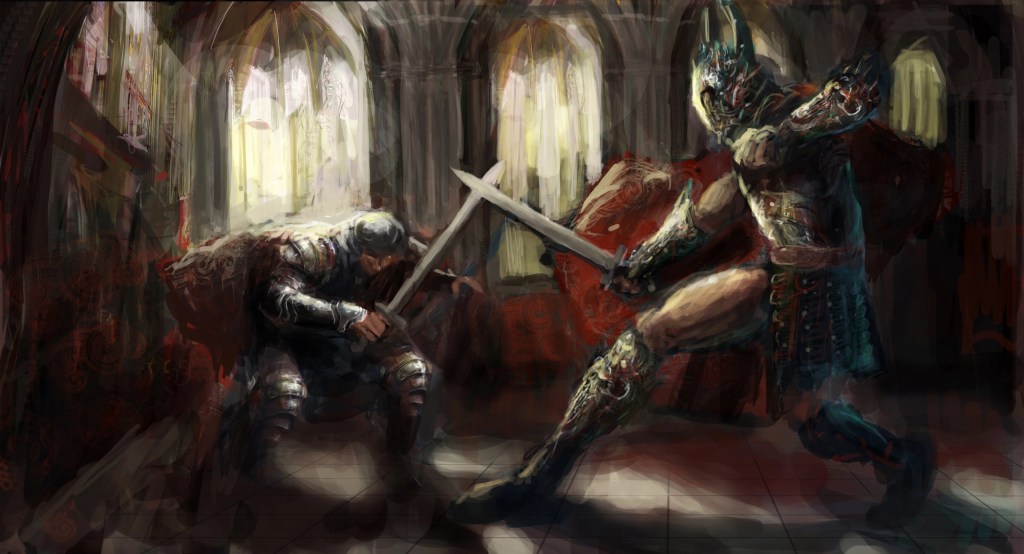
Vengeance is Mine, Sayeth Donald Trump?

“‘It is mine to avenge; I will repay,’ says the Lord.'”


I try not to be too political, and I try pretty hard to stay out of the public political fray. I am convinced that Christians should be very circumspect about politics. We are citizens of the kingdom of God, first and foremost, and we owe our ultimate personal allegiance only to the King of all Kings.

I am also mindful of the tradition of the prophets. They stood as God’s mouthpieces to God’s people and to the priests and kings who lead them. While they didn’t hold back in pronouncing God’s judgments and warnings on surrounding nations, they directed most of their attention to God’s people, the nations of Israel and Judah.

I also have to note that the nations of Israel and Judah are unique in the history of God and man. The United States of America is not a nation of God’s chosen people like the nations of Israel and Judah were.

(The current state of Israel isn’t either! See the responses of Hank Hanegraaff, the Bible Answer Man, to a pointed questions put to him about the status of nation of Israel today in the postscript to this blog article.)

There is much I could say about these things, but I want to get to my topic today. God’s prophetic voice is most prominently focused on His own people, wherever they are situated. Thus, Jesus often confronted the religious leaders of his day – the Pharisees and Sadducees – though he hardly said a word about the Romans who were the governing authorities in Judea.

Similarly, I believe God’s attention is on the church in America, and I am focused on Donald Trump only because many American Christians have claimed him as their champion. Biden, and Clinton, and Obama didn’t claim to be aligned with the church, but Trump does.

Therefore, when I read the following headline in the New York Times recently, For Those Deemed Trump’s Enemies, a Time of Anxiety and Fear, I took notice. The statement that Donald Trump has vowed to exact vengeance caught my attention.

Trump’s public warnings to those who opposed him, searched his home, prosecuted him, etc. are have weight behind them because they are characteristic of the man. People have taken them deadly seriously, including Joe Biden who pardoned a record number of people in his last days of office, including preemptive pardons of his own family members and people on Trump’s hit list.

I could say a lot about these pardons, also, but I won’t do that right now. I will only say that the threats Trump has made are not empty, and conducting himself in that way has repercussions for both parties and the health and future of politics in America. “What goes around comes around,” as the saying goes.

My focus, though, is on what this means for the church and how we live out being salt and light, making disciples to the ends of the world, and living consistent with the kingdom of heaven on earth. Do we not have some responsibility to God, the Father, the Maker of heaven and earth, to speak prophetically about the state of the church and of its complicity in the rise to power of Donald Trump?

Continue reading “Vengeance is Mine, Sayeth Donald Trump?”

Myth, Seasons, and the Resurrection of Jesus

Should the claim that Christianity is similar to prior, pagan mythology concern us?

The god of the sea and oceans Neptune (Poseidon).

Popular trends arise in culturally contingent ways, and those trends often dominate the public mind for a season. Thus, the idea that Christianity borrowed from prior pagan mythology gained notoriety with the rise of New Atheism. The Zeitgeist: The Movie (2007) is a poster child for this popular trend in thinking.

The Zeitgeist movie forces the narrative, ignoring glaring dissimilarities, and manufacturing similarities that don’t really exist. It ignores (or isn’t familiar with) the relevant academic scholarship, but it has been watched well over one million times. We might say that the Zeitgeist movie has become legendary in a truly mythic sense itself.

I will go out on a limb, nevertheless, to say that Christians have shown far too much angst over this trend of claiming that Christianity is similar to prior pagan mythology. There are critical differences, and they are significant, but there are some similarities also. Do the similarities pose a problem for Christianity?

The short answer is, no. In fact, if truth is truth and reality is reality, ancient, pagan attempts at explaining that reality are likely to hit on some metaphysical truth. If they didn’t, I might begin wonder about the nature of reality and our ability to recognize and understand it.

Mythic literature as a genre is an attempt to provide some explanation and understanding of basic realities and the ebb and flow of life. I am reminded of these things as I sit outside on an unseasonably warm day in November with a view of trees bared of their multicolored leaves that have been collected by my earnest neighbors in piles lining the suburban streets for pickup.

Fall is ebbing into the dark night of winter. The subtle coolness in the breeze portends (what seems to me now) a distant spring. I am braced for what comes next as I enjoy what is likely to be the lest vestige of warmer days for longer than I care to think about.

My hope for the spring, however far off it seems in my present mood, is rooted in my experience of the certainty of the seasons. I know my hope is not fanciful, even as I brace (all too knowingly) for the cold, bleak trudge ahead.

It seems completely natural that ancient mythology captures this duality in stories that have religious significance. These experiences are common to man. We remind ourselves of the hope of spring as we gaze in wonderment at fall trees in the throes of seasonal death and the chill onset of winter. It reminds us of our own life and death sagas, even now in all our modern comforts.

Our modern comforts allow us to be a bit more disconnected and circumspect, perhaps, than our ancient forbearers. Those comforts and great advances in scientific knowledge allow us to be intellectual about these things. Ancient pagans lived literally at the mercy of the seasons, and all the things they didn’t know played like gods on the stage of their fraught imagination.

Modern people chalk seasonal changes up to natural cycles that just happen. We believe humans chased all the gods off long ago. The ownership we have asserted in our knowledge of the way the world works gives us an illusion of control that I surmise is not all that much different than the ancients, who sought some ownership and control of this world through the mediators of gods they thought they could appease.

Pagans found solace in the seasons as we do. Myth is rooted in collective experience, and it is driven by an impulse to understand and import control into our experience. We also have a natural inclination to seek meaning. We might call this impulse a “religious” one.

Though we have the chased the gods off, we still have a religious impulse. Though we no longer believe in many gods, and we no longer venerate ancient myths with more than a curious read, the idea of one, Creator God God persists, and it is not explained away by modern science and knowledge. The Bible, though it has ancient origins, stands up to our modern scrutiny in ways that pagan myth does not.

Continue reading “Myth, Seasons, and the Resurrection of Jesus”

Christmas: The Triumph of the Almighty God Is Not Exactly As We Might Have Imagined It

The hope we reflect on in wonderment at this time of year

The words of the ancient prophet, Isaiah, are spoken often this time of year:

“For to us a child is born, to us a son is given, and the government will be on his shoulders. And he will be called Wonderful Counselor, Mighty God, Everlasting Father, Prince of Peace. Of the greatness of his government and peace there will be no end. He will reign on David’s throne and over his kingdom, establishing and upholding it with justice and righteousness from that time on and forever. The zeal of the Lord Almighty will accomplish this.”

Isaiah 9:6-7 NIV

These words were spoken many centuries before one, Jesus of Nazareth, was born in Bethlehem while his parents were in town for a census. This passage is full of triumph: “Mighty God”, an “Everlasting Father”, and “Prince of Peace”. “The government will be on his shoulders,” and he will “reign on David’s throne” – the “Lord Almighty!”

These words foretell of a mighty, conquering, benevolent God. (Benevolent after the conquering bit, of course). Human beings have always venerated and celebrated strength, and what could be more compelling to us than a conquering king (provided he is benevolent also!)

This is the way people view God and the world. This view of God inspired the crusades. It inspired many kings and nobleman through the ages like Stephen I, Szent István király. Born in 975, Stephen took the throne on December 25, 1000, and he became the last “grand prince of the Hungarians”, and he is the first King of Hungary.


I took the photos I have reproduced here when I was visiting my daughter in Hungary this time of year 6 years ago. The prominence of Steven and other kings in Hungarian lore is evident in the statuary around Budapest and in the stately basilica named after him that lies near the Danube in the center of the City.


Stephen succeeded his father as a grand prince of the Hungarians, but he had to fight for the throne against his own extended family. He fought many wars against surrounding tribes and chieftains, including his own uncle. He “converted his uncle’s ‘country to the Christian faith by force’ after its conquest,” and he “encouraged” the spread of Christianity “by meting out severe punishments for ignoring Christian customs.” (See Wikipedia)

Many modern minded people with sensibilities trained over the last generation likely squirm (or fume) over stories like Stephen’s, as children are taught in grammar school to recoil at the “imperialism” of our Western/Christian forebears. The so-called “Christian nationalists” among us likely count Stephen a hero of the faith.

Indeed, Hungarians today proudly celebrate Saint Stephen as a national hero, but this celebration seems more focused on nationalistic pride than the spread of Christian faith – if faith can be commandeered by force. Stephen is hailed for unifying the tribal regions around him under his kingship, giving birth to the nation of Hungary.

That the nation was unified under a Christian flag seems to be more of a national identity than a statement of faith. While I was visiting, I observed that Hungarians did not appear, as a whole, to be a people of devout faith.

A 2017 poll reveals that Hungarians, indeed, are not very religious. While about 76% of Hungarians self-identified as “Christian”, only about 8% of Hungarians attended church services on a weekly basis, “placing Hungary among the countries with the lowest church attendance in Europe” (according to my very cursory research using Chat GPT).

While the notion of a king conquering in the name of Christ may be a source of national pride for some, it makes other people feel uneasy. It makes me uneasy.

We celebrate at Christmastime the triumphal prophecies foretold by Isaiah of the Lord Almighty taking the government on his shoulders with zeal and reigning on David’s throne. Yet, this imagery contrasts with the images of the story of the birth of Jesus, born of a humble virgin in a lowly manger because they had no influence to make room for themselves anywhere else.

As this story goes, God incarnate was born in poverty, on the edge of the Roman empire, in the humblest of circumstances, to parents who were not even married. God came into the world as an infant, weak and vulnerable.

God is human form became a refugee when his parents fled to Egypt to avoid King Herod’s decree to kill the male babies in the region of Galilee. They returned after Herod’s death but moved to the more remote and neglected area of Nazareth where Jesus grew up in almost total anonymity apart from the small community of people who knew him.

These realities stand in stark contrast to the conquering and reigning king imagery of Isaiah and the images of kingly might we celebrate in people like Saint Stephen. We consider these paradoxical images this Christmas day, December 25, 2024, as we recall the birth of our Savior and Lord, Jesus, and what it all means for us.

Continue reading “Christmas: The Triumph of the Almighty God Is Not Exactly As We Might Have Imagined It”

Still Influenced by the Flesh? Division in Christ

What is your litmus test for who is in Christ? If you have a litmus test that is different than God’s standard, you need to put yours down!


I keep coming back to the theme of unity that Paul addressed in most of his letters. Christ tore down the dividing wall between Jews and Gentiles (Ephesians 2:14), and there is no longer any divisions in Christ: “There is neither Jew nor Gentile, neither slave nor free, nor is there male and female, for you are all one in Christ Jesus.” Galatians 3:28 (Emphasis added) Elsewhere Paul says,

“[T]here is no Gentile or Jew, circumcised or uncircumcised, barbarian, Scythian, slave or free, but Christ is all, and is in all.”

Colossians 3:11

We might add the major divisions we have today, like black or white, Republican or Democrat, liberal or conservative, capitalist or socialist, Palestinian or Israeli, American or Russian….

Did I lose anyone there?

Do you have a hard job believing that certain types of people can be considered Christians?

Are we not “all one in Christ”?

Of course, we need to define what is meant by “in Christ.”

According to John Piper, to be in Christ means to receive and embrace grace (1 Timothy 3:9) to be chosen by God (Ephesians 1:4), to be loved by God’s inseparable love (Romans 8:39), to be redeemed and forgiven (Eph. 1:7), to be justified and considered righteous (2 Corinthians 5:21), and to be a new creation. (2 Cor. 5:17) It means to be in relationship with God in Christ as sons and daughters, marked by God’s Holy Spirit.

“In Christ” means that we have a saving relationship with Christ in union with him:

Being one with Christ, means that those in Christ should be one with each other also. The one thing that binds us together is Christ Jesus. We may be very different from each other in many ways, but we are one if we are, indeed, in Christ.

It doesn’t matter how many differences we have with each other. If we are (indeed) in Christ, we are unified in Christ. Thus, it should not be surprising that Paul urged the Corinthians to be unified:

“I appeal to you, brothers and sisters, in the name of our Lord Jesus Christ, that all of you agree with one another in what you say and that there be no divisions among you, but that you be perfectly united in mind and thought.”

1 Corinthians 1:10

No divisions among you! Be united in mind and thought.

How do we do that? What keeps us from being united?

Continue reading “Still Influenced by the Flesh? Division in Christ”

Still Influenced by the Flesh: Jealous Much?

To avoid jealousy and dissension we need unity in the basics of our faith


The following words were Paul’s assessment of the Corinthians when he wrote to them in the letter we call 1st Corinthians:

“[Y]ou are still influenced by the flesh. For since there is still jealousy and dissension among you, are you not influenced by the flesh and behaving like unregenerate people?”
1 Corinthians 3:3 NET

Paul admonished the Corinthians for having jealousy and dissension among them. What Paul meant in that phrase (jealousy and dissension) may not be exactly as you imagine, however. Of course, I will explain.

First of all, though, we need to understand that Paul wrote this letter to the Christians at Corinth. He was writing to people who were born again who were “still influenced by the flesh” , causing those Christians to behave “like unregenerate people”.

Christians today are also still influenced by the flesh, and we sometimes act like unregenerate people. And, that’s not okay!

God’s plan for you is to be conformed to the image of Jesus Christ (Romans 8:29) who is the “the exact representation of [God’s] being”. (Hebrews 1:3) God had same plan for the Corinthian Christians, and He has the same plan for all Christ followers today.

If I have time and focus enough, I will make this a series. Today, though, I want to focus on the influence Paul specifically identified the Corinthians – jealousy. (If you read the whole letter, you find that jealousy wasn’t the only issue, but it’s the one Paul leads with.)

The word translated as jealousy in this verse is ζῆλος, ου, ὁ (zelos), meaning eagerness, zeal, rivalry. (Biblehub) It is an onomatopoeic term that mimics the sound of water bubbling over from heat. It may even derive from the Greek world, zéō (“to boil”).

Zeal comes from the same root word (), which means “hot enough to boil”. This word can be used in the positive or the negative. It can be used metaphorically with many emotions such as boiling anger, burning love, burning zeal, etc.

A person who burns with zeal for God is exhibits a positive form of zelos, but a person who burns with zeal for idols exhibits a negative form of zelos. Burning passion for one’s spouse can be good (unless it gets possessive), but burning passion for someone else’s spouse is not good.

Paul pairs zelos with ἔρις, ιδος, ἡ (eris) in the verse quoted above, which means strife and is often translated as contention, strife, wrangling, or quarreling. It means to have a contentious spirit. Thus, zeal (zelos) with a contentious spirit (eris) is how Paul assesses some people in the church in Corinth.

That kind of zeal is caused by the influence of the flesh. That kind of zeal, Paul says, is unregenerate behavior, and needs to stop. So, what is Paul specifically talking about?

Paul is talking about the quarreling among them over who they follow: “One of you says, ‘I follow Paul’; another, ‘I follow Apollos’; another, ‘I follow Cephas’; still another, ‘I follow Christ.'” (1 Cor. 1:12) He comes to the point again in Chapter 3 when he says, “Are you not acting like mere humans? For when one says, ‘I follow Paul,’ and another, ‘I follow Apollos,’” are you not mere human beings?”

Stop and think about that for a moment…. Don’t we still do that in the 21st Century, too? Paul says that this kind of attitude is worldliness; it is acting like “mere infants in Christ” (1 Cor. 3:1); it is acting as of we are unregenerate.

If we are going to take Paul (and God) seriously, we should not allow ourselves to burn with a contentious spirit that leads to dissension with fellow Christians. With that in mind, let’s take a deeper dive into what I believe Paul is saying.

Continue reading “Still Influenced by the Flesh: Jealous Much?”