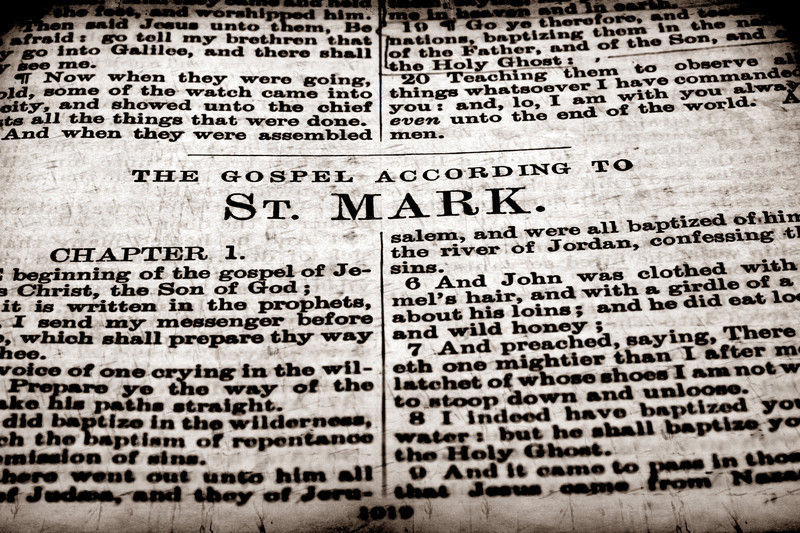
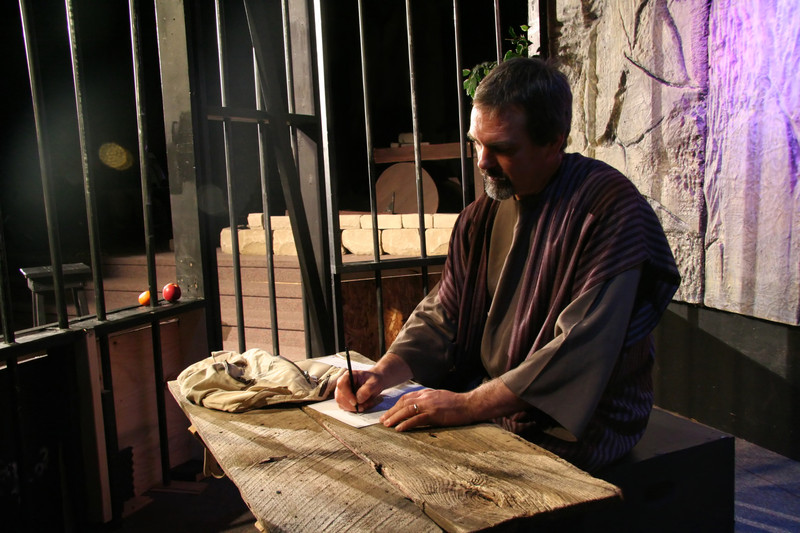
Dating the Gospels and the Resurrection Story

© Can Stock Photo Inc. / CWMGary

When were the Gospels written? This is an important question.

Most scholars date the Gospels between 40 and 65 years from the death of Christ as follows: Mark 70 AD, Matthew 80 AD, Luke 85 AD and John 95 AD. The scholarly position is stated concisely in the narrative on Dating the Gospels linked here.  Other scholars date them much earlier than that, but Gary Habermas, adopts the majority scholarly view in making his argument for the historical resurrection. (Gary Habermas Explains The Earliest Source Of Resurrection Facts.)

Virtually no one disagrees that Paul’s letters (the ones scholars concede) were written in the 50’s AD. James, Peter and Paul all died in the 60’s AD during the persecution of Christians by Rome. Another key date is the destruction of the Temple in Jerusalem in 70 AD. The scholarly consensus is that “the deaths of these important figures likely encouraged the writing down of the narratives about Jesus”.

Some scholars maintain the narratives were written down well before that time, the reasons for which I will explore in this article. Incidentally, that was the the common view until about the 19th Century, when scholars from the Tubingen school in Germany began to posit the idea that the Gospels were written much later, even as late as the 2nd Century. They also began to question that the Gospels were written by the people attributed to them.

That view of the Gospels is what I learned in college in the late 1970’s, but modern scholars have backed off that view and concede that the Gospels were written within a generation of the death of Jesus. Most scholars agree that Mark was the first Gospel to be written, and that Mark was written around the year 70 AD. Most scholars believe the Gospels of Matthew and Luke were composed in the 80’s, using Mark as source material and a “collection of Jesus’s sayings” (oral tradition). The Gospel of John was believed to derive from different sources (like the Apostle John, himself) and was written toward the end of the 1st Century..

While there is some disagreement on how early the Gospels were written, the work of Gary Habermas has convinced many (most?) scholars, even skeptical ones, that the message of the Gospel – that Jesus, lived, died and rose from the dead, appearing to his followers – goes back many years before the Gospels are believed to have been written. 

In fact, it seems fairly clear that this message (of the resurrection) goes back virtually to the beginning. It goes back, at least, to the time when Paul says he “received” the message at his conversion, but it goes back further than that because he corroborated the message he received with the apostles in Jerusalem who were sharing the same message before Paul did. That message was also at the heart of all the creeds found in Paul’s writings, which were arguably before the Gospels were written.

Continue reading “Dating the Gospels and the Resurrection Story”

Money in God’s Economy

canstockphoto10984788


One pretends to be rich[1], yet has nothing; while another pretends to be poor, yet has great wealth[2]. Proverbs 13:7

In God’s economy, things are often upside down and inside out, at least from our perspective, because we tend to value things differently than God does. Take money for instance. God says, “The love of money is a root of all sorts of evil.” (1 Tim. 6:10) This verse, along with the passage about the rich young ruler, cause most of us to pause and consider how different from our ways God’s ways are.

Money is not intrinsically bad. Money, by itself is neither bad nor good. The “love of money”, not money itself, is a root of evil. It is not the money, but how we treat it that is the problem. The “love” comes from us, not from money, itself. “For from within, out of the heart of man, come evil thoughts….” (Mark 7:21)

The fact is that money has no intrinsic value at all. Dollar bills are just pieces of paper. Coins are just inorganic substance. A rock might as well be just as valuable as a dollar bill. So, if money has no intrinsic value, we (people) are the ones who ascribe value to money.

The value of money comes from the value we ascribe to it. Some rocks we value highly, and other rocks we value hardly at all. Diamonds, rubies and precious gems we covet, but pebbles lying at our feet are not worth bending over to pick up.

In God’s economy, however, value is ascribed much differently than the values projected by people in the human marketplace. Because God is who is, the Creator of the Universe, God and what God values are the only things with intrinsic value. The values that people have given things are, ultimately, worthless in God’s economy unless God, Himself, gives them value.

We are God’s crowning creation. God made us, and not we ourselves. (Ps. 100:3) God values people who were made in His image above all things.

It should be no surprise, then that value in the economy of God is ranked according to the greatest commandment (to love God above all things) and to the second greatest commandment (to love our neighbors as ourselves). If we are going to be rich in God’s economy, we should value what God values.

While God may value us most highly, our greatest value must be in God Himself.

When we value money before God and other people, we are deviating from God’s what God values ans accepting something less. Money does, obviously, have value, but the value lies not in the money, itself. The value is imparted by us, by society, and the value is in what money can gain for us. Since money, unlike God and people, has no intrinsic value, it should be subordinated to those things that do have intrinsic value.

Money is not evil in itself. Evil is what flows out of the hearts of people. The value we ascribe to money can be at the heart of all kinds of evil that flow out of our hearts, but money is not the culprit – we are the culprits.

As always, throughout Scripture, the real issue lies with us. Our treasure is where are hearts are. If we do not value God above all things and love other people only second to our love for God, we have the world upside down and inside out.

God’s economy provides freedom from the pressures and the stress of being tied to worldly, fleshy fortunes. When we value what God values, we are free to live as God intends us to live. When we value what God values, we put our treasures up in heaven where the value will not rust, rot, fade or diminish.

The ransom of a man’s life is his wealth, but a poor man hears no threat. Proverbs 13:8

Money, in God’s economy, has no intrinsic value, but it may be valuable to the extent that it can be used to the benefit of what God values.


[1] The action, “pretends to be rich,” is expressed with the hithpael verb stem.  It conveys a sense of acting on one’s self. The fundamental (“inside”) meaning of hithpael adds an inner layer of meaning beyond the literal sense of the verb – stressing the self-benefit (motivation) driving the subject to act.  This personal benefit is understood from the context (not the form itself) and metaphorically roots to the spiritual or psychological element moving the person to act.

[2] This term, 1952/hôn, implies freedom from pressures of life because enjoying surplus (accumulation).


TheDiscoveryBible Logo

I use The Discovery Bible to gain a deeper, richer and more complete understanding of the Scripture. If you want ready understanding of the original Greek, the original word emphasis and Greek tenses that do not exist in English, definitions of Greek words and more to make your reading of the New Testament deeper and richer, check out The Discovery Bible. The Discovery Bible opens up knowledge of the original New Testament text in Greek to you in your everyday Bible reading. It shows the words emphasized in the Greek text, the tenses and the meanings that do not always translate well into English or English sentence structure. If you are ready to dig deeper in your Bible reading, try a free 30-day trial download of The Discovery Bible.


Finding Balance in Worship

Are our Sunday worship services more pagan than Christian? That was the claim of a recent article.

© Can Stock Photo Inc. / grace1221

Praise the LORD! Sing to the LORD a new song, and His praise in the congregation of the godly ones. Let Israel be glad[1] in his Maker; let the sons of Zion rejoice[2] in their King. Let them praise His name with dancing; Let them sing praises to Him with timbrel and lyre. For the LORD takes pleasure in His people; He will beautify the afflicted ones with salvation. Let the godly ones exult[3] in glory; let them sing for joy[4] on their beds. (Psalm 149:1-5)

I have been thinking about an article I read recently: Is Your Church Worship More Pagan Than Christian? by Todd Pruitt. He questions the popular Christian music and worship culture on the basis that it exalts music to a sacramental position and musicians to priestly status without biblical foundation for the emphasis. He claims it promotes feelings over doctrinal soundness and experience over preaching the Word of God. These are valid concerns.

I agree with Todd Pruitt on nearly every point, yet the article and the one that followed, (Is Your Worship Christian or Pagan? (7 Tests)), leave me scratching my head a bit. Let me explain. Continue reading “Finding Balance in Worship”

Let Your Light Shine Before Men without Practicing Your Own Righteousness

In the Sermon on the Mount Jesus said “Let your light shine”, but don’t practice your righteousness before men. How do we do tell the difference?

by Heather Russell
by Heather Russell

In the Sermon on the Mount (where Jesus spoke to His disciples, not the crowds that also followed Him) a couple of the subjects that Jesus addressed seem contradictory at first blush. They both relate on the surface to the way we act in public, before other people. He said, on the one hand:

You are the light[1] of the world…. Let your light shine before men in such a way that they may see[2] your good[3] works, and glorify your Father who is in heaven. (Matthew 5:14, 16)

Jesus, on the other hand, gave the following negative instruction:

Beware of practicing your righteousness before men to be noticed by them; otherwise you have no reward with your Father who is in heaven. (Matthew 6:1)

Jesus went on to provide the following examples:

“So when you give to the poor, do not sound a trumpet before you, as the hypocrites do in the synagogues and in the streets, so that they may be honored by men. Truly I say to you, they have their reward in full. But when you give to the poor, do not let your left hand know what your right hand is doing, so that your giving will be in secret; and your Father who sees what is done in secret will reward you. When you pray, you are not to be like the hypocrites; for they love to stand and pray in the synagogues and on the street corners so that they may be seen by men. Truly I say to you, they have their reward in full. But you, when you pray, go into your inner room, close your door and pray to your Father who is in secret, and your Father who sees what is done in secret will reward you.” (Matthew 6:2-6)

How do we let our light shine before men without practicing our righteousness before men?

Continue reading “Let Your Light Shine Before Men without Practicing Your Own Righteousness”

Let Your Light Shine

by Nicholas Drendel
by Nicholas Drendel

When Jesus saw the crowds, he went up on a mountain. The disciples followed and gathered around Him when He sat down. So began the Sermon on the Mount.

Though the text does not clearly say, I believe it was just Jesus and the disciples on the mountain. Jesus was sitting, and the disciples were around Him. there was no room for the crowds to gather, and they could not hear Him as He sat with the disciples around Him.

The Sermon on the Mount, therefore, was not for the crowds, but for the followers of Jesus.

Continue reading “Let Your Light Shine”