Suffering, Hope Deferred and Desire Fulfilled

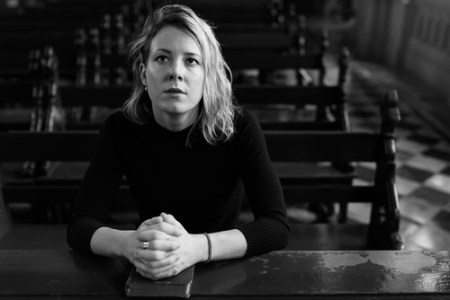
For most of us, we fight disappointment throughout our lives. Our dreams never seem to come to fruition. “Hope deferred makes the heart sick….”

depositphotos Image ID: 27797997 Copyright: xura

“[U]unless a grain of wheat falls into the earth and dies, it remains alone; but if it dies[1], it bears much fruit. Whoever loves his life loses[2] it, and whoever hates[3] his life[4] in this world will keep it for eternal life[5]. If anyone serves me, he must follow me; and where I am, there will my servant be also. If anyone serves me, the Father will honor him.”[6]

Things aren’t necessarily as they seem. Our lives seem vibrant, filled with import and purpose when we are children. Everything is fresh. Summer days, puffy white clouds and blue skies seem to last forever. The older we get, the faster the days seem to go, the less the sun seems to shine. The more fleeting becomes the clouds and the blue skis. The polish of our lives, which seemed so fresh once, begins to dull.

For most of us, we fight disappointment throughout our lives. Our dreams never seem to come to fruition. “Hope deferred makes the heart sick….”[7]

We learn to carry on. We have nowhere to go but forward. Those of us who don’t spend our time thinking of what could have been, might have been, make an awkward peace with the past. We try to make the most of the present and adjust hope for our future.

We learn to dream less. We learn to rein our hopes in, tethering them closer to the ground. Disappointment lowers our expectations. We cling to what we can hold onto, and we risk, thereby, losing it all.

Continue reading “Suffering, Hope Deferred and Desire Fulfilled”

The Choices God Gives Us

We must choose to receive Jesus, and then He gives us the right to become children of God.

Depositphotos Image ID: 7103912 Copyright: kohy81

“But to all[1] who did receive[2] Him, to those who believed[3] in His name, He gave the right[4] to become[5] children[6] of God— children born[7] not of blood, nor of the will[8] of the flesh[9], nor of the will of man, but born of God.” (John 1:12-13)

Johns packs a lot into these short verses, tucked into the first chapter of his Gospel that is profoundly full of other significant meaning:

“In the beginning was the Word, and the Word was with God, and the Word was God…. All things were made through him….In him was life, and the life was the light of men…. The true light…. was in the world, and the world was made through him, yet the world did not know him. He came to his own, and his own people did not receive him. But to all who did receive him… he gave the right to become children of God…. And the Word became flesh and dwelt among us….”[10]

These are some of the most profound and remarkable verses in all of Scripture. God became flesh, and He lived among the people He chose as His own, but they didn’t even recognize who He was. But those who received – who believed Him – He gave the right to become children of God.

I see two choices here: the choice of receiving Christ and the choice God gives us after receiving Christ – the right to become children of God. My Reformed friends might be tempted to overlook the import of this power-packed passage.  I am little unnerved by it myself, truth be told. I don’t trust my own heart to make the right choices!

Continue reading “The Choices God Gives Us”

God Chooses US

The Scripture presents to us a tension between the necessity of free will and the certainty of God’s sovereignty.

Creative Commons photo from Flicker

God lets us choose Him: “But to all who did receive Him, to those who believed in His name, He gave the right to become children of God.” But that isn’t the beginning of the story – or the end of it.

God chooses us. He gives us the right to become children of God[i], and He made that choice before the foundation[ii] of the world. We become the children of God not by blood descent, not by the will of parents or anyone else – maybe not even by our own will – but by God’s choice.[iii]

I do not have a systematic theology. I am not a theologian, and my understanding of systematic theology is limited, but free will has always seemed self-evident to me. It also seems eminently biblical. God created us in his own image[iv], and a primary characteristic of God is agency. We see in the story of Adam and Eve that God gave us agency too, by giving them dominion over the animals of the earth and in the choice to eat of the fruit of the tree of the knowledge of good and evil.

The freedom to choose is also a necessary condition of love. God is love[v], and he created us in His image to reflect Him, to glorify Him and to love Him.

The point of an image is to image. Images are erected to display the original. Point to the original. Glorify the original. God made humans in his image so that the world would be filled with reflectors of God. Images of God. Seven billion statues of God. So that nobody would miss the point of creation. Nobody (unless they were stone blind) could miss the point of humanity, namely, God. Knowing, loving, showing God.[vi]

God created us to love him. Therefore, we must have agency/free will in order to be able to reflect back His love as He intended.

But there is another side to this. There is not only what we call faith; there is grace. There is God’s unmerited favor. God chooses us. We call this predestination and attribute it to God’s sovereignty

Continue reading “God Chooses US”

The Rose and the Thistle

We live with the duality of being born of the flesh and born of the spirit

Depositphotos Image ID: 4468140 Copyright: Estea-Estea

“Two things cannot be in one place. Where you tend a rose, my lad, a thistle cannot grow.”[i]

This quotation by Frances Hodgson Burnett is pretty profound when you think about it. A person cannot feed love and feed hate at the same time. One displaces the other, like light displaces the darkness.

Except, we know from our own experience that we can love and hate at the same time. It’s just that we cannot love and hate the same thing at the same time. This is what the quotation is saying: a rose and a thistle cannot occupy the same space, though roses and thistles can certainly stand side-by-side. We can love one person and hate another.

Jesus puts a twist on these thoughts when he says that a person cannot serve two masters. When two priorities are vying for position in our hearts, they cannot both occupy the top position: “Either you will hate the one and love the other, or you will be devoted to the one and despise the other.”  And Jesus provides us a ready example: “You cannot serve both God and money.”[1]

Continue reading “The Rose and the Thistle”

God Lets Us Choose Him

If we encountered God “face to face” in our daily lives and if God was so evident in creation that we could not deny him, we would not have free will.

Depositphotos Image ID: 31693997 Copyright: DesignPicsInc

In back-to-back chapters in the Gospel of John (8, 9 and 10), Jesus has conversations with Jewish crowds who question who he is. Jesus never tells them in direct words, “I am God,” but the crowd clearly knows what he is talking about. This is similar to what we experience in life.

The world is made in such a way that it is governed by natural laws that have existed since the beginning of time. The cosmological constants were set from the beginning and are so finely tuned that they could not be changed this way or that way, even the slightest bit, without negating the possibility of life on Earth. Many scientists look at these laws and draw the conclusion that either they have always existed or they are simply all there is.

But where did the laws come from? Where did the universe come from? There is plenty of other evidence that God, the Creator, exists. The cosmological constants do not eliminate the possibility of a God. In fact, if those constants had a beginning, they must have had a beginner. But, there is room to question and to dismiss the idea.

Many of the Jewish people at the time of Jesus, especially the influential leaders, questioned who Jesus claimed to be.  Jesus did not get in their face about it. Just like God does not reveal himself in the created Universe in a way that we could not ignore him, Jesus was subtle, but clear.

I find this to be fascinating. It reveals a deep thread that has been coming into focus for me going way back in time.

God created us with free will. If he was in our face, we would have no free will. He would overwhelm and overcome us if we could not ignore Him.

Continue reading “God Lets Us Choose Him”