The Rose and the Thistle

We live with the duality of being born of the flesh and born of the spirit

Depositphotos Image ID: 4468140 Copyright: Estea-Estea

“Two things cannot be in one place. Where you tend a rose, my lad, a thistle cannot grow.”[i]

This quotation by Frances Hodgson Burnett is pretty profound when you think about it. A person cannot feed love and feed hate at the same time. One displaces the other, like light displaces the darkness.

Except, we know from our own experience that we can love and hate at the same time. It’s just that we cannot love and hate the same thing at the same time. This is what the quotation is saying: a rose and a thistle cannot occupy the same space, though roses and thistles can certainly stand side-by-side. We can love one person and hate another.

Jesus puts a twist on these thoughts when he says that a person cannot serve two masters. When two priorities are vying for position in our hearts, they cannot both occupy the top position: “Either you will hate the one and love the other, or you will be devoted to the one and despise the other.”  And Jesus provides us a ready example: “You cannot serve both God and money.”[1]

Continue reading “The Rose and the Thistle”

God Lets Us Choose Him

If we encountered God “face to face” in our daily lives and if God was so evident in creation that we could not deny him, we would not have free will.

Depositphotos Image ID: 31693997 Copyright: DesignPicsInc

In back-to-back chapters in the Gospel of John (8, 9 and 10), Jesus has conversations with Jewish crowds who question who he is. Jesus never tells them in direct words, “I am God,” but the crowd clearly knows what he is talking about. This is similar to what we experience in life.

The world is made in such a way that it is governed by natural laws that have existed since the beginning of time. The cosmological constants were set from the beginning and are so finely tuned that they could not be changed this way or that way, even the slightest bit, without negating the possibility of life on Earth. Many scientists look at these laws and draw the conclusion that either they have always existed or they are simply all there is.

But where did the laws come from? Where did the universe come from? There is plenty of other evidence that God, the Creator, exists. The cosmological constants do not eliminate the possibility of a God. In fact, if those constants had a beginning, they must have had a beginner. But, there is room to question and to dismiss the idea.

Many of the Jewish people at the time of Jesus, especially the influential leaders, questioned who Jesus claimed to be.  Jesus did not get in their face about it. Just like God does not reveal himself in the created Universe in a way that we could not ignore him, Jesus was subtle, but clear.

I find this to be fascinating. It reveals a deep thread that has been coming into focus for me going way back in time.

God created us with free will. If he was in our face, we would have no free will. He would overwhelm and overcome us if we could not ignore Him.

Continue reading “God Lets Us Choose Him”

Emptied of Glory and Obedient to Death

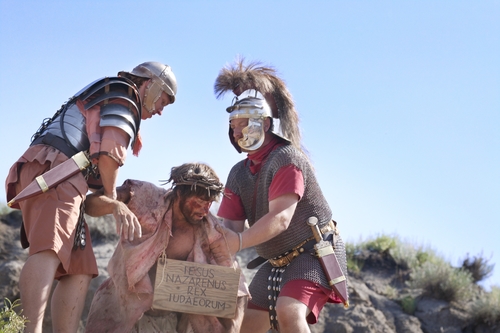
Depositphotos: 31617591 Copyright: DesignPicsInc

On Good Friday we remember the ultimate sacrifice God made for us. Not only did He empty Himself of His glory to become like us, taking on human flesh, but He was obedient to the law that He established for us – obedient to death – even death on the cross. We shudder at the thought of hanging on a cross, but it’s hard for us to imagine how utterly shameful crucifixion was in the 1st Century.[1]

This was not just a person, though, this was God who had already shed his glory to become like us and walked in humble obedience to all that He required of us – something that we do not even do ourselves. This man who hung tortuously and shamefully on the cross was also fully God who certainly suffered all the pain and shame that a man and God could possibly feel at the hands of His own creation.

In the article linked at the end of this blog piece, Trevin Wax makes three observations that have stuck with me since I read them: Continue reading “Emptied of Glory and Obedient to Death”

Remembering Jesus on Good Friday

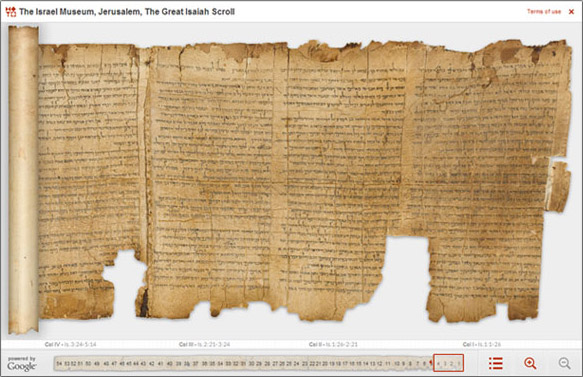
The Great Isaiah Scroll (1QIsaa) • Qumran Cave 1 • 1st century BCE • Parchment • H: 22-25, L: 734 cm • Government of Israel • Accession number: HU 95.57/27

These words where written by a man named Isaiah[1], considered a prophet, about 700 BC, before Christ Continue reading “Remembering Jesus on Good Friday”

What Is Man That God Should Take Notice?

Depositphotos Image ID: 31610845 Copyright: DesignPicsInc

We all know the story of Job. Job was considered a righteous man, as far as men go. He was a God-fearing man, and He was also blessed with wealth, a good family and many friends.

Then, according to the story, God allows Satan to destroy Job’s wealth, family, and health. He lost everything, and he can’t understand why God would allow such a righteous man as himself to fall on such hard times.

Job became the poster child of bad things happening to good people!

Job put on sackcloth and sat in ashes demanding to know of God why he was suffering such injustice. He counted all the ways he had been righteous and just and challenged God to explain why he was suffering while men not as righteous or just as he were living in relative comfort and abundance.

Job’s friends tried to counsel him, but they didn’t believe that he was as just and good as he claimed to be. They, like Job, believed that God wouldn’t allow a righteous man to suffer as Job was suffering. Thus, they concluded that Job wasn’t as good as he claimed.

This is a common paradigm. Job’s dilemma is our dilemma as well. We think that good people should have good lives and bad people should pay the price of their badness.

Only, it doesn’t seem to work out that way. It obviously isn’t that simple. We have a keen sense of justice (especially when we feel the sting of injustice close to home). We can see that injustice exists in the world, and we it bothers us.

The Bible doesn’t shy away from the issue, as some suppose. It doesn’t soft peddle the problem. It tackles “the problem of pain” head on.

Continue reading “What Is Man That God Should Take Notice?”