Our Transcendent Hope

Llife is short and tenuous. Whether we live to be a hundred or 80 or only 8, life will end. What, then, is our hope?


A very close friend of mine was expressing concern about the state of the world recently. He expressed concern about Donald Trump the Korean dictator, like a bully provokes a mass murderer. I was not prepared for such an existential discussion, and I did not respond very well.

I recognize, though, the the concerns are real. I was haunted by the specter of nuclear war as a child growing up in the 60’s and 70’s. I even bought a poster of a mushroom cloud to hang on my wall, not because I wanted the world to end in a ball of fire, but because it was a reality I couldn’t ignore.

But we do learn to ignore realities like that. I no longer have a poster of a mushroom cloud, and the threat of nuclear war no longer looms in my psyche like it did in my teenage years. Though it is no less likely to happen. (Maybe even more likely now!)

Maybe we lose our angst over these things because they are hard to live with them. We learn to push them back into the recesses of our consciousness. We displace the angst with busyness, entertainment and other distractions.

The fact is that life is short and tenuous. Whether we live to be a hundred or 80 or only 8, life will end. This is a harsh, but true, reality, though I’m afraid it isn’t very helpful “advice” for someone who is laboring under the burden of the weight of the world. I wish I had said something different (or, at least, more).

I firmly believe this world is not all there is. We thirst, and water exists to quench our thirst. We hunger, and food exists to sate our hunger. It makes sense that, if we yearn for something transcendent, something transcendental exists to satisfy our existential longing.

We all seem to “know” this, but the world is so full of a thousand superficial answers to the ultimate existential question that we hardly have any idea what to believe. We might be tempted to seize on the first or closest one or easiest answer, like responding to that Publishers Clearing House Sweepstakes mailer declaring you might be the winner. For some people, hope springs eternal.

Others are tempted to abandon any hope of an existential answer. The resign ourselves to the material world, trying to squeeze whatever temporal pleasure and benefits while they can out of this myopic existence.

Is there proof of something transcendent? How can we know? These are serious and heartfelt questions.

Continue reading “Our Transcendent Hope”

Christmas, Taxes and a Heart for God

What do Christmas, taxes and King David have to do with each other? You might be surprised to find out.

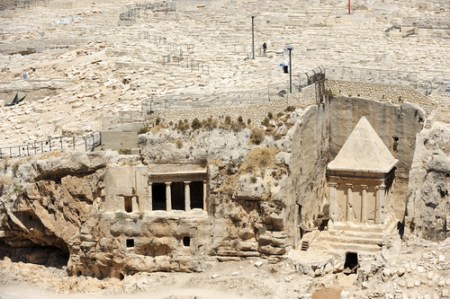
Archaeological site, City of David in Jerusalem, Israel 


This blog article is prompted by a Christmas tax article. Yes, Christmas and income taxes go together. Who would’ve thunk it?!

In Luke 2:1, we read that Caesar Augustus sent out a decree for a census. It turns out the census was declared so that the Caesar could tax people.

That fact, though, isn’t what caught my eye or what prompts this article, though. The article is also not about unjust taxes that burden the poor and avoid the rich. This article also isn’t about the controversy over whether Luke is accurate about the census and the timing of it.

What prompts me to write this piece is the reference to a previous census and previous tax and the surprising and shocking instigator of that tax – the man of God who allowed it to happen, David.

Continue reading “Christmas, Taxes and a Heart for God”

The Creed of Our Lives

We tend to want to reduce spiritual things to “the letter of the law”, but Jesus wasn’t like that.

Depositphotos Image ID: 3036050 Copyright: marko5

Gandhi once said something to the effect that Christians will not make a dent in India until the Sermon on the Mount becomes part of their creed. Gandhi saw what many modern skeptics see, which is a gap between the Christian proclamation and testimony and how those same Christians live their lives.

If we are followers of Christ, shouldn’t we model what Jesus preached?

It’s a fair question.

Continue reading “The Creed of Our Lives”

The Significance of Our Father

God is always orientated as a Father toward us

Christianpicsco NKFw

Tim Keller[1] says there are no more important words in the prayer that Jesus taught us to pray then the first two words, Our Father.[2] The importance of these words is underscored by the way we reference The Lord’s Prayer. We sometimes call it “the Our Father”.

Why are these words so important?

Tim Keller says that these words frame our orientation toward God. He suggests that people either have a transactional orientation toward God or a family orientation. Most of us operate on a transactional orientation toward God and others at times in our lives. Some of us live there. Beginning a prayer by calling God, “Our Father”, orientates us the right way.

A transactional orientation is focused on what we must do in order to have a relationship, a connection, with other people. A transactional orientation focuses on what people (and God) can do for us. A transactional orientation is characterized by offering consideration[3] in order to get something in return.

When we have a transactional orientation toward God, we approach Him completely differently than the way Jesus taught us to pray. We come to Him looking for something for ourselves. We are focused on what we need and want. We feel like we have to offer Him something in order to get what we are seeking. A transactional orientation toward God turns prayer into bargaining.

When we have a transactional orientation toward God, we are not seeking God. We are seeking something from God.

Continue reading “The Significance of Our Father”

Back to the Tree of Life

The hope that is deferred is not just eternal life, but fullness of life.

The tree of life is mentioned only three places in the Bible. The first and most prominent appearance of the tree of life is in Genesis. The tree of life appears in Proverbs (three times) and again in the Book of Revelation (on either side of the “river of the water of life… flowing from the throne of God….”[1])

The tree of life was there in the beginning, and it will be reappear in the end. In between, where we are now, between Genesis and Revelations, we are presently cut off from the tree of life.

The tree of life obviously figures into God’s ultimate plan and purpose. But how? Where is the tree of life between the Garden of Eden and standing beside the river of the water of life flowing from the throne of God? Let’s take a look.

Continue reading “Back to the Tree of Life”