Diving for Pearls in the stories of Dustin Kensrue and Mark Driscoll

Dustin Kensrue’s music is as good as ever, but it comes with the melancholy of what used to be.


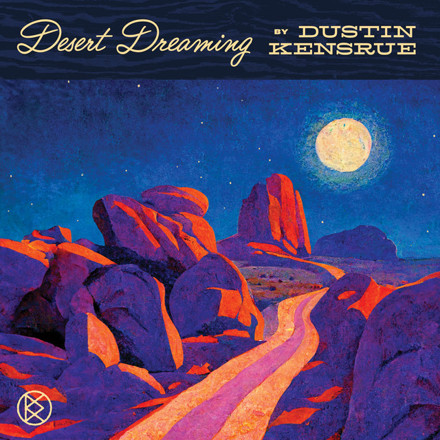
I recently spent some time listening to Dustin Kensrue’s new album, Desert Dreaming. I like his music, and the new album is good. The first song I heard, though, reminded me of the rumors that he has walked away from orthodox Christianity:

When I left town, I was swept up
With the visions of a man from Galilee
Along the way, I lost my bearings
I got swallowed up by sins of certainty
The heart of sedona

The words to this song triggered a desire to research the truth. Kensure was an impactful Christian musician who wrote the worship album of the year not to many years ago. I wondered, therefore, why he walked away (if indeed he did).


I learned that Kensrue was a former worship leader for Mars Hill, the failed church that rose to the heights of evangelical influence with many campuses, only to collapse with the failings of its erstwhile leader, Mark Driscoll.

Listening to the song, Heart of Sedona, off Kensrue’s new album, Desert Dreaming, gave me pause. The words seem to confirm the rumor, and the story seems all too familiar lately.

His music is as good as ever, but it comes with the melancholy of what used to be. Or maybe it never was. It’s hard to know how to process the deconstruction of someone else’s faith.

Given the back story (involvement in a failed church movement), I suspected his “deconstruction” (and many other artists who seem to have followed a similar path) may be symptomatic of some malady that has infected Evangelical Christianity.

My entre into Kensrue’s story begin with the article, It’s Not Enough: Dustin Kensrue’s Turning Away, which is where I learned that Kensrue was intimately involved in the toxic environment of the Mars Hill church movement led by Driscoll, a controversial and polarizing personality.

I had heard of the rise and fall of Mark Driscoll and the Mars Hill Church, but I did not jump on the curiosity bandwagon when people associated with Christianity Today produced the podcast, The Rise and Fall of Mars Hill. I only heard about it, and I had listened to a discussion of the podcast on another podcast. Therefore, I finally felt a need to hear it firsthand to gain some perspective.

The podcast describes the talent and bravado of Mark Driscoll, who was also polarizing and toxic and seemingly proud of it. Driscoll was staunchly reformed in his theology with a cultish personality and a flair for the dramatic. He attracted people on the edges of faith in the notoriously countercultural Seattle area. I summarized some of my thoughts on what I learned in Keeping It Real for the Church: Talent in Tension with Character)

I have also gone back, now, through the tweets highlighted in the article I noted above, and I have poured over Dustin Kensrue’s Twitter (X) feed to gain further insight. These things give me additional food for thought in considering the “deconstruction” of Dustin Kensrue as it relates to the American Evangelical Church.

Though I have spent considerable time researching these things, my thoughts remain preliminary and exploratory. I am not certain that I have gained sufficient perspective to be clear or certain of any conclusions, but all this seems to confirm my sense that the story is symptomatic of a problem with the American Evangelical Church.

In fact, the original article I found, itself, seems to be symptomatic of issues in the American Evangelical Church. These issues may also be reflected in current American culture, affected as it is by social media. I apologize for the length of this article, but I am afraid I do not do much more than scratch the surface here.

Continue reading “Diving for Pearls in the stories of Dustin Kensrue and Mark Driscoll”

The Way of Righteousness and the Holy Command: an Introduction

We escape the corruption of the world by the way of righteousness and the sacred command. But, what if we lose the way and don’t know the sacred commandment?


Have you ever read a passage in the Bible that weighed heavily on you? A verse that caught you up short?  A verse that gave you great concern? A verse that made you question your own salvation?

I assume we all (who take the Bible seriously) have experienced that. I believe the Holy Spirit interacts with us as we read the Bible (which the writer of Hebrews says is “living and active”). Sometimes we are encouraged, and sometimes the light of scripture shines into the recesses of our hearts and exposes things that bother us. (And so they should!)

Indeed, I believe that this is one of the great benefits of reading Scripture on a regular basis. God talks to us through His revealed Word. He interacts with us in ways that get to the core of our being … if we let Him … to teach us, to convict us, to correct us, and to instruct us in righteousness. (2 Timothy 3:16)

I recently read the following verses in my daily Bible reading:

If they have escaped the corruption of the world by knowing our Lord and Savior Jesus Christ and are again entangled in it and are overcome, they are worse off at the end than they were at the beginning. It would have been better for them not to have known the way of righteousness, than to have known it and then to turn their backs on the sacred command that was passed on to them.

2 Peter 2:20-21

Peter goes on to quote two “proverbs” about: 1) a dog that returns to its vomit (quoting Proverbs 26:11); and 2) a sow that is washed that returns to wallowing in the mud.

These examples seem to be clear illustrations of people who, having been cleansed from sin, return to their sin. If you have ever returned to the sin you have walked away from, you know the angst that reading this verse can bring.

Peter says it is better that we never know Jesus than to have known him and walked away! People are worse off not to have known the “way of righteousness” than to have known it and turned their backs on the “sacred command” (or holy commandment).

I am convicted when I read these things. I sometimes despair of the sin I tend to repeat. I have often felt like a slave to certain sin, and I been anxious for my own salvation when I read a verse like this.

I think we should feel the full weight of verses like this. God is clearly interested in the fruit of our lives. A bad tree cannot produce good fruit. If we are tapping into the wrong tree, nothing we do can produce good fruit. The problem isn’t in the fruit; the problem is the source.

Continue reading “The Way of Righteousness and the Holy Command: an Introduction”

The Way of Righteousness and the Holy Command: The Way

We escape the corruption of the world by the way of righteousness and the sacred command. But, what if we lose the way and don’t know the sacred commandment?


I started this short series focusing on the second epistle of Peter where Peter warns his readers about false prophets with “eyes full of adultery”, greed, and depravity who are slaves to their own sin. These people seduce the unstable and entice others by appealing to the lustful desires of the flesh. Peter says,

It would have been better for them not to have known the way of righteousness, than to have known it and then to turn their backs on the sacred command that was passed on to them.

These are fearful words of warning. Anyone who might feel enslaved to sin has likely felt angst when reading this words.

In the previous article, I note that the actions Peter describes are the fruit of people who have “known the way of righteousness” and the “sacred [holy] command” and have turned their backs and walked away. The fruits are the symptoms, not the cause.

The important thing for us, therefore, is to know the way of righteousness and the holy commandment, and not to turn our backs on them! In this follow up to that introductory article, I will focus on the way of righteousness.

Continue reading “The Way of Righteousness and the Holy Command: The Way”

The Way of Righteousness and the Holy Command: the Holy Command

We escape the corruption of the world by the way of righteousness and the sacred command. But, what if we lose the way and don’t know the sacred commandment?


I started this short series with a passage from 2 Peter 2:20-21:

If they have escaped the corruption of the world by knowing our Lord and Savior Jesus Christ and are again entangled in it and are overcome, they are worse off at the end than they were at the beginning. It would have been better for them not to have known the way of righteousness, than to have known it and then to turn their backs on the sacred command that was passed on to them.

They “they” who escaped the corruption of the world only to be entangled in it again are the false prophets Peter accuses at the beginning of the chapter of introducing “destructive heresies” and “denying the sovereign Lord who bought them.” (2 Pet. 2:1) Peter says these false prophets are like dogs returning to their vomit. (v. 22) Seducing the unstable (v. 14) and appealing to the lustful desires of the flesh, they entice “people who are just escaping from those who live in error.” (v. 18)

In the introductory article, I note that the words of judgment Peter unleashes on these false prophets might lead to a concern that we could one of those unstable ones who are enticed and entrapped. Those who struggle with sins that so easily entangle us might easily feel condemned in this tirade.

The solemn warning that such ones are better off not knowing Jesus. than knowing the way of righteousness and turning their back on the sacred command is enough to send a shiver down the spine. The actions Peter describes, however, are the fruits of turning away from the sacred command. These fruits are not the problems in themselves, but the symptoms of disconnecting from the way of righteousness and the sacred command.

In the second article, I explored the way of righteousness. The way of righteousness is the way of Jesus, who is the Way! Knowing Jesus and knowing the way of righteousness is the same thing.

The way of righteousness means embracing and walking in light of his sacrifice on the cross by which we are justified and we are considered righteous before God the Father. It means trusting in Jesus and the grace of God the Father. It means ceasing from our striving to earn the way and the pride that goes with our achievement.

The way of righteousness means following Jesus and maintaining relationship with Jesus, who is our Living Water, our Bread of Life, and the Vine in which we have become the branches (extensions of him). Knowing the way of righteousness and turning from the sacred command is to disconnect and to go our own way.

But what is the sacred command? This was my big question as I read through this passage recently, and this question is ultimately what motives me to write this short series.

I admit, that I wasn’t sure as I read through this passage. I should have known, because Jesus was pretty clear about it. But, I didn’t. I had lost sight of it. It’s so easy to lose sight of what’s important in the turmoil in the world that often spills over into my own heart.

Continue reading “The Way of Righteousness and the Holy Command: the Holy Command”

A Facelift Proposed on the Doctrine of Inerrancy

God guided the circumstances in which the biblical literature was divinely inspired, and God approved the final product


The Chicago Statement on Biblical Inerrancy is just a little older than my Christian faith. It was relatively new when I first read the Bible in college and when I first asked Jesus to be the Lord and Savior of my life. I have wrestled with the idea of inerrancy from the beginning of my Christian life until now.

It isn’t that I don’t think the Bible is the “word of God”. It isn’t that I don’t have a “high” view of the reliability, integrity, and divine nature of the Bible. It isn’t that I don’t think the Bible was inspired by God and should be relied on as His word to us to follow.

I believe all these things, but I have issues with statements on inerrancy that seem to push what the Bible says about itself beyond what it says.

Finally, I have found some similar thinking in two of the great Christian thinkers of our time: Mike Licona and William Lane Craig. In his blog, Risen Jesus, Licona introduces a paper to the world that he wrote and presented at the annual meeting of the Evangelical Theological society.


In the paper, Licona cites Craig in support of a new proposal on inerrancy. First, though, he explains some of what is problematic with the Chicago Statement. I am not going to restate the points he makes here. You can read the paper, CSBI Needs a Facelift, yourself, but I will summarize it for those who don’t have the time or inclination to read the original (though it isn’t long).

Licona starts with the two main verses that provide the inspiration (pun intended) for the doctrine of inerrancy: 2 Timothy 3:16 and 2 Peter 1:20-21. At the center of this are the words “God-inspired” or “God-breathed” which are English translations of the Greek word, “theopneustos“.

Licona traces the history of the use of the word, theopneustos, prior to the 3rd Century. The word was not often used, and it was used in very diverse contexts. Licona quotes a commentary on 2 Timothy, stating, “Theopneustos does not have enough precision to go beyond the basic idea that the Scriptures came from God.” and he concludes:

Therefore, 2 Timothy 3:16 does not contribute as much to our discussion as we may have first thought. So we should be cautious not to read more into it than Paul may have intended.

The 2 Peter 1:20-21 text speaks of prophets who were “carried along by the Holy Spirit.” Licona observes that the Greek word translated “carried along”, pherō, is also used by Philo “to describe how prophets received revelation from God, during which time they had ‘no power of apprehension’ while God made ‘full use of their organs of speech.’ Josephus likewise used this word to say that “God’s Spirit put the words in the mouths of the prophets” (quoting Licona, who paraphrased Josephus).

The 2 Timothy passage and the 2 Peter passage express different ideas and give rise to different pictures of how God speaks to/through people who authorized the writings of the Bible. some writings purport to be prophetic and some do not expressly adopt that attitude. The Chicago Statement assumes that both passages mean the same thing, but most biblical scholars disagree with that conclusion.

Licona goes on to summarize some phenomena in the text of the Bible that suggest a “human element in Scripture”. Licona concludes from this, “Although [the human element] does not challenge the doctrine of the inspiration of Scripture, it does challenge the concept of inspiration imagined by [the Chicago Statement].”

These issues with the ambiguous meaning of the Greek words and the very different images of God working to convey His “Word” through people (God-breathed and carried along by the Spirit), can be reconciled with a “new” paradigm, says Licona. This paradigm was suggested by Craig in 1999.

Continue reading “A Facelift Proposed on the Doctrine of Inerrancy”