How Can You Say your Religion is Right, And Everyone Else is Wrong?

“How can you say your religion is right and everyone else has it wrong?” This is a common challenge to Christianity, but not just to Christianity. All of the world religions make exclusive truth claims.

Even religions that ascribe to values like unity and universalism (like maybe the Baháʼí faith, which “stresses the unity of all people as its core teaching“) make exclusive truth claims. Their claims deny claims of other, competing religions and worldviews that are expressly more exclusive and/or which ascribe to unity and universal application with different parameters.  

The idea of exclusive religious principles is especially anathema in a post-modern world. It’s the cardinal sin of post-modernism. In such a world, it seems crude and out of step to believe, let alone admit that you believe, that some religious and philosophical assertions are true and others aren’t.

It’s much more acceptable to say that I can have “my belief”, and you can have “your belief”. We would quickly add, “What’s true for me doesn’t have to be true for you.” We believe with religious truth that people should be able to have their preferred spiritual cake and eat it too.

We do this with ethics also. People sometimes conflate religious or spiritual truth with ethics, but that’s another topic maybe for another time. People also, generally, don’t feel so magnanimous in allowing differing beliefs when they feel their own oxen have been proverbially gored. 

In the western, post-modern world, it’s ok for me to believe in chakras, or karma, or queer theory or a particular gender identity (even if my gender identity is unique to me), or aliens and whatever ethical construct goes with those things. It doesn’t need to be internally cohesive. It doesn’t really matter what a person believes, as long as she doesn’t claim it to be universal or exclusive. Claims of universality and exclusivity though, are not tolerated. 

Notice, however, that even this “tolerant” position can’t escape the charge of being an exclusive truth claim. The very claim that no one can make exclusive truth claims is an exclusive truth claim.

The person who says exclusive truth claims are not valid is making that claim contrary to all people who believe that exclusive truth claims are valid. 

I believe that people who are making the claim that religious people (especially) should not make excusive truth claims are doing so in response to people whoa re fanatical, self-righteous, judgmental, and even militant about their truth claims. Much tension in the world, cruelties perpetrated against other people, and even wars are the result of such exclusive religious truth claims. We can’t deny it. 

So what do we do? Following are some thoughts on the subject of truth claims, with some additional comments on the subject of tolerance and respect.

Continue reading “How Can You Say your Religion is Right, And Everyone Else is Wrong?”

Putting Denominational Disagreements in Perspective for the World and the Church

In a world in which the standard for disagreement is tolerance, we are called not just to tolerate each other, but to love each other deeply, from the heart.

J. Warner Wallace tackled the question, Do Denominational Disagreements Falsify Christianity? recently from an apologetic angle. A common challenge to Christianity is the extent to which we don’t agree with other. If Christianity is true, why so much disagreement? Why so many denominations?

I like the way Wallace tackles the issue. He starts by observing that truth is often complex, and finite beings such as ourselves often disagree on the complexities. This is true not just in Christianity, but even in science. Wallace lists some of the various “theoretical camps” on the origin of the universe and the various types of atheists who don’t agree with each other in their atheism.

Wallace observes that disagreement doesn’t negate the truth. Truth remains truth whether people understand it or agree on it. Paul is saying the same thing, basically, when he says, “Let God be true though every one were a liar.” (Romans 3:4) We can’t judge God by the way people act, and we can’t judge the truth of Christianity by the way the Church acts.

On that last statement, I can imagine someone saying, “Now wait a minute! Shouldn’t we hold the Church to a higher standard? Shouldn’t the Church, of all institutions, be better than secular ones? If Christianity is true, shouldn’t we expect more harmony in the Church?

I actually agree with these criticisms. What about the inquisitions, and Christians burning other Christians at the stake for heresy and Puritans burning Puritans at the stake for supposedly being witches? That sounds like a lot of infighting for a group of people who are called to be “one in Christ”!

These are serious charges against the Church and Christianity. Wallace is right that every human institution under the sun has disagreement, but shouldn’t the Church be different? If God is God and Christianity is true, shouldn’t the Church stand apart?

Jesus called his followers to be like a city set on a hill, like a beacon of truth. He said the world would know his followers by their love for one another, and he prayed for them to be one with each other as he and the Father are one.

We don’t have to dig very deep, or look very far, or think very long before we find examples in history and in current events today that paint a very different picture of the Church. The Church, universal, is fragmented. Even denominations, within themselves, are divided. Division and dissention occur in our local churches on a regular basis.

The skeptics put up a serious challenge to believers when they make the claim that our penchant for disagreement calls into question the truth that we stand for. How do we respond?

Yes, disagreements in the Church do not negate the truth, but how do we put them in perspective? How does our disagreement fit the truth that is revealed in Scripture? (That the world should know us by our love for one another) How do we reflect the love of God to the world as a fractured and broken Church?

I don’t believe I have a complete handle on these things, but I have some thoughts on how we can square the disagreement in the Church with Scripture and how we should respond as believers to this challenge.

Continue reading “Putting Denominational Disagreements in Perspective for the World and the Church”

J. Warner Wallace on the Limited Usefulness of Personal Testimonies

Experience and testimony can move people, but it doesn’t tell us whether something is true.

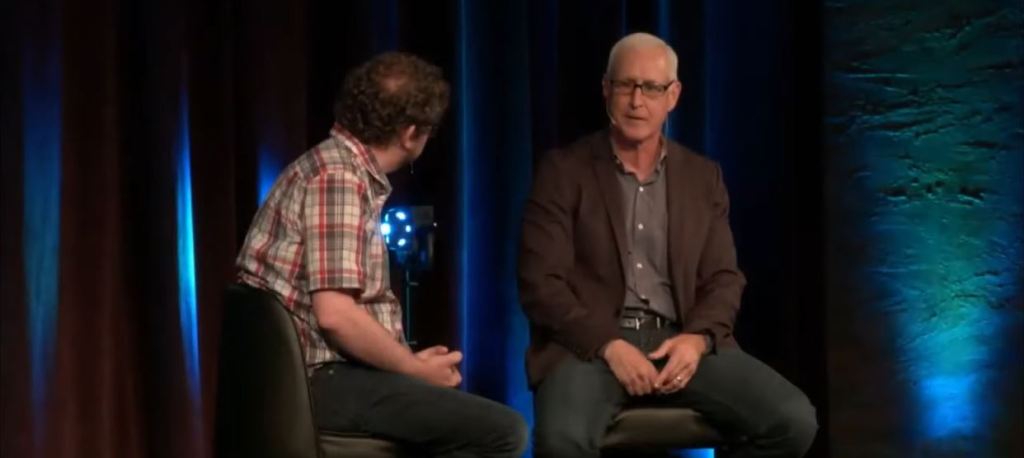
J. Warner Wallace, the “cold case detective”, has become a leading Christian apologist. He brings a unique perspective to the world of faith.

Having grown up in an atheist family, he didn’t come to faith until well into adulthood. He didn’t grow up in the church, obviously. The traditional focus on personal experience and testimonies in evangelicalism was not part of his background. He didn’t come to faith through experience or the influence of personal testimonies. For him, it was simply a matter of the facts.

Wallace observes that the most popular answer people give for being a Christian is that they were raised in a Christian family. The second most popular answer people give for being a Christian is some experience that demonstrates to them personally that Christianity is true.

Wallace criticizes these bases for Christian faith because Mormons give similar answers to explain their belief in Mormonism. The number one answer people give for being a Mormon is that they were raised in a Mormon family, and the second most popular answer is some experience that demonstrated for them that Mormonism is true.

Christians don’t think Mormonism is true, but their stories of coming to faith are the same as ours. Thus, Wallace concludes, experience can be a powerful thing, but it doesn’t necessarily settle the truth of the matter, and people who rely on personal experience are relying on a weak anchor to faith.

More important than experience is whether something is true.

Wallace goes on to share his testimony in the short interchange linked at the end of this article with the caveat given above – don’t put too much faith in his (or anyone else’s) testimony. Still, we like testimonies, right?

Continue reading “J. Warner Wallace on the Limited Usefulness of Personal Testimonies”

The Case for Jesus Christ Rests on the Evidence of Eyewitnesses

As a lawyer, I am keenly aware of the central importance of eyewitnesses to getting at the truth of any matter. There is no better proof in the law than eyewitness testimony. The rules of law allow hearsay testimony (the testimony of what someone else said) only in extreme and limited circumstances because eyewitness testimony is considered inherently much more reliable.

Eyewitness testimony is light years more reliable than secondhand testimony, but even eyewitness testimony needs to be carefully considered along with the credibility of the eyewitnesses. People aren’t always good at observing details accurately. People sometimes fill in the gaps in understanding of what happened with details that are assumed, but which aren’t accurate. People do this consciously and unconsciously.

Eyewitnesses can also be influenced by subconscious biases and influences. Sometimes eyewitnesses even lie about what they have seen.

Because eyewitness testimony isn’t foolproof, we always compare eye witness testimony with other evidence, including other eye witness testimony. Judges and juries weigh the credibility of the witnesses, and they look for evidence that corroborates or contradicts the eyewitness testimony. At the end, weigh the totality of the evidence to reach a verdict.

Still, most cases are built on eyewitness testimony. A case can be built on the testimony of a single, good eyewitness, but multiple eyewitnesses are always better. The more eyewitnesses that agree with each other on key facts, and the more evidence that corroborates that testimony, the stronger a case is.

The narrative accounts contained in the Bible that we call the Gospels keys in on eye witness testimony. The the biblical writings are expressly self-conscious of the eyewitness sources of the accounts. Following is a summary of the eyewitness testimony that runs throughout the New Testament.

Continue reading “The Case for Jesus Christ Rests on the Evidence of Eyewitnesses”

Francis Collins on Proof of God: The Options are Simple

Which position requires more faith? The existence of God? Or the existence of a multiverse?


Francis Collins is the former director of the National Human Genome Research Institute where he spearheaded the Human Genome Project. He is now director of the National Institute of Health. He is a member of the Institute of Medicine and the National Academy of Sciences and has received the Presidential Medal of Freedom and the National Medal of Science.

He graduated from the University of Virginia with a Bachelor of Science degree in Chemistry. He graduated as a Doctor of Philosophy in physical chemistry from Yale University. Then he earned a Doctor of Medicine degree from University of N. Carolina at Chapel Hill.

Francis Collins is best known for his work in sequencing and mapping the human genome. He has been involved in the discovery of genes associated with various diseases. Most recently, Francis Collins was announced as the 2020 Templeton Prize winner.

“The Templeton Prize is an annual award granted to a living person, in the estimation of the judges, ‘whose exemplary achievements advance Sir John Templeton’s philanthropic vision: harnessing the power of the sciences to explore the deepest questions of the universe and humankind’s place and purpose within it.’” The Templeton Prize exceeds the value of the Nobel Prize each year and is awarded to recognize progress toward research and discoveries about spiritual realities. (See Wikipedia)

The early trajectory of his life would not have predicted a Templeton Prize in his future. Francis Collins grew up on a small farm, in a non-religious home of parents he describes as hippies. He was home schooled through 6th grade. He loved science despite his more artsy upbringing, but any notions of the possibility of a God were wiped from the ledger of possibilities for him by the time he entered graduate school.

Francis Collins was an atheist, and he didn’t give God or religion much thought until sometime after his doctoral degrees were completed and he was working in the field of medicine. He was challenged one day by a cancer patient to support his view that God didn’t exist. While he was convinced of his position, he realized his position was based on assumptions he had not explored.

Collins realized he hadn’t really considered the evidence, or lack thereof. He had not come to his position in a scientific way.

The scientist in him recognized that he should know why he didn’t believe in God. He understand at that point that he could not hold that position with integrity without considering the contrary evidence. Thus, he set out to inform himself.

Along the way, he came to the conclusion that his original position wasn’t as tenable as he supposed. Reluctantly he came to believe that God is the best explanation for all the evidence he understood through science.

Francis Collins was in his late 20’s when he found himself a believer, and specifically a believer in the Christian concept of God. (A little bit of his story is captured in Inspiration or Artifice? Faith and Reason) That position has informed his life work ever since.

Francis Collins recently sat down (remotely) with Justin Brierley, the Unbelievable? Podcast, host, to discuss faith and science. I will embed the YouTube video of the interview at the end of this article, focusing on the question: what evidence of God is most compelling? (But the whole interview is worth a listen.)

Continue reading “Francis Collins on Proof of God: The Options are Simple”