Is the Bible Sexist and Racist? Part 2 – Sexism

If anything, Genesis 2 suggests that men need help, and Eve is to Adam what God is to mankind.

Depositphotos Image ID: 31694753 copyright: DesignPicsInc

Racism, sexism and oppression are themes in the story of man’s relations to other men (and women) throughout history. Many people today have the enlightened notion that the Bible perpetuates those old tropes from the Bronze Age and that modern men and women who have progressed by our will to advance know better. But is that really true?

We introduced the question, “what the Bible says about sexism and racism”, in Part I. In this second part in the series, we look at what the Bible reveals to us about sexism. In Part 3, we begin to explore how the Bible addresses racism. In Part 4, we observe what Jesus reveals about sexism, and Part 5 tackles racism through the life of Jesus and what he taught.

Regarding sexism, the Bible first reveals God’s view of the interrelationship of men and women at the very beginning, back before sin entered the world. In Genesis, we are told God created Adam and Eve, the first (or representative) people, and we get a glimpse, there, of what God intended. Genesis gives us critical clues on how God views men and women in their original, intended state.

Continue reading “Is the Bible Sexist and Racist? Part 2 – Sexism”

Is the Bible Sexist and Racist? Part 1

The Bible has been used to justify racism, sexism and other similar things, but, are those things what the Bible really stands for?

Depositphotos Image ID: 150906934 Copyright: Rawpixel

Many people charge the Bible with being sexist and racist. Whether the Bible is sexist and racist goes to the heart of who the Bible says God is. What does the Bible say about these things? How does the Bible describe men, women, ethnicity, diversity and human life?

Is the Bible accurately portrayed in the media on these issues? Is it accurately understood by the common person? Is the Bible accurately followed by the people who claim the Bible as their guiding light?

These questions are relevant today as Black Lives Matters and women’s marches and gatherings make the news and immigration policy is being debated in the national media in the United States.

How do we value human life? What is the basis for the value of human life?

And what does the Bible really say about these things?

This begins a five part series that looks at the evidence of how God views sexism from a biblical overview and evidence of how God views racism from a biblical overview, followed by the evidence in the Bible of the way Jesus viewed sexism and the evidence in the Bible of the way Jesus viewed racism.

Continue reading “Is the Bible Sexist and Racist? Part 1”

Timing the Walls of Jericho

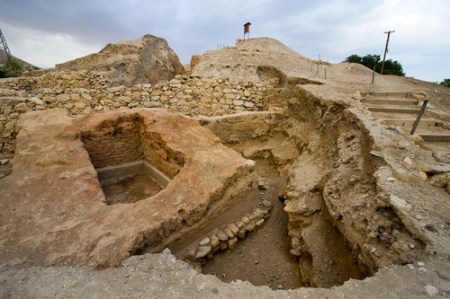
Image ID:73289745 Copyright: Buurserstraat38
Old ruins in Tell es-Sultan better known as Jericho the oldest city in the world

I recently attended a conference at which Ted Wright, an archaeologist, presented information related to the exodus of the Jewish people from Egypt and the later conquest of the area of Canaan. Ted Wright has participated in the excavation of Jericho and Khirbet el-Maqatir, thought to be the modern location of the city, Ai, mentioned in the Bible. One thing that Ted Wright said, which has stuck with me, is that modern archaeology continues to affirm people, places and other information contained in biblical accounts.

As an example, Ted Wright recounted the story of an archaeologist, John Garstang, who excavated Jericho in the 1930’s. Garstang concluded that the site dated to 1400 BC, consistent with the biblical account (John Garstang, “Jericho and the Biblical Story,” p. 1222.):

“In a word, in all material details and in date the fall of Jericho took place as described in the Biblical narrative. Our demonstration is limited, however, to material observations: the walls fell, shaken apparently by earthquake, and the city was destroyed by fire, about 1400 B.C. These are the basic facts resulting from our investigations. The link with Joshua and the Israelites is only circumstantial but it seems to be solid and without a flaw.”

Ted Wright observed in his talk that most of the battle in modern archaeology is not whether places, like Jericho, really existed, or the happening of events, but rather the timing of when they existed and happened. Continue reading “Timing the Walls of Jericho”

On the Proposition of Looking for God

In the context of searching for God, if I can’t “find God”, does that mean God doesn’t exist?

If I can’t find something I am looking for, does that mean it doesn’t exist?

In the context of searching for God, if I can’t “find God”, does that mean God doesn’t exist?

My inability to find something I’m looking for is not proof that the thing I am looking for doesn’t exist. Ask my wife. She will often describe an object to me and asked me to go retrieve it for her. I am reluctant to say how many times I have come back without what she sent me to retrieve. I might even be embarrassed to admit how many times I’ve wanted to tell her that the object doesn’t exist (before she walks right up to it and grabs it herself).

How many times have we said to ourselves when looking for something, “It isn’t anywhere!”? Do we mean, literally, that the object isn’t anywhere? Not usually. Intellectually we know that it is somewhere, but we just can’t find it.

Maybe I am looking in the wrong place. If I’m looking for an object I’ve never seen before, maybe I have the wrong picture of the object in my mind and I am not looking for the right thing. Maybe the object isn’t where I thought it was. Maybe the object is hidden and needs to be uncovered.

These examples are allegorical when it comes to the idea of searching for God.

Continue reading “On the Proposition of Looking for God”

Was the Jesus Story a Copycat from Pagan Myth?

Is the Jesus story just is an amalgam of pagan myths?


The answer is pretty decisively, no! Much has been said of this popular Internet opinion by actual historians and biblical scholars of every stripe, Christian, agnostic and atheist. Very few, if any, modern scholars, meaning men and woman who have proven themselves in the world of academia, which usually means have been vetted by peer review, hold to this view today.

This is true whether the scholar happens to be a theist or atheist, believer or nonbeliever. There simply isn’t any credible evidence for it. The only evidence lives in the active imaginations of people who want it to be true, like Bill Maher. In fact, he did a movie about it.

Continue reading “Was the Jesus Story a Copycat from Pagan Myth?”